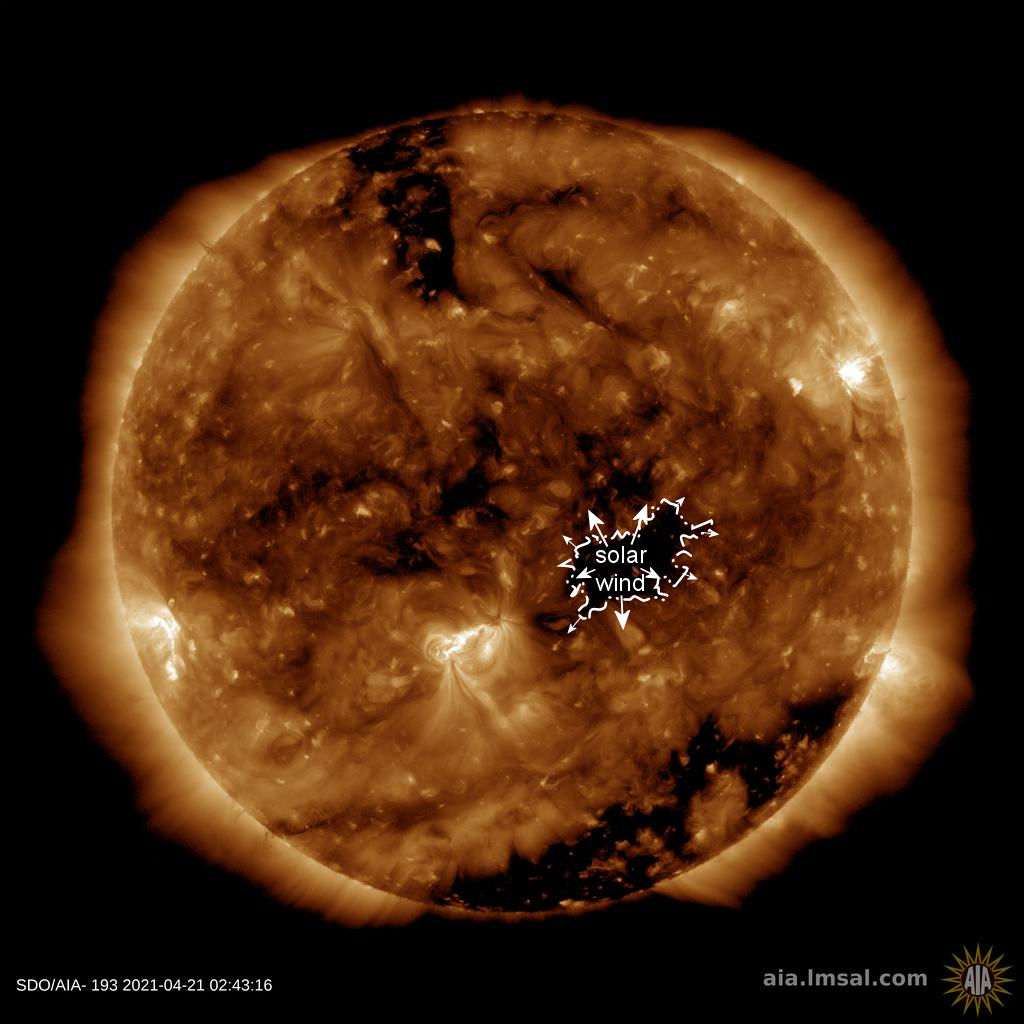
CME WILL NOT HIT EARTH: A CME hurled into space by a strong solar flare on April 19-20 will not hit Earth, according to NOAA analysts. Earth's magnetic field should remain undisturbed until April 23rd when a narrow stream of solar wind arrives. The gaseous material is flowing from an equatorial hole in the sun's atmosphere. Aurora alerts: SMS Text.
RARE ECLIPSES OF JUPITER'S MOONS: Jupiter is about to be edge-on to the sun, and that means unusual things are happening around the giant planet. Here's an example recorded by Australian astronomer Anthony Wesley on April 19th. "It's an eclipse of Ganymede by Callisto," he says.
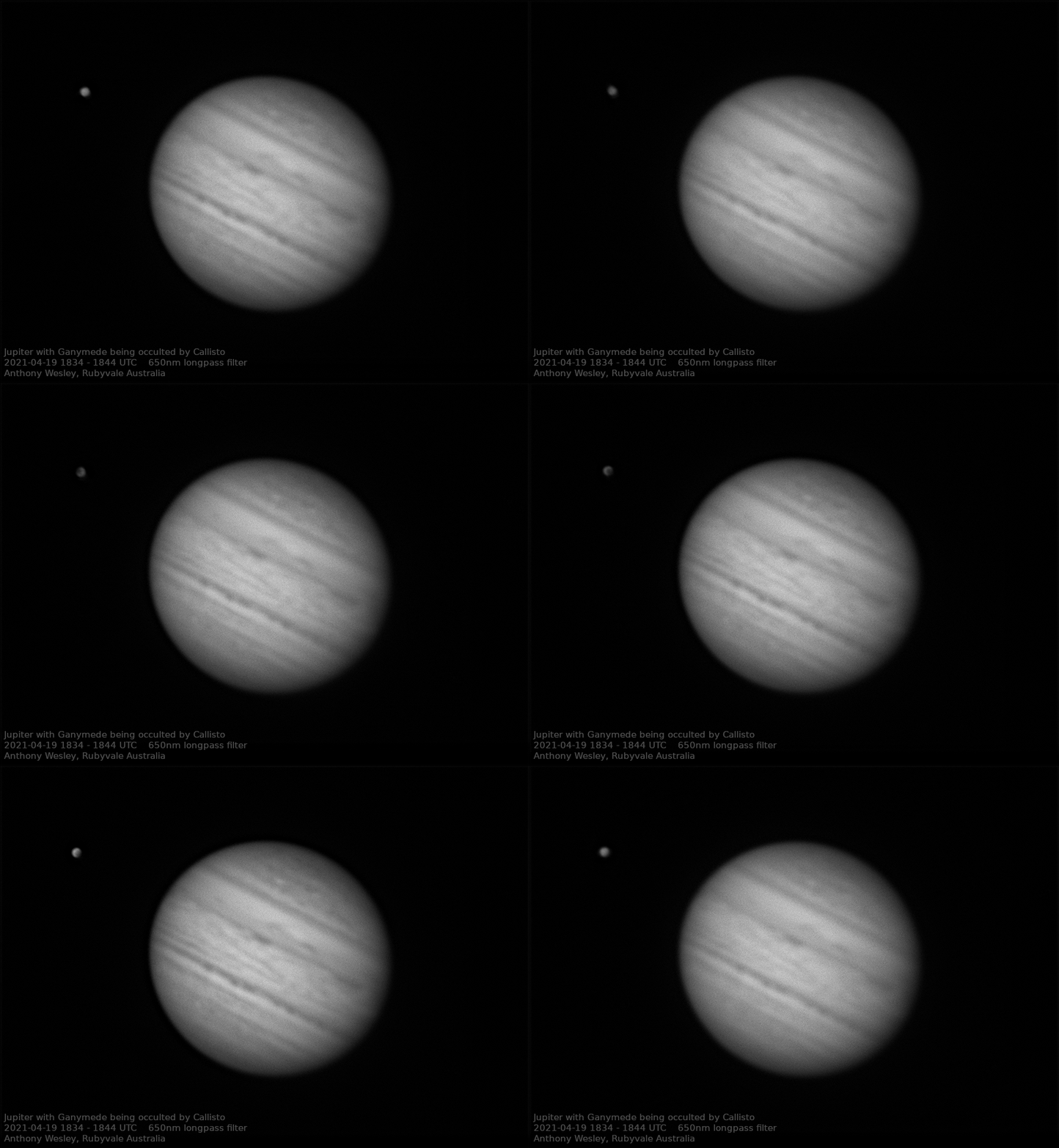
Above: Anthony Wesley recorded this eclipse using a 16-inch telescope
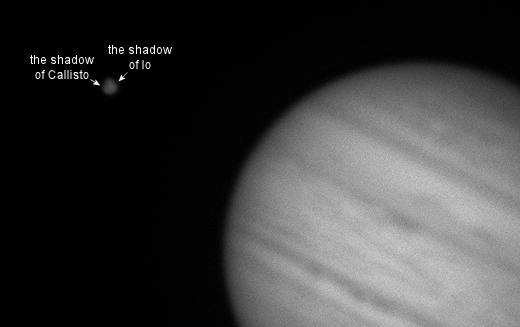
Callisto is off-screen, stage left, but its circular shadow can be seen moving across the disk of Ganymede. Actually, look again. Just before Callisto's shadow appears, the shadow of Io partially eclipses Ganymede as well. Wesley captured two of Jupiter's moons eclipsing a third in only 10 minutes. Unusual, indeed.
This is happening because Jupiter is nearing its equinox on May 2nd; the sun is crossing Jupiter's equatorial plane. Around this time, the orbits of Jupiter's moons line up with the sun, allowing their shadows to fall across one another.
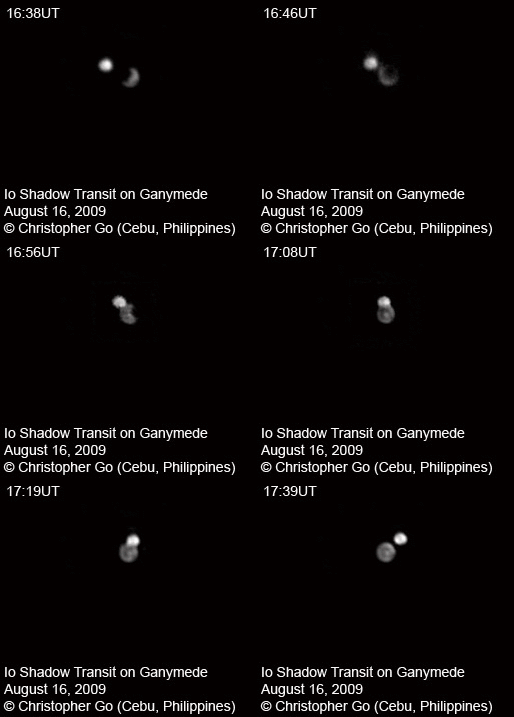 Astronomers call it "mutual event season." During the season, which lasts until August 2021, astronomers can see not only eclipses, but also occultations. That's when the physical disk of one moon blocks another. The last mutual event season occured in 2015; the next won't come until 2026.
Right: In this movie, recorded by Christopher Go using an 11-inch telescope, Io both eclipses and occults Ganymede. This happened during a previous mutual event season 12 years ago. See Spaceweather's Aug. 19, 2009 archive page for details.
According to France's Institute for Celestial Mechanics and Computation of Ephemerides (IMCCE), there are 85 more mutual events between now and the end of the 2021 season. Some of the best may be found in this table from the Cambridge University Press. Only experienced astrophotographers will be able to make movies as detailed as Wesley's. However, even casual stargazers with ordinary backyard telescopes can see moons winking in and out as the shadowplay unfolds. Look for Jupiter low in the southeast before dawn.
Got a picture? Submit it here.
Realtime Space Weather Photo Gallery
Free: Spaceweather.com Newsletter
MOTHER'S DAY IS MAY 9TH: Are you looking for an out-of-this world Mother's Day gift? Consider this: Every time the students of Earth to Sky Calculus launch a cosmic ray balloon, they include something extra in the payload--something Mom will love:

Every item in the Earth to Sky Store has flown to the edge of space and comes with a greeting card showing the item in flight. The interior of the card tells the story of the gift's journey from launch to landing. Mom-satisfaction guaranteed!
Mother's Day Special: Use coupon code "SPACEMOM" at checkout for a 10% discount. Offer valid from now until Mother's Day (May 9, 2021) .
Far Out Gifts: Earth to Sky Store
All sales support hands-on STEM education
Realtime Aurora Photo Gallery
Free: Spaceweather.com Newsletter