CME SPARKS STRONG GEOMAGNETIC STORM: Earth's magnetic field is still reverberating from a CME impact during the early hours of May 12th. The solar storm cloud struck at approximately 0630 UT, setting the stage for a strong geomagnetic storm. At its peak, the disturbance registered G3 on NOAA Storm Scales, making it the strongest geomagnetic storm of young Solar Cyle 25.

The peak of the storm spanned 1200 UT to 1800 UT--mostly daylight hours in Europe and North America. Even so, some auroras were sighted:
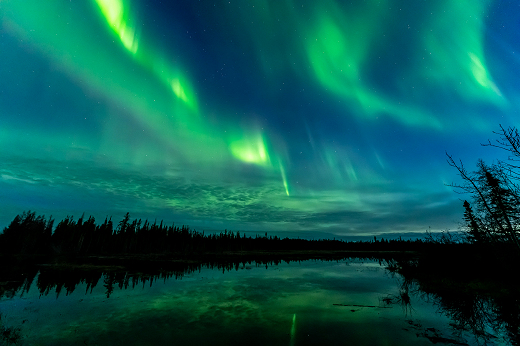
"Very bright and active waves of aurora danced with morning twilight here in western Canada," reports John David McKinnon, who photographed the display from the Sandhill Crane Marsh in Alberta.
The storm is subsiding now. Nevertheless, high latitude sky watchers should remain alert for auroras as Earth's travels through the CME's turbulent wake on May 12-13. Aurora alerts: SMS Text.
Realtime Aurora Photo Gallery
Free: Spaceweather.com Newsletter
SUNSET PLANETS: When the sun goes down tonight, step outside and look west. Mercury and Venus are emerging from the glare of the sun, and you can see them in the twilight sky. Geoff Chester sends this picture from Mollusk, Virginia:
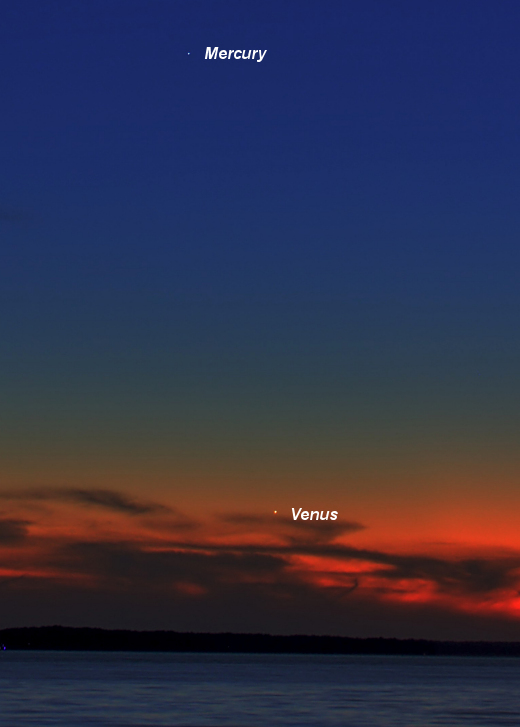
"I managed to catch Venus just before she disappeared into a low-hanging cloud bank," says Chester, who was looking across the Rappahannock River. "Mercury was much higher in the sky."
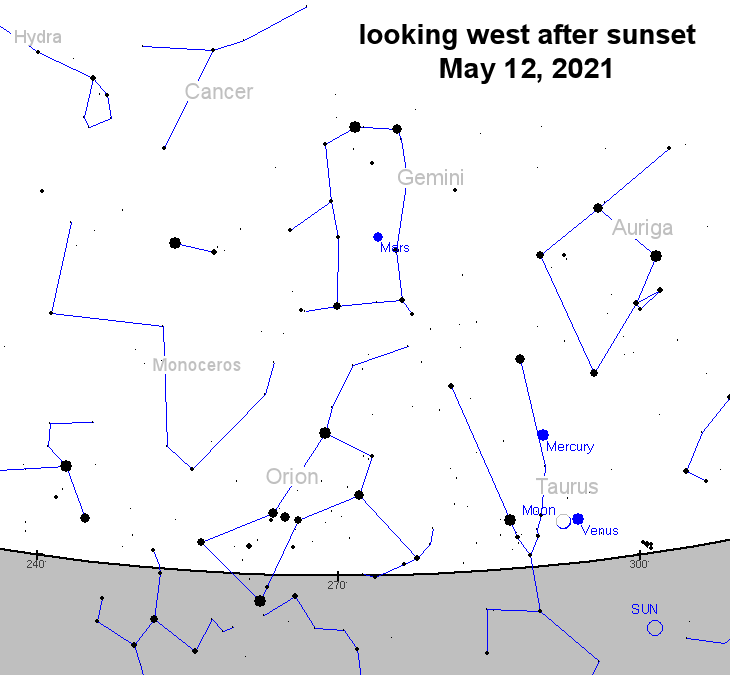
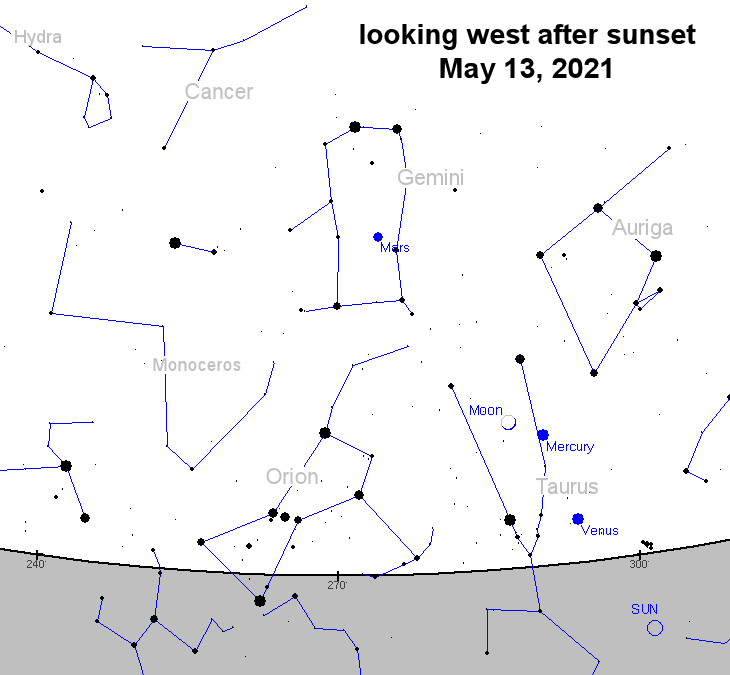
Tonight and tomorrow are dates of special interest. On May 12th, a super-skinny crescent Moon skims past Venus only about half a degree away. A clear view of the horizon will be needed to see the conjunction. Then, on May 13th, the Moon will visit Mercury. Coincidentally, Mercury's sodium tail will be at its brightest on May 13th--a rare photo-op indeed. Sky maps: May 12, 13.
Realtime Space Weather Photo Gallery
Free: Spaceweather.com Newsletter
WHISKEY STONES FROM SPACE: It's the gift for the person who has everything: Whisky Stones from Space. These granite cubes have experienced the cold of the stratosphere, more than 50 degrees below zero! Put them in your cup for an truly out of this world drink:
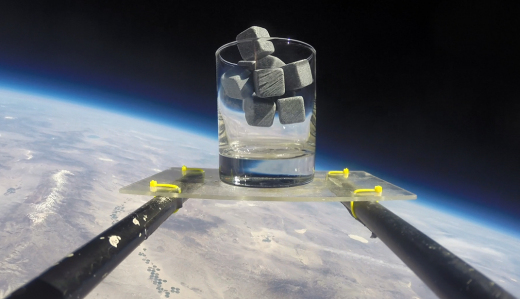
You can have a set of 9 cubes for $99.95 (glass not included). The students of Earth to Sky Calculus are selling whiskey stones to support their cosmic ray monitoring program. The ones picture above flew to the stratosphere onboard a cosmic ray research balloon on April 23, 2021, reaching an altitude of 97,543 feet.
Refrigerated whiskey stones cool a drink without diluting it, solving the problem of ordinary melting ice cubes. They make great Father's Day and birthday gifts. All stones come with a greeting card showing the cubes in flight.
Far Out Gifts: Earth to Sky Store
All sales support hands-on STEM education
Realtime Aurora Photo Gallery
Free: Spaceweather.com Newsletter