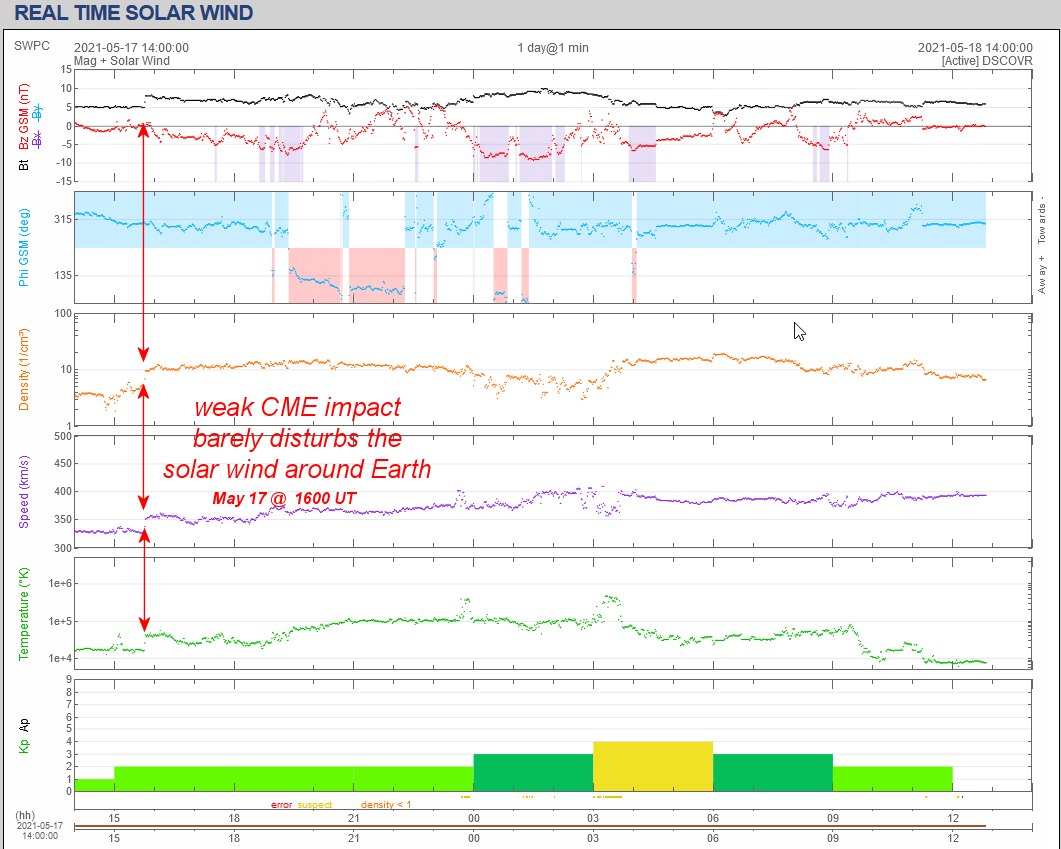
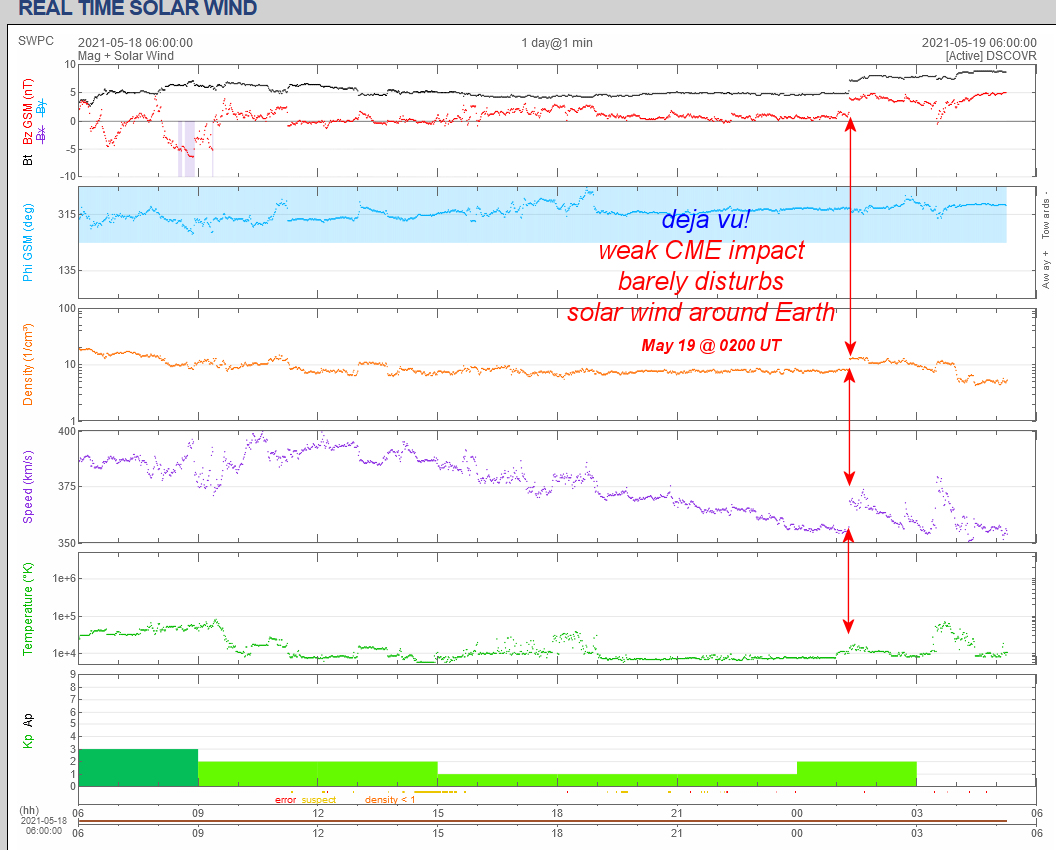
GEOMAGNETIC STORM--CANCELED: Another CME hit Earth's magnetic field on May 19th, the second in little more than 24 hours. Both impacts were weak and have failed to spark even a minor geomagnetic storm. No storms are expected for the next 3 days. Data: Impact #1, #2.
ELLERMAN BOMBS: Sunspot AR2824 rotated over the sun's eastern limb on May 17th. Harald Paleske of Langendorf bei Weißenfels, Germany, photographed the sunspot edge-on and noticed a number of flashing lights (circled):
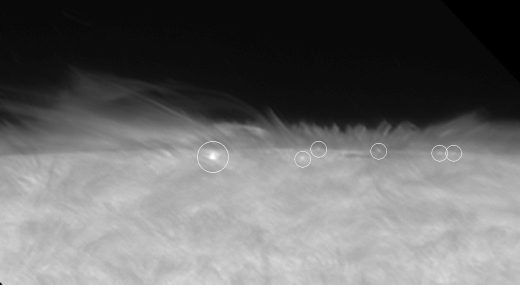
"These are Ellerman bombs," says Paleske. "I recorded them using an H-alpha filter tuned slightly off-band."
Ellerman bombs are magnetic explosions about one-millionth as powerful as true solar flares. They are named after Ferdinand Ellerman who studied the tiny blasts in the early 20th century. Of course, "tiny" is relative. A single Ellerman bomb releases about 1026 ergs of energy, equal to about a hundred thousand WWII atomic bombs.
Now that AR2824 is turning to face Earth, Ellerman bombs may be observed in the sunspot's core as well. The dark heart of AR2824 makes a nice backdrop for these pinprick blasts. Solar flare alerts: SMS Text.
Realtime Space Weather Photo Gallery
Free: Spaceweather.com Newsletter
AN INFLATABLE SPACESHIP: Can an inflatable spaceship really work? Finding out is one of the goals of BEAM, a bubble-like room attached to the International Space Station (ISS). Astronomer Michael Tzukran photographed the structure on May 15th when the ISS passed over Israel:
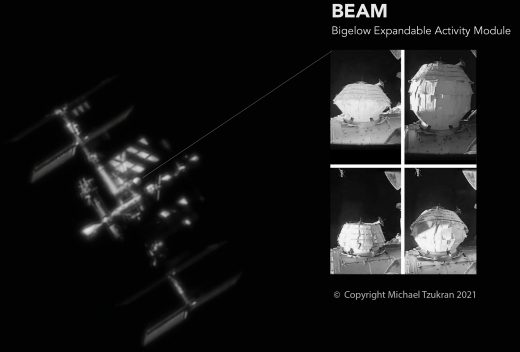
Short for "Bigelow Expandable Activity Module," BEAM was attached to the ISS and inflated in 2016. Ever since, NASA has been monitoring the module for micrometeoid impacts, internal temperature and pressure, radiation, and other aspects of safe habitability. From time to time, astronauts enter the module; it has become so dependable that NASA now stores more than 1400 kilograms of cargo inside.
Inflatable satellites were actually deployed during the early years of the Space Age. More recently, inflatable antennas have attracted positive attention. With BEAM demonstrating the viability of inflatable habitats, it's only be a matter of time before someone puts all the pieces together to make a full-fledged inflatable spaceship. If they do, Michael Tzukran will probably photograph it.
Realtime Aurora Photo Gallery
Free: Spaceweather.com Newsletter
WHISKEY STONES FROM SPACE: It's the gift for the person who has everything: Whisky Stones from Space. These granite cubes have experienced the cold of the stratosphere, more than 50 degrees below zero! Put them in your cup for an truly out of this world drink:
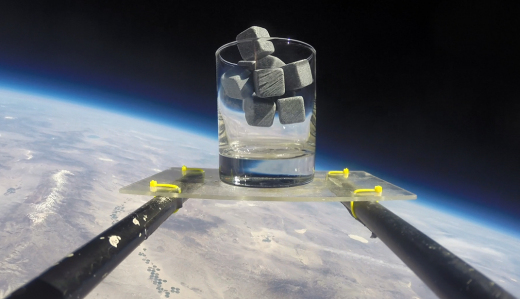
You can have a set of 9 cubes for $99.95 (glass not included). The students of Earth to Sky Calculus are selling whiskey stones to support their cosmic ray monitoring program. The ones picture above flew to the stratosphere onboard a cosmic ray research balloon on April 23, 2021, reaching an altitude of 97,543 feet.
Refrigerated whiskey stones cool a drink without diluting it, solving the problem of ordinary melting ice cubes. They make great Father's Day and birthday gifts. All stones come with a greeting card showing the cubes in flight.
Far Out Gifts: Earth to Sky Store
All sales support hands-on STEM education
Realtime Space Weather Photo Gallery
Free: Spaceweather.com Newsletter