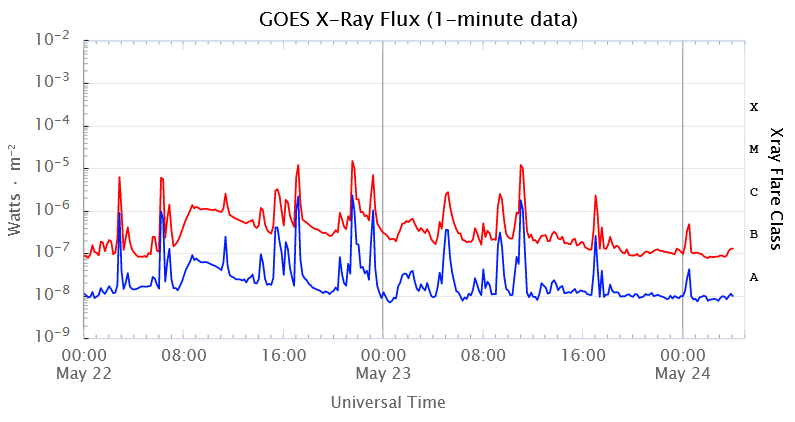
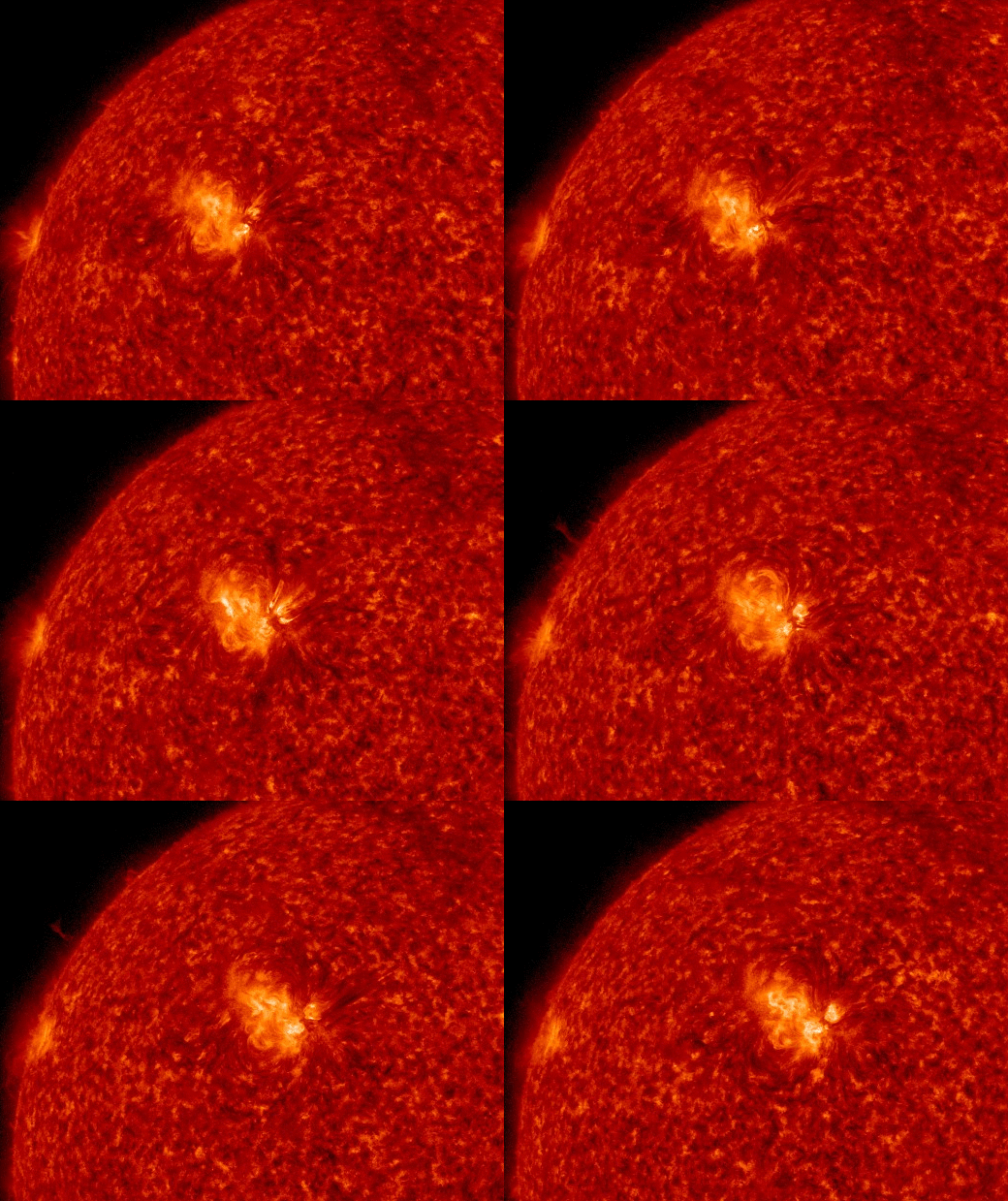
GEOMAGNETIC STORM WATCH: On May 22nd, sunspot AR2824 unleashed a sequence of solar flares unlike anything we've seen in years. In only 24 hours, NASA's Solar Dynamics Observatory recorded 10 C-flares and 2 M-flares: movie. The rapidfire explosions hurled multiple overlapping CMEs into space. According to NOAA models, a combined CME will hit Earth's magnetic field during the late hours of May 25th, potentially sparking G2-class geomagnetic storms on May 26th. Aurora alerts: SMS Text.

NOCTILUCENT CLOUDS ARE BACK: The 2021 season for noctilucent clouds (NLCs) is underway. NASA's AIM spacecraft detected the first electric-blue NLCs over Ellesmere Island in northern Canada on May 20th:
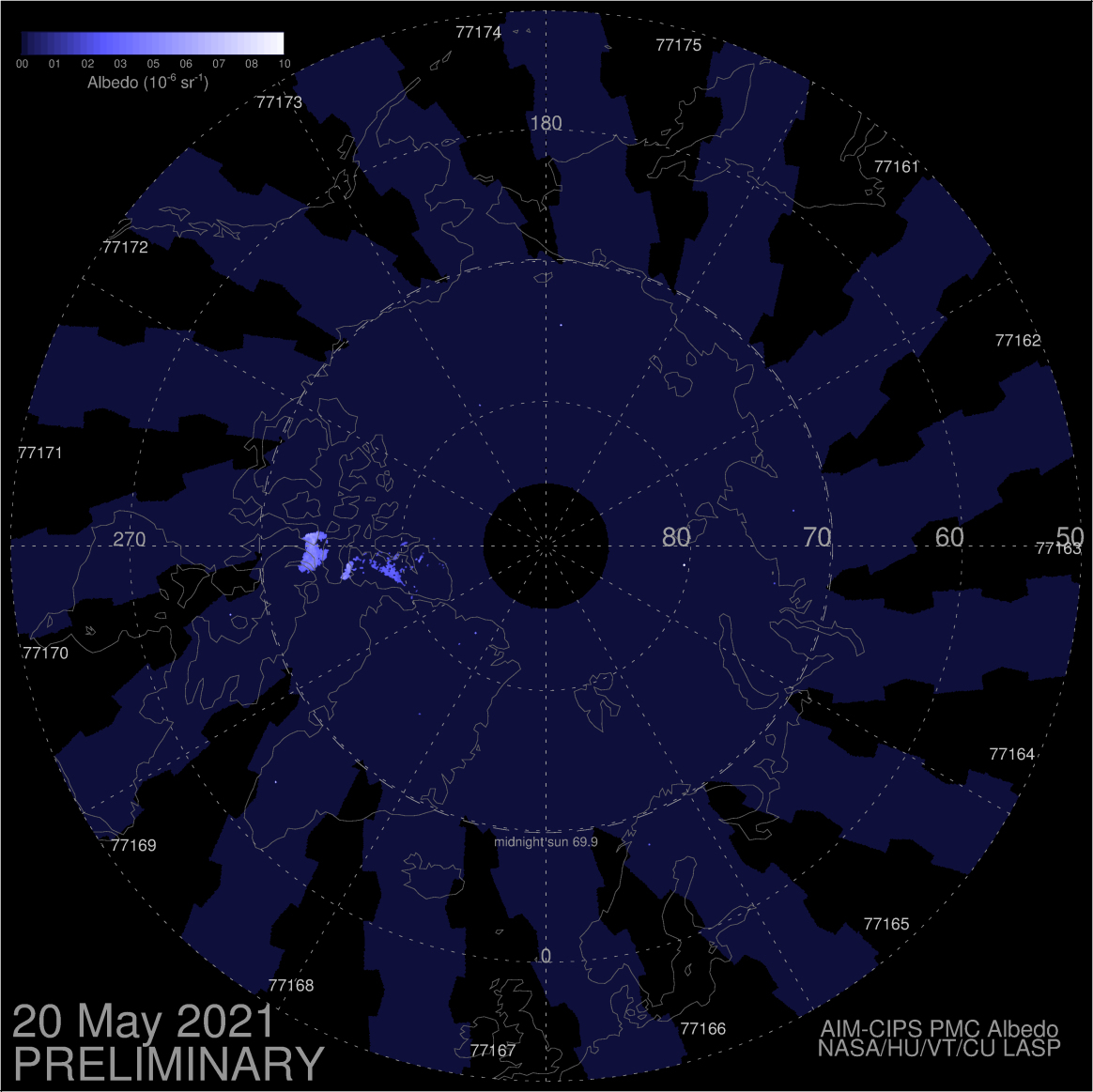
NLCs are Earth's highest clouds. Seeded by meteoroids, they float at the edge of space about 83 km above the ground. The clouds form around Earth's poles when summertime wisps of water vapor rise up to the mesosphere, allowing water to crystallize around specks of meteor smoke. In recent years they have spread as far south as Los Angeles and Las Vegas, setting records for low-latitude sightings.
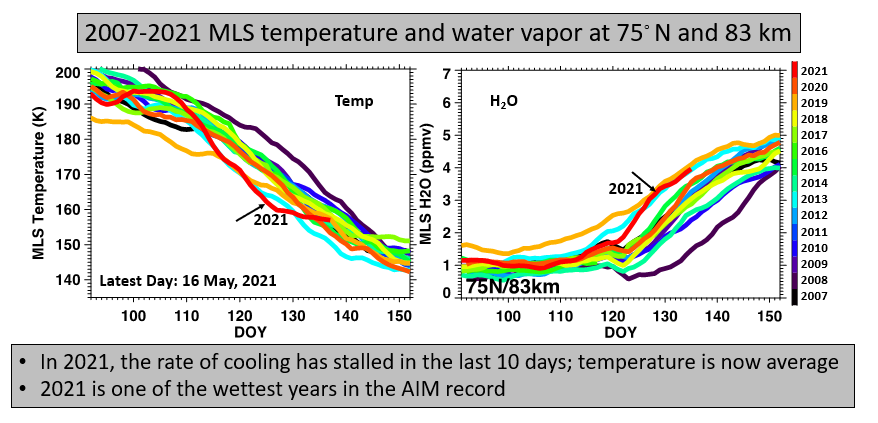
This year the mesosphere is unusually wet. "2021 is one of the wettest years in the AIM record," says Lynn Harvey of the University of Colorado's Laboratory for Atmospheric and Space Physics, who processed data from NASA's Microwave Limb Sounder (MLS) to check conditions in the noctilucent zone. Click here to see her results. Only once or twice in the past 14 years have NLCs had more water to work with.
The extra water bodes well for a strong season. In fact, there have already been ground sightings. "We saw the first NLC from Germany on May 21st," reports Gerd Baumgarten of the Leibniz-Institute of Atmospheric Physics. "The clouds appeared in the feed from one of our high resolution cameras located in Collm (51.3N, 13.0E)."
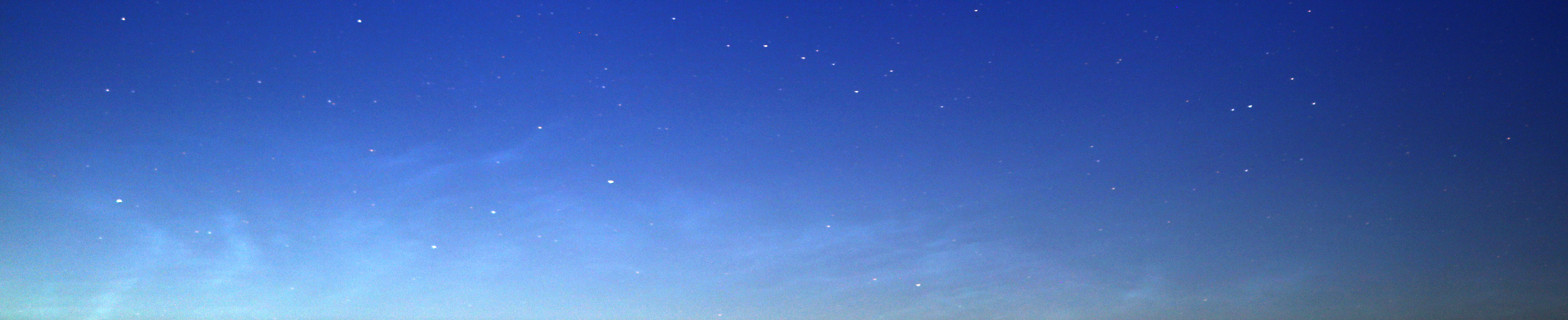
Above: Faint NLCs over Collm, Germany, on May 21, 2021.
"The display was quite faint," he notes. They may not remain faint for long, however. Previous data from AIM show that NLCs are like a great "geophysical light bulb." They turn on every year in late spring, reaching almost full intensity over a period of no more than 10 days.
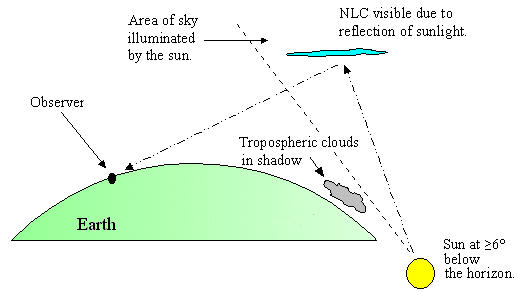
Observing tips: Look west 30 to 60 minutes after sunset. If you see luminous blue-white tendrils spreading across the sky, you may have spotted a noctilucent cloud. Early season NLCs are typically confined to high latitudes, spreading south as northern summer unfolds.
Realtime Space Weather Photo Gallery
Free: Spaceweather.com Newsletter
TO BOLDLY GO WHERE NO MUG HAS GONE BEFORE: There's nothing like morning coffee in a cup from space. On April 23, 2021, this rare ceramic Capt. Kirk mug flew to the stratosphere onboard an Earth to Sky Calculus cosmic ray research balloon. At the apex of the flight, it floated 97,438 feet above the Sierra Nevada mountains of central California:
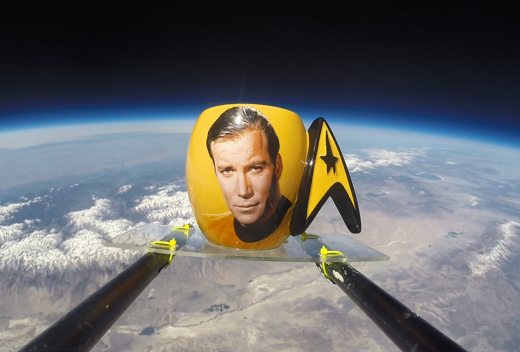
You can have it for $170.10. That's the serial number of the Enterprise divided by 10. The students are selling Star Trek mugs to support their cosmic ray ballooning program. Each one holds 16 oz. of steaming hot Raktajino (Klingon coffee) and comes with a greeting card showing the collector's item in flight.
Far Out Gifts: Earth to Sky Store
All sales support hands-on STEM education
Realtime Aurora Photo Gallery
Free: Spaceweather.com Newsletter