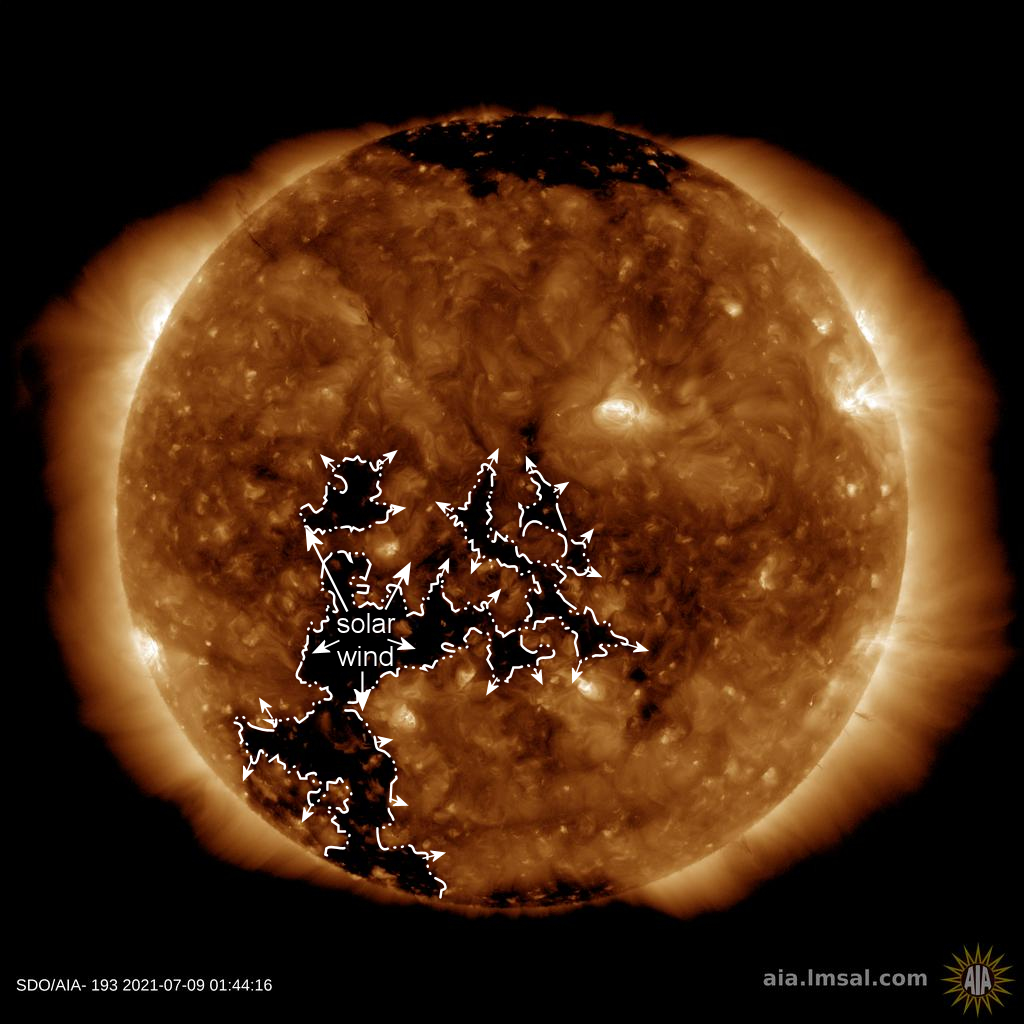
SOLAR WIND, INCOMING: A high-speed stream of solar wind is approaching Earth. ETA: July 11-12. The gaseous material is flowing from an equatorial hole in the sun's atmosphere. Minor geomagnetic storms and auroras are possible when the solar wind arrives. Aurora alerts: SMS Text.
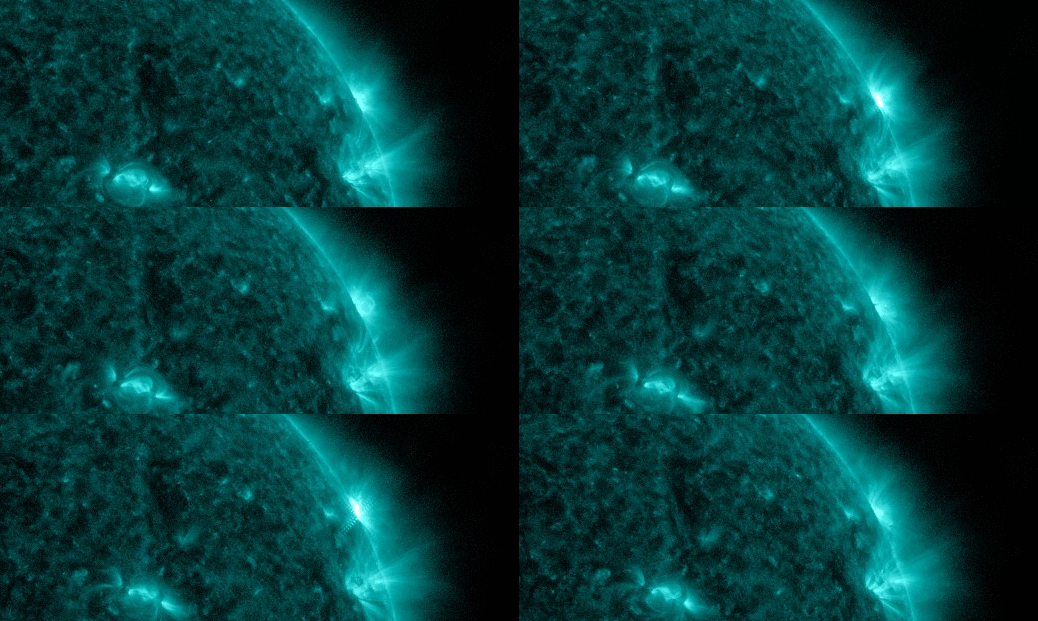
TWO SOLAR FLARES, TWO RADIO BLACKOUTS: Departing sunspot AR2840 erupted twice on July 9th, producing a pair of almost-M-class solar flares. NASA's Solar Dynamics Observatory captured the two ultraviolet flashes:
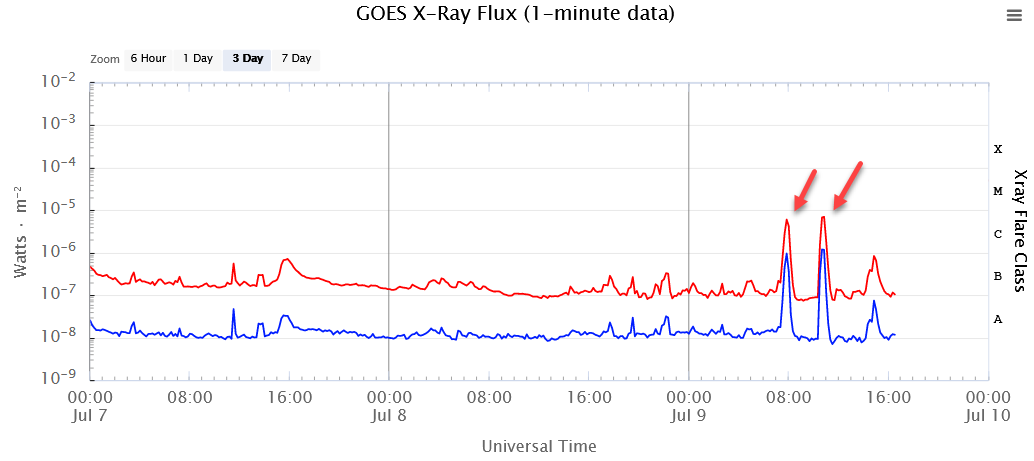
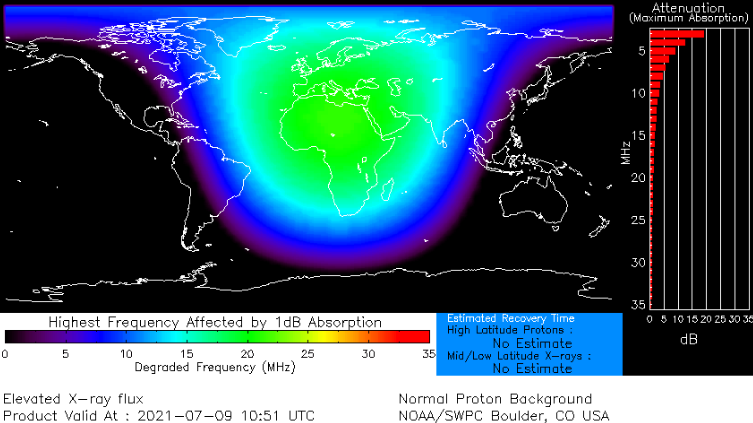
Pulses of X-radiation ionized the top of Earth's atmosphere. The result: two minor radio blackouts, one over Asia and another over Europe. Mariners, aviators, and ham radio operators may have noticed unusual propagation effects at frequencies below ~15 MHz.

MORE POWER TO THE SPACE STATION: The International Space Station's massive solar arrays are getting old. The first panels were installed more than 20 years ago, and their efficiency has been naturally declining since then. To give the ISS a power boost, NASA is installing new panels, which roll out over the old. Amateur astronomer Philip Smith photographed them on June 30th:
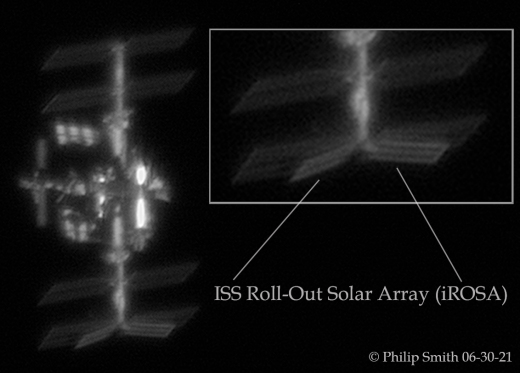
"The space station passed almost directly over my backyard in Manorville, New York, where I observed it using a 14-inch telescope," says Smith. "After looking over the recorded video, I was very happy to see that I imaged a new part of the space station's solar panel system."
The new arrays, named "iROSA" (ISS Roll-Out Solar Array), were unfurled by astronauts Shane Kimbrough and Thomas Pesquet during spacewalks on June 20th and 25th. They provide a 20% to 30% power boost compared to the older panels behind them. Eventually, 6 of 8 older panels will be supplemented with roll-out arrays, boosting the output of the entire system from 160 kW to as much as 215 kW.
Realtime Space Weather Photo Gallery
Free: Spaceweather.com Newsletter
APOLLO 11 PROOF SILVER DOLLAR (COLLECTOR'S ITEM): Are you looking for a far-out gift? Consider this: On July 20, 2019 (the 50th anniversary of the Apollo 11 Moon landing), the students of Earth to Sky Calculus flew this rare proof silver dollar to the stratosphere:
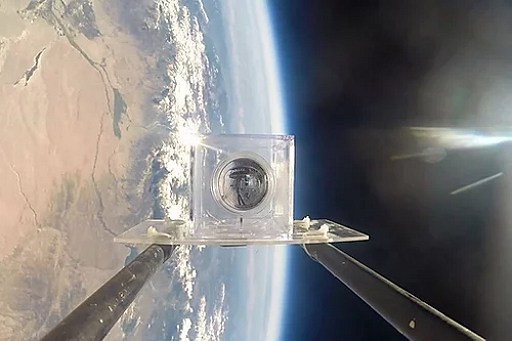
The US Mint created Apollo 11 coins to celebrate the first Moon landing--but you can no longer buy them from the Mint. You can, however, get one from Earth to Sky Calculus. The students are selling the collector's item for $229.95 to support their cosmic ray ballooning program.
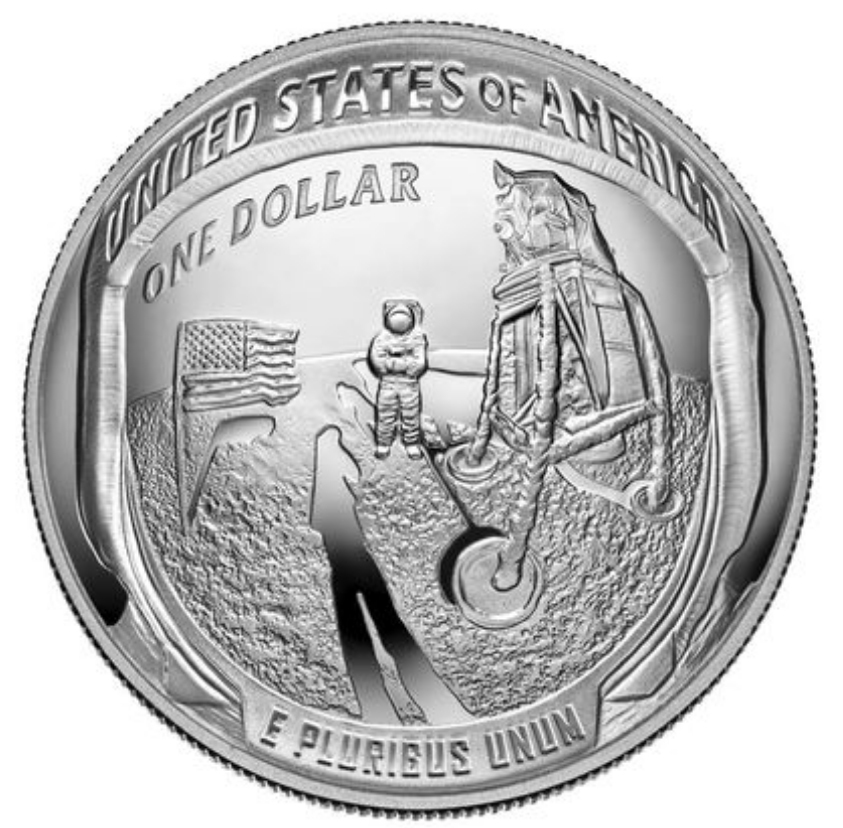
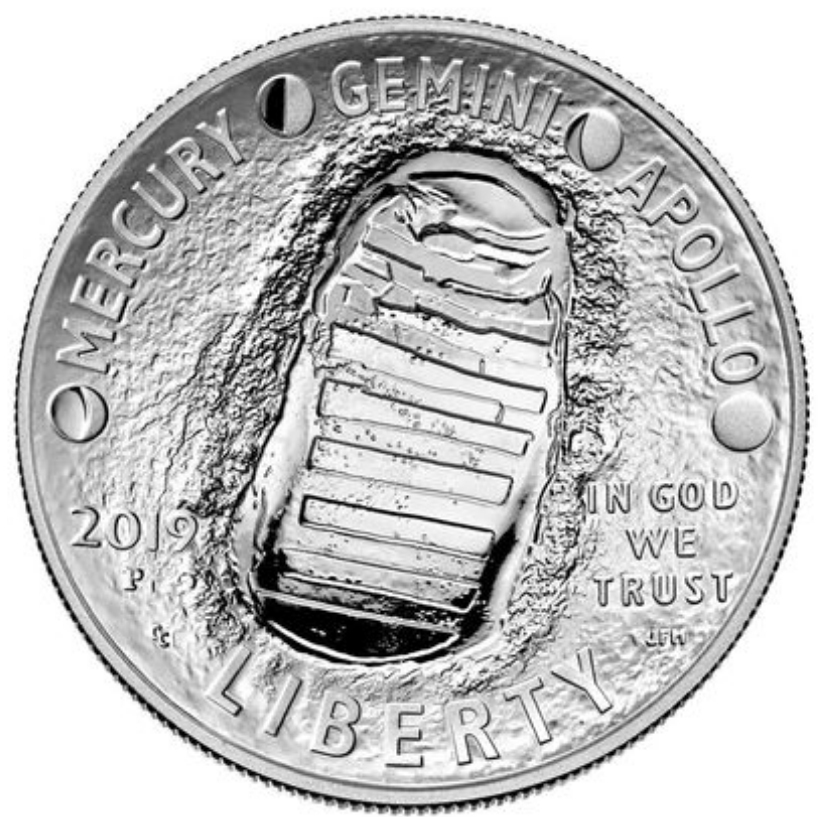
The silver dollar is curved and reproduces the helmet of astronaut Buzz Aldrin. Reflected in Buzz's visor are Neil Armstrong, the United States flag, and the lunar lander. The opposite side of the coin shows Neil's iconic footprint on the Moon. Included is a greeting card showing the coin in flight and a certificate of authenticity.
Far Out Gifts: Earth to Sky Store
All sales support hands-on STEM education
Realtime Noctilucent Cloud Photo Gallery
Free: Spaceweather.com Newsletter
Realtime Aurora Photo Gallery
Free: Spaceweather.com Newsletter