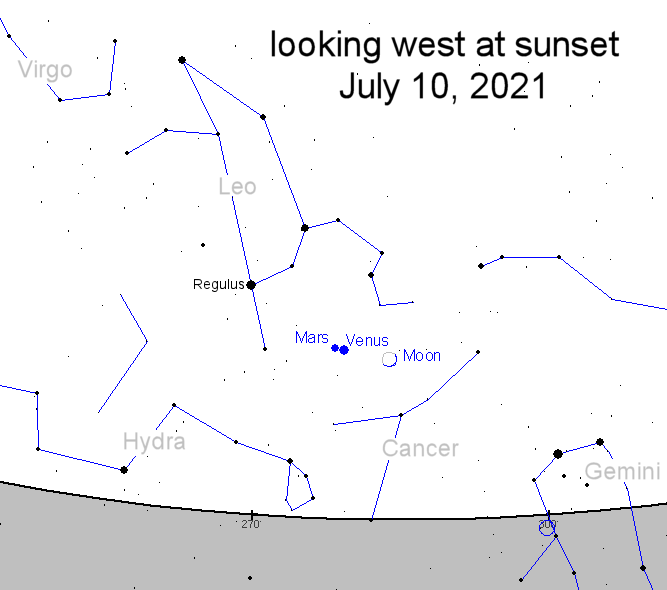
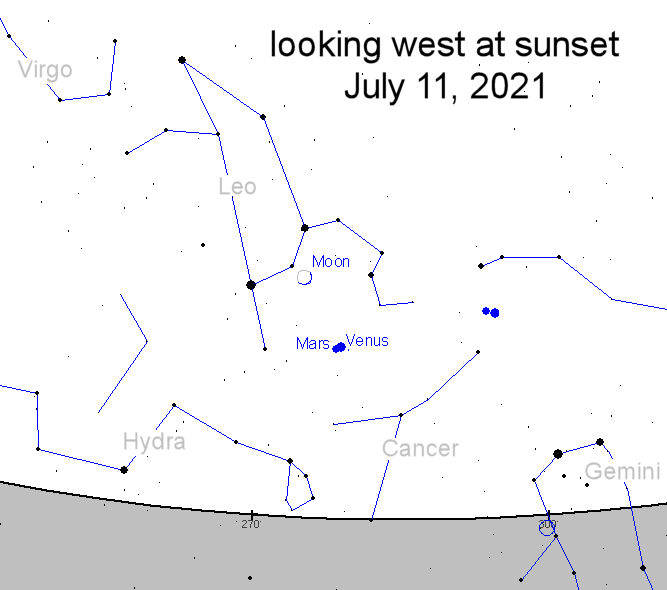
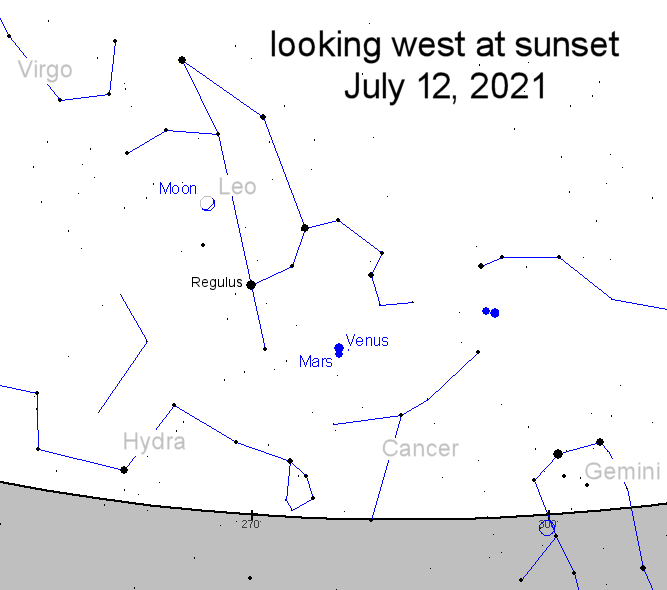
SUNSET PLANET SHOW: Deep in this evening's twilight, an exquisitely slender crescent Moon will glide by Venus and Mars. A clear view of the western horizon and, perhaps, binoculars will be required to see the show. Got pictures? Submit them here. Sky maps: July 10, 11, 12.
COMING SOON, THE PERSEID METEOR SHOWER: We're only a month away from the best meteor shower of 2021. On the nights of August 10th-13th, Earth will pass through a stream of debris from giant comet Swift-Tuttle, source of the annual Perseid meteor shower. Forecasters expect as many as 100 meteors per hour during the shower's peak.
Ian Webster created this interactive visualization of Swift-Tuttle's debris stream cutting across Earth's orbit.
Perseids are always good, but 2021 will be extra-good because the shower peaks on nights just after a New Moon. Velvety-dark skies will provide the perfect backdrop for even the faintest meteors. Not that Perseids are known for being faint...
No other comet produces fireballs (meteors brighter than Venus) like 109P/Swift-Tuttle--probably a result of its oversized nucleus. The comet's core is 26 km in diameter, and naturally crumbles into larger chunks. In a recent 5-year survey, NASA counted more fireballs from the Perseids than any other shower:
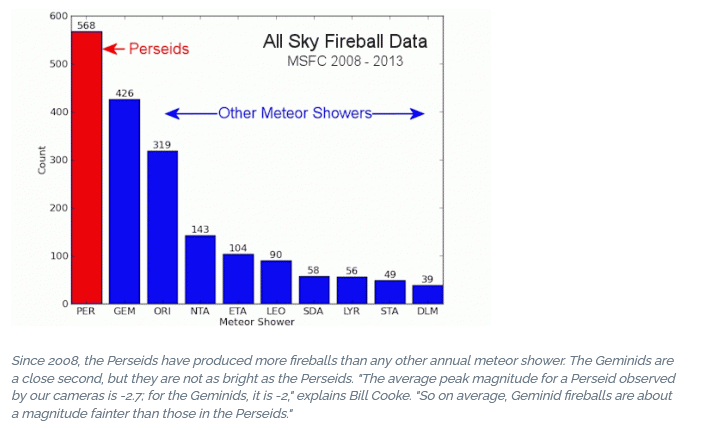
Note: A fireball is a very bright meteor, at least as bright as the planets Jupiter or Venus.
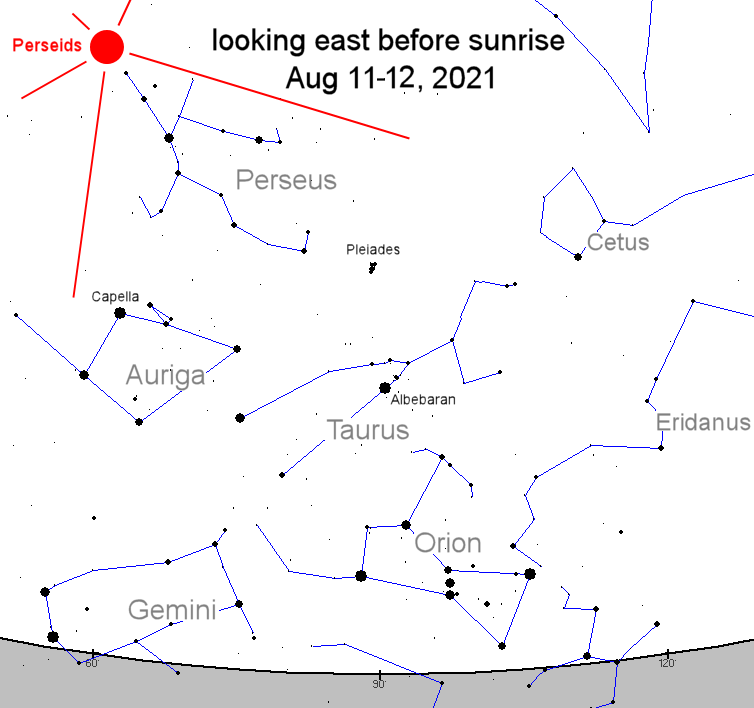
When should you look? The night of Aug. 11-12 will probably be best, with adjacent nights only a smidgen less active. Perseids may be seen at any time after ~10 pm. Rates increase after midnight when the constellation Perseus is high in the sky. For best results, lie down in a dark place with a wide view of the heavens. Meteors will streak out of Perseus but can appear anywhere in the sky. Sky maps: Aug. 11-12
Realtime Space Weather Photo Gallery
Free: Spaceweather.com Newsletter
APOLLO 11 PROOF SILVER DOLLAR (COLLECTOR'S ITEM): Are you looking for a far-out gift? Consider this: On July 20, 2019 (the 50th anniversary of the Apollo 11 Moon landing), the students of Earth to Sky Calculus flew this rare proof silver dollar to the stratosphere:
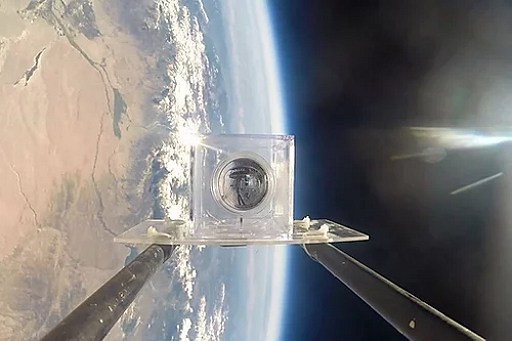
The US Mint created Apollo 11 coins to celebrate the first Moon landing--but you can no longer buy them from the Mint. You can, however, get one from Earth to Sky Calculus. The students are selling the collector's item for $229.95 to support their cosmic ray ballooning program.
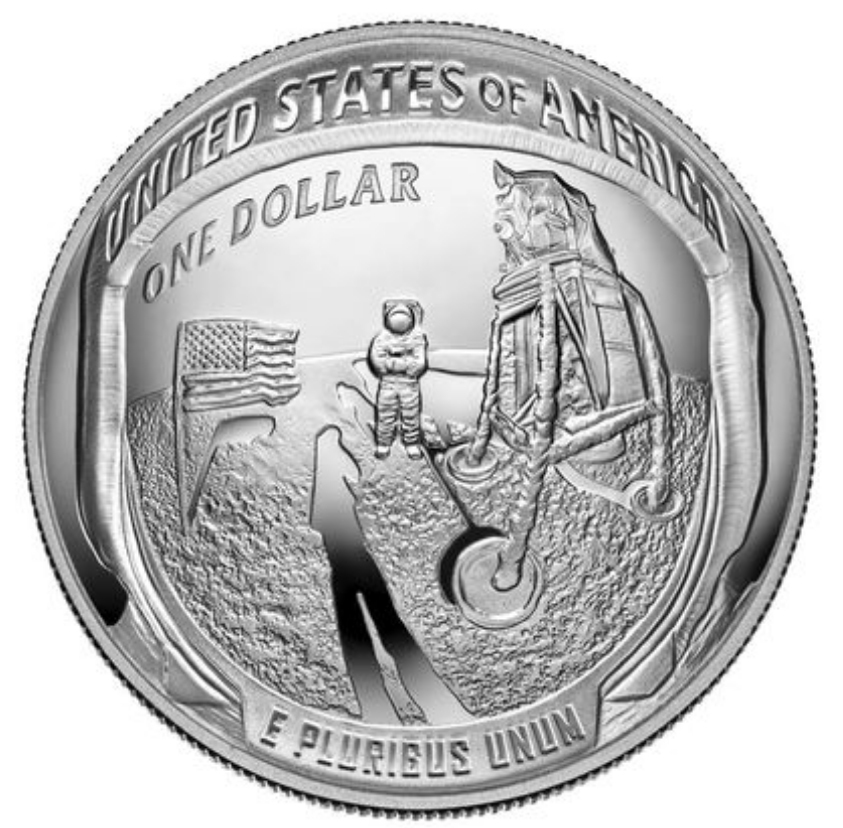
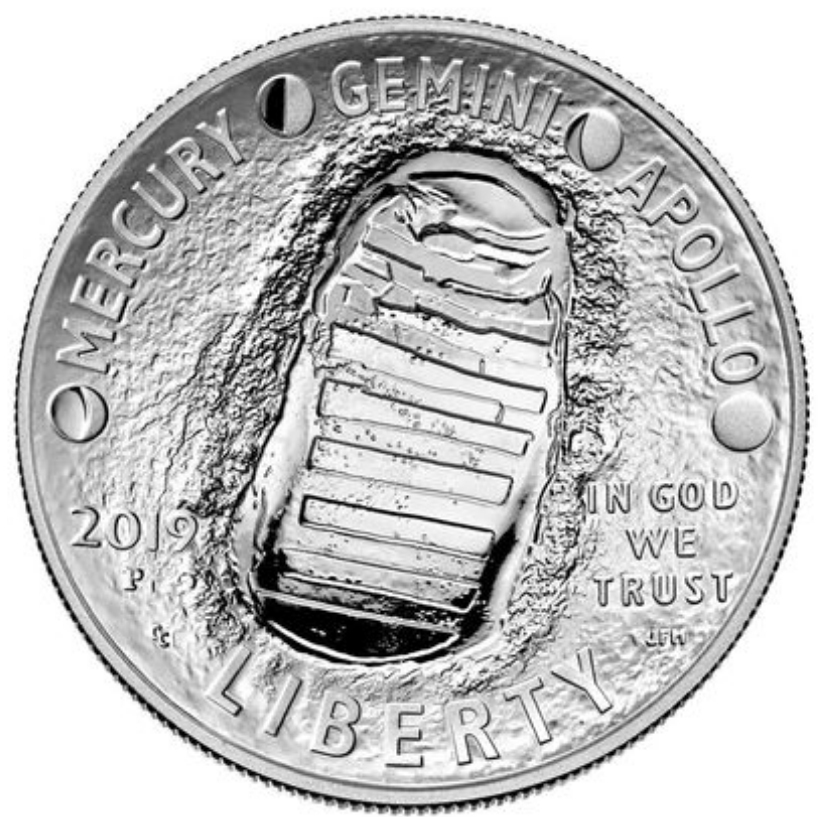
The silver dollar is curved and reproduces the helmet of astronaut Buzz Aldrin. Reflected in Buzz's visor are Neil Armstrong, the United States flag, and the lunar lander. The opposite side of the coin shows Neil's iconic footprint on the Moon. Included is a greeting card showing the coin in flight and a certificate of authenticity.
Far Out Gifts: Earth to Sky Store
All sales support hands-on STEM education
Realtime Noctilucent Cloud Photo Gallery
Free: Spaceweather.com Newsletter
Realtime Aurora Photo Gallery
Free: Spaceweather.com Newsletter