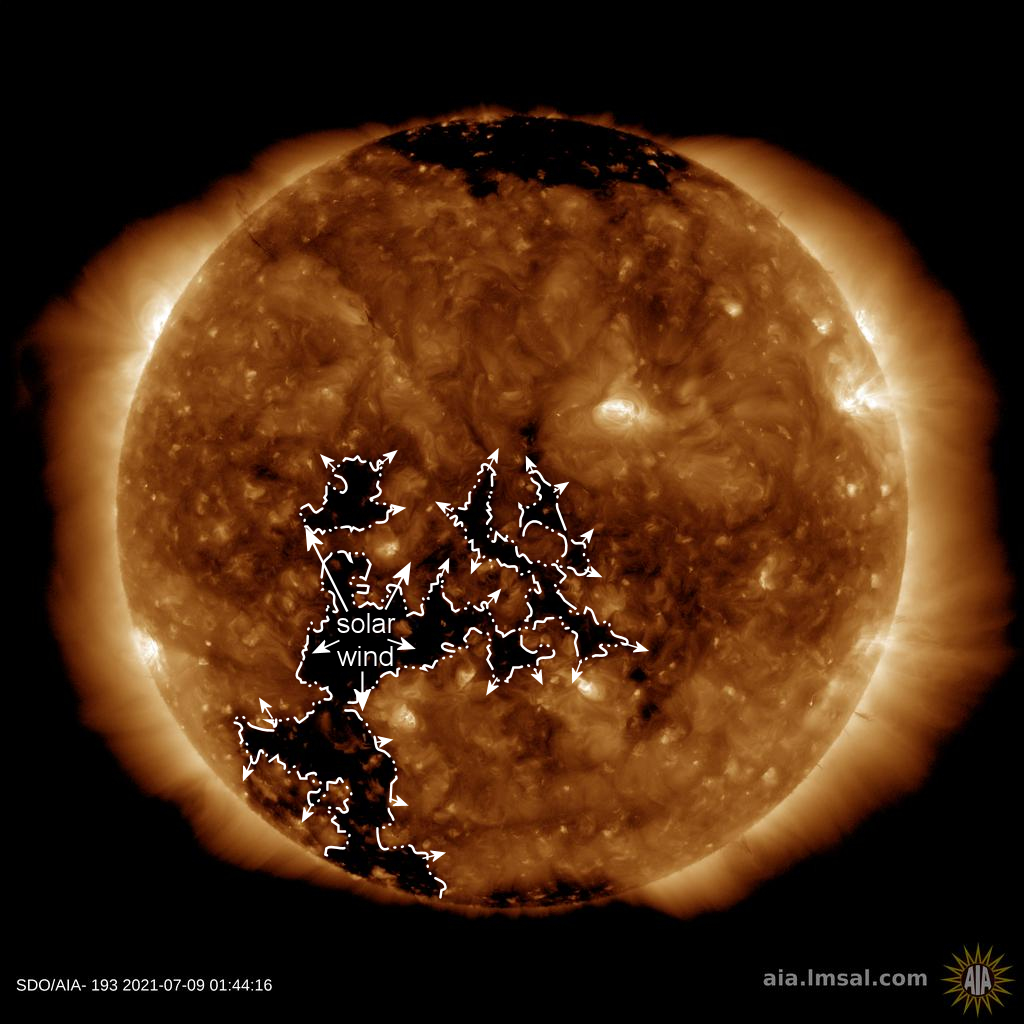
WINDY WITH A CHANCE OF STORMS: Today, a high-speed stream of solar wind is expected to hit Earth's magnetic field. Wind speeds could top 600 km/s, sparking minor (G1-class) geomagnetic storms and high latitude auroras. The gaseous material is flowing from an equatorial hole in the sun's atmosphere. Aurora alerts: SMS Text.

IT'S MILKY WAY SEASON: Northern summer is Milky Way season, a time when the spine of our galaxy soars overhead after sunset. To see it, you have to have dark skies. On June 30th, Juan Carlos Casado went to one of the finest dark-sky sites in the world (the Teide Observatory atop Tenerife in the Canary Islands) and this is what he saw:
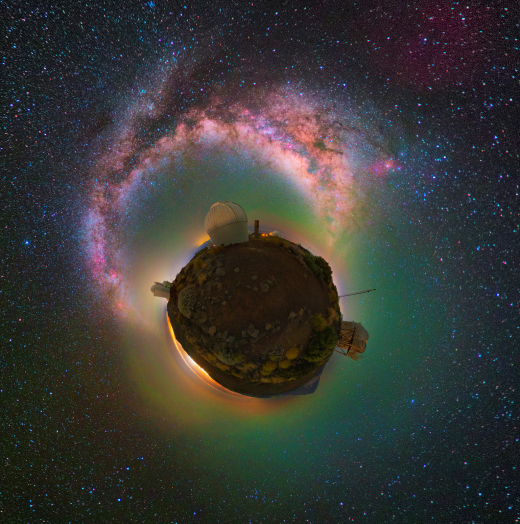
"Using a fisheye lens, I took 22 pictures and wrapped them into this 'mini-planet' presentation," says Casado. "The entire arc of the Milky Way was visible."
Casado's mini-planet is wrapped in a diaphanous bubble of green light. This is airglow--an aurora-like phenenomenon caused by chemical reactions in the upper atmosphere. Faint airglow is best photographed from extremely dark sites on nights when the Moon is new or below the horizon. It often shows up in long exposures of the Milky Way.
That means it's airglow season, too. Mid-July through August are always the best time of year to see the Milky Way in the evening, and on really dark nights airglow can make an appearance as well. Submit your photos here!
Realtime Milky Way Photo Gallery
Free: Spaceweather.com Newsletter
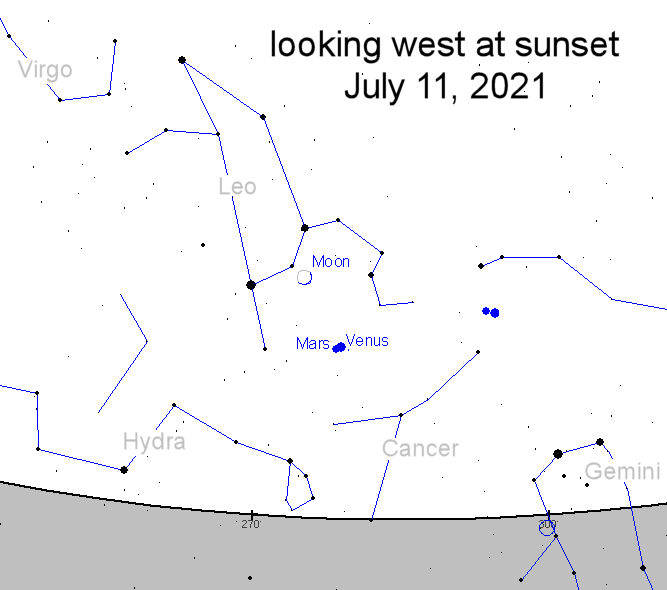
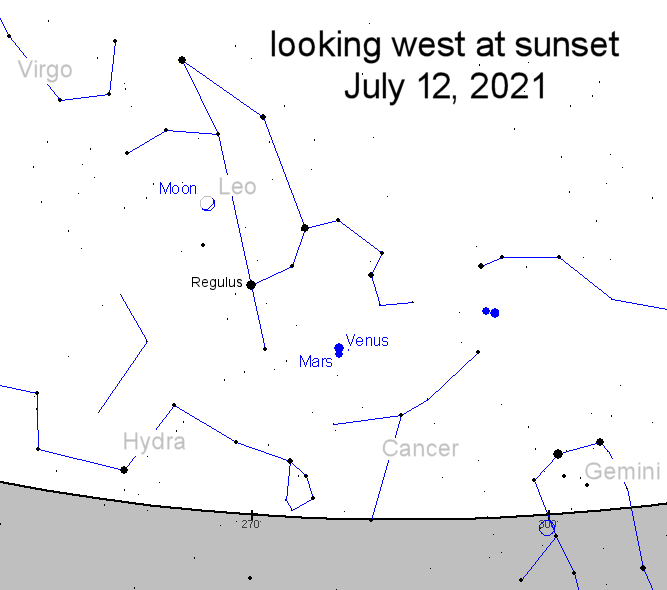
VENUS KISSES MARS: When the sun goes down tonight, step outside and look west. Deep in evening twilight, Venus is kissing Mars; the two planets are only half a degree apart. Michael Mirjahangir of Huntington Beach, California, photographed them on Sunday alongside the crescent Moon:
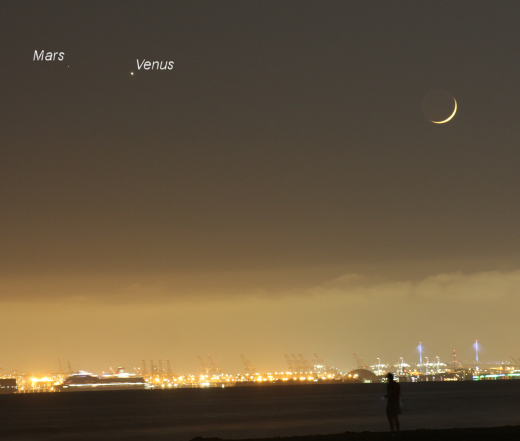
"This is a 3-second exposure with my Canon Digital Rebel T4i," says Mirjahangir. "Complete photo settings may be found here."
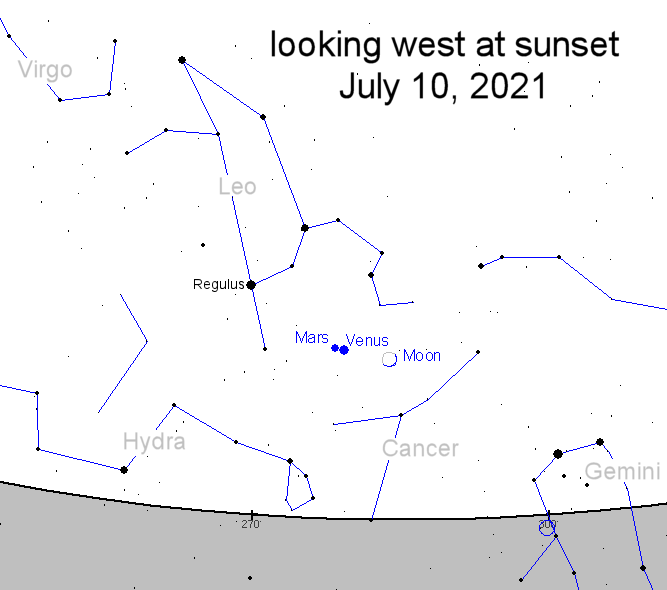
The best time to look is ~45 minutes after local sunset. The planets will be hanging low, so a clear view of the western horizon is essential. Brilliant Venus (mag. -3.9) pops out of the twilight first, followed later by fainter Mars (mag. +1.8). They won't be this close together again until May 11, 2034. Sky maps: July 10, 11, 12.
Realtime Space Weather Photo Gallery
Free: Spaceweather.com Newsletter
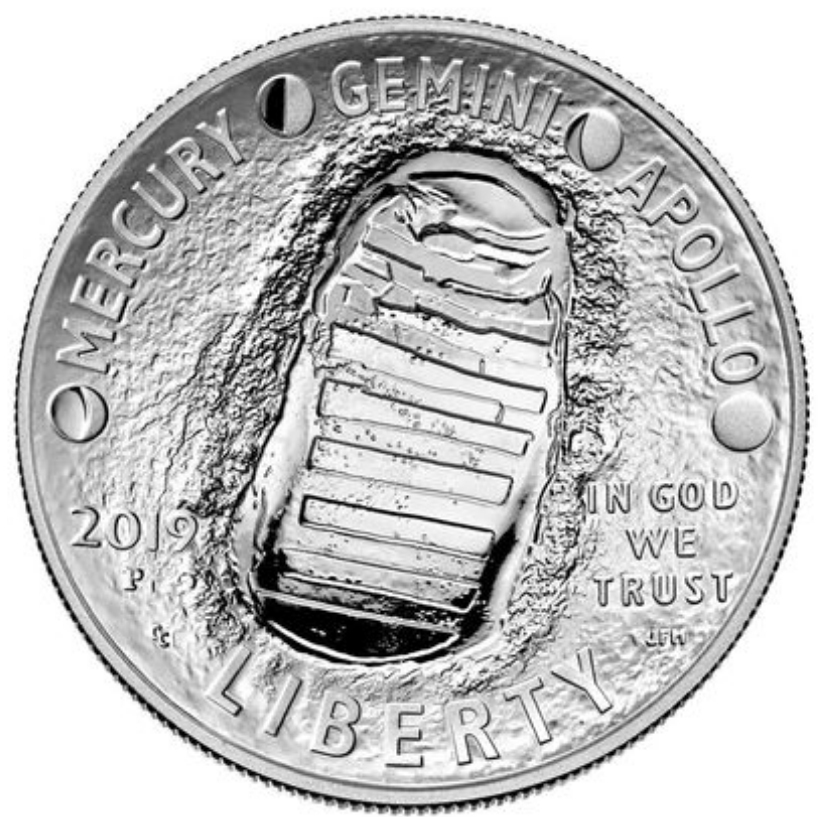
APOLLO 11 PROOF SILVER DOLLAR (COLLECTOR'S ITEM): Are you looking for a far-out gift? Consider this: On July 20, 2019 (the 50th anniversary of the Apollo 11 Moon landing), the students of Earth to Sky Calculus flew this rare proof silver dollar to the stratosphere:
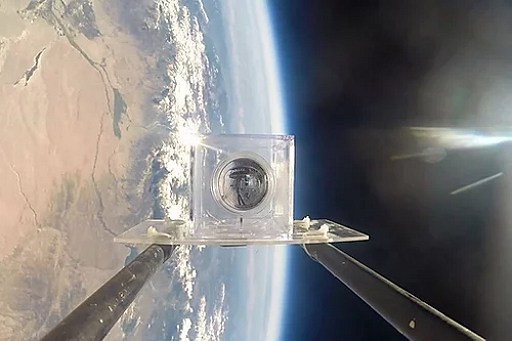
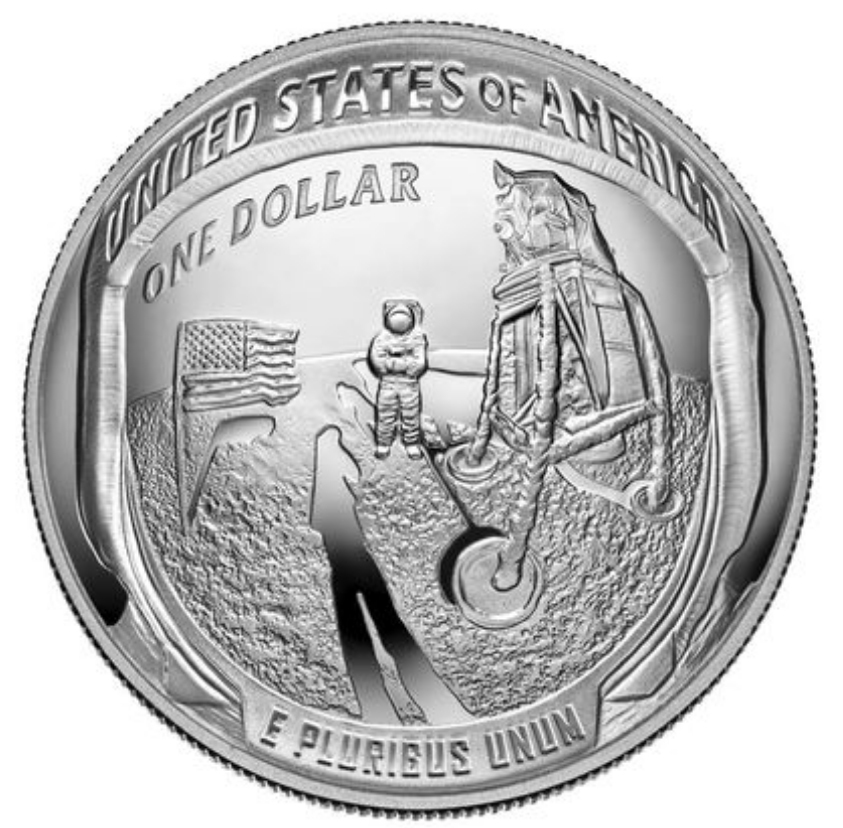
The US Mint created Apollo 11 coins to celebrate the first Moon landing--but you can no longer buy them from the Mint. You can, however, get one from Earth to Sky Calculus. The students are selling the collector's item for $229.95 to support their cosmic ray ballooning program.
The silver dollar is curved and reproduces the helmet of astronaut Buzz Aldrin. Reflected in Buzz's visor are Neil Armstrong, the United States flag, and the lunar lander. The opposite side of the coin shows Neil's iconic footprint on the Moon. Included is a greeting card showing the coin in flight and a certificate of authenticity.
Far Out Gifts: Earth to Sky Store
All sales support hands-on STEM education
Realtime Noctilucent Cloud Photo Gallery
Free: Spaceweather.com Newsletter
Realtime Aurora Photo Gallery
Free: Spaceweather.com Newsletter