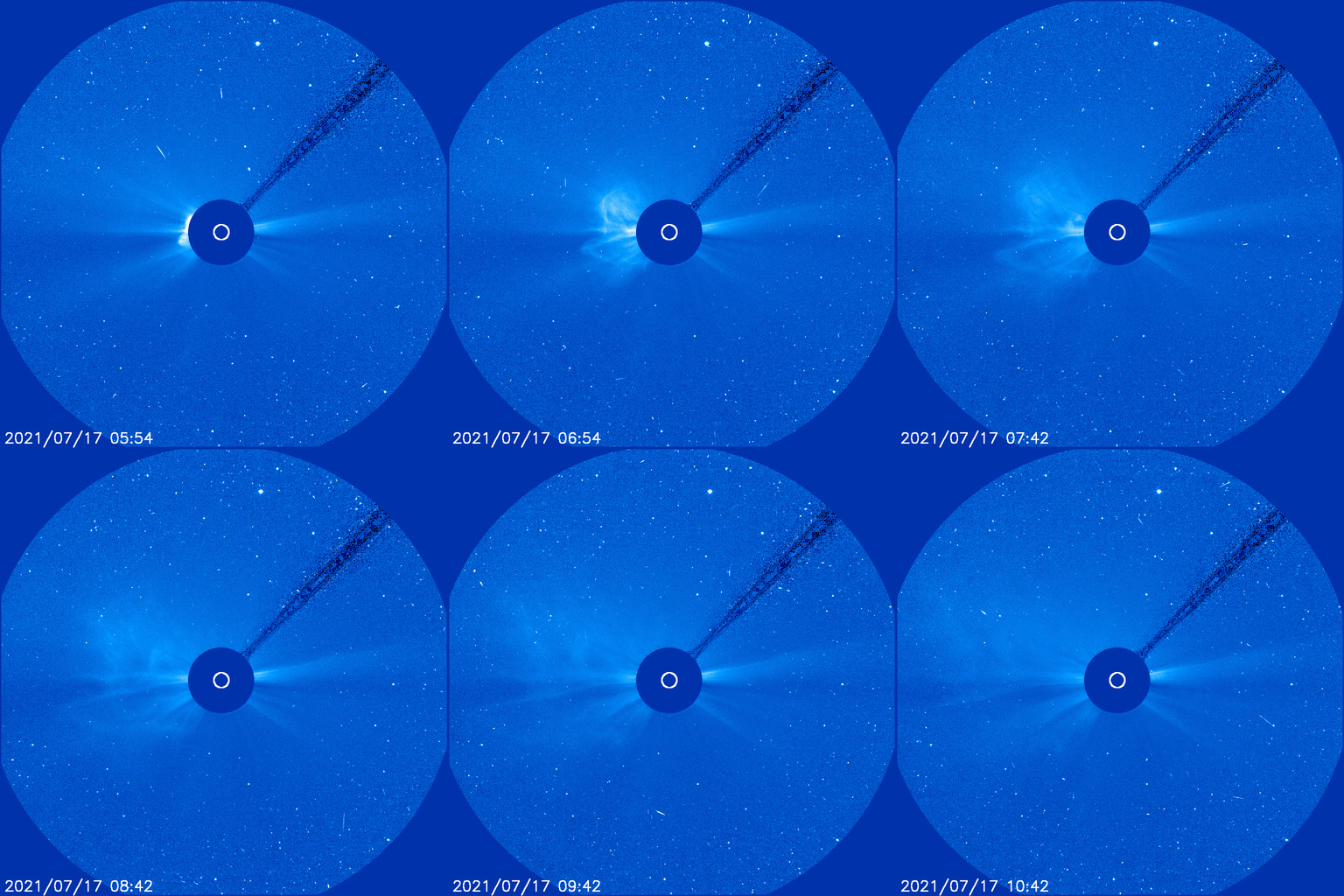
STRONG FARSIDE SOLAR ACTIVITY: Since July 13th, NASA and ESA spacecraft have observed multiple CMEs billowing away from the farside of the sun. The latest came today, July 17th, when a CME emerged from behind the sun's eastern limb: movie. It all adds up to an explosive farside sunspot group, which could turn to face Earth early next week. Solar flare alerts: SMS Text.
HIGH LATITUDE SUNSPOT: An unusual sunspot has emerged in the sun's southern hemisphere. Located 43 degrees south of the sun's equator, AR2844 is a rare high-latitude sunspot:

Sunspots are a mostly-equatorial phenomenon. According to the Solar-Terrestrial Center of Excellence, 95% of sunspots in the historical record have latitudes less than 30 degrees, and nearly three quarters were crowded within 20 degrees of the sun's equator.
AR2844 is an outlier, located 2 to 3 times as far from the equator as a typical sunspot. Since the Space Age began, only a handful of sunspots have been seen at such high latitudes. Now is the time to look for them. Research shows that high-latitude sunspots appear most often during the early years of solar cycles, and Solar Cycle 25 is just getting started.
Realtime Space Weather Photo Gallery
Free: Spaceweather.com Newsletter
SPRITE SIGHTINGS: Sometmes the best place to look for lightning is *above* the clouds. On July 14th, Petr Horalek witnessed eerie red forms leaping up from an electrical storm in Proseč, the Czech Republic:

"These are sprites," says Horalek. "I just had to share my joy at seeing them."
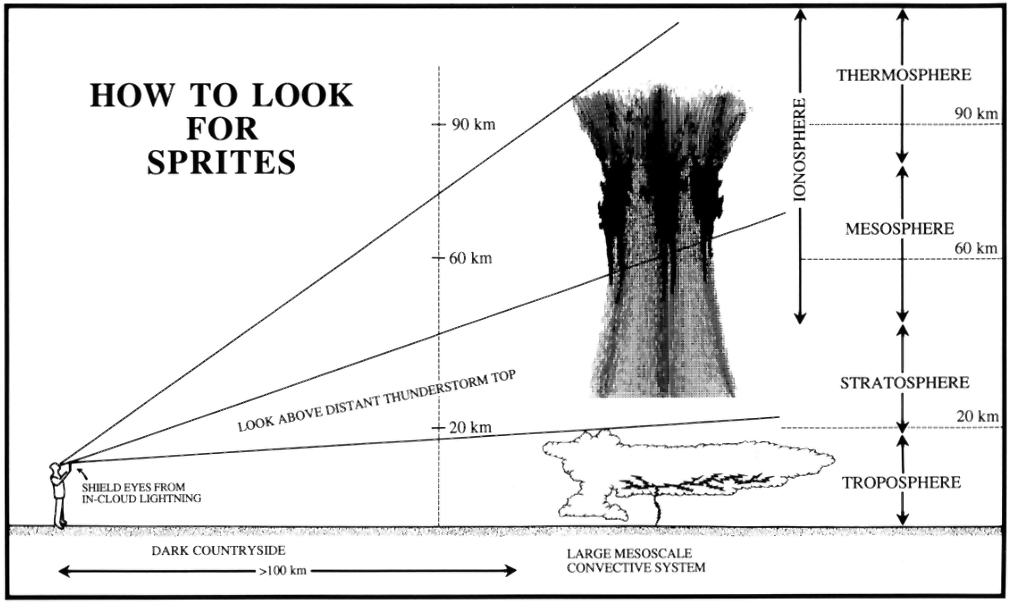
Glowing red because of nitrogen emissions in the upper atmosphere, sprites are a kind of counter-discharge provoked by positively-charged lightning bolts striking the ground below. The ones Horalek saw were almost 95 km high.
"Severe stormy weather over central Europe has been creating sprites," says Horalek. "I caught these as large thunderstorms were crackling over the distant High Tatras Mountains of Slovakia about 320 km away."
Realtime Sprite Photo Gallery
Free: Spaceweather.com Newsletter
RARE MR. SPOCK MUG: It's the logical way to wake up in the morning: Coffee in a rare Mr. Spock mug. On March 21, 2021, this unique ceramic collector's item flew to the stratosphere onboard an Earth to Sky Calculus cosmic ray research balloon:

You cannot buy these mugs anywhere on the internet--not even Amazon. But you can have one from Earth to Sky Calculus for $170.10. That's the serial number of the Enterprise divided by 10. The mug comes with a greeting card showing the item in flight and telling the story of its journey to the edge of space and back again. It's a great gift for any Trekkie!
Far Out Gifts: Earth to Sky Store
All sales support hands-on STEM education
Realtime Noctilucent Cloud Photo Gallery
Free: Spaceweather.com Newsletter
Realtime Aurora Photo Gallery
Free: Spaceweather.com Newsletter