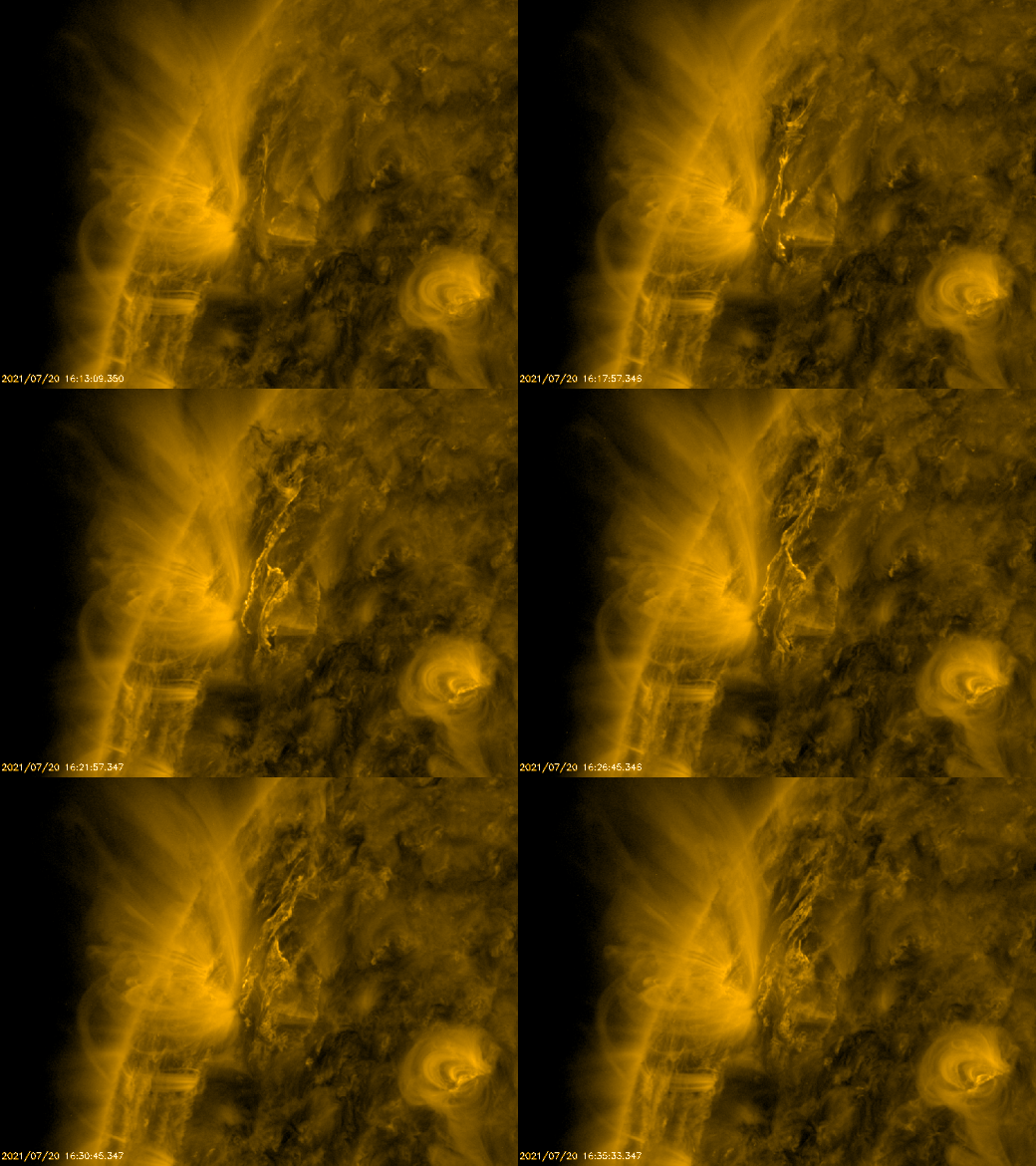
GEOMAGNETIC STORM WATCH: A filament of magnetism near sunspot AR2846 erupted on July 20th, sparking a B-class solar flare and hurling a cloud of plasma into space. Normally, the location of the blast site would rule out an impact on Earth. However, the explosion's debris squirted out sideways. New modeling by NOAA suggests that the edge of the cloud will strike Earth's magnetic field on July 23rd or 24th, sparking G1-class geomagnetic storms. Solar flare alerts: SMS Text.

NOCTILUCENT CLOUD UPDATE: Noctilucent cloud (NLC) season is now 8 weeks old. This animation from NASA's AIM spacecraft shows everything that has happened since the first clouds appeared in late May:

The last frame says it all: Noctilucent clouds are still bright and abundant. In fact, at the highest latitudes they are setting records.
"We're seeing more clouds at 80°N than in any other year since AIM was launched," says Cora Randall of the University of Colorado's Laboratory for Atmospheric and Space Research. "Cloud frequencies at 80°N are around 85%, whereas it's more typical to see frequencies of about 75%." ('Frequencies' are a measure of patchiness. 100% is complete coverage; 0% is no clouds at all.)
"This morning, I watched a fantastic display, the best of the year so far ," reports Marek Nikodem, who photographed the clouds from Szubin, Poland (53°N) on July 21st:
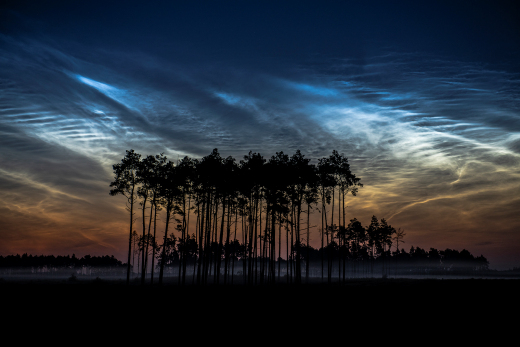
"It's not the end of the season yet," he says. Indeed, it's not.
NLCs are Earth's highest clouds. They form when summertime wisps of water vapor rise up to the edge of space, about 83 km high, and crystalize around disintegrated meteoroids. When you see one, you're literally seeing a cloud of frosted meteor smoke.
Earlier this summer, NLCs were seen in Europe as far south as the mediterranean coast of Spain (+37N). Given the current surge, another low-latitude excursion cannot be ruled out before the season ends in August. Watch for them!

Realtime Noctilucent Cloud Photo Gallery
Free: Spaceweather.com Newsletter
I NEED MY SPACE: Snoopy has been to space. On July 16, 2021, the students of Earth to Sky Calculus launched everyone's favorite Beagle to the stratosphere onboard a cosmic ray research balloon. Here is astronaut Snoopy floating more than 105,315 feet above Earth's surface:
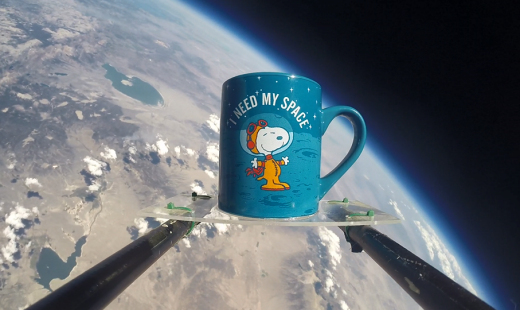
You can have it for $99.95. It's Peanuts for a cup from space! The students are selling Snoopy cups to support their cosmic ray monitoring program. Each one comes with a greeting card showing the cup in flight and telling the story of its trip to the stratosphere and back again.
Far Out Gifts: Earth to Sky Store
All sales support hands-on STEM education
Realtime Space Weather Photo Gallery
Free: Spaceweather.com Newsletter
Realtime Aurora Photo Gallery
Free: Spaceweather.com Newsletter