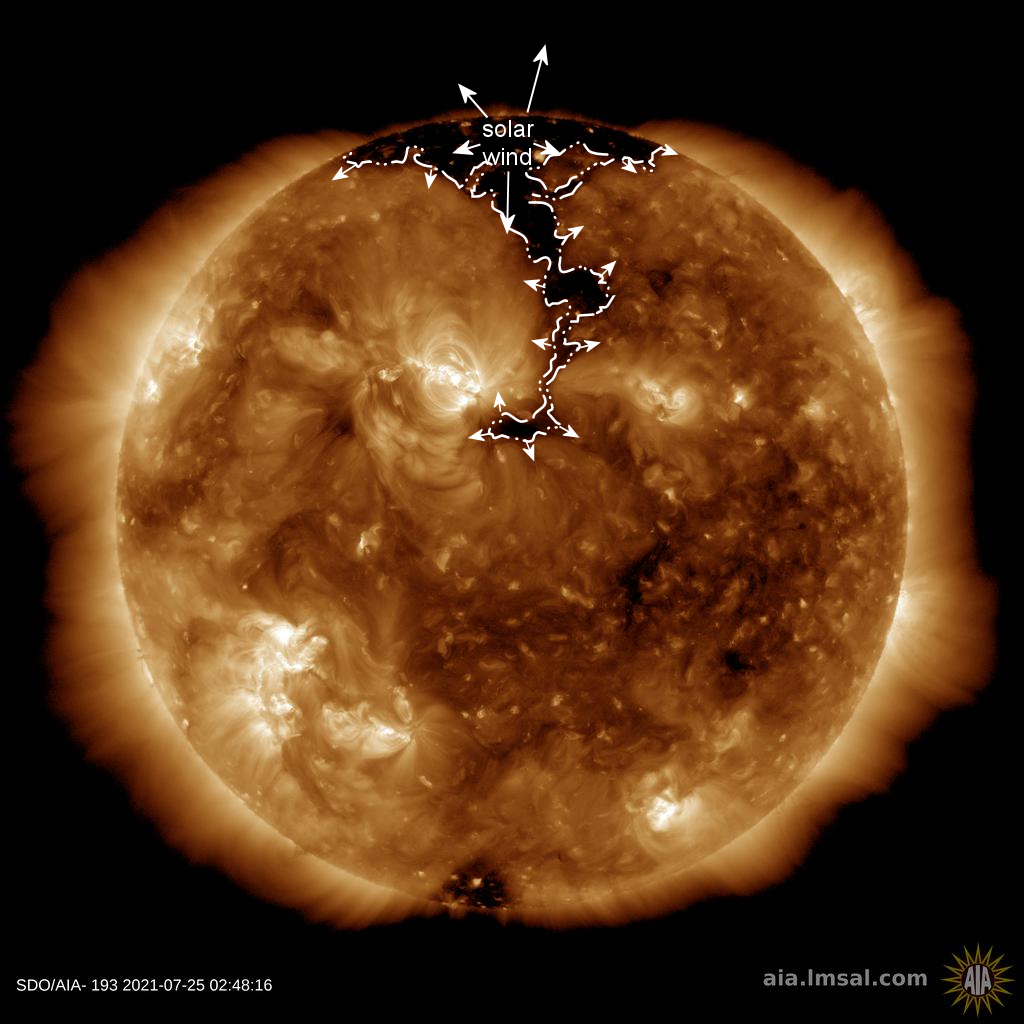
GEOMAGNETIC FORECAST: Today, Earth's magnetic field is quiet. It should stay that way until July 28th when a narrow stream of solar wind arrives. The gaseous material is flowing from a sinuous hole in the sun's atmosphere, and could trigger minor (Kp=4) geomagnetic unrest. Aurora alerts: SMS Text.
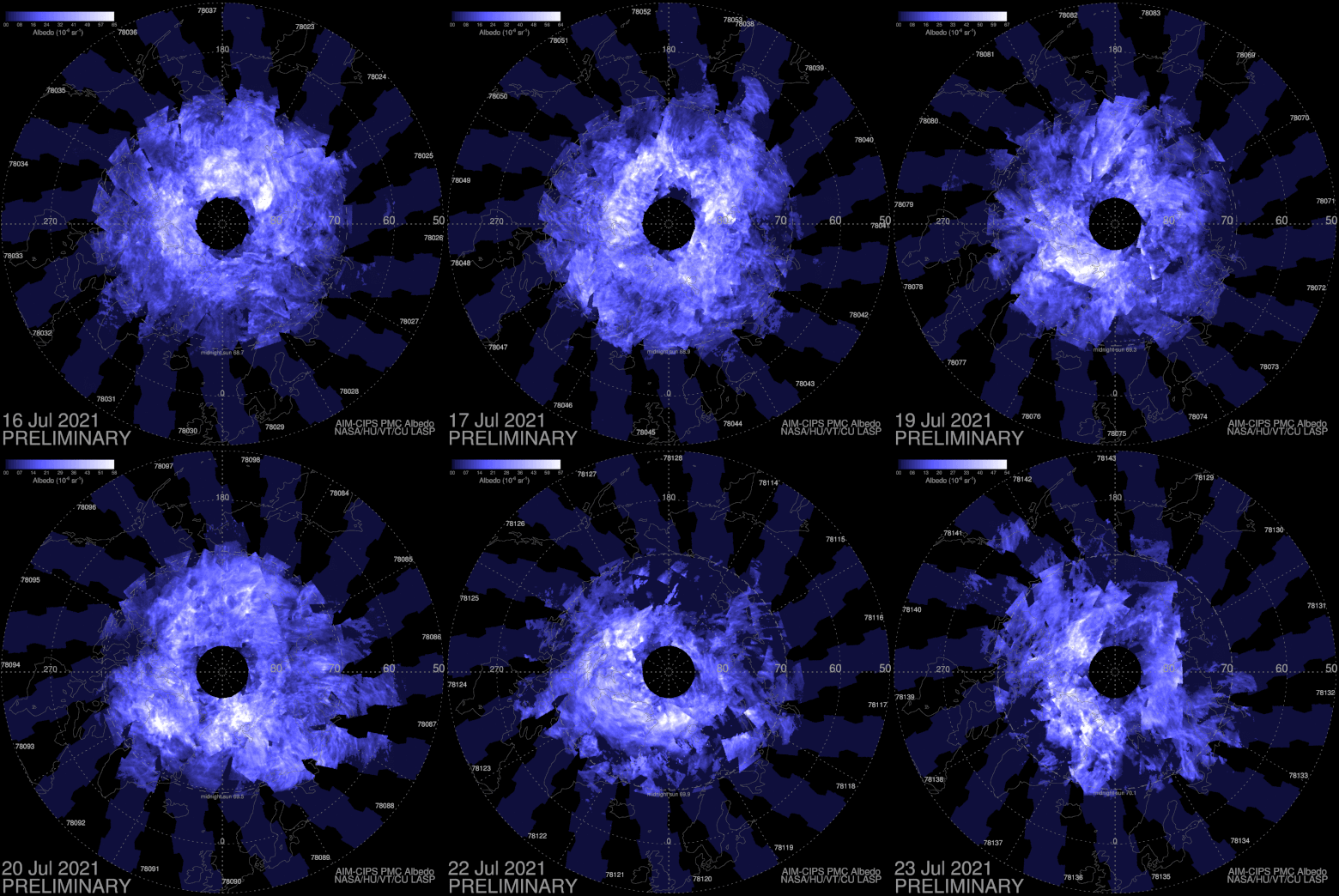
SUBSIDING NOCTILUCENT CLOUDS: After a long summer of record setting, noctilucent clouds (NLCs) are finally starting to subside. This 1-week animation of data from NASA's AIM spacecraft shows the recent contraction of the North Pole's noctilucent ring:
NLCs are Earth’s highest clouds. They form when summertime wisps of water vapor rise up to the edge of space, about 83 km high, and crystalize around disintegrated meteoroids. When you see one, you’re literally seeing a cloud of frosted meteor smoke.
It's not unusual for the clouds to retreat in late July. To show how noctilucent cloud cover typically changes during summer months, atmospheric scientist Cora Randall (University of Colorado LASP) made this plot:

These are data from AIM. Since the spacecraft was launched in 2007, NLCs have typically started their seasonal decline ~30 days after the summer solstice--that is, about now. To help us pick out the year 2021, Randall included a pane with all previous years colored grey; 2021 is highlighted in red.
"You'll see that although we've probably passed the peak, we're still seeing more clouds than average for this time of year," says Randall. "I don't think ground-based observers should put their cameras away quite yet!"
Indeed, even subsiding NLCs can put on a beautiful show. High-latitude observers often photograph them deep into August--sometimes alongside auroras in darkening Arctic skies. It doesn't get much better than that.
Realtime Space Weather Photo Gallery
Free: Spaceweather.com Newsletter
MIDNIGHT BLACK PEARL: Space is black--and so is this pearl. On July 22, 2021, the students of Earth to Sky Calculus launched the Midnight Pearl to the stratosphere onboard a cosmic ray research balloon. Here it is floating 96,785 feet above the Sierra Nevada mountains of central California:
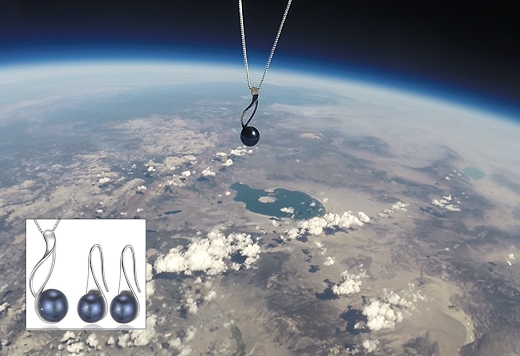
You can have it for $179.95--earrings included! Matching pearl earrings flew inside the payload among the cosmic ray sensors.
The students are selling space pearls to support their cosmic ray ballooning program. Wrapped in a sterling silver infinity twist, each Midnight Pearl comes with a greeting card showing the pendant in flight and telling the story of its trip to the edge of space.
Far Out Gifts: Earth to Sky Store
All sales support hands-on STEM education
Realtime Noctilucent Cloud Photo Gallery
Free: Spaceweather.com Newsletter
Realtime Aurora Photo Gallery
Free: Spaceweather.com Newsletter