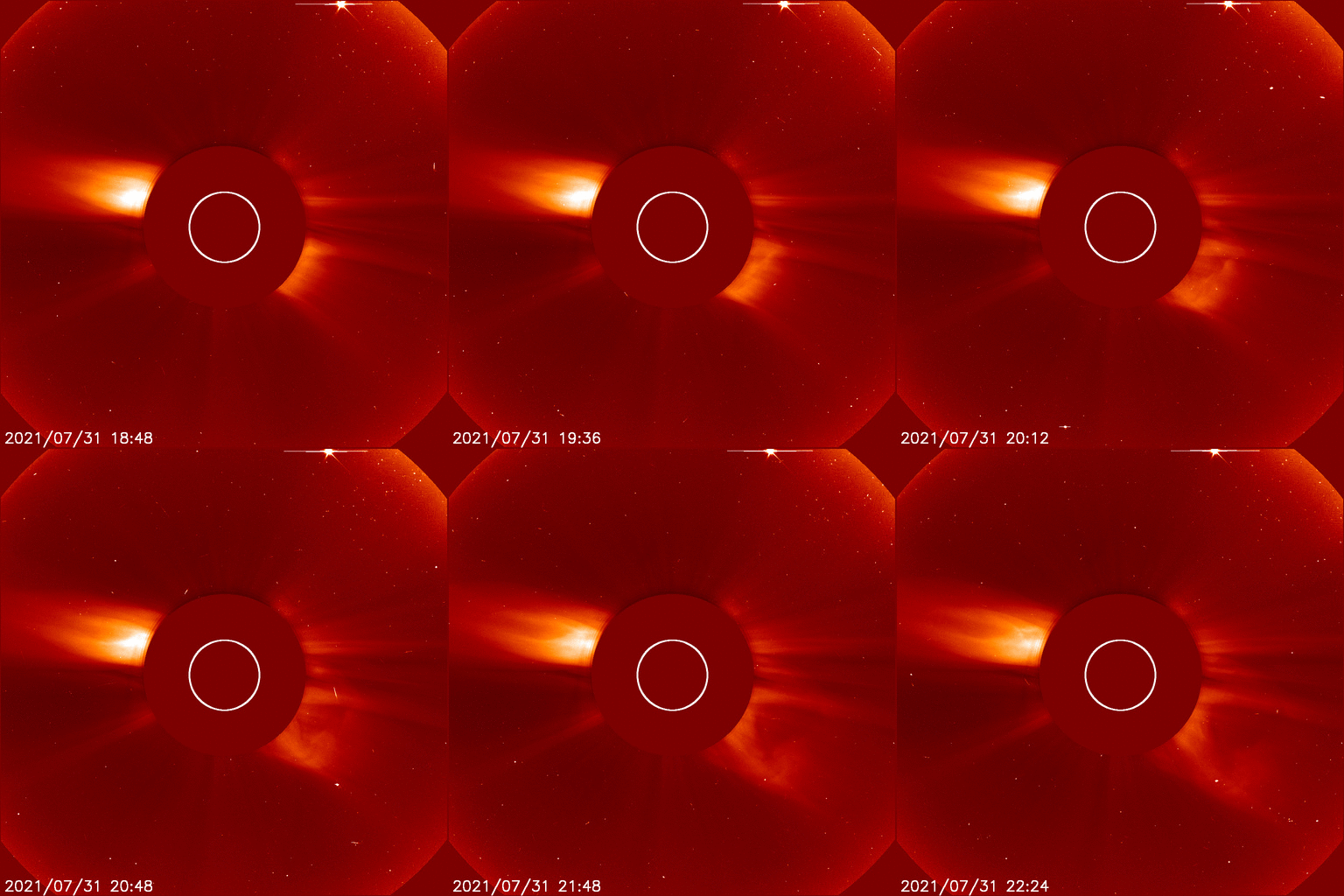
THE SUN CAN'T SHOOT STRAIGHT: Another CME is going to miss Earth. The off-target plasma cloud was hurled into space during the late hours of July 31st when the corpse of old sunspot AR2849 erupted, producing a B2-class solar flare. Like other CMEs in recent weeks, this one looks like it will sail wide of our planet. Aurora alerts: SMS Text.
SATURN'S RINGS ARE SURGING IN BRIGHTNESS: Tonight, Aug. 1-2, Saturn will be "at opposition"--that is, opposite the sun in the skies of Earth. Whenever this happens, Saturn's rings surge in brightness. Why? Scroll down for the explanation; on the way, check out this photo taken by Jefferson Teng of Bandar Lampung, Indonesia, on July 27th:
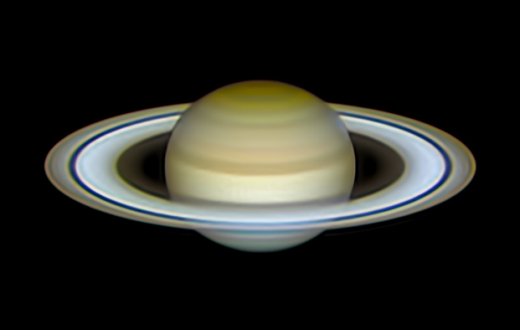
Teng took the picture at local midnight using his 11-inch telescope. "The rings were very bright," he says.
They're about to get even brighter. It's called the "opposition effect." Saturn's rings are made of frozen chunks ranging in size from dust to houses. Sunlight backscattered from those ice particles causes the ring system to shine even more than usual for a few days around opposition. The exact mechanism involves shadow-hiding and possibly coherent backscattering.
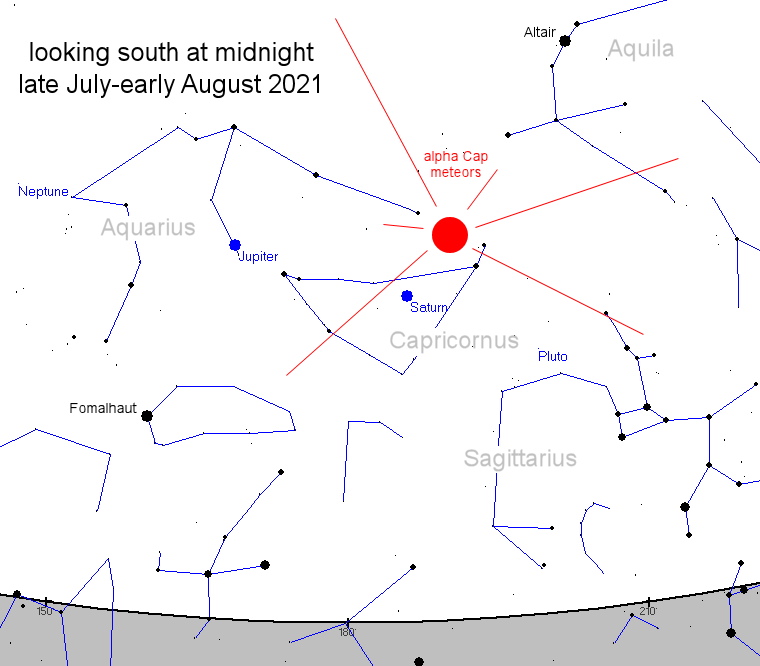
To find Saturn, go outside around midnight and look south. Jupiter and Saturn are shining brightly side-by-side in the constellation Capricorn; Saturn is the golden one on the right. This year, the two planets are bracketing the radiant of the alpha Capricornid meteor shower, so you might see a fireball, too: sky map.
Realtime Space Weather Photo Gallery
Free: Spaceweather.com Newsletter
UNUSUAL MONSOON RAINBOW: Rainbows are shaped like a wheel. On July 29th, Gregg Ruppel saw the spokes. "A few rays of sunlight pierced the clouds as a powerful monsoon storm approached Tucson," explains Ruppel. This is how it looked:
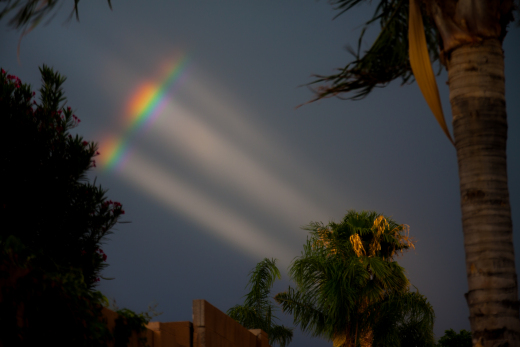
Spokes are simply the shadows of clouds interrupting the rainbow's normal arc. Sometimes, when clouds are moving fast across the sky, the rainbow wheel appears to rotate. That would be amazing to see. Maybe the next monsoon...
A BEAGLE AT THE EDGE OF SPACE: Snoopy has been to the stratosphere. On July 16, 2021, the students of Earth to Sky Calculus launched everyone's favorite Beagle onboard a cosmic ray research balloon. Here is astronaut Snoopy floating more than 105,315 feet above Earth's surface:
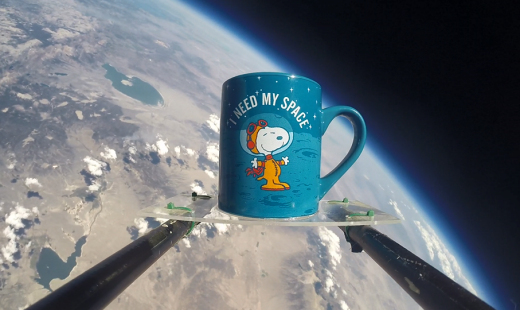
You can have it for $99.95. It's Peanuts for a cup from space! The students are selling Snoopy cups to support their cosmic ray monitoring program. Each one comes with a greeting card showing the cup in flight and telling the story of its trip to the stratosphere and back again.
Far Out Gifts: Earth to Sky Store
All sales support hands-on STEM education
Realtime Noctilucent Cloud Photo Gallery
Free: Spaceweather.com Newsletter
Realtime Aurora Photo Gallery
Free: Spaceweather.com Newsletter