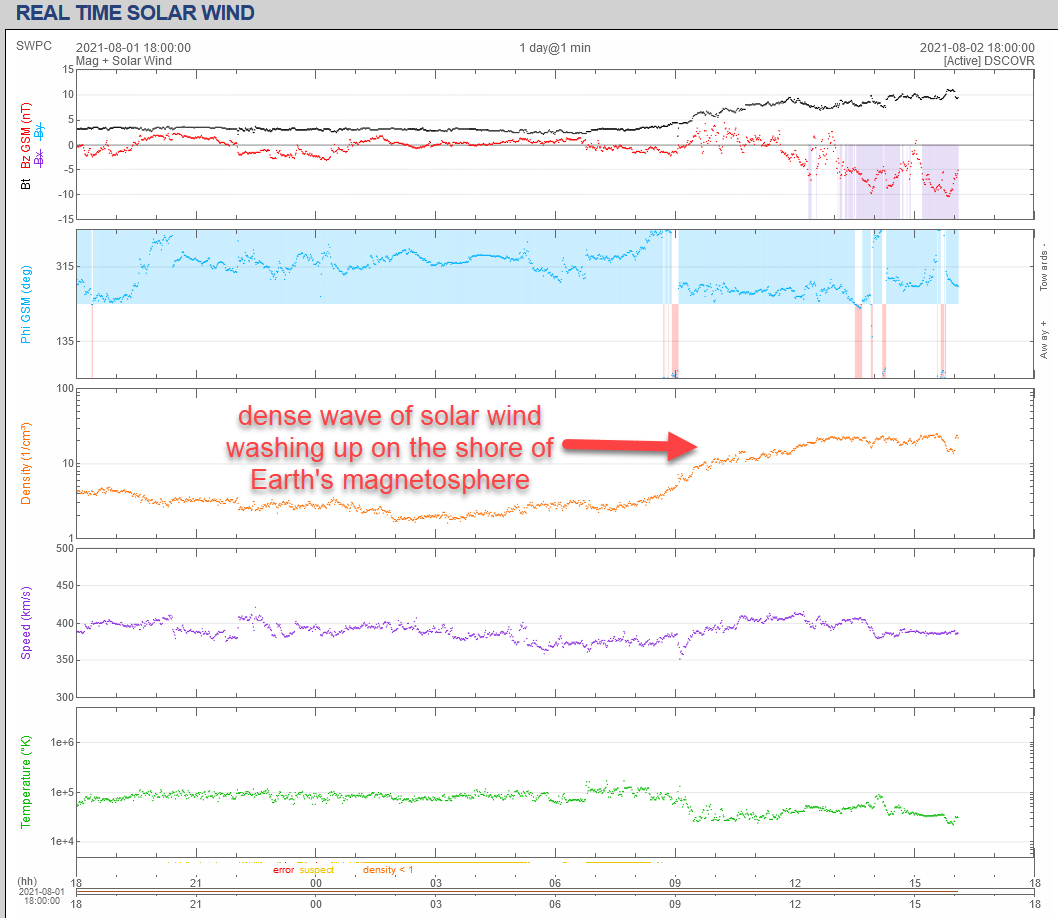
DENSE SOLAR WIND SPARKS GEOMAGNETIC STORM: A dense wave of solar wind gently crashed against Earth's magnetic field on Aug. 2nd, sparking a G1-class geomagnetic storm. It may have been a ripple from a passing CME--one of several "near miss CMEs" that left the sun in late July. Twilight auroras mixed with noctilucent clouds were seen in Norway. Aurora alerts: SMS Text.

SOLAR MAX MIGHT COME A YEAR EARLY: Solar Cycle 25 is heating up faster than expected. The latest sign may be found in sunspot counts from July 2021. Continuing a trend that started last year, they overperform the official forecast:
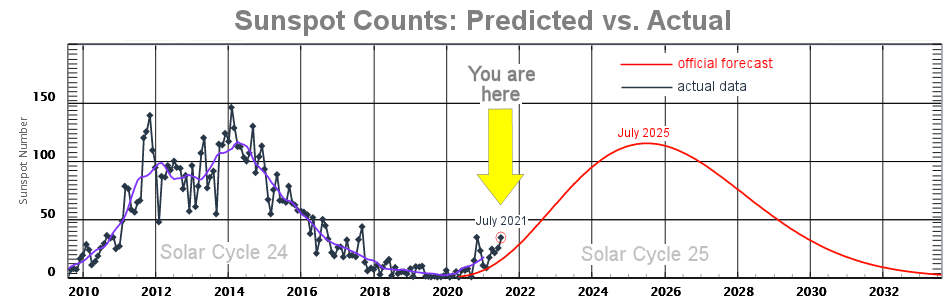
Issued by the NOAA/NASA Solar Cycle 25 Prediction Panel in 2019, the official forecast calls for Solar Cycle 25 to peak in July 2025. However, a better fit to current data shows Solar Cycle 25 peaking in October 2024. This is just outside the 8-month error bars of the Panel's forecast.

July 2021 was a remarkable month. Solar Cycle 25 crossed multiple thresholds, including its first X-flare and, at one point, 6 sunspots on the solar disk. The last time so many sunspots were seen at the same time was Sept. 2017 (SWx archive). One farside CME in July was so strong it affected Earth despite being on the "wrong" side of the sun. A handful of other CMEs narrowly missed our planet.
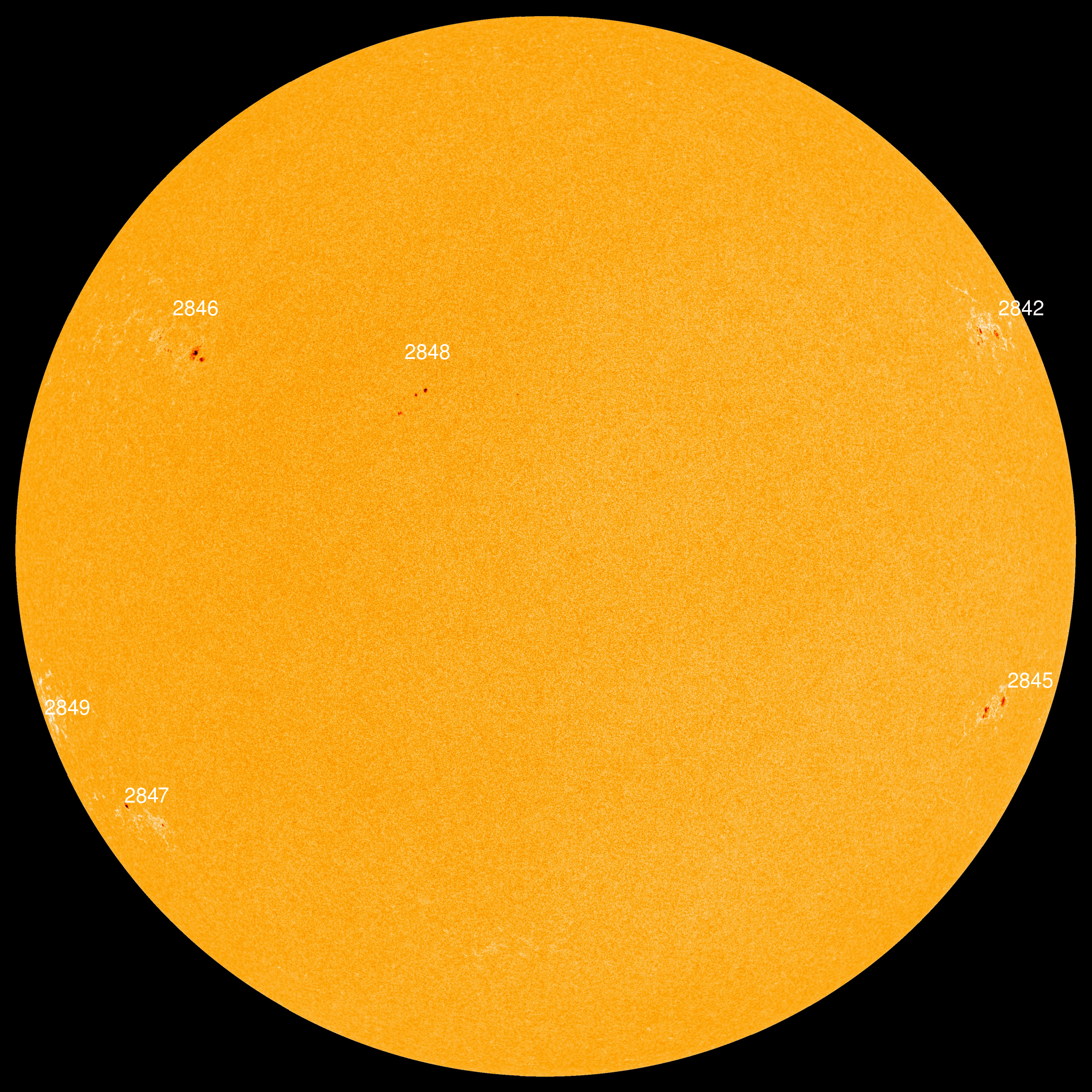
If solar activity increases apace, some of those blows will soon begin to land. Stay tuned. Aurora alerts: SMS Text.
A SUNSPOT MADE IN CHINA: What does a world-famous astrophotographer do while on vacation? Astrophotography. On July 27th, Theirry Legault was sitting on a Mediterranean beach when he snapped this picture of China's new space station transiting the sun:
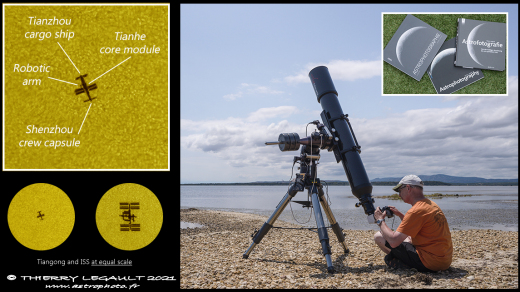
"A few days of vacation with my 8" refractor along the Mediterranean Sea produced this picture of China's Tiangong Space Station," says Legault. Backlit by the sun, "the station's silhouette shows all 3 of the station's modules with their solar arrays and the robotic arm."
China's new space station is only 3 months old. The core module was launched April 29th, and it has since been joined by a cargo carrier and a spacecraft carrying 3 astronauts, now living on board. China plans to add two more modules in 2022, turning Tiangong into a Mir-class facility. The final product will weigh nearly 70 tons with living quarters, science labs and even a Hubble-class telescope to view the cosmos.
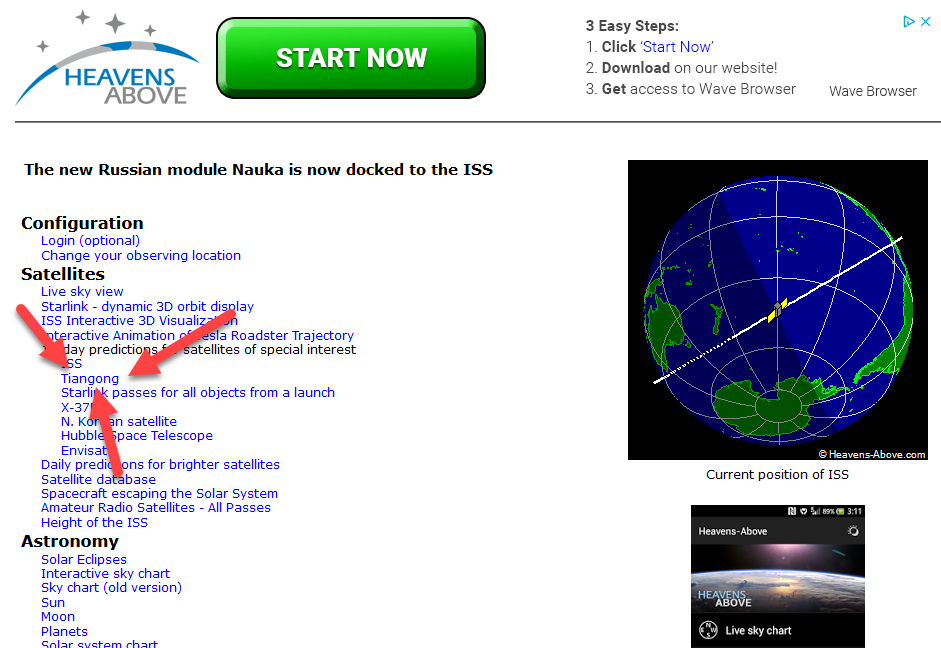
Readers, you can see the space station with your own eyes. Visit Heavens-Above.com and select flyby predictions for Tiangong. It glows in the night sky as brightly as a 1st magnitude star.
Realtime Space Weather Photo Gallery
Free: Spaceweather.com Newsletter
THE GALACTIC CENTER PENDANT: Are you looking for a far-out gift? Consider the Galactic Center Pendant. On July 22, 2021, the students of Earth to Sky Calculus launched this handcrafted glass orb to the stratosphere onboard a cosmic ray research balloon. At the apex of the flight it floated 96,785 feet above Earth's surface:
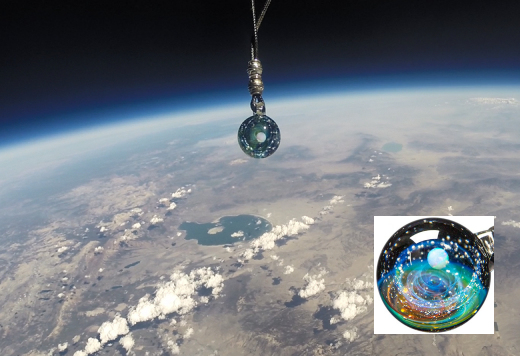
You can have it for $129.95. The students are selling Galactic Center pendants to support their cosmic ray ballooning program. At the orb's core is a nugget of blue opal surrounded by a swirl of air-bubble stars. Each one is unique and comes with a greeting card showing the necklace in flight.
Far Out Gifts: Earth to Sky Store
All sales support hands-on STEM education
Realtime Noctilucent Cloud Photo Gallery
Free: Spaceweather.com Newsletter
Realtime Aurora Photo Gallery
Free: Spaceweather.com Newsletter