HOLES IN THE SUN'S ATMOSPHERE: Two and possibly three holes in the sun's atmosphere are facing Earth today. Emerging streams of solar wind could reach our planet on Aug. 6th, sparking minor geomagnetic storms. Aurora alerts: SMS Text.

SOLAR MAX MIGHT COME A YEAR EARLY: Solar Cycle 25 is heating up faster than expected. The latest sign may be found in sunspot counts from July 2021. Continuing a trend that started last year, they overperform the official forecast:
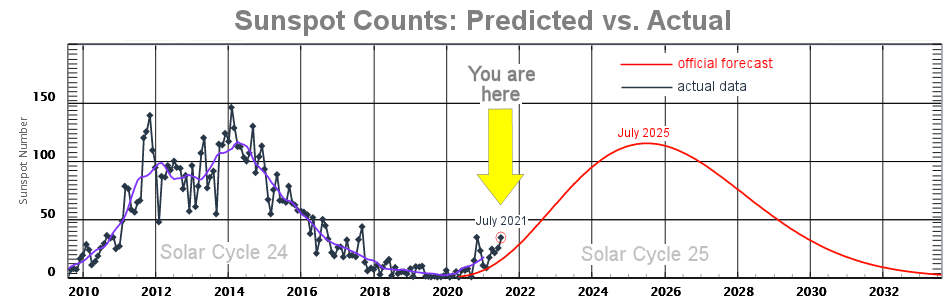
Issued by the NOAA/NASA Solar Cycle 25 Prediction Panel in 2019, the official forecast calls for Solar Cycle 25 to peak in July 2025. However, a better fit to current data shows Solar Cycle 25 peaking in October 2024. This is just outside the 8-month error bars of the Panel's forecast.

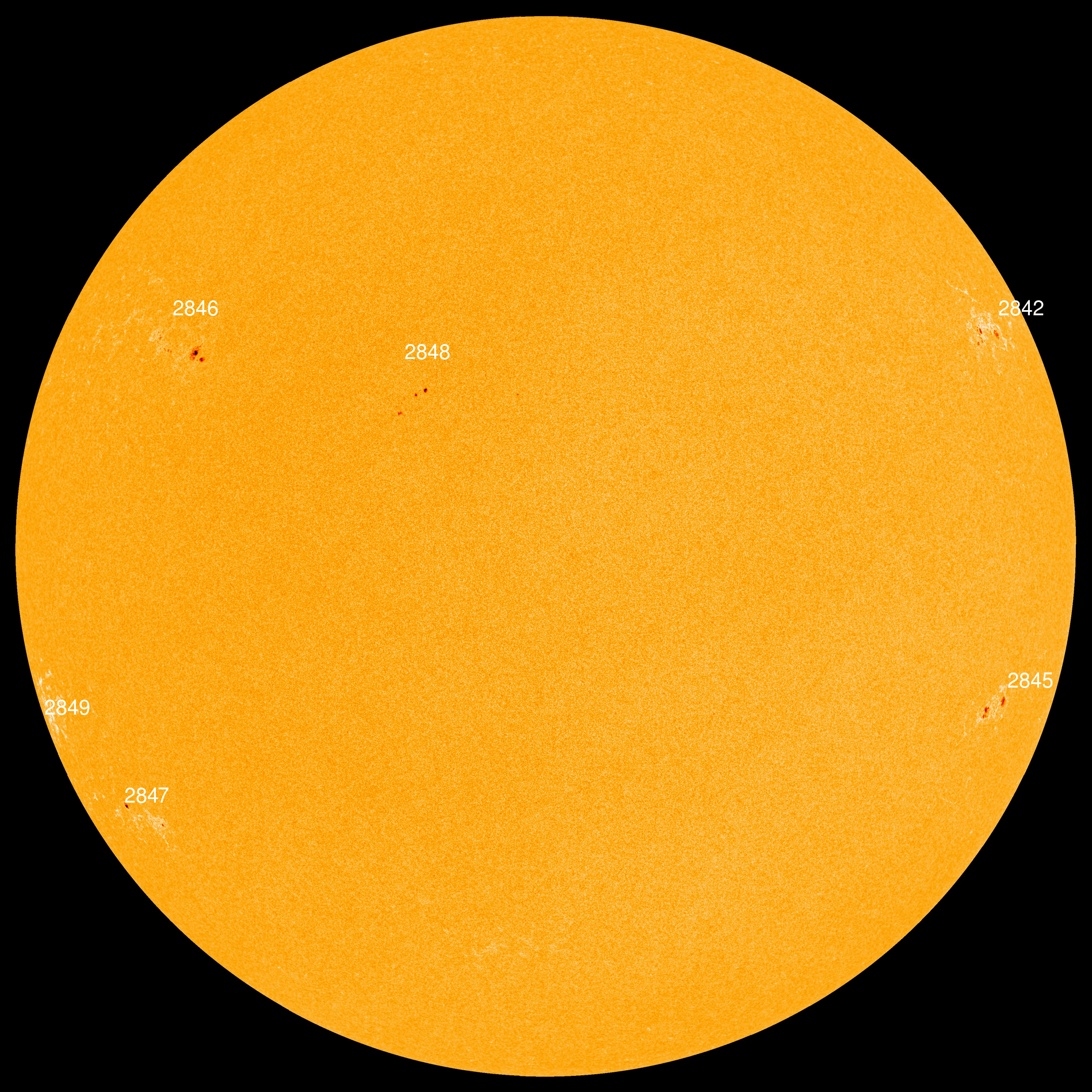
July 2021 was a remarkable month. Solar Cycle 25 crossed multiple thresholds, including its first X-flare and, at one point, 6 sunspots on the solar disk. The last time so many sunspots were seen at the same time was Sept. 2017 (SWx archive). One farside CME in July was so strong it affected Earth despite being on the "wrong" side of the sun. A handful of other CMEs narrowly missed our planet.
If solar activity increases apace, some of those blows will soon begin to land. Stay tuned. Aurora alerts: SMS Text.
Realtime Space Weather Photo Gallery
Free: Spaceweather.com Newsletter
THE PERSEID METEOR SHOWER IS UNDERWAY: So it begins. Earth is entering a stream of debris from Comet 109P/Swift-Tuttle, source of the annual Perseid meteor shower. Although it won't peak until next week, the shower is already active. NASA cameras have detected 30 Perseid fireballs over the USA this week (so far), and Petr Horálek photographed this beauty burning up over the Czech Republic:
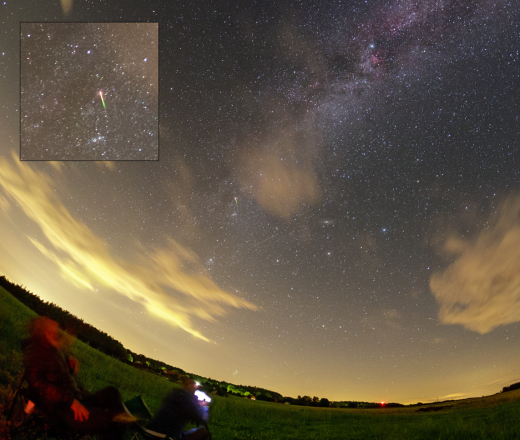
"I captured the first Perseid of the year over Proseč on Aug. 3rd," reports Horálek. "Its rainbow hues were visible despite local light pollution."
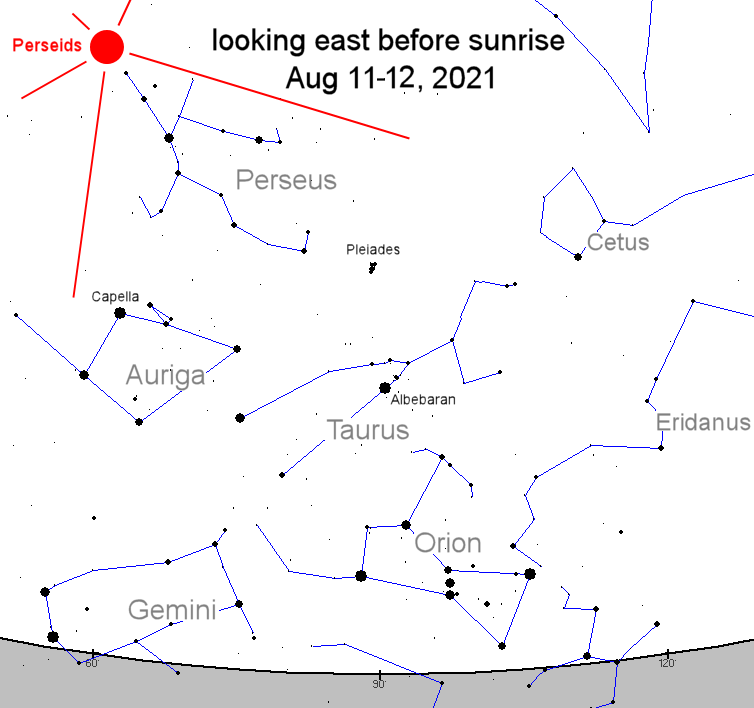
When is the peak? The night of Aug. 11-12 will probably be best, with adjacent nights only a smidgen less active. Perseids may be seen at any time after ~10 pm local time. Rates increase after midnight when the constellation Perseus is high in the sky. Pro tip: Avoid city lights!
Realtime Perseid Photo Gallery
Free: Spaceweather.com Newsletter
TO BOLDLY GO WHERE NO MUG HAS GONE BEFORE: There's nothing like morning coffee in a cup from space. On April 23, 2021, this rare ceramic Capt. Kirk mug flew to the stratosphere onboard an Earth to Sky Calculus cosmic ray research balloon. At the apex of the flight, it floated 97,438 feet above the Sierra Nevada mountains of central California:
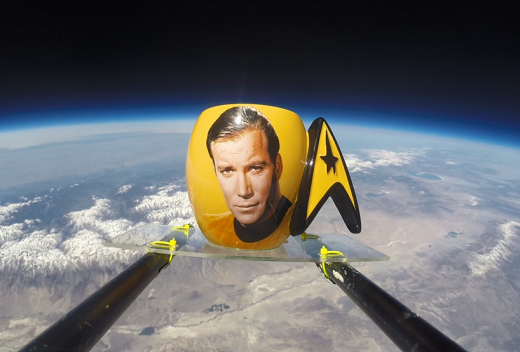
You can have it for $170.10. That's the serial number of the Enterprise divided by 10. The students are selling Star Trek mugs to support their cosmic ray ballooning program. Each one holds 16 oz. of steaming hot Raktajino (Klingon coffee) and comes with a greeting card showing the collector's item in flight.
Far Out Gifts: Earth to Sky Store
All sales support hands-on STEM education
Realtime Noctilucent Cloud Photo Gallery
Free: Spaceweather.com Newsletter
Realtime Aurora Photo Gallery
Free: Spaceweather.com Newsletter