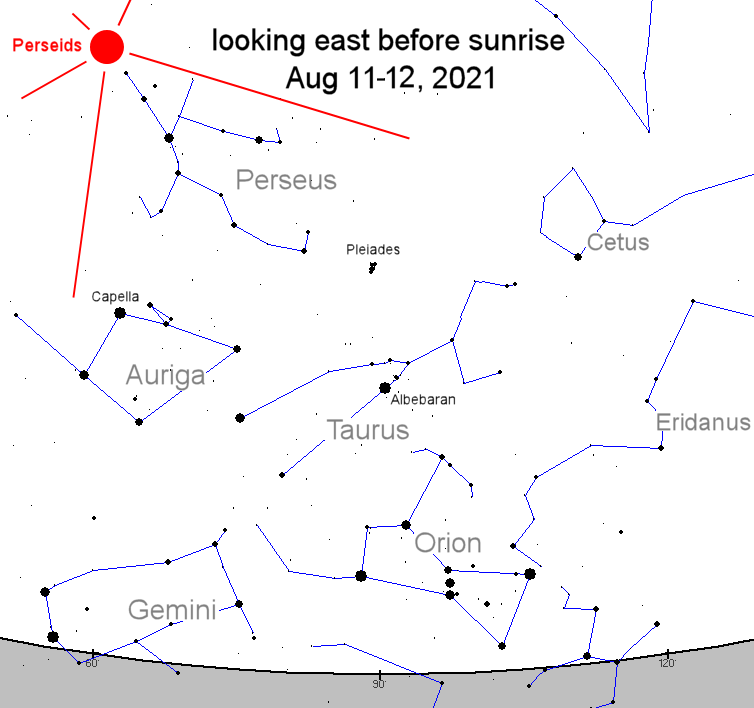
PERSEID METEOR SHOWER UPDATE: The annual Perseid meteor shower is intensifying with peak activity expected tonight and tomorrow. International observers are currently reporting as many as 30 Perseids per hour--a rate that could triple during the next 24 hours. When should you look? The dark hours before sunrise on Thursday, Aug. 12th, are probably best. More: observing tips, sky map.
A PERSEID METEOR AND SPRITES: It's late summer. Powerful thunderstorms are crawling across the US-Mexico border. At the same time, specks of dust from Comet 109P/Swift-Tuttle are peppering Earth's atmosphere. The stage is set for close encounters like this:
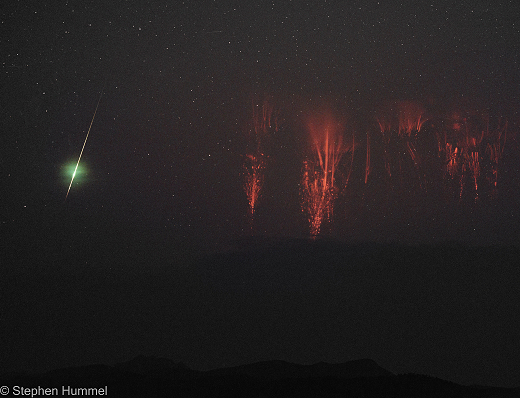
Stephen Hummel took the picture from the McDonald Observatory in Texas. "I was photographing sprites on Aug. 8th when this Perseid meteor appeared," he says. "The southern border has been very stormy this past week. In the past two nights alone I've photographed more than 50 TLEs. This capture stood out because of the Perseid."
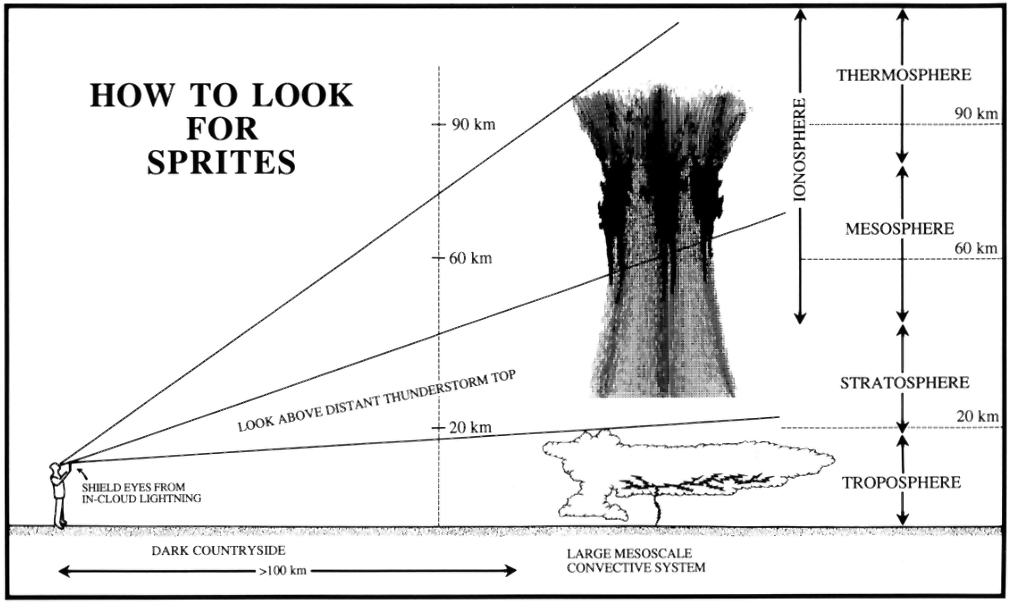
This won't be the last time a Perseid photobombs a bunch of sprites. The meteor shower is expected to peak on the nights of Aug. 11th through 13th as Earth passes the core of Comet Swift-Tuttle's debris zone. Meanwhile, the weather forecast calls for more storms in the hot desert southwest. Photographers, point your cameras just above the cloudtops.
Realtime Space Weather Photo Gallery
Free: Spaceweather.com Newsletter
A NOVA MADE OF HYDROGEN: 5000 light years away in the constellation Ophiuchus, white dwarf star RS Oph is busy exploding. Astronomers around the world are monitoring the debris, which is now shining brightly enough to see with the naked eye. What is the debris made of? The answer appears to be "hydrogen":
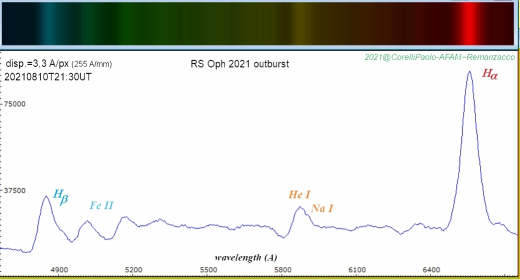
Italian astronomer Paolo Corelli obtained this spectrum last night. "I used a homemade Littrow spectroscope and an 8-inch Celestron telescope," he says. "The hydrogen line was strong."
It makes sense. The white dwarf is stripping hydrogen gas from a nearby red giant. The material accumulates on the surface of the white dwarf until the temperature reaches 10 million Kelvin; then, a runaway thermonuclear reaction ejects unburnt hydrogen into a rapidly-expanding shell.
Corelli's spectrum shows that the nova's glowing shell also contains a sprinkling of helium, sodium and iron. Monitoring the spectrum in the nights ahead will reveal how these elements disperse, becoming the "star stuff" of future solar systems.
THIS MOONSTONE HAS TOUCHED SPACE: Are you looking for a far-out gift? Nothing says "I love you" like a moonstone from the edge of space. The students of Earth to Sky Calculus flew this one wrapped in a hand-crafted sterling silver Celtic love knot 35.1 km (115,158 feet) above Earth's surface:
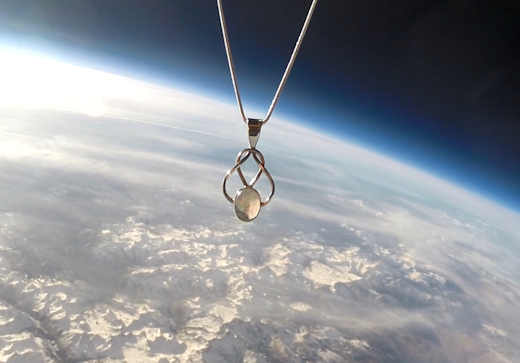
You can have it for $179.95. The students are selling these pendants to support their cosmic ray ballooning program. Each one comes with a greeting card showing the item in flight and telling the story of its journey to the edge of space. All sales support the Earth to Sky Calculus cosmic ray ballooning program and hands-on STEM research.
Far Out Gifts: Earth to Sky Store
All sales support hands-on STEM education
Realtime Noctilucent Cloud Photo Gallery
Free: Spaceweather.com Newsletter
Realtime Aurora Photo Gallery
Free: Spaceweather.com Newsletter