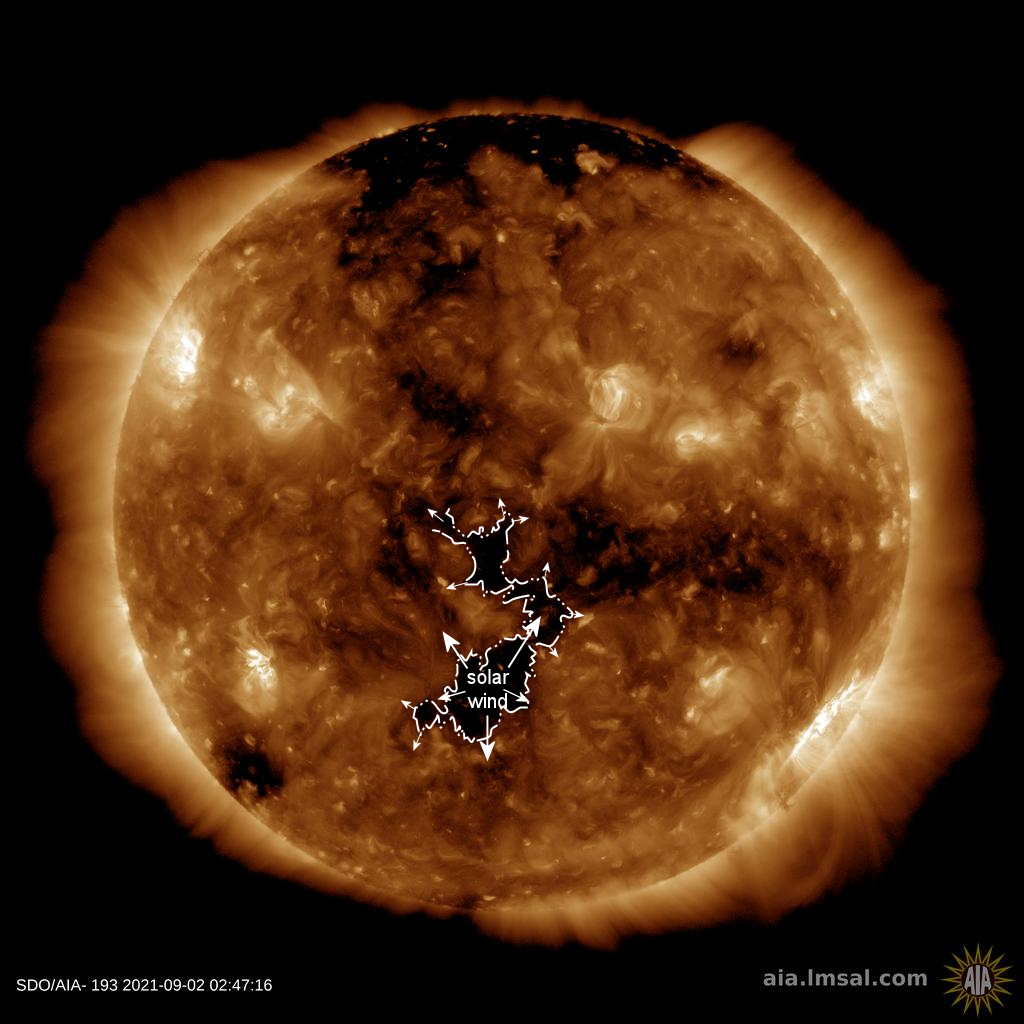
SOLAR WIND STREAM: A minor stream of solar wind is approaching Earth. Estimated time of arrival: Sept. 6th. Geomagnetic unrest, but not geomagnetic storms, are expected when the gaseous material arrives. "Unrest" might be enough to spark high-latitude auroras; see below. Aurora alerts: SMS Text.
AURORAS FOR NO PARTICULAR REASON: No solar flares. No CMEs. No problem. Last night in Minnesota, Greg Ash photographed auroras without any special solar activity:
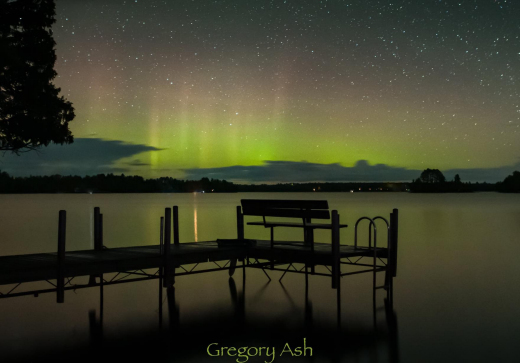
"A red fireball streaked above the lake during this 30 second aurora exposure on Sept. 5th," says Ash. "The bright meteor was outside my camera's field of view, but it was a treat to see!"
Where did the auroras come from? It's September, and at this time of year auroras can appear for no particular reason. During weeks around equinoxes, cracks open in Earth's magnetic field. Ambient solar wind flows through the gaps to power random episodes of geomagnetic unrest. It's called the "Russell-McPherron effect." Not only does this create unpredictable auroras, like the ones Ash saw, but also it can amplify the effect of predicted events such as the solar wind stream due to arrive on Sept. 6th.

Realtime Aurora Photo Gallery
Free: Spaceweather.com Newsletter
SIX SUNSPOT GROUPS: For most of the past three years, the sun has been absolutely blank. Today the sun has *six* sunspot groups. They're popping up all over the solar disk, as shown in this image taken by Martin Wise of Trenton, Florida:
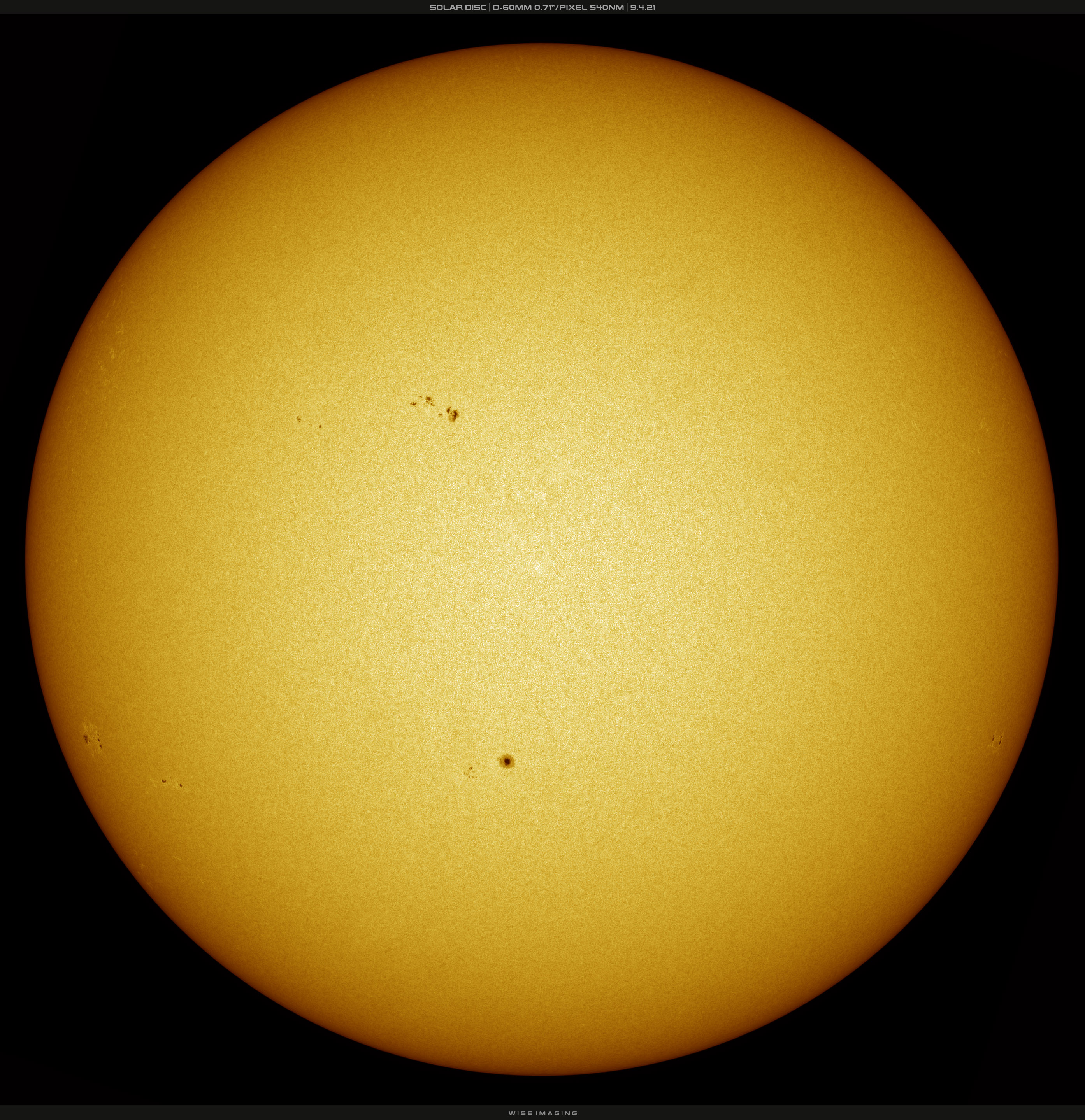
The sudden profusion of so many sunspots is a sign of strength for young Solar Cycle 25. The solar cycle is actually running ahead of schedule. NOAA and NASA predicted that it will peak in the year 2025. Outbreaks like this one support the idea that Solar Max could come a year early.
Realtime Space Weather Photo Gallery
Free: Spaceweather.com Newsletter
THIS IS *REAL* MONEY FROM SPACE: Earlier this year, the US Mint released a reverse-proof dollar coin honoring the Hubble Space Telescope. You can no longer buy these coins from the Mint, but you can get some from Earth to Sky Calculus. The students launched the coins to the stratosphere onboard a cosmic ray research balloon:
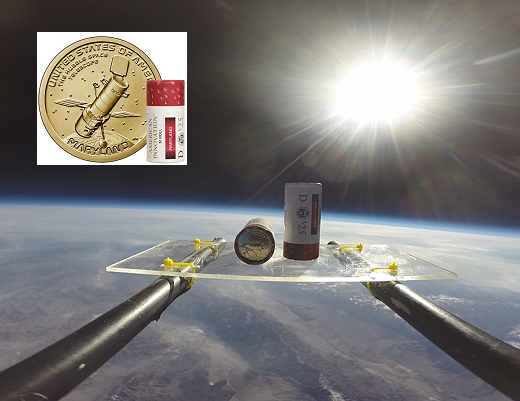
You can buy one coin for $49.95. Each coin comes with a greeting card showing the money in flight and telling the story of its trip to the stratosphere. Best of all, this is real money! You can actually spend it. All sales support hands-on STEM research.
Far Out Gifts: Earth to Sky Store
All sales support hands-on STEM education