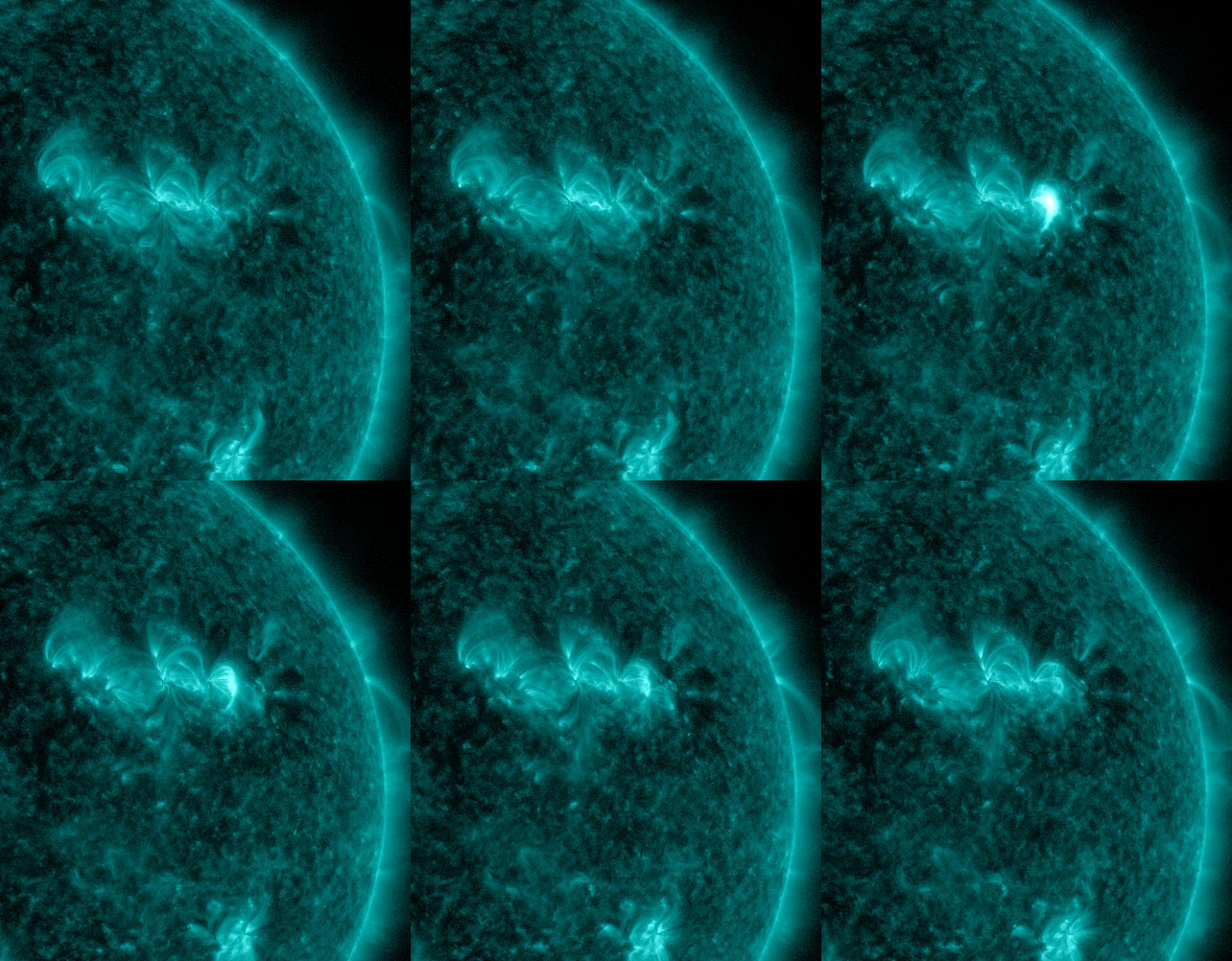
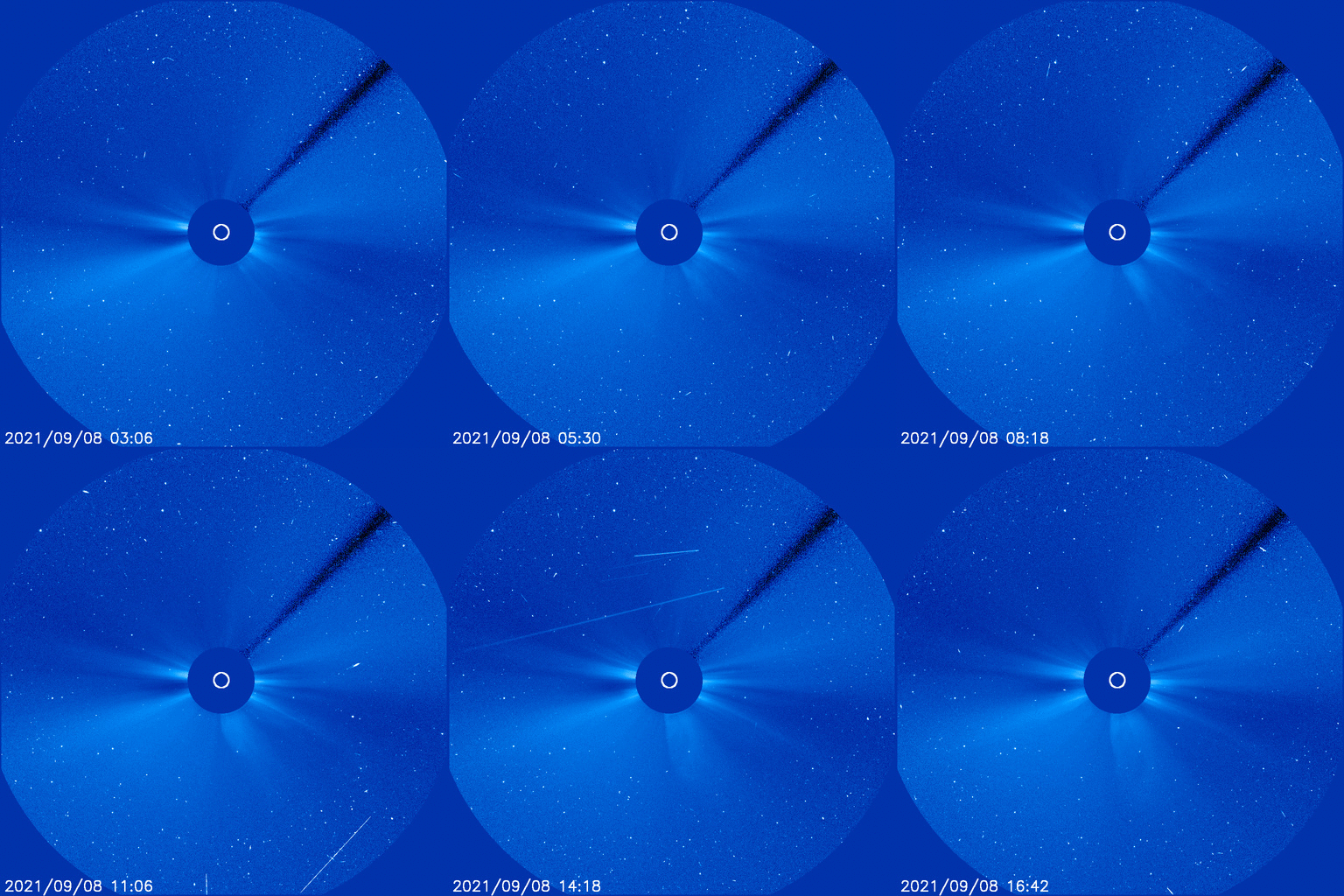
A LOPSIDED CME IS COMING: Yesterday, Sept. 8th @ 0009 UT, sunspot AR2864 erupted, producing a C2-class solar flare. The explosion sent a global shock wave rippling through the sun's atmosphere and hurled a lopsided CME into space. NOAA analysts believe Earth could experience a glancing blow (or near miss) late on Sept. 11th. Aurora alerts: SMS Text.
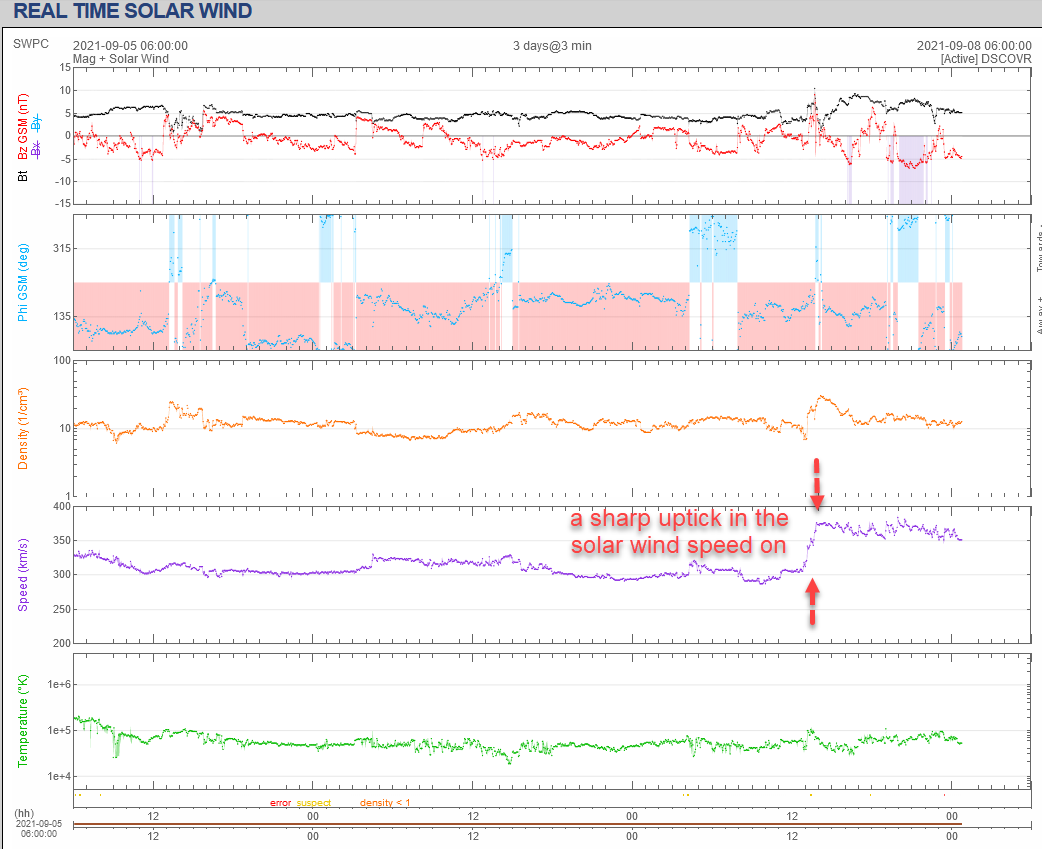
RARE RED ARC APPEARS DURING GEOMAGNETIC UNREST: Auroras danced across Canada on Sept. 8th after a solar wind gust rattled Earth's magnetic field. In Alberta, veteran aurora chaser Harlan Thomas was photographing the display when, he says, "there was the oddest arc that I have ever seen." The deep red band appeared south of the auroras:
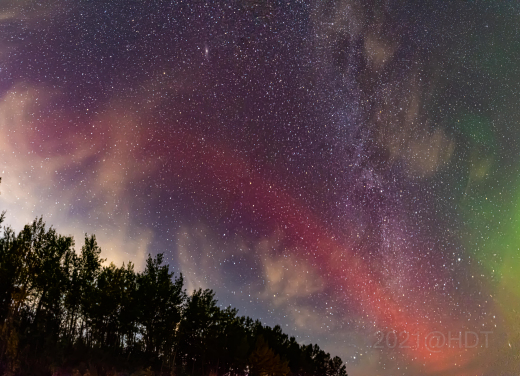
Thomas appears to have caught a rare "SAR"--short for Stable Auroral Red arc.
SARs are related to auroras, but they are not the same. Regular auroras appear when high-energy particles rain down along polar magnetic field lines. They hit the atmosphere 100 to 200 km high, causing the air to glow like the picture tube of an old color TV. SARs form differently. They are a sign of heat energy leaking into the upper atmosphere from Earth's ring current system. The red color is the glow of atomic oxygen about 400 km high--much higher than normal auroras.
"The arc lasted for 3/4 of an hour," describes Thomas. "It was dim, but easy to photograph after I cranked up the ISO to 8000. The image above is a 17 second exposure."
Realtime Aurora Photo Gallery
Free: Spaceweather.com Newsletter
SUNSPOT SUNSET: New Solar Cycle 25 is doing something strange to sunsets around the world. Peter Lowenstein photographed the phenomenon yesterday in Mutare, Zimbabwe:
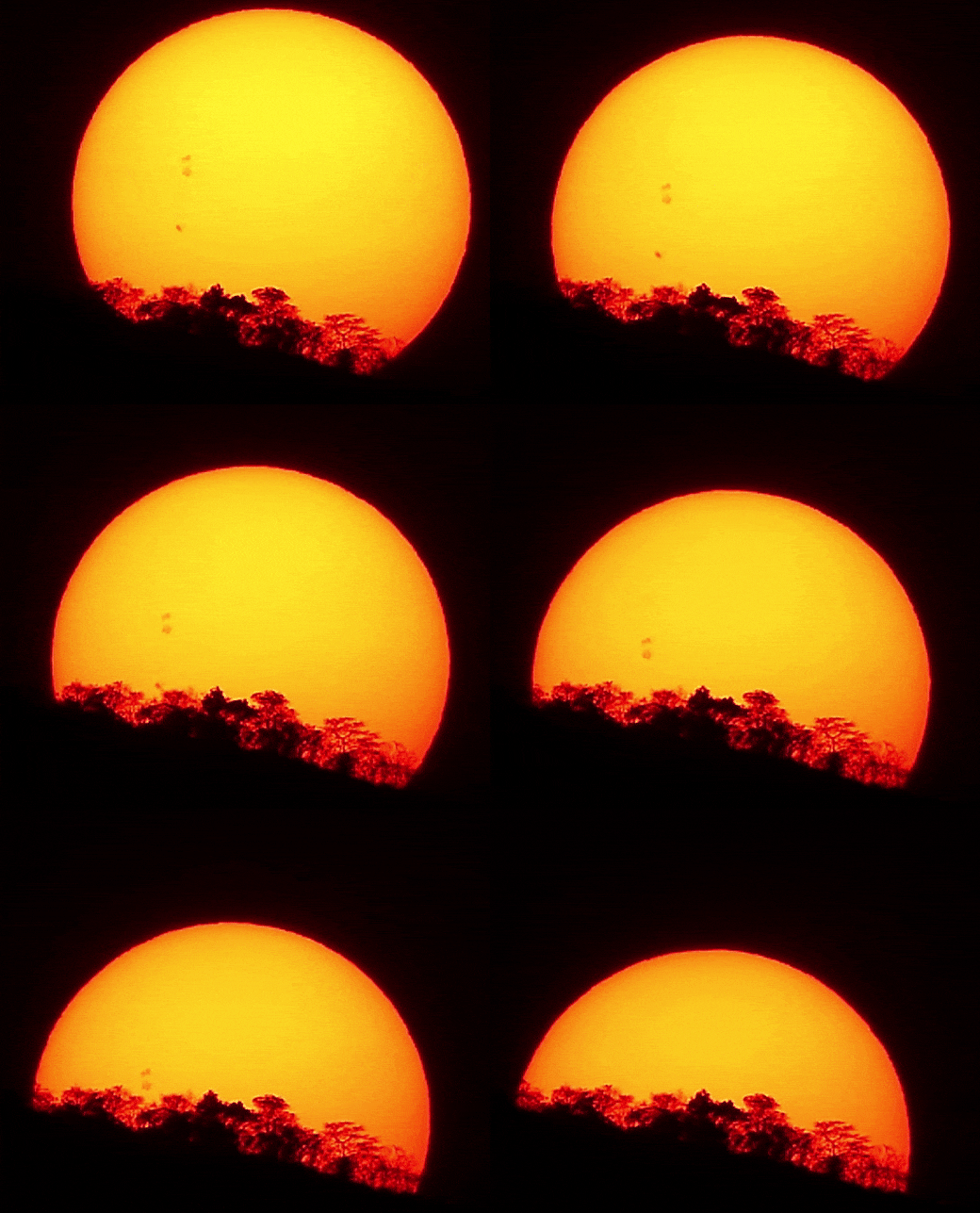
"For the first time in years, there are multiple large spots on the sun," says Lowenstein. "During the past three days it has been possible to view these through an electronic camera viewfinder shortly before sunset."
"On Sept. 8th, I made this recording as the sun set behind some trees on the crest of Murahwa Mountain," he continues. "The largest of these, AR2866, is above the others and was the last to disappear."
Lowenstein used no solar filter. The sun was dimmed enough for photography by smoke and haze from nearby dry season burning. A warning to photographers who may be tempted to try this: Never look at the sun through unfiltered optics. Even a brief glimpse of magnified sunlight can damage your eyes. Lowenstein pointed his camera safely using an electronic viewscreen.
Realtime Space Weather Photo Gallery
Free: Spaceweather.com Newsletter
ARCTIC WOLF SPACE PENDANT: This wolf glows in the dark--and it's been to the edge of space. The students of Earth to Sky Calculus launched the lupine pendant to the stratosphere on board a cosmic ray research balloon. The payload of radiation sensors and jewelry traveled 107,611 feet above Earth's surface:
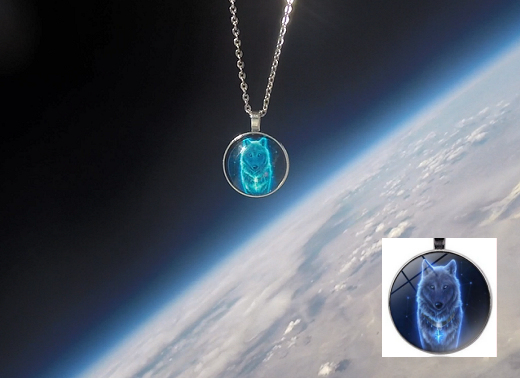
You can have it for $99.95. The students are selling these pendants to support their cosmic ray ballooning program. Each one comes with a greeting card showing the wolf in flight and describing its journey to the stratosphere and back again.
Far Out Gifts: Earth to Sky Store
All sales support hands-on STEM education