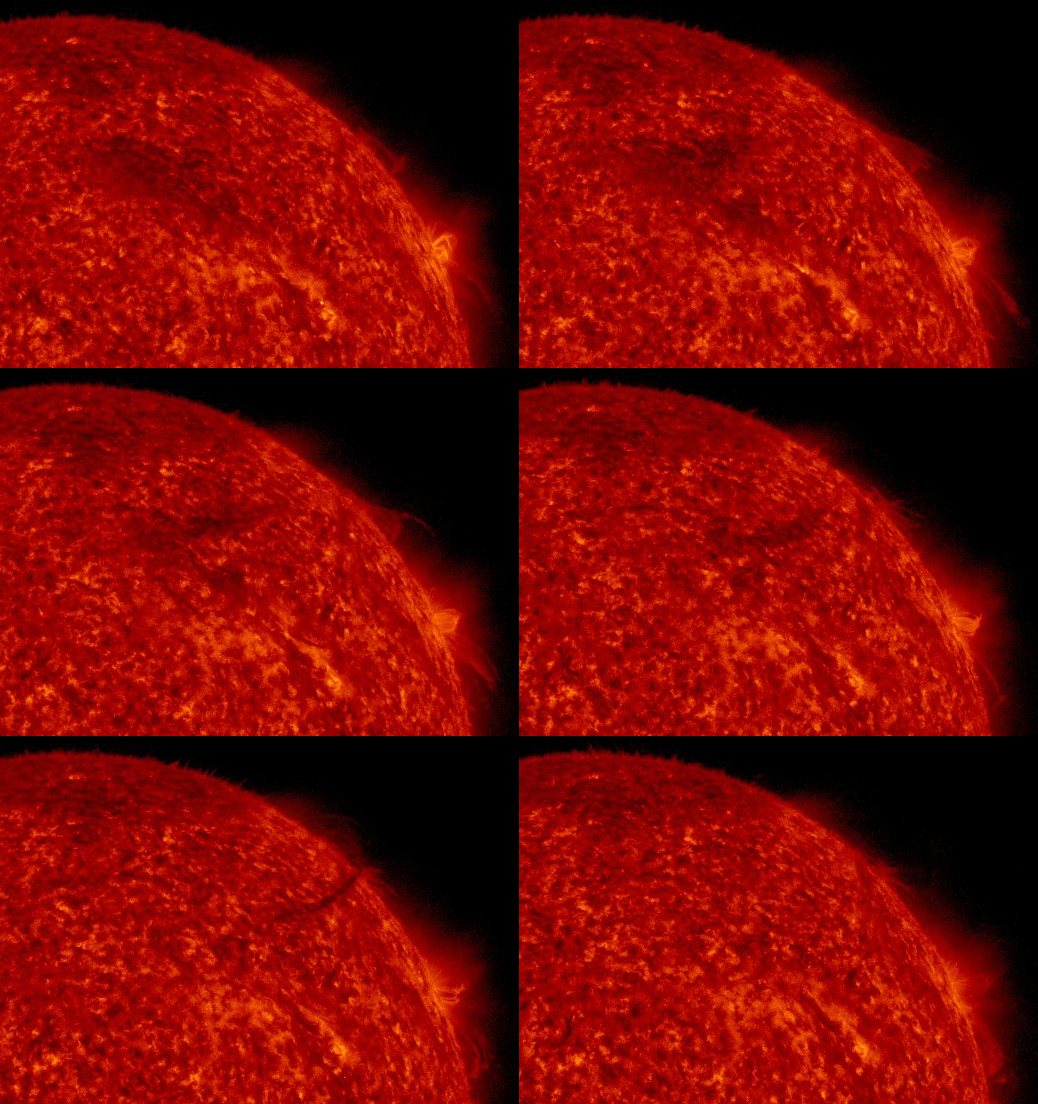
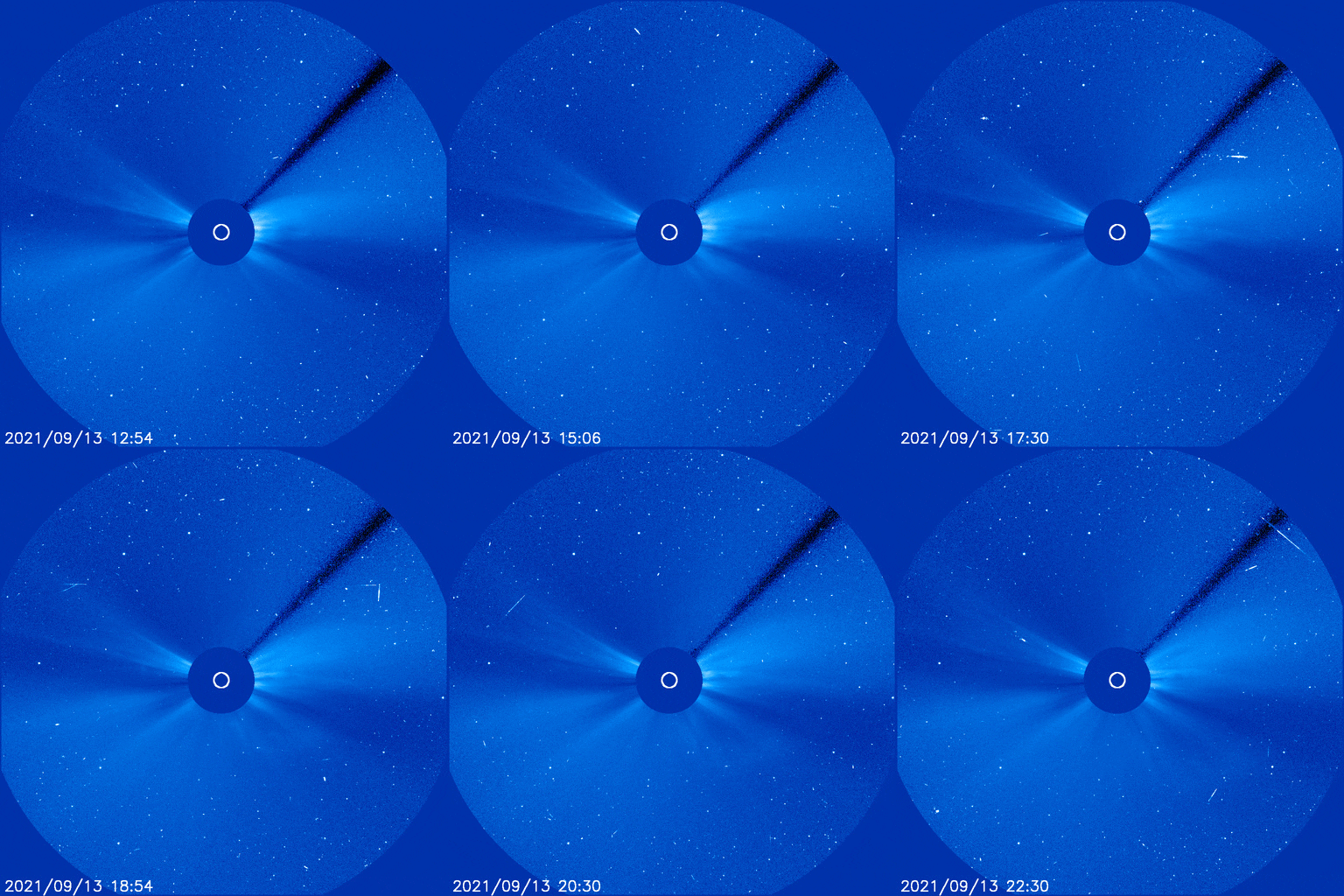
POSSIBLE EARTH-DIRECTED CME: During the early hours of Sept. 13th (~0200 UT), a dark filament of magnetism on the sun exploded. The blast hurled a CME into space, and maybe toward Earth. Initial modeling by NOAA suggests a near miss (or glancing blow) on Sept. 16-17. The fact that the CME overlaps at least two other CMEs makes unraveling its trajectory tricky. Stay tuned for additional analysis. Aurora alerts: SMS Text.
SOMETHING JUST HIT JUPITER: Last night, German astronomer Harald Paleske was watching the shadow of Io create a solar eclipse in the atmosphere of Jupiter when something unexpected happened. "A bright flash of light surprised me," he says. "It could only be an impact." Follow the arrows to the fireball:
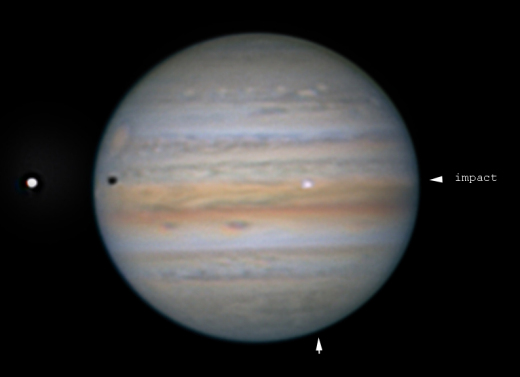
Reviewing his video frames, Paleske quickly ruled out objects such as airplanes and satellites, which might be crossing Jupiter at the time of his observation. The fireball was fixed in Jupiter's atmosphere. It first appeared at 22:39:27 UT on Sept. 13th and remained visible for a full two seconds. The most likely explanation is a small asteroid or comet striking the giant planet; an asteroid in the 100m size range would do the trick.
This isn't the first time astronomers have seen things hitting Jupiter. The most famous example is Comet Shoemaker-Levy 9 (SL9), which struck Jupiter in July 1994. At the time, most astronomers thought such collisions were rare, happening every hundred years or so. Since SL9, however, amateur astronomers using improved low-light cameras have observed more than a dozen impact flashes in Jupiter's cloudtops. The Solar System is more dangerous than we thought.
Paleske pinpoints the fireball at Jovian latitude 106.9° (CM1), longitude +3.8°. Other observers are encouraged to monitor the location for debris. Previous impacts have sometimes created inky clouds -- probably the remains of the impactor itself mixed with aerosols formed by shock-chemistry during the explosion.
Realtime Space Weather Photo Gallery
Free: Spaceweather.com Newsletter
STAR TREK WINE STOPPER: It's the most far-out wine stopper ever! On Sept. 9, 2021, the students of Earth to Sky Calculus launched the USS Enterprise to the stratosphere onboard a cosmic ray research balloon. Here is the starship-shaped stopper floating 105,563 feet above the rugged Sierra Nevada mountains of central California:
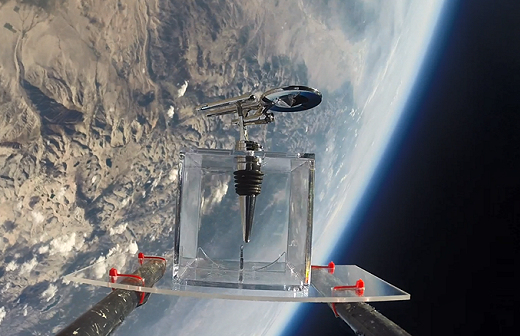
You can have it for $99.95. The students are selling these must-have bar accessories to support their cosmic ray research program. Each one comes with a greeting card showing the stopper in flight, telling the story of its trip to the edge of space and back again.
Far Out Gifts: Earth to Sky Store
All sales support hands-on STEM education
Realtime Aurora Photo Gallery
Free: Spaceweather.com Newsletter