UPDATED GEOMAGNETIC STORM FORECAST: A minor G1-class geomagnetic storm expected on Sept. 26th has not materialized. There's still hope for auroras, though. NOAA forecasters say that a CME is due to pass by Earth on Sept. 27th, potentially sparking G2-class storms around 1200 UT. Aurora alerts: SMS Text.



AURORAS BEFORE THE STORM: The storm hasn't started yet, but auroras are already dancing over Iceland. Last night, a minor geomagnetic disturbance rippled over the island nation where Christopher Mathews was waiting with his camera:
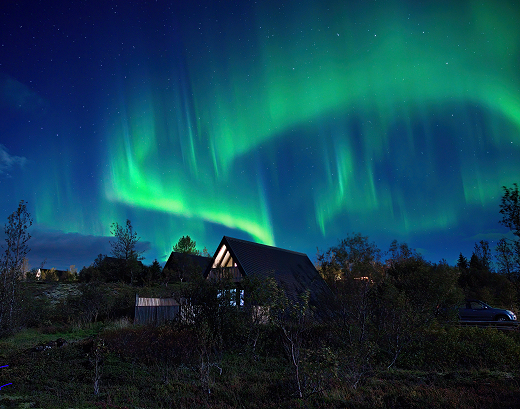
"I shot this image of the aurora over my house in southern Iceland at about 11 pm," says Mathews. "This is a 2.5 second exposure taken at ISO 2000, with an aperture of f/2.0. "
At the time, the planetary K-index was only 2, a low value that usually signifies no auroras. "But local conditions can and do vary, and over Iceland our local magnetic observatory recorded a K-index of 4, much more suitable for a good show!" says Mathews.
If the current forecast holds, tonight's K-index could reach 5 or 6, values that represent full-fledged geomagnetic storms. The auroras over Iceland could become very bright, indeed. Aurora alerts: SMS Text.
Realtime Aurora Photo Gallery
Free: Spaceweather.com Newsletter
RECTANGULAR SUNSET: No, it's not an alien planet. It's just San Francisco. On Sept. 21st, Mila Zinkova looked out over the Pacific Ocean from the Bay Area and saw something out of this world--a rectangular sun:
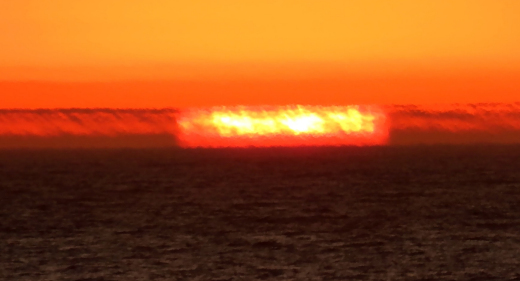
"Over the years I've enjoyed observing many sunset mirages, but this was a special one," says Zinkova.
The fiery block appeared minutes after the actual sun had set. This suggests a link to a mirage called "Novaya Zemlya." The phenomenon is typically observednear the poles where severe temperature inversions can channel the sun's rays all the way around the curvature of the Earth. In the Novaya Zemlya mirage, the sun looks rectangular and rises minutes early or sets many minutes late. Apparently, this can happen in California, too.
Realtime Space Weather Photo Gallery
Free: Spaceweather.com Newsletter
STAR TREK WINE STOPPER: It's the most far-out wine stopper ever! On Sept. 9, 2021, the students of Earth to Sky Calculus launched the USS Enterprise to the stratosphere onboard a cosmic ray research balloon. Here is the starship-shaped stopper floating 105,563 feet above the rugged Sierra Nevada mountains of central California:
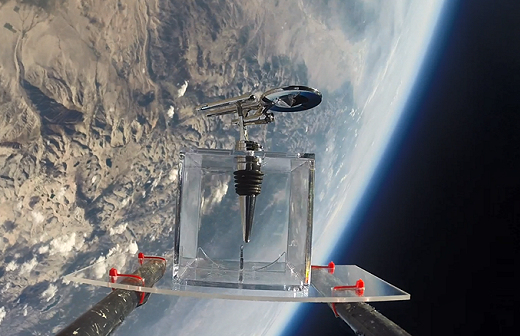
You can have it for $99.95. The students are selling these must-have bar accessories to support their cosmic ray research program. Each one comes with a greeting card showing the stopper in flight, telling the story of its trip to the edge of space and back again.
Far Out Gifts: Earth to Sky Store
All sales support hands-on STEM education