A CME MISSES EARTH: A CME may have passed close to our planet on Sept. 27th. Ripples in the solar wind suggest either a weak collision or, more likely, a near miss. The close encounter did not spark a geomagnetic storm. Aurora alerts: SMS Text.

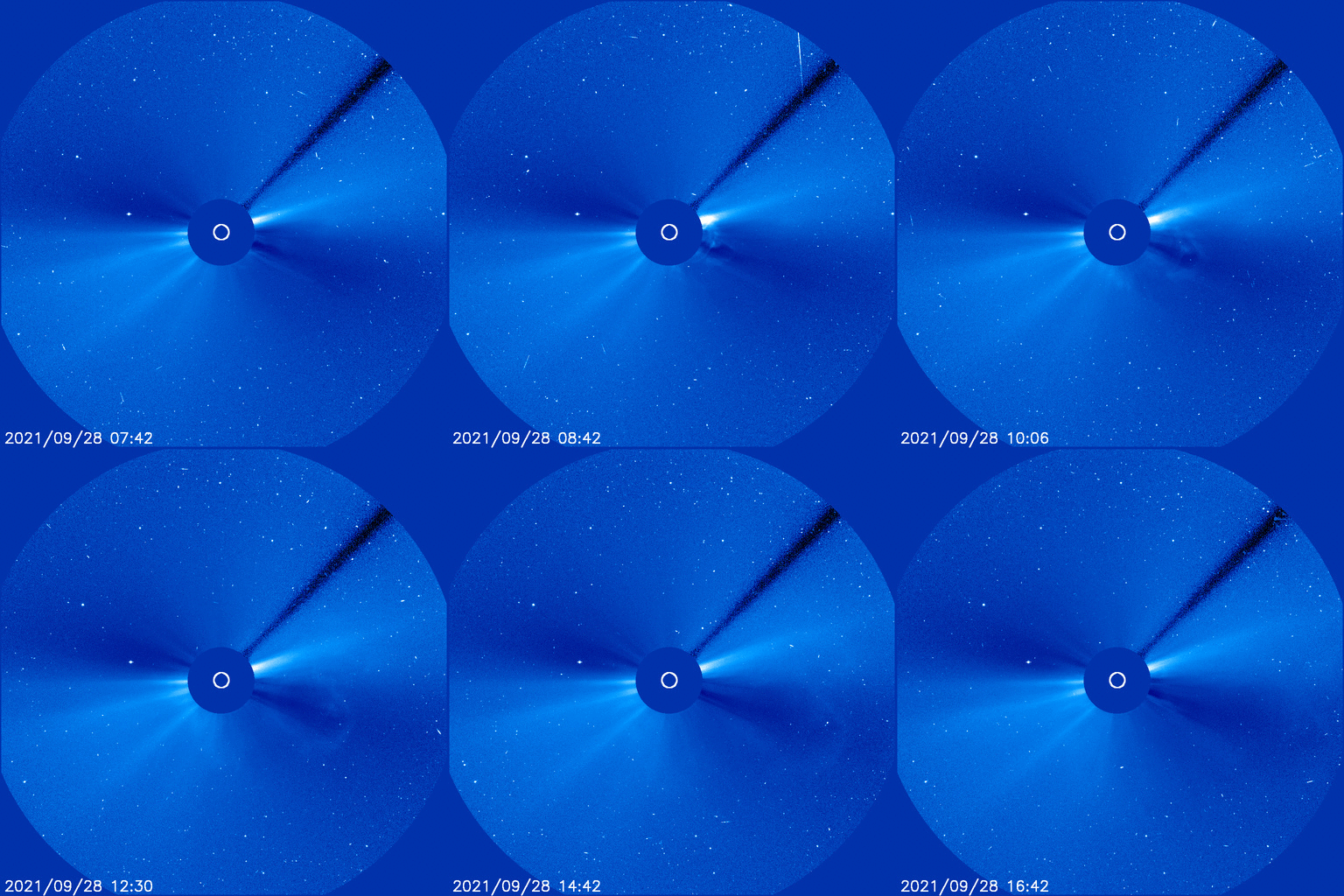
THE NEXT CME MIGHT ACTUALLY HIT (UPDATED): Decaying sunspot AR2871 erupted on Sept 28th (0634 UT) producing a slow C2-class solar flare. This movie from NASA's Solar Dynamics Observatory shows a shock wave billowing away from the blast site:

The shock wave propelled a CME into space. Update: New data from the Solar and Heliospheric Observatory (SOHO) shows a partial-halo CME almost certain to sideswipe Earth. ETA: Oct. 1st. Minor G1-class geomagnetic storms are likely when the CME arrives. Aurora alerts: SMS Text.

Realtime Aurora Photo Gallery
Free: Spaceweather.com Newsletter
A COMET MADE OF ROCKET FUEL: Last night, sky watchers in Europe saw a bright comet glide across the night sky. Where did it come from? Hint: It was made of rocket fuel. Martin McKenna photographed the phenomenon from Beaghmore, Northern Ireland:
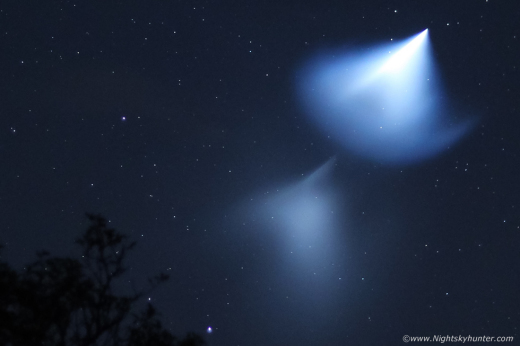
McKenna, and many others, witnessed the ascent of NASA's new Landsat 9 satellite. It blasted off Sept. 27th (18:12 UT) from California's Vandenberg Air Force Base onboard an Atlas V rocket. A few hours later, the rocket's Centaur upper stage executed a deorbit burn--and that's what European sky watchers saw.
"It was a spectacular sight, like naked-eye comets with tails moving from NE to N while casting shadows," says McKenna.
Landsat 9 is now in orbit, joining its predecessor Landsat 8 in mapping urban sprawl, wildfires, the retreat of glaciers and many other changes to planet Earth. The latest member of the Landsat family carries two new cutting-edge instruments: the Operational Land Imager 2 (OLI-2) and the Thermal Infrared Sensor 2 (TIRS-2). These can detect minute changes in lakes, rivers and forests by analyzing light reflected from Earth's surface.
more images: from Hendrik Wolff of Senja, Norway; from Alan C. Tough of Elgin, Moray, Scotland; from Gordon Mackie of Caithness, Scotland; from Marco Langbroek of Leiden, the Netherlands; from Risto Hautala of Orresokka, Luosto, Finland.
Realtime Space Weather Photo Gallery
Free: Spaceweather.com Newsletter
STAR TREK WINE STOPPER: It's the most far-out wine stopper ever! On Sept. 9, 2021, the students of Earth to Sky Calculus launched the USS Enterprise to the stratosphere onboard a cosmic ray research balloon. Here is the starship-shaped stopper floating 105,563 feet above the rugged Sierra Nevada mountains of central California:
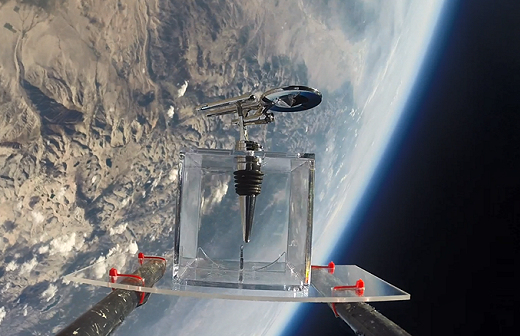
You can have it for $99.95. The students are selling these must-have bar accessories to support their cosmic ray research program. Each one comes with a greeting card showing the stopper in flight, telling the story of its trip to the edge of space and back again.
Far Out Gifts: Earth to Sky Store
All sales support hands-on STEM education