CO-ROTATING INTERACTION REGION: Geomagnetic unrest is possible on Oct. 18-19 when a co-rotating interaction region (CIR) is expected to hit Earth's magnetic field. CIRs are transition zones between fast- and slow-moving streams of solar wind. Sharp, shock-like density gradients and enhanced magnetic fields in CIRs often do a good job sparking Arctic auroras. Aurora alerts: SMS Text.
AURORAS AT 35,000 FT: Young Solar Cycle 25 is gaining strength. Count the crew of this flight to Alaska among the believers:
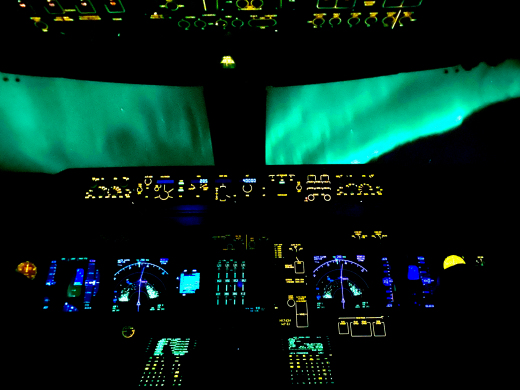
"While flying from New York City to Anchorage on Oct. 12th, we saw auroraa nearly the entire flight," reports Terry Brown, who photographed the display using his iPhone. "The colors and the movement were the best everyone in the crew could ever recall experiencing."
The auroras appeared shortly after a CME struck Earth's magnetic field, sparking a G2-class geomagnetic storm. It was one of the strongest storms in years, but only a fraction of what is expected as Solar Cycle 25 continues to intensify in the years ahead. Solar Max is expected in 2024-2025. Tip for flyers: Select the window seat!

Realtime Aurora Photo Gallery
Free: Spaceweather.com Newsletter
THE CHINESE SPACE STATION: The human population in space just increased by 3. Yesterday, a trio of taikonauts blasted off from the Jiuquan Satellite Launch Center bound for China's new Tiangong space station. Photographer Jeff Dai was on hand to witness the launch:
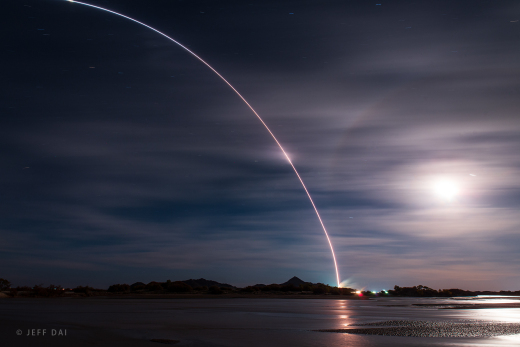
"I watched the crewed spaceship Shenzhou-13 soar into the night sky, sending three Chinese astronauts on a 6 month mission," says Dai.
On Saturday morning, China's space agency announced that the crew had arrived safely. They are now inside the station's Tianhe module where they will live and work until April 2022. They'll focus, in part, on preparing the station for the arrival of two new modules. By the end of 2022, Tiangong could be as massive as Russia's old Mir space station, albeit with far more sophisticated technology.
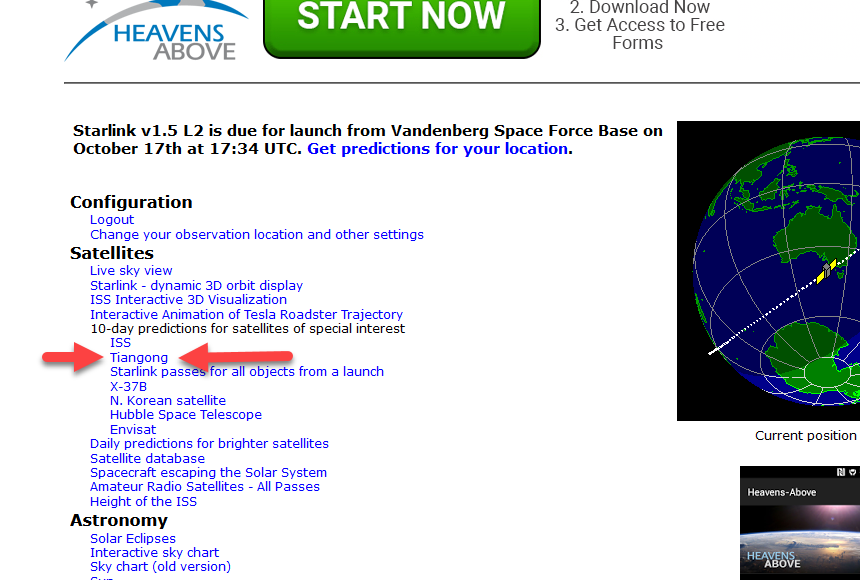
You can see Tiangong with your unaided eye. It is typically as bright as a 1st magnitude star, and sometimes much brighter. Visit Heavens-Above.com and select flyby predictions for Tiangong.
Realtime Space Weather Photo Gallery
Free: Spaceweather.com Newsletter
STERLING SILVER OPAL PENDANT: It's our most beautiful space pendant ever: The Sterling Silver Opal. The students of Earth to Sky Calculus just launched one to the stratosphere onboard a cosmic ray research balloon. Here it is floating 103,018 ft above Earth's surface on Sept. 5th:
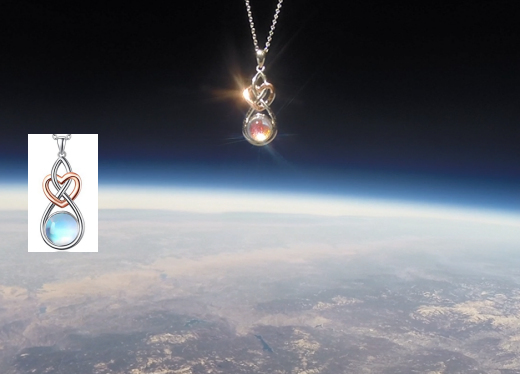
You can have it for $179.95. Wrapped in a sterling silver Celtic love knot, the opal is suspended from a matching 18-inch chain. Each pendant comes with a greeting card showing the opal in flight, telling the story of its trip to the edge of space and back again.
Opals are cousins of moonstones; in fact they look the same in low light. But when bright sunlight strikes an opal, something special happens. A spray of color emerges from the stone. This happened while the stone was in the stratosphere (see above) and it remains capable of this beautiful trick back on Earth.
Far Out Gifts: Earth to Sky Store
All sales support hands-on STEM education