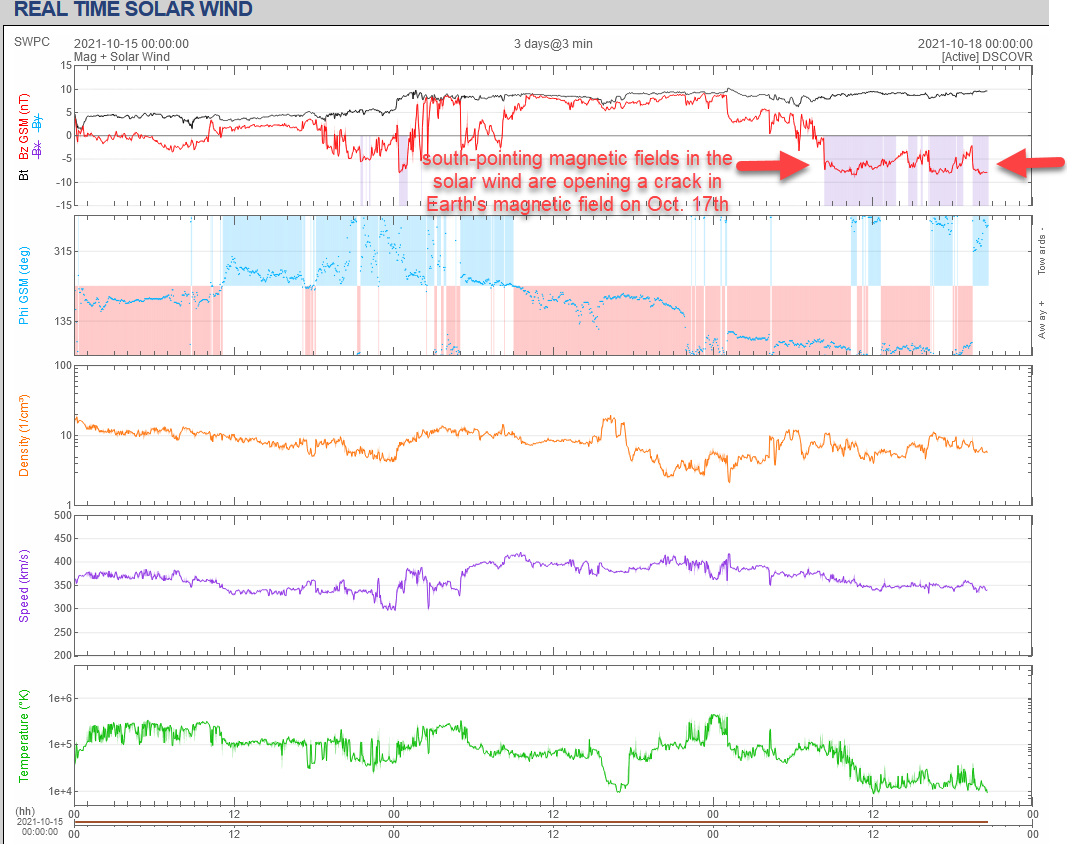
GEOMAGNETIC UNREST: A minor crack has opened in Earth's magnetic field on Oct. 17th. Solar wind is rushing through the gap to fuel geomagnetic unrest (Kp=4). Arctic sky watchers shoould be alert for auroras after local nightfall. Aurora alerts: SMS Text.
LUCY SPACECRAFT BLASTS OFF: NASA's Lucy spacecraft left Earth on Saturday, Oct. 16th, launching in a blaze of light just before sunrise over Cape Canaveral. Less than 18 hours later, Brad Young of Tulsa, Oklahoma, photographed the probe 350,000 km from Earth racing through the constellation Cancer:
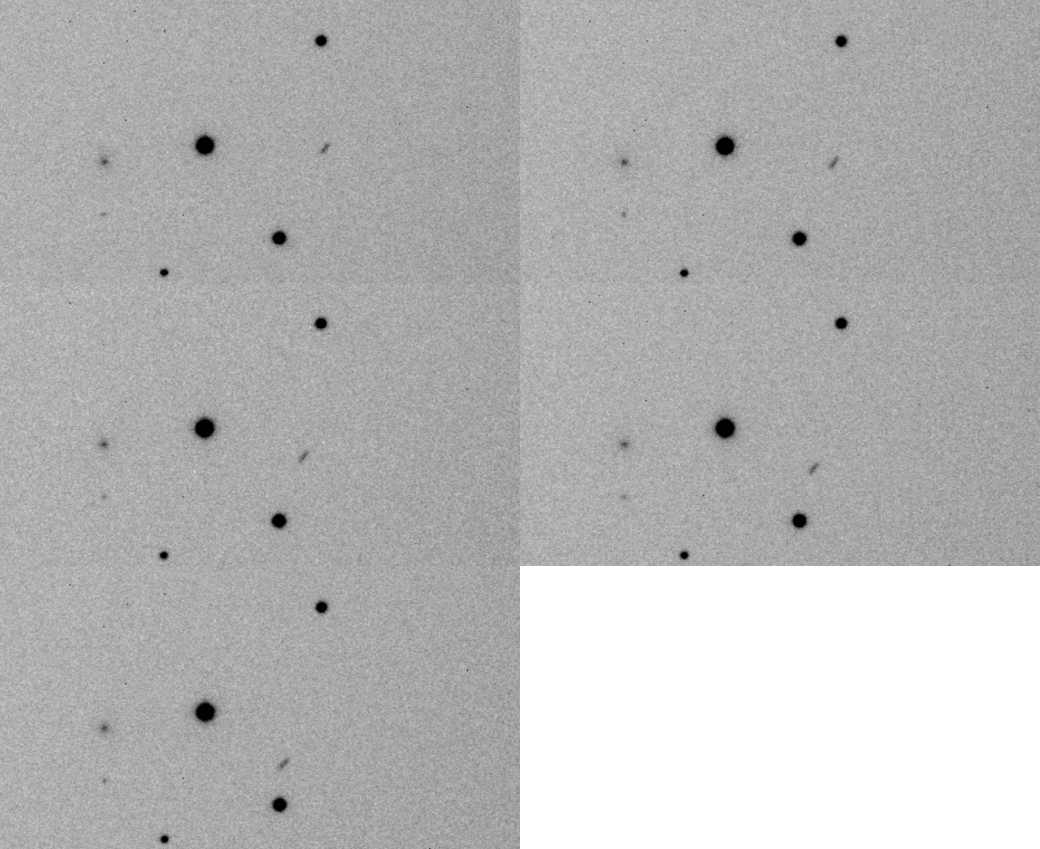
"The spacecraft was very faint, only about 15th magnitude," says Young, "but I was able to catch it using the big half-meter iTelescope (T11) in New Mexico."
Named for the famous hominid fossil "Lucy" found in 1974 in Africa, the spacecraft is hurtling into deep space to study a totally different kind of relic. Lucy will visit 7 Trojan asteroids. These are primitive leftovers from the formation of our solar system, collected into swarms around two of Jupiter's Lagrange points. Sensors onboard the spacecraft will examine their appearance and composition, putting competing theories of planetary genesis to the test.

But first... Lucy will visit a small asteroid in the Main Belt between Mars and Jupiter: Asteroid 52246 Donald Johanson, named for the paleoanthropologist who discovered the original Lucy. Mission controllers plan to test Lucy's sensors on the space rock as a practice run before its main mission to the Trojans. Visit Lucy's home page for updates.
Realtime Space Weather Photo Gallery
Free: Spaceweather.com Newsletter
WHAT IS A RAINBLOW? You've seen a rainbow--the spray of color which results when sunlight hits falling rain. Now let us introduce you to a rainblow:
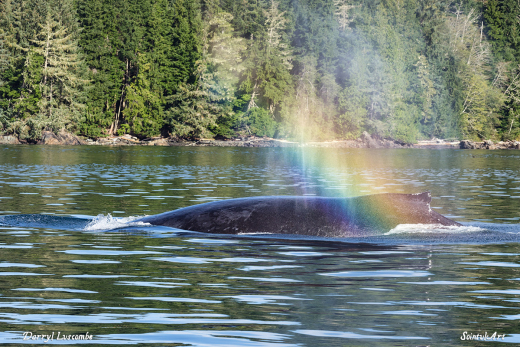
Darryl Luscombe photographed this specimen in Blackfish Sound on the northeast coast of Vancouver Island on Oct. 11th. "A humpback whale surprised us by surfacing close to our boat and the fine mist from its blow created a short-lived 'rainblow,'" explains Luscombe.
On a sunny day, any source of water droplets can make a rainbow: a lawn sprinkler, a water fall, a crashing wave. Add to that list an exhaling cetacean.
Realtime Space Weather Photo Gallery
Free: Spaceweather.com Newsletter
STERLING SILVER OPAL PENDANT: It's our most beautiful space pendant ever: The Sterling Silver Opal. The students of Earth to Sky Calculus just launched one to the stratosphere onboard a cosmic ray research balloon. Here it is floating 103,018 ft above Earth's surface on Sept. 5th:
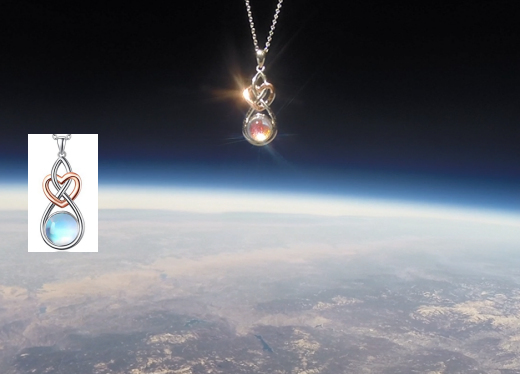
You can have it for $179.95. Wrapped in a sterling silver Celtic love knot, the opal is suspended from a matching 18-inch chain. Each pendant comes with a greeting card showing the opal in flight, telling the story of its trip to the edge of space and back again.
Opals are cousins of moonstones; in fact they look the same in low light. But when bright sunlight strikes an opal, something special happens. A spray of color emerges from the stone. This happened while the stone was in the stratosphere (see above) and it remains capable of this beautiful trick back on Earth.
Far Out Gifts: Earth to Sky Store
All sales support hands-on STEM education
Realtime Aurora Photo Gallery
Free: Spaceweather.com Newsletter