GEOMAGNETIC STORM WATCH: A strong G3-class geomagnetic storm is possible on Oct. 30th when the CME from yesterday's X1-flare is expected to hit Earth's magnetic field. Such storms can spark naked-eye auroras as far south as Illinois and Oregon (typically 50° geomagnetic latitude) and photographic auroras at even lower latitudes. Lesser G1 and G2-class storms could persist through Halloween as Earth passes through the CME's wake. Aurora alerts: SMS Text.

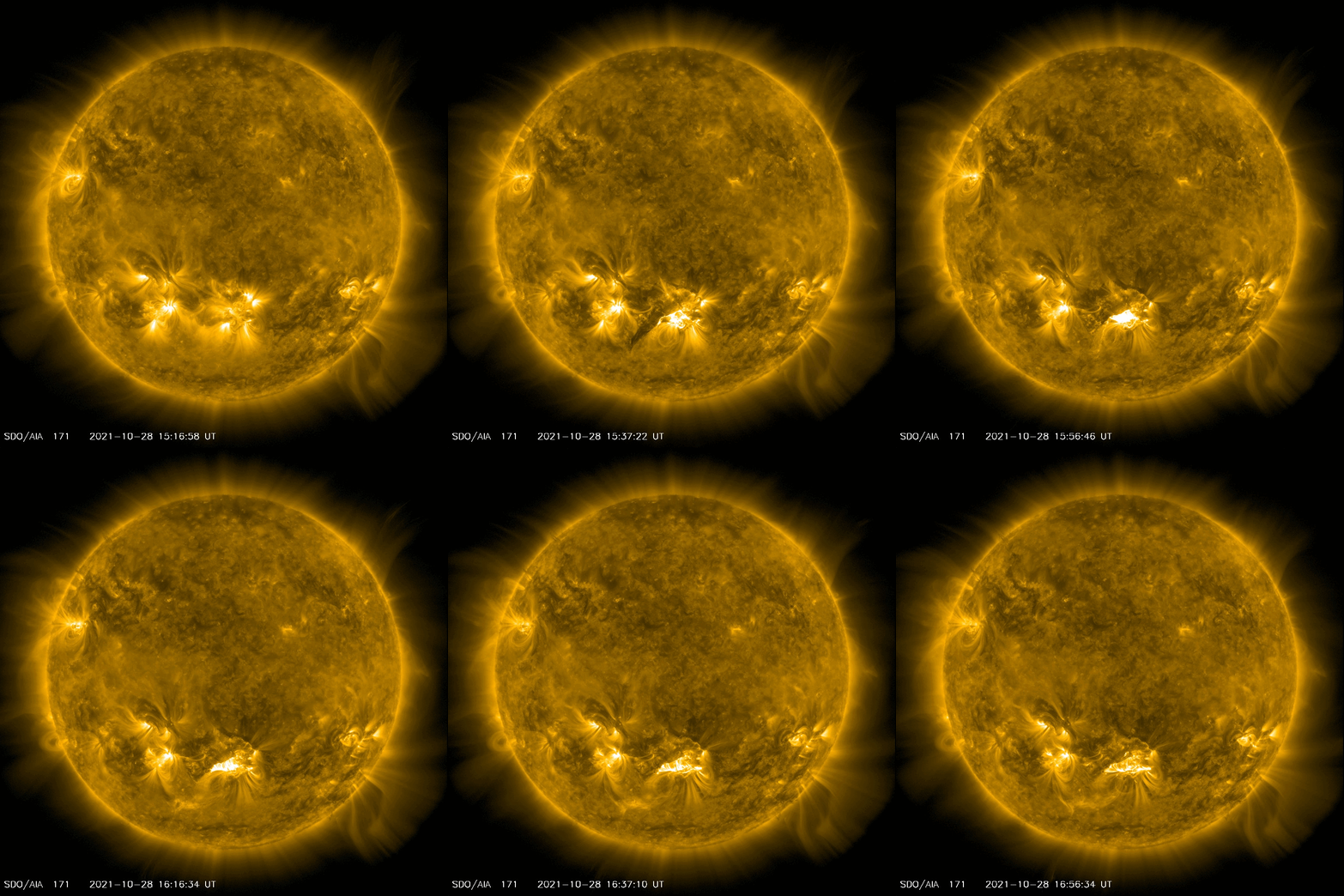
THE CORONAL MASS EJECTION: Here it comes. A coronal mass ejection (CME) launched into space on Oct. 28th by exploding sunspot AR2887 is heading almost directly for Earth. SOHO coronagraphs recorded the CME racing away from the sun faster than 1457 km/s (3.3 million mph):
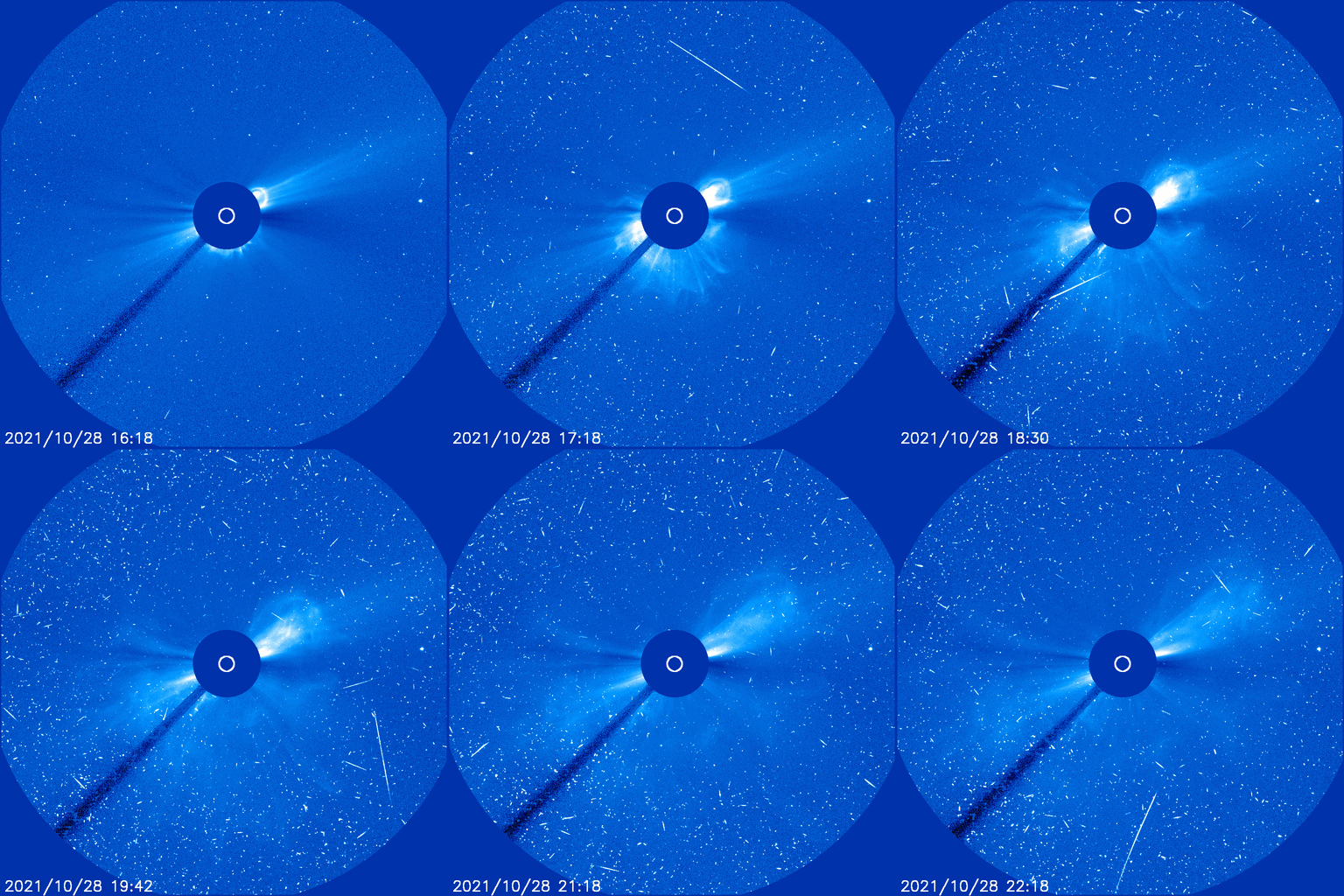
The movie is full of "snow"--speckles caused by solar protons striking the coronagraph's CCD camera. These particles were accelerated toward the spacecraft (and toward Earth) by shock waves in the leading edge of the CME. Traveling at relativistic speeds, the protons reached us in less than an hour. The CME itself will take more than two days to cross the sun-Earth divide. ETA: Oct. 30th. Aurora alerts: SMS Text.
Realtime Aurora Photo Gallery
Free: Spaceweather.com Newsletter
SOLAR RADIO BURST: Who says explosions in space make no sound? Yesterday's X1-class solar flare created a loud burst of static in shortwave radio receivers on Earth. Click to hear what emerged from Thomas Ashcraft's loudspeaker in rural New Mexico:
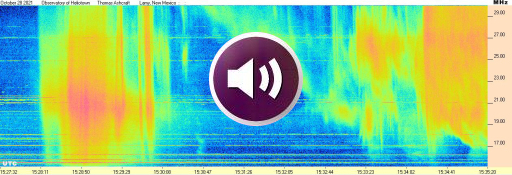
View the dynamic spectrum or listen to the audio
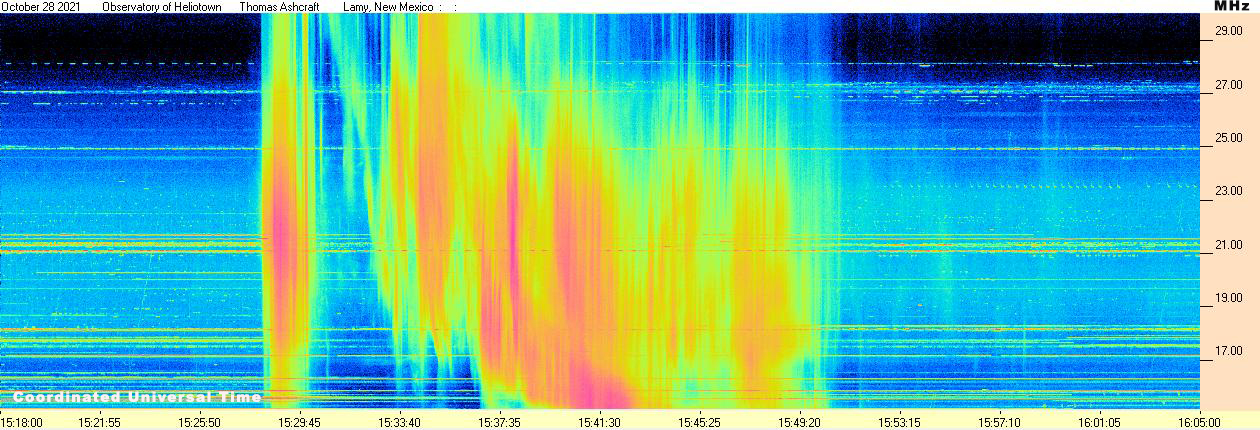
"I captured the X1 flare on my spectrograph and audio recorders," says Ashcraft. "It was super dynamic. It is not often to see a solar radio event showing up in purple range on my radio telescope."
Astronomers classify solar radio bursts into 5 types. Ashcraft recorded a mixture of Type II and Type V. These are caused, respectively, by shock waves and electron beams moving through the sun's atmosphere in the aftermath of strong flares. Solar flare alerts: SMS Text.
Realtime Space Weather Photo Gallery
Free: Spaceweather.com Newsletter
THE CITRINE X-PENDANT: It's the color of a sunburst: The Citrine X-Pendant. On Oct. 15, 2021, the students of Earth to Sky Calculus launched one to the stratosphere onboard an cosmic ray research balloon. At the apex of the flight it floated 120,892 feet above Earth's surface--a record high for our 10-year ballooning program:
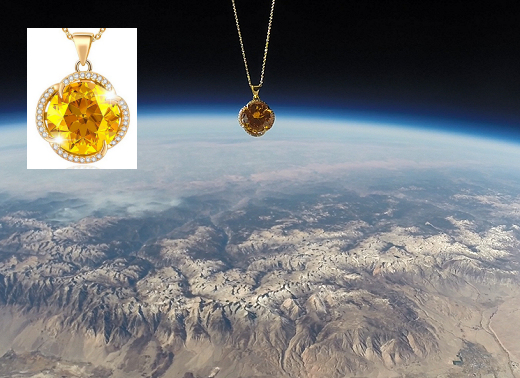
You can have it for $169.95. The citrine gemstone is framed in an 18K gold-plated swirl with a matching 16-inch chain. The students are selling these pendants to support their cosmic ray ballooning program. Each one comes with a greeting card showing the necklace in flight and telling the story of its journey to the edge of space.
Far Out Gifts: Earth to Sky Store
All sales support hands-on STEM education