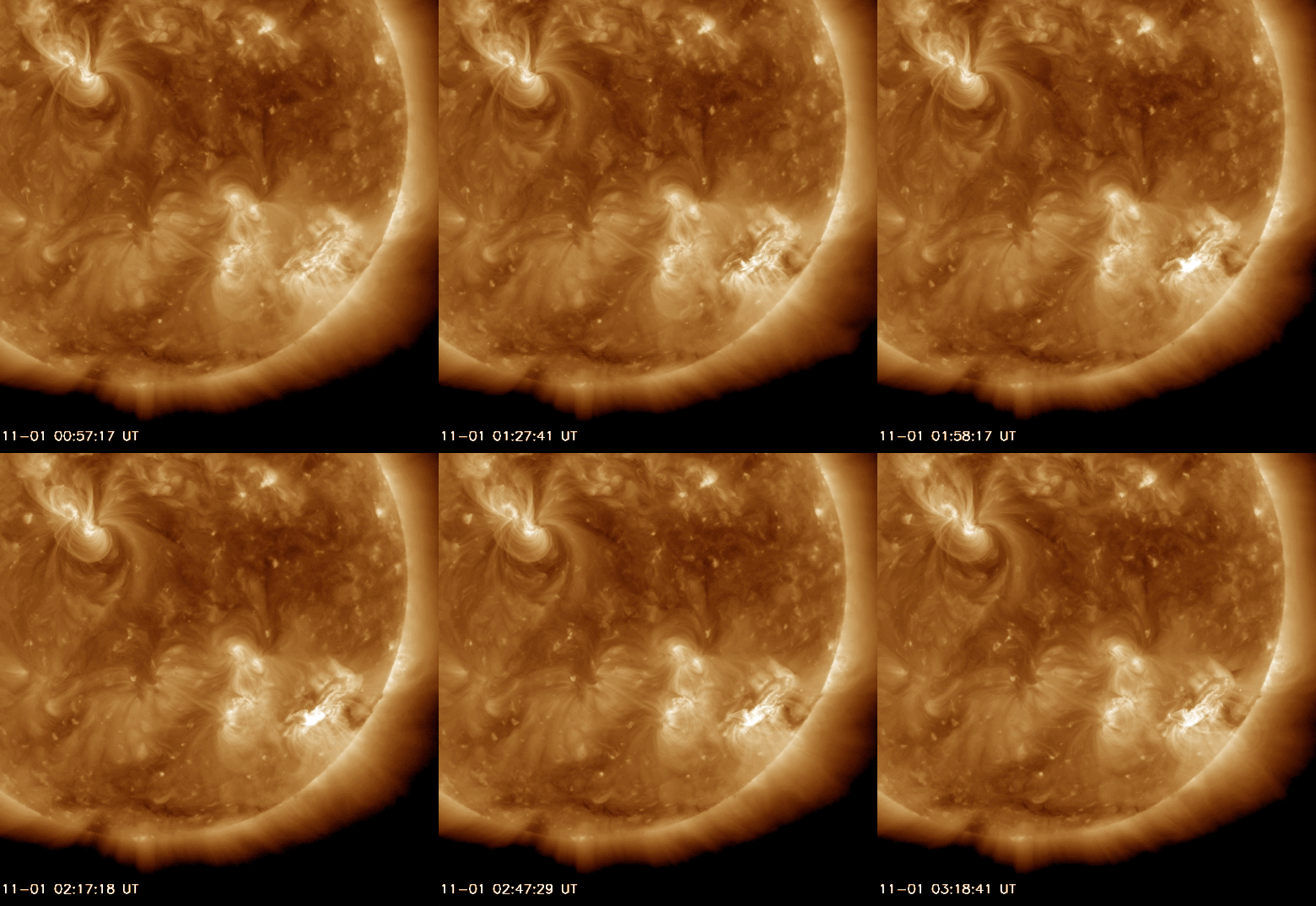
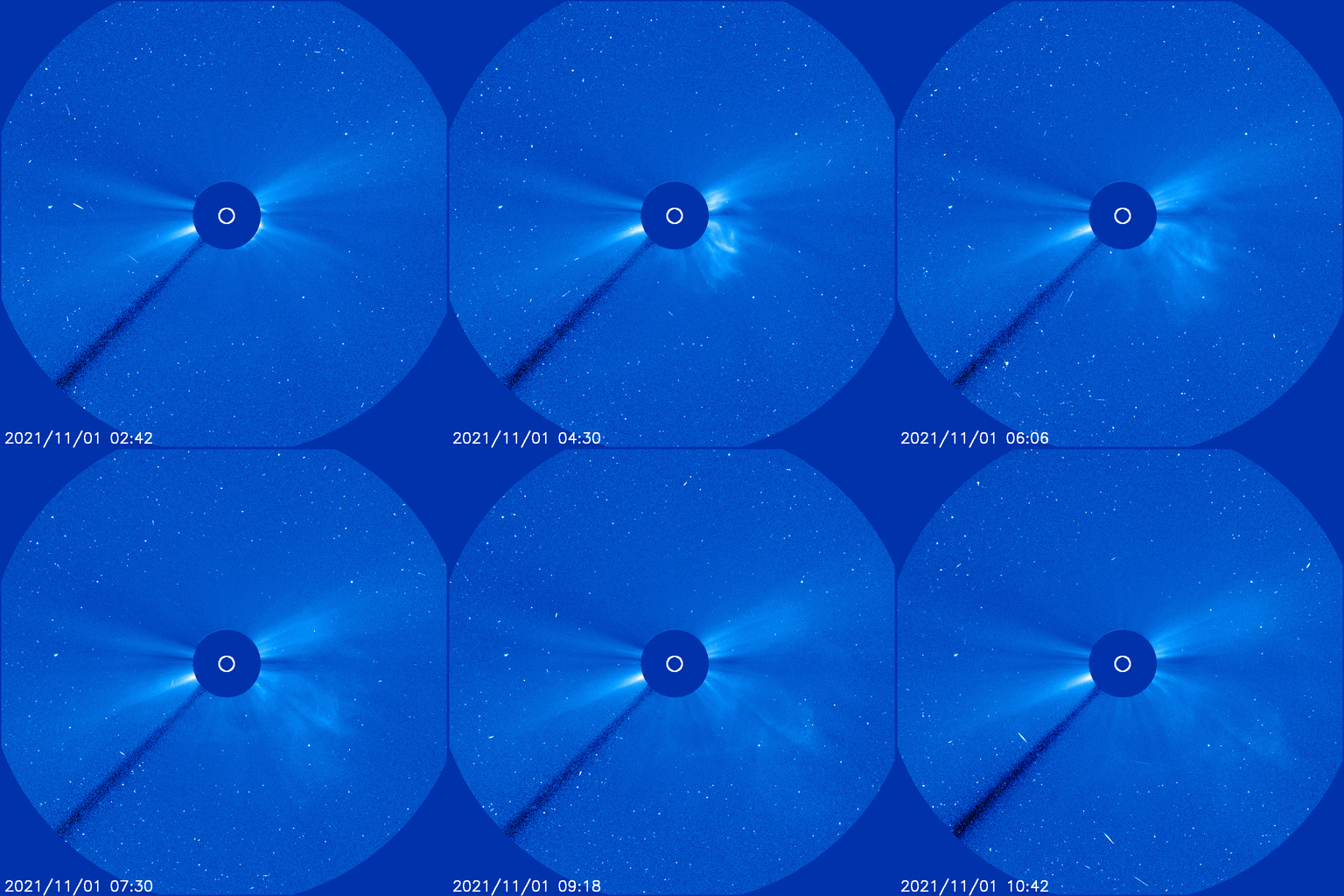
ANOTHER SOLAR FLARE AND CME--UPDATED: Sunspot AR2887 erupted again on Nov. 1st (0145 UT), producing an M1-class solar flare and a plasma wave that rippled across half the solar disk: movie. The USAF reports Type II radio emissions which likely came from the shock front of a CME moving ~600 km/s through the sun's atmosphere. NOAA analysts are currently evaluating the possibility of a glancing blow from this CME on Nov. 4th. Stay tuned. Solar flare alerts: SMS Text.
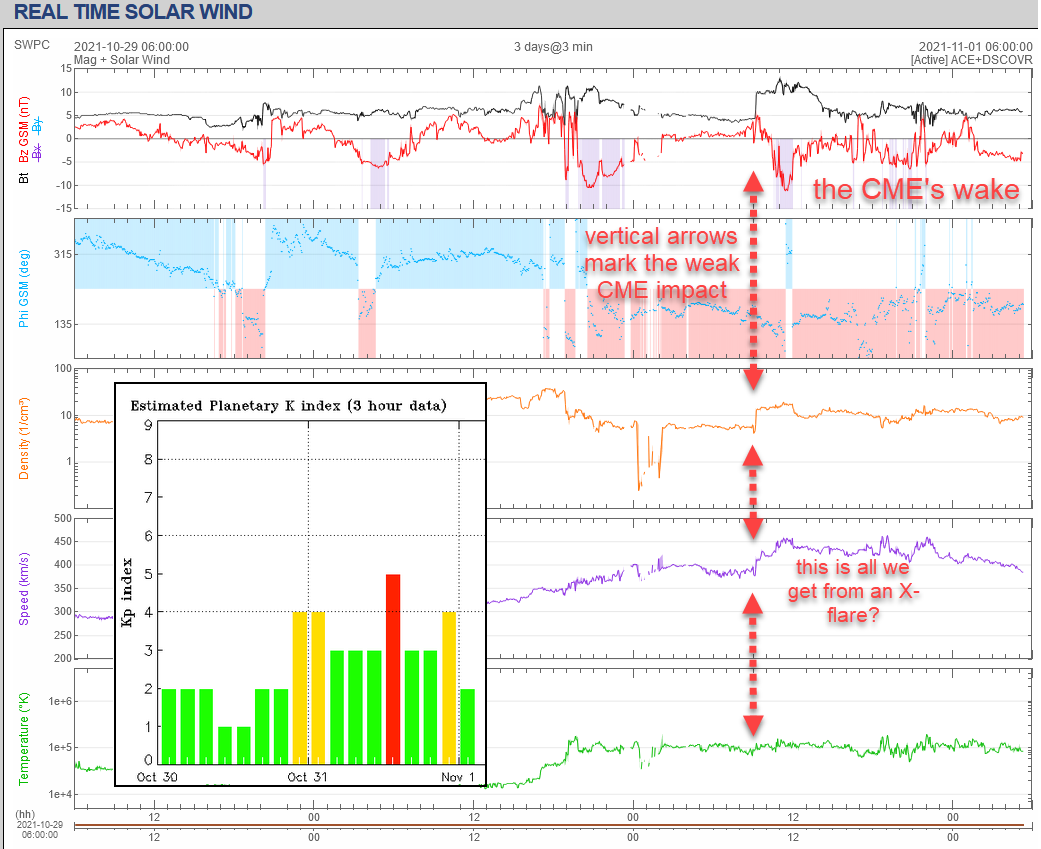
AFTERGLOW OF A CME: A CME hit Earth's magnetic field on Oct. 31st. Its weak impact did not spark the strong geomagnetic storm forecasters expected. However, the afterglow was divine. Minoru Yoneto of Queenstown, New Zealand, took this picture as Earth was passing through the CME's wake:
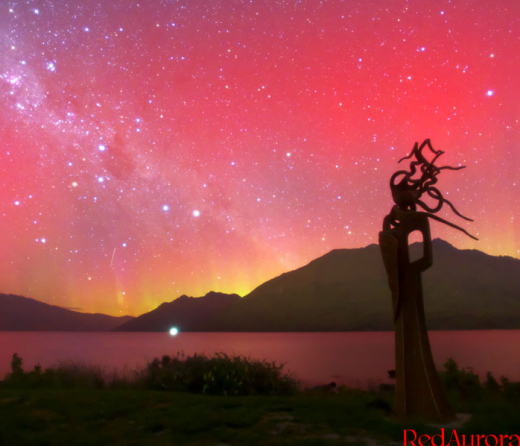
"The auroras were faint," says Yoneto, "but we were lucky because they appeared on a clear night with a nearly New Moon. Please note that you need to use an astronomically modified camera to capture this much red color."
Red auroras were also seen in Tasmania. "The glow appeared in the south," says photographer Peter Sayers. "It was strong and visible from 9pm until 3am the next morning."
Among auroras, reds are the most delicate. They come from atomic oxygen near the top of Earth's atmosphere. Oxygen atoms excited by solar wind spit out red photons very slowly. The radiative lifetime of the transition is 110 seconds--an eternity at the quantum scale. The atoms must remain undisturbed that long to produce their eerie red light. Quiet, patience, and dark skies are required to catch them. Apparently, a weak Halloween CME helps, too. Aurora alerts: SMS Text.
Realtime Aurora Photo Gallery
Free: Spaceweather.com Newslette
STAR TREK WINE STOPPER: It's the most far-out wine stopper ever! On Sept. 9, 2021, the students of Earth to Sky Calculus launched the USS Enterprise to the stratosphere onboard a cosmic ray research balloon. Here is the starship-shaped stopper floating 105,563 feet above the rugged Sierra Nevada mountains of central California:
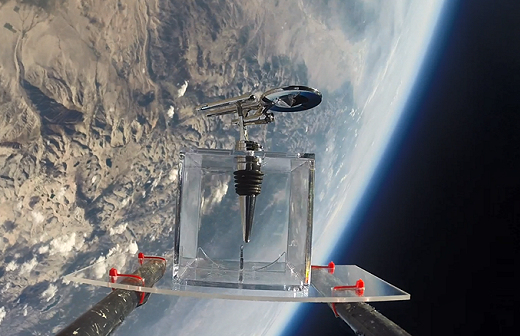
You can have it for $119.95. The students are selling these must-have bar accessories to support their cosmic ray research program. Each one comes with a greeting card showing the stopper in flight, telling the story of its trip to the edge of space and back again.
Far Out Gifts: Earth to Sky Store
All sales support hands-on STEM education
Realtime Space Weather Photo Gallery
Free: Spaceweather.com Newsletter