THE SOLAR WIND IS BLOWING: Earth is inside a stream of fast-moving (~600 km/s) solar wind, which is causing geomagnetic unrest around the poles. This is not a storm-level event. However, Arctic sky watchers should be alert for auroras after nightfall on Nov. 2nd. Aurora alerts: SMS Text.
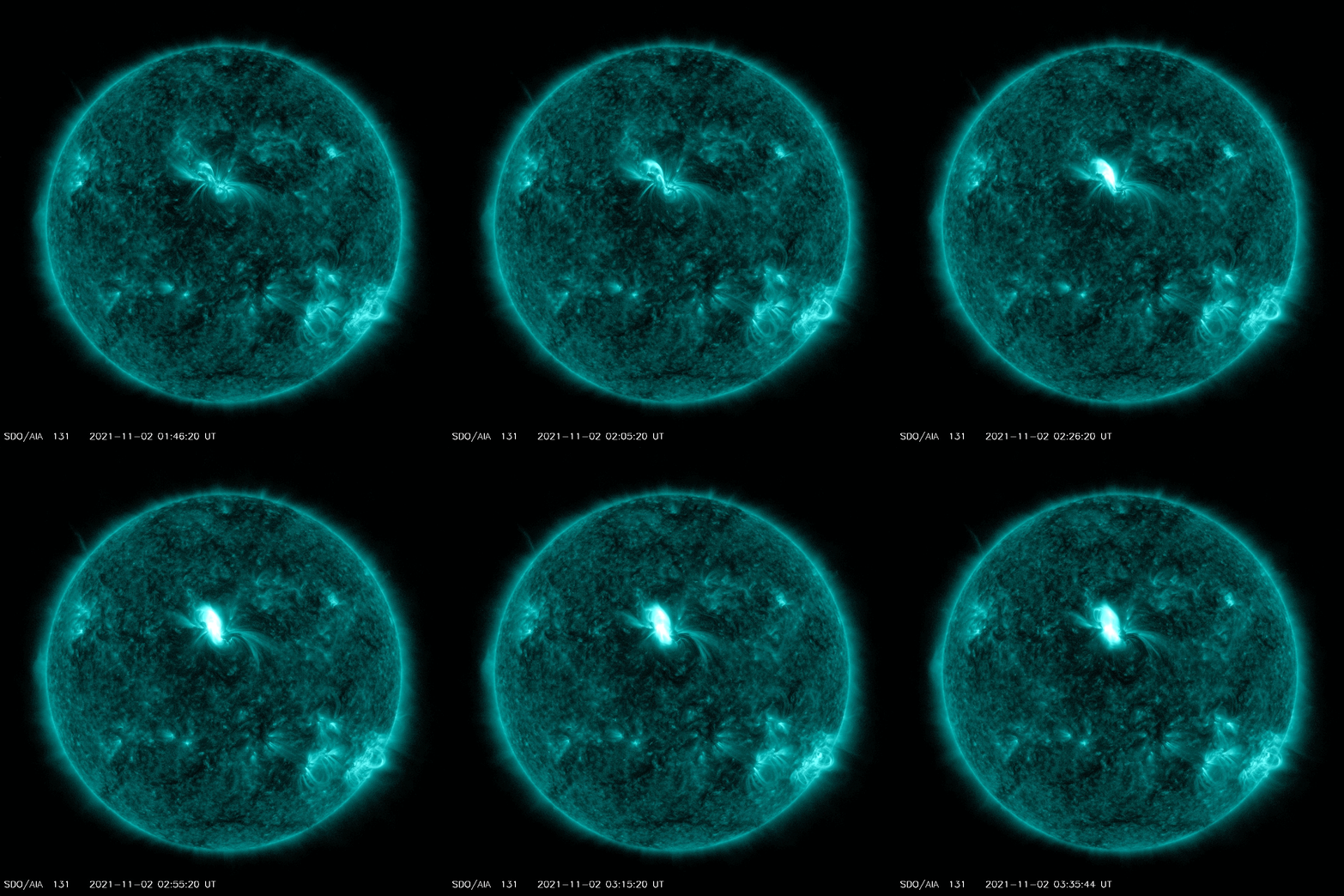
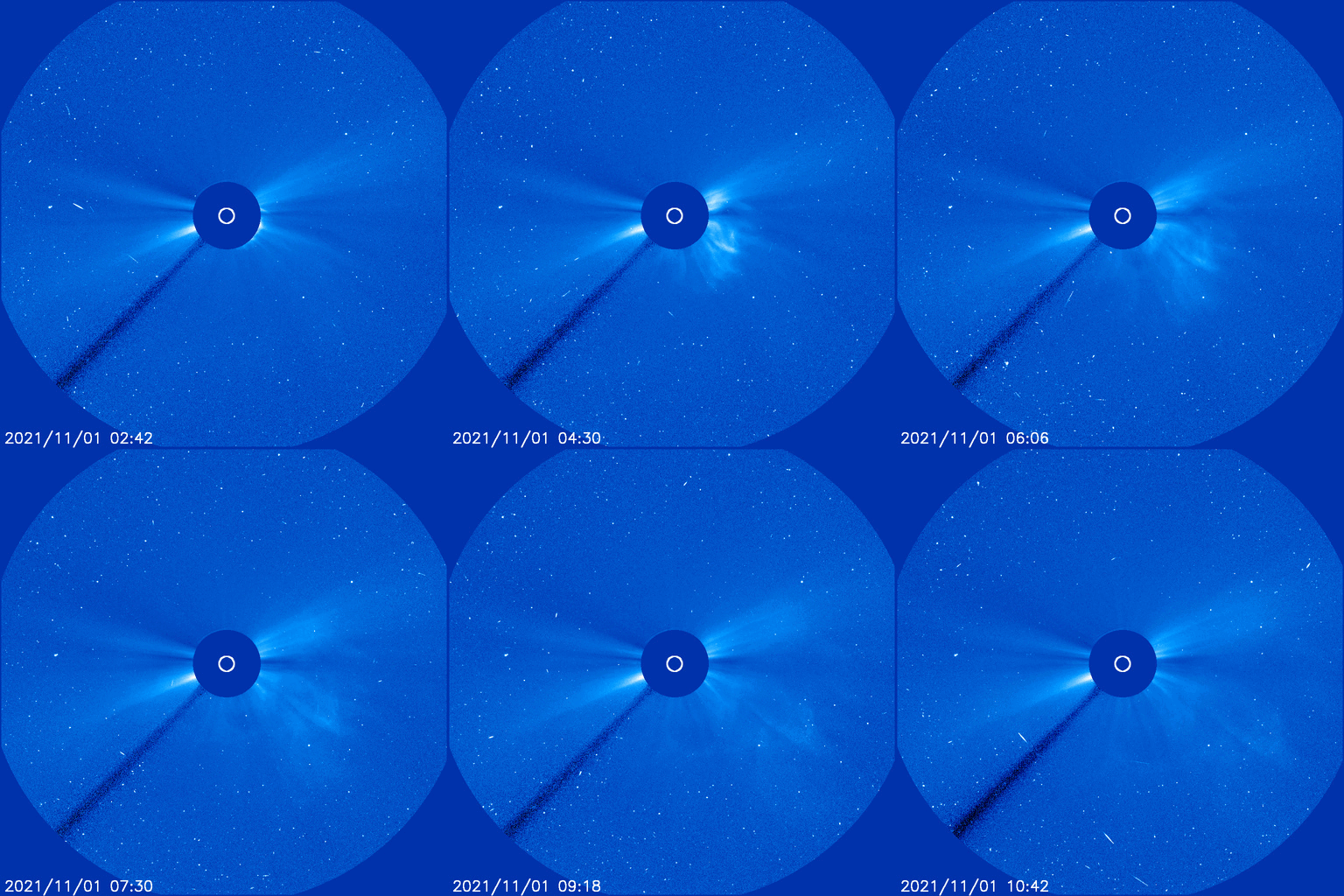
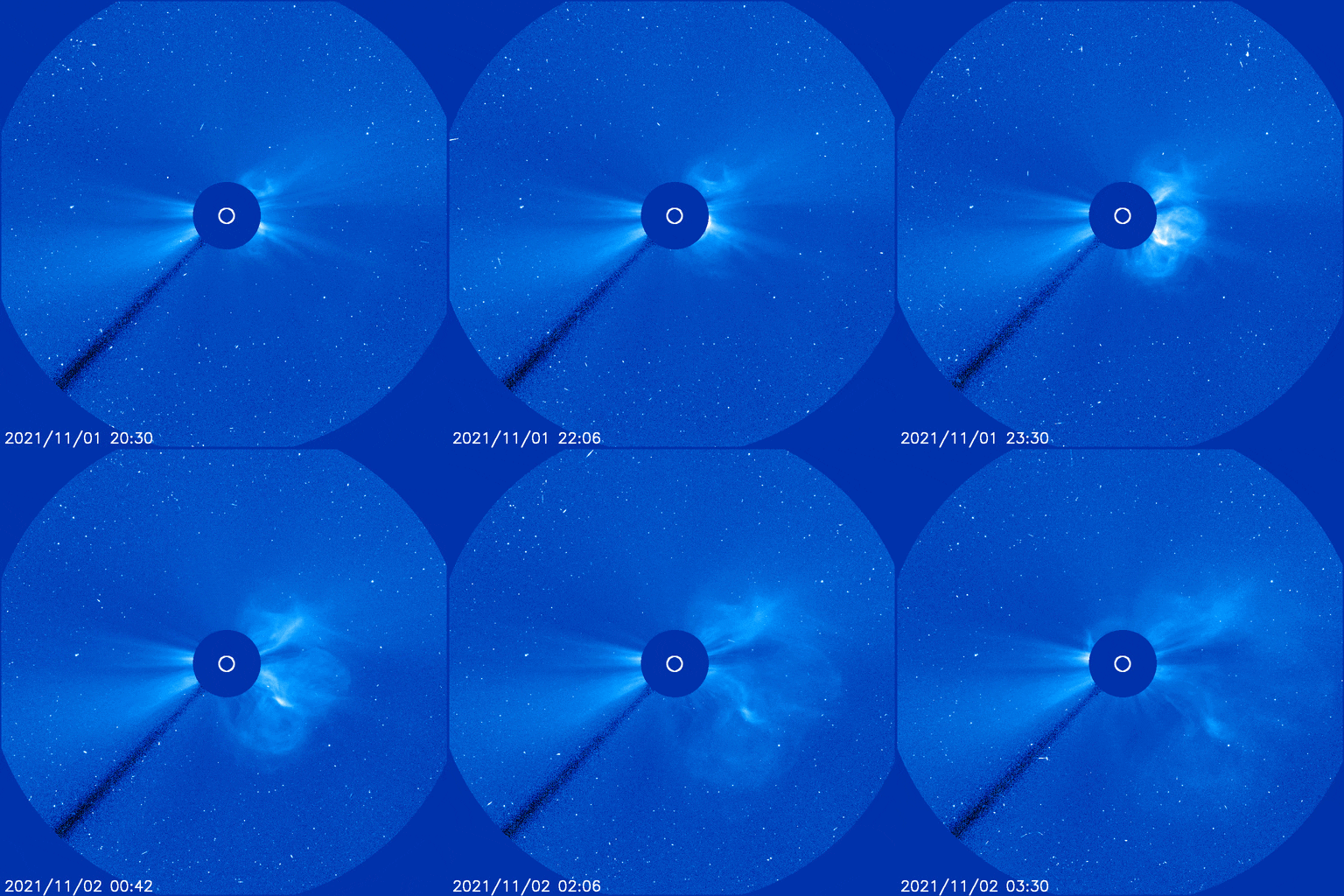
A HALO CME IS HEADING FOR EARTH: The sun just hurled a storm cloud toward Earth. It launched during the early hours of Nov. 2nd, propelled by an M1.7-class solar flare in the magnetic canopy of sunspot AR2891. This movie from SOHO shows the resulting CME:

Researchers call this a "halo CME" because the storm cloud apppears to form an expanding halo all the way around the sun. It's a sign that the CME is heading directly for our planet.
Estimated time of arrival: Nov. 5th. The impact could spark geomagnetic storms as strong as category G2.

The X-factor in this forecast is the possible arrival of one or more glancing-blow CMEs beginning Nov. 4th. These were emitted by departing sunspot AR2887 near the edge of the Earth strike-zone. A series of glancing blows on Nov. 4th could set the stage for stronger than expected storms on Nov. 5th.
Realtime Aurora Photo Gallery
Free: Spaceweather.com Newsletter
SHADOWS OF VENUS IN THE ATACAMA DESERT: The Atacama Desert in northern Chile is an astronomer's paradise. Its unique combination of high altitude, clear air, and zero light pollution make it one of the best places in the world to look at the sky. Last week, however, Daniele Gasparri found something amazing on the desert floor. "It was my Venus shadow," he says.
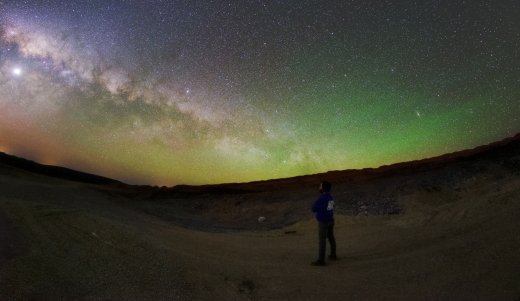
"It's that time of the year when Venus shines so brightly that it generates faint shadows, explains Gasparri. "Here is the proof: Me and my long shadow that follows me for the first part of the night, every night."
Gasparri is a professional astronomer who actually lives in the Atacama Desert. He finds himself silhouetted by the light of another planet perhaps more often than anyone else on Earth. Some of his best shots may be found here.
Realtime Space Weather Photo Gallery
Free: Spaceweather.com Newsletter
STAR TREK WINE STOPPER: It's the most far-out wine stopper ever! On Sept. 9, 2021, the students of Earth to Sky Calculus launched the USS Enterprise to the stratosphere onboard a cosmic ray research balloon. Here is the starship-shaped stopper floating 105,563 feet above the rugged Sierra Nevada mountains of central California:
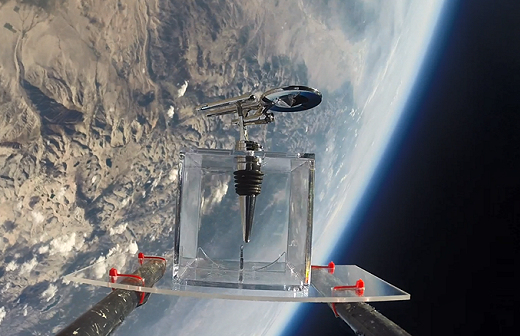
You can have it for $119.95. The students are selling these must-have bar accessories to support their cosmic ray research program. Each one comes with a greeting card showing the stopper in flight, telling the story of its trip to the edge of space and back again.
Far Out Gifts: Earth to Sky Store
All sales support hands-on STEM education