THE STORM IS SUBSIDING: Earth's magnetic field is still reverberating from yesterday's Cannibal CME impact, but the storm is subsiding. The planetary K-index has dropped to 4, techically below the threshold of geomagnetic storms. The solar wind speed remains high (600+ km/s), however, which means Arctic sky watchers could see another round of auroras tonight. Aurora alerts: SMS Text.

CANNIBAL CME SPARKS LOW LATITUDE AURORAS: Auroras in California? Believe it. Last night, the glow of a strong (G3) geomagnetic storm spread almost to Los Angeles. Aurora chaser Hongming Zheng took this picture just outside Lincoln CA at latitude +39N:

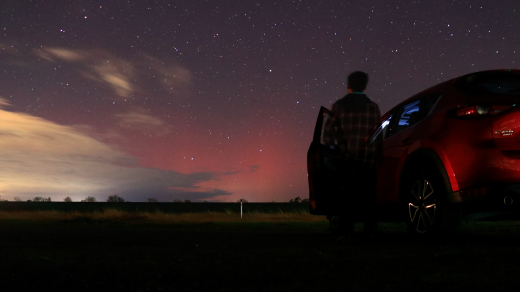
"This was my southernmost aurora sighting yet!" says Zheng. "A red glow and occasional pillars were visible to the naked eye. I was very pleasantly surprised with this unexpectedly strong geomagnetic storm."
More reds appeared in Joshua Tree, California (+34N). "I could not see them with my naked eye," says veteran observer Don Davis, "but my camera recorded these rare SoCal auroras."
The CME that sparked the display was a special "Cannibal CME"--that is, a mashup of multiple solar storm clouds striking Earth all at once. Cannibal CMEs contain tangled magnetic fields and compressed plasmas that often do a good job sparking auroras.
In Abisko, Sweden, the auroras were so bright they could be seen at sunrise:
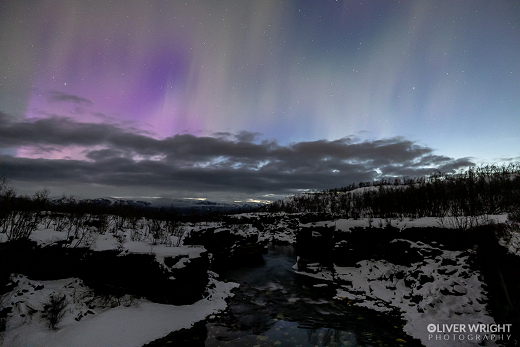
"I almost slept through the storm," confesses photographer Oliver Wright. "I woke up just after 5am and I could see auroras through my bedroom window. So quick coffee and headed down to the bridge over the Abisko canyon. I was watching purple auroras getting washed out by the nautical sunrise. I've only ever seen that once before during the Saint Patrick Day geomagnetic storm of 2015."
more aurora images:from Marianne Bergli of Tromsø, Norway; from Marybeth Kiczenski of Bayfield, Wisconsin; from Markus Varik of Tromsø, Norway; from Chris Cook of Cape Cod, Massachusetts; from Greg Ash of Duluth Minnesota; from Genevieve of Greenwood, Maine; from Thomas Spence of Tofte, Minnnesota; from Shelley Johnson of Anacortes, Washington
Realtime Aurora Photo Gallery
Free: Spaceweather.com Newsletter
STERLING SILVER OPAL PENDANT: It's our most beautiful space pendant ever: The Sterling Silver Opal. The students of Earth to Sky Calculus just launched one to the stratosphere onboard a cosmic ray research balloon. Here it is floating 103,018 ft above Earth's surface on Sept. 5th:
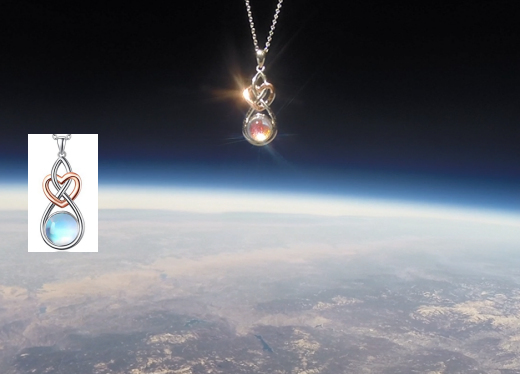
You can have it for $179.95. Wrapped in a sterling silver Celtic love knot, the opal is suspended from a matching 18-inch chain. Each pendant comes with a greeting card showing the opal in flight, telling the story of its trip to the edge of space and back again.
Opals are cousins of moonstones; in fact they look the same in low light. But when bright sunlight strikes an opal, something special happens. A spray of color emerges from the stone. This happened while the stone was in the stratosphere (see above) and it remains capable of this beautiful trick back on Earth.
Far Out Gifts: Earth to Sky Store
All sales support hands-on STEM education
Realtime Space Weather Photo Gallery
Free: Spaceweather.com Newsletter