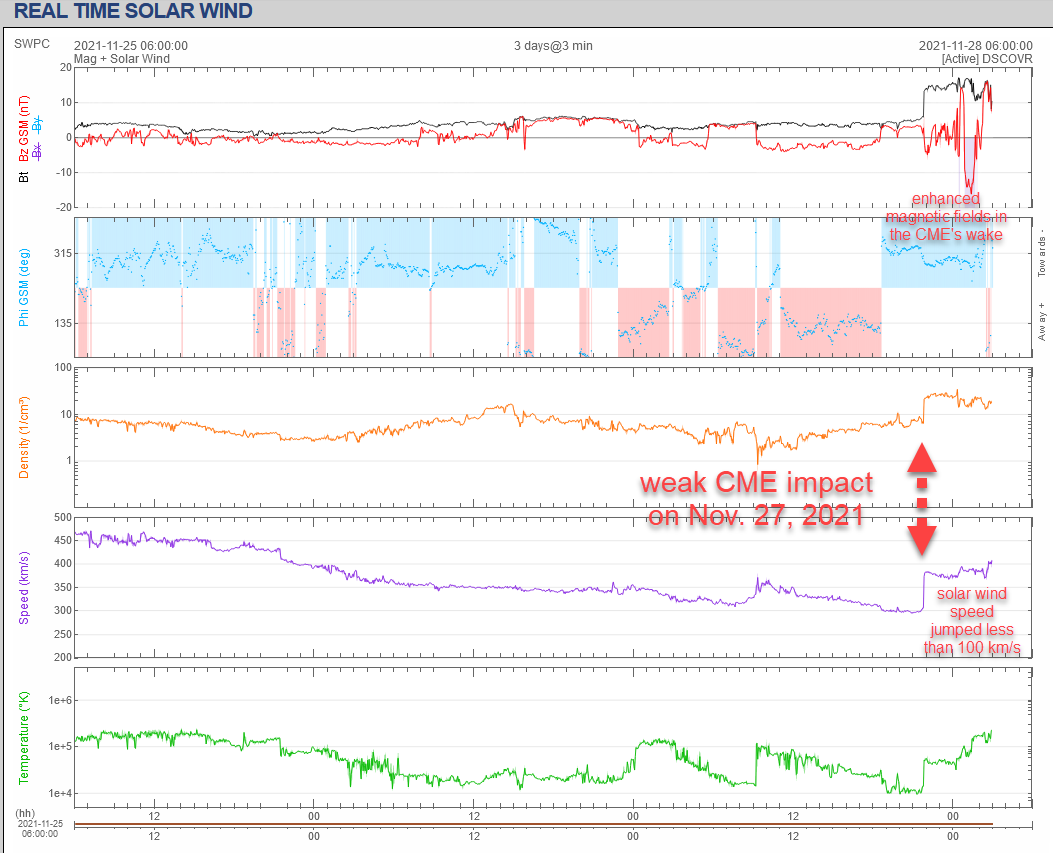
WEAK CME IMPACT: As predicted, a CME hit Earth's magnetic field during the late hours of Nov. 27th (approx. 23:30 UT). The weak impact did not cause a geomagnetic storm--not even a minor one. A brief outburst of auroras over Alaska might have been related to the CME's arrival. Aurora alerts: SMS Text
SOLAR ORBITER SURVIVES RISKY FLYBY: Yesterday, Nov. 27th, Europe's Solar Orbiter spacecraft buzzed the nightside of Earth just 470 km above the Atlantic Ocean. When the spacecraft emerged from our planet's shadow, Arizona astronomer Scott Tucker photographed it racing through the constellation Aries. Click to set the scene in motion:
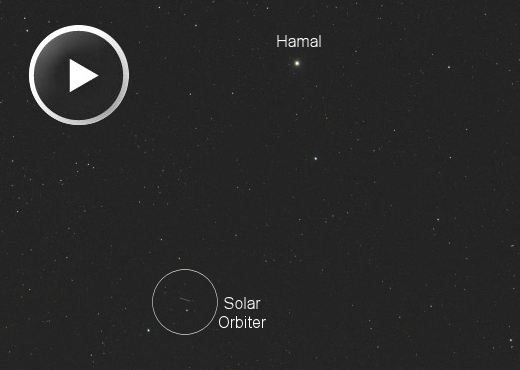
"In the movie, the total timelapse is about 3 minutes with individual exposures of 2 seconds. The field of view is 10 degrees wide," explains Tucker. "There is also a random, slower moving satellite passing through the same field in the upper right."
Shortly after Tucker recorded this movie, the European Space Agency reported "Solar Orbiter is out of the space debris danger zone following its close Earth flyby and on its way to the next close pass of the sun next year."
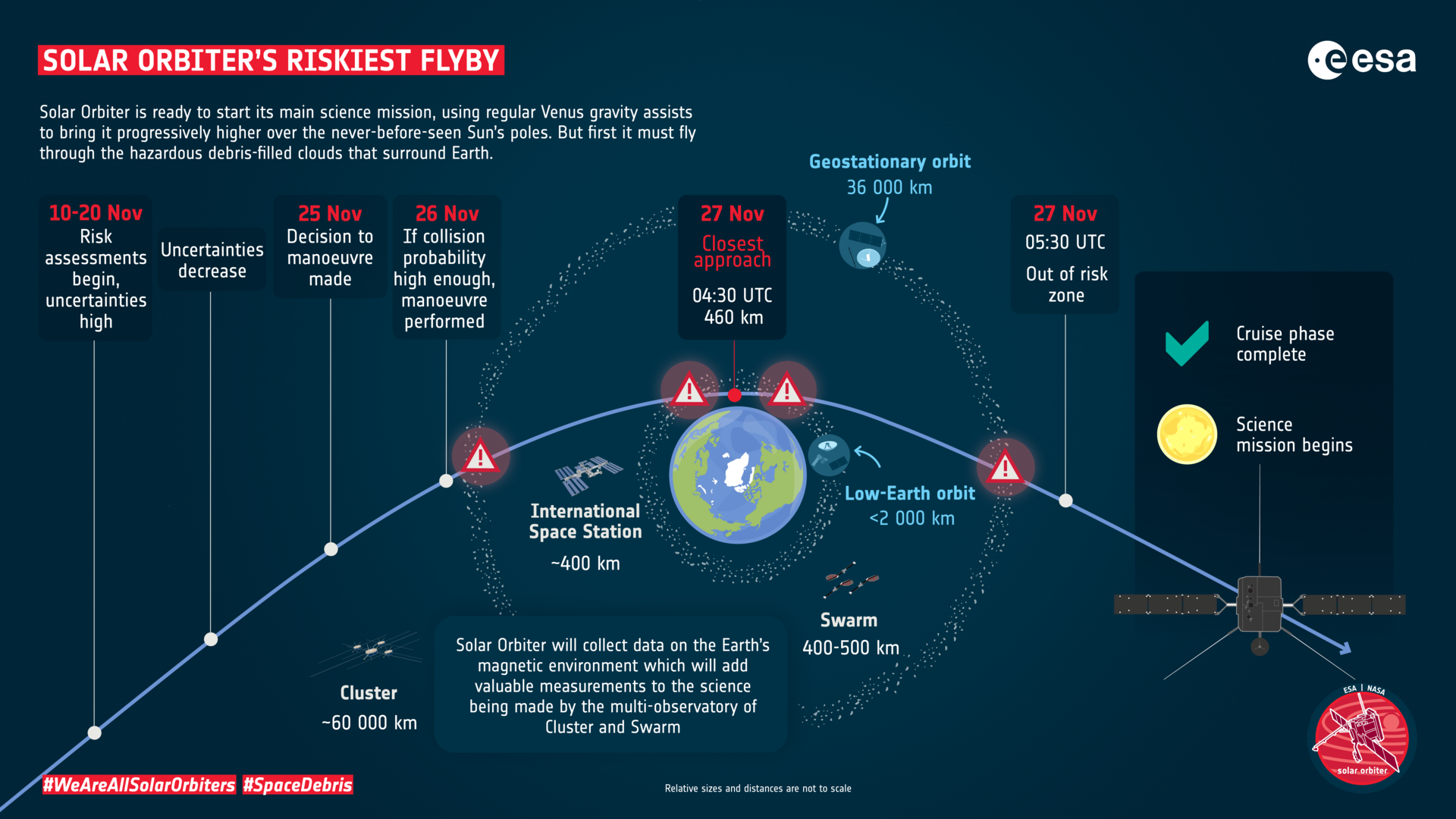
The orbit-bending maneuver sent Solar Orbiter hurtling toward the sun. Next year, it will photograph our star from point-blank range inside the orbit of Mercury. Incredibly, that is *not* the riskiest part of Solar Orbiter's mission. Passing close to Earth where space is filled with debris worried mission controllers even more.
Realtime Space Weather Photo Gallery
Free: Spaceweather.com Newsletter
THE DAYTIME MOON: Some people think the Moon can only be seen at night. "In fact," says Taiwanese phtographer Meiying Lee, "if you look up at the sky, you will find that not only can the Moon be seen during the day, but also that it is very charming." This combined photo shows daytime Moons of all phases photographed by Lee over the past 5 years:
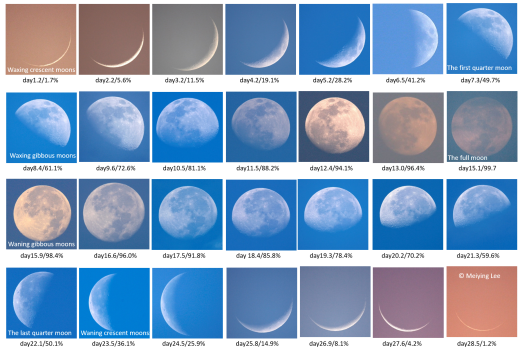
"A special thing about this photo is that you can see the relationship between the Moon and the sky," says Lee. "Crescent Moons are near the sun, so they can only be observed during sunset and sunrise; the sky around them is pink or off-white. Blue sky surrounds half Moons and gibbous Moons, which are relatively easy to find in broad daylight."
"The full Moon during the day is the most difficult to observe," says Lee. "In the summer, daytime is longer and there is a chance to observe it. But the weather in the summer afternoon is often bad in Taiwan, so in the past five years I could barely get a single picture of the full Moon on a misty day--the last one in the second row."
Realtime Aurora Photo Gallery
Free: Spaceweather.com Newsletter
GIFTS FROM THE EDGE OF SPACE: Christmas is coming. Are you looking for a far-out gift? Check out the Earth to Sky Store. It's filled with unique items that have flown to the edge of space onboard cosmic ray research balloons.

Carried aloft by giant helium balloons, these unique gifts have flown above 99.7% of Earth's atmosphere, experiencing space-like blasts of cosmic rays, extreme cold, and a wild ride parachuting back to Earth after the balloon explodes. Even Amazon doesn't carry items this far out.
Don't forget to enter coupon code "BLACKPEARL" at checkout for a 15% Extended Black Friday discount.
Far Out Gifts: Earth to Sky Store
All sales support hands-on STEM education