GEOMAGNETIC STORM IN PROGRESS: A minor G1-class geomagnetic storm is in progress on Nov. 30th as Earth enters a slow-moving but strongly magnetized stream of solar wind. This might be a co-rotating interaction region (CIR)--a shock-like boundary zone between slow and fast-moving solar wind. CIRs often do a good job sparking high latitude auroras. Aurora alerts: SMS Text.

ANDROMEDID METEOR OUTBURST: The Andromedids are back. Over the weekend astronomers reported an outburst of more than 100 faint meteors per hour. "[It was] the strongest outburst of Andromedid meteors ever detected by the Canadian Meteor Orbit Radar (CMOR)," says Peter Brown of the University of Western Ontario. This radar sky map shows a hot spot of meteor activity on Nov. 28th:
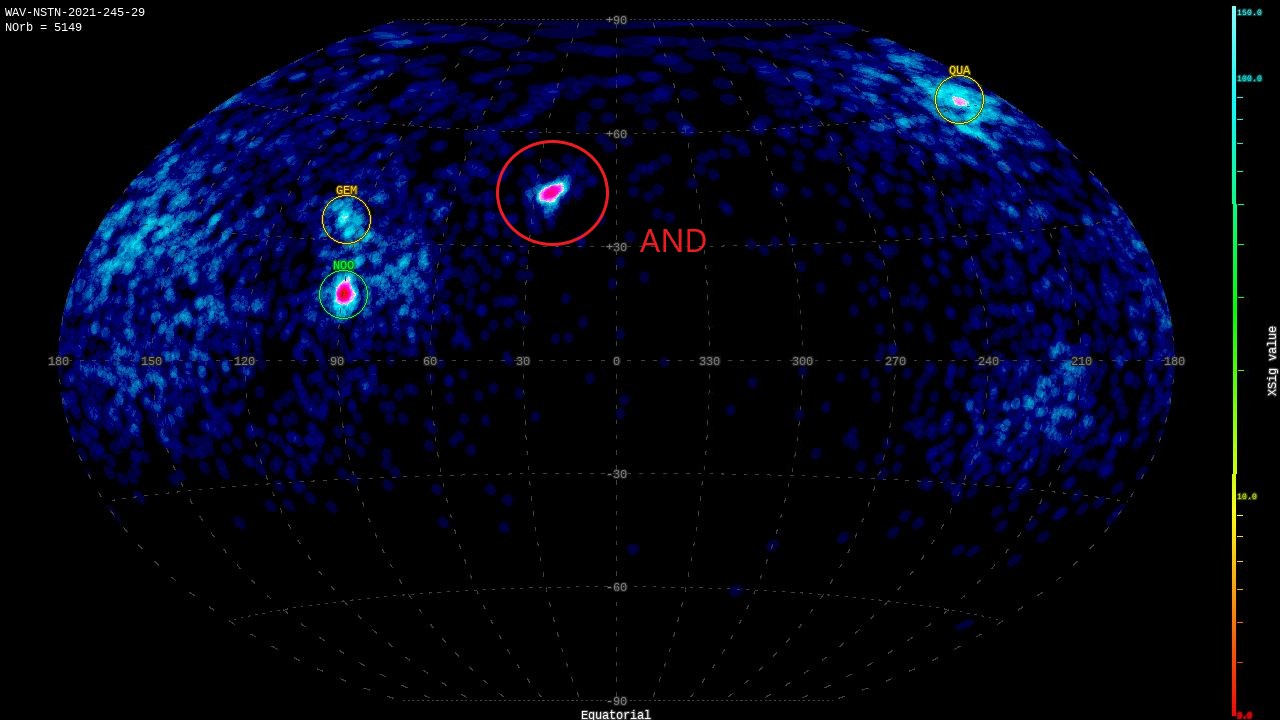
The shower's not over yet. "The current outburst is ongoing and it may be another few days or even a week before the activity ramps down," says Brown. "These meteors are too faint to see with the naked eye, but they are easy targets for our radar."
Andromedids are debris from Biela's Comet, known to historians as "the comet that split in two." 3D/Biela started to fall apart not long after it was discovered in 1772. It was a double comet when it swung by Earth in 1852 and, after that, was never seen again. In 1872 and 1885, thousands of meteors shot out of the constellation Andromeda as Earth passed through Biela's remains. Chinese records described "stars that fell like rain."
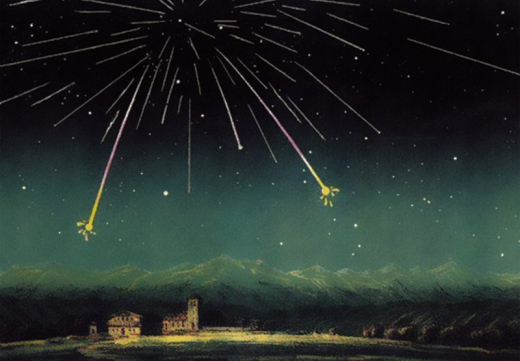
Above: Andromedids on the night of November 27, 1872, by Amédée Guillemin [ref]
Then the Andromedids vanished, too. The shower has been weak or absent entirely since the late 19th century. Only a surprise outburst in 2011 signaled that Biela's debris might still be lurking nearby. This week's activity is even more promising.
Bill Cooke of NASA's Meteoroid Environment Office (MEO) is one of several experts who have been modeling Biela's debris streams, hoping to forecast a return. "Our models generally do not do well in predicting the timing or intensity," he says. "However, this year our model got the timing roughly correct." This plot shows current radar data (red dots) vs. predicted debris stream crossings:
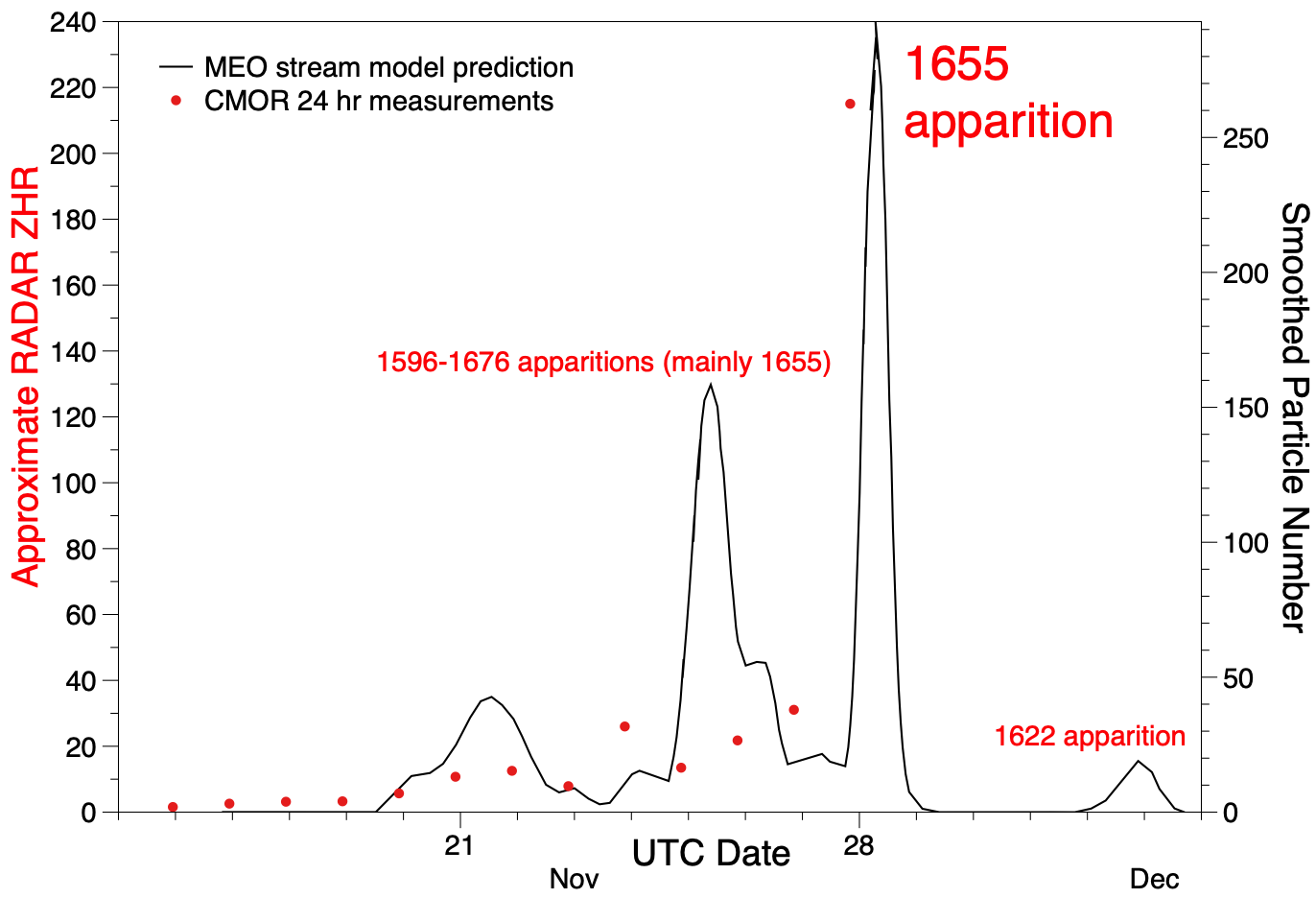
According to Cooke's model, the outburst on Nov. 28th was caused by a stream of dust laid down in 1655--interestingly before the comet fell apart. "We didn't think the 1655 crossing would produce much of anything," confesses Cooke. "So the outburst came as a bit of a surprise."
A team of astronomers led by Paul Wiegert (including Brown) had already predicted a strong naked-eye Andromedid outburst in December 2023. If they are right, the display two years from now could yield as many as 200 bright meteors an hour, surpassing even the Perseids and Geminids. The current outburst is providing new data for their stream models, and could help improve the predictions.
Stay tuned for updates as the shower continues.
Note: The Canadian Meteor Orbit Radar is operated through a cooperative agreement between Western University’s Meteor Physics Group and NASA’s Meteoroid Environment Office.
Realtime Space Weather Photo Gallery
Free: Spaceweather.com Newsletter
GIFTS FROM THE EDGE OF SPACE: Christmas is coming. Are you looking for a far-out gift? Check out the Earth to Sky Store. It's filled with unique items that have flown to the edge of space onboard cosmic ray research balloons.

Carried aloft by giant helium balloons, these unique gifts have flown above 99.7% of Earth's atmosphere, experiencing space-like blasts of cosmic rays, extreme cold, and a wild ride parachuting back to Earth after the balloon explodes. Even Amazon doesn't carry items this far out.
Don't forget to enter coupon code "BLACKPEARL" at checkout for a 15% Extended Black Friday discount.
Far Out Gifts: Earth to Sky Store
All sales support hands-on STEM education
Realtime Aurora Photo Gallery
Free: Spaceweather.com Newsletter