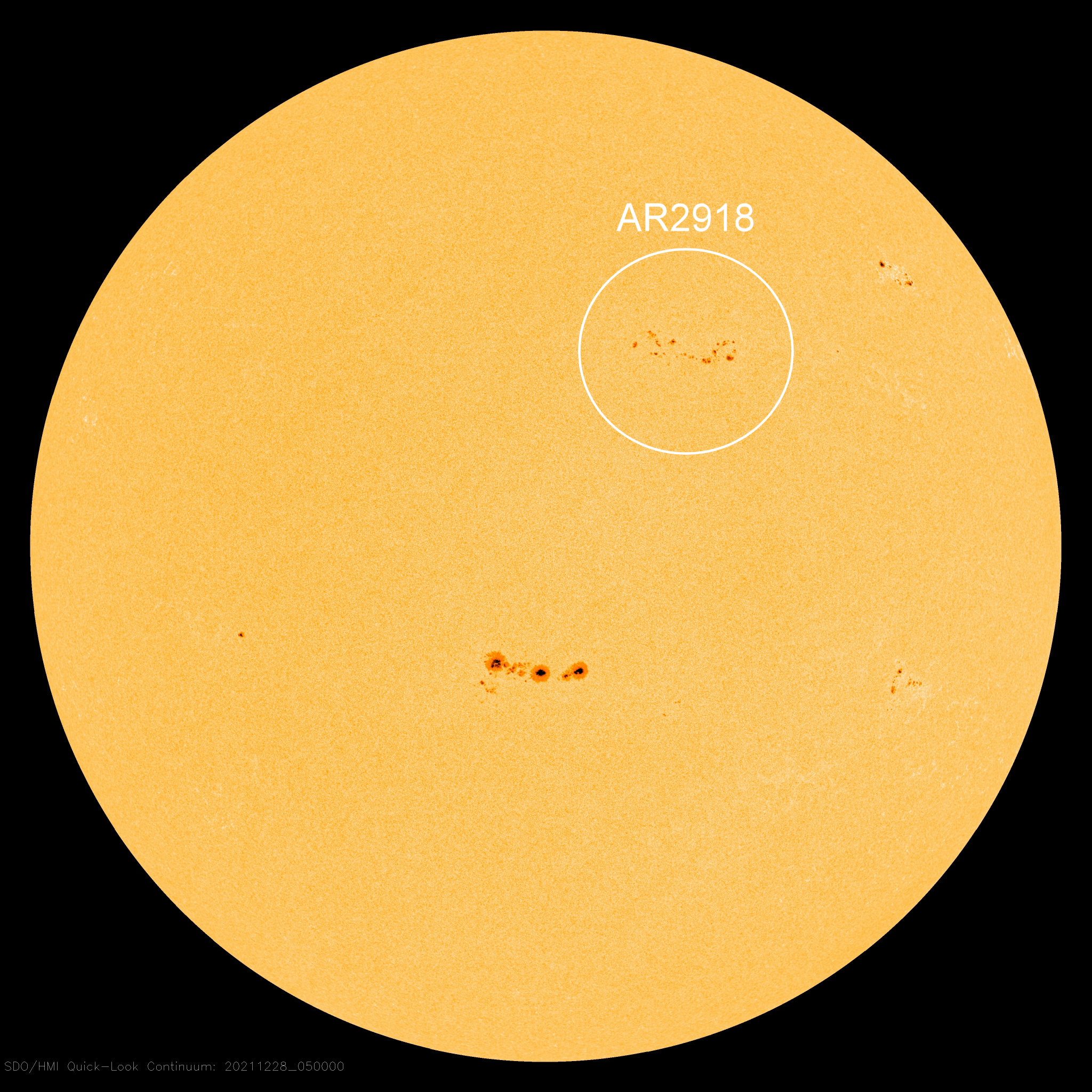
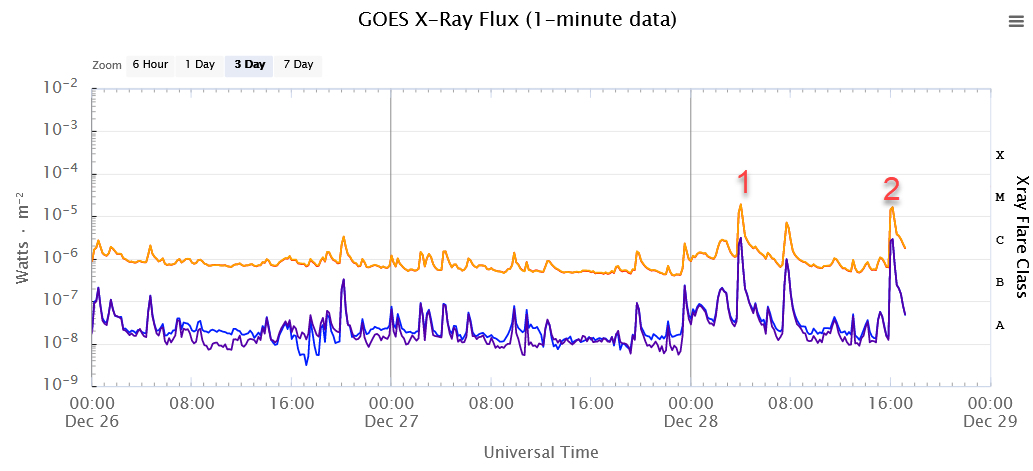
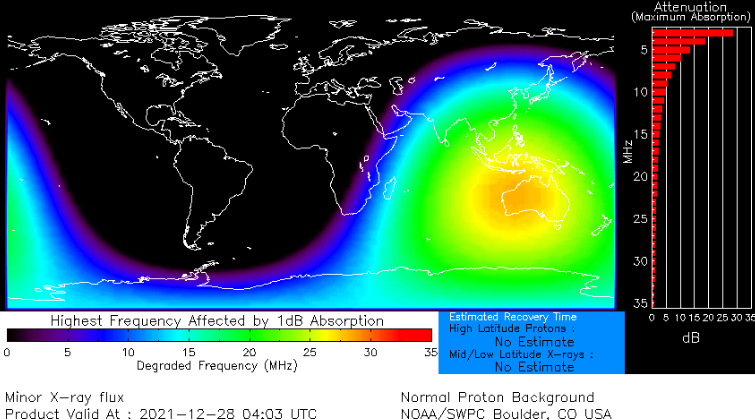
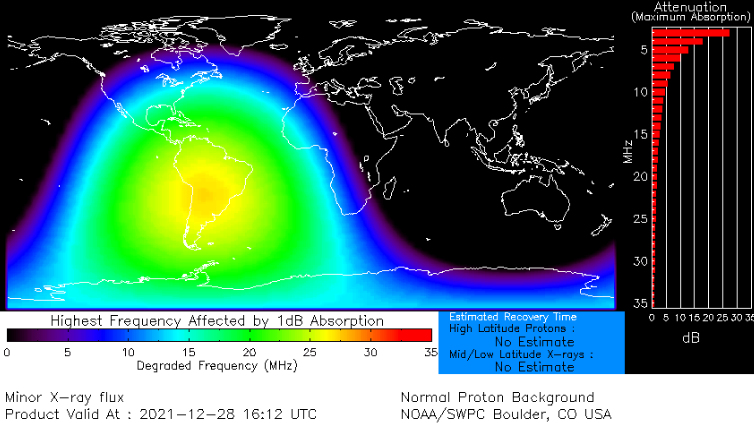
SOLAR FLARE ACTIVITY INTENSIFIES: Suddenly, rash-like sunspot AR2918 is crackling with M-class solar flares. There have been two so far today (0401 UT & 1611 UT). The flares produced brief shortwave radio blackouts over Australia and South America. Stay tuned for updates about possible CMEs. Solar flare alerts: SMS Text.
THE LEONARD NEBULA: There's a new nebula in the night sky. It's a piece of Comet Leonard's tail that was just pinched off by a gust of solar wind. Bill Williams photographed it on Dec. 27th from the Chiefland Astronomy Village in Florida:
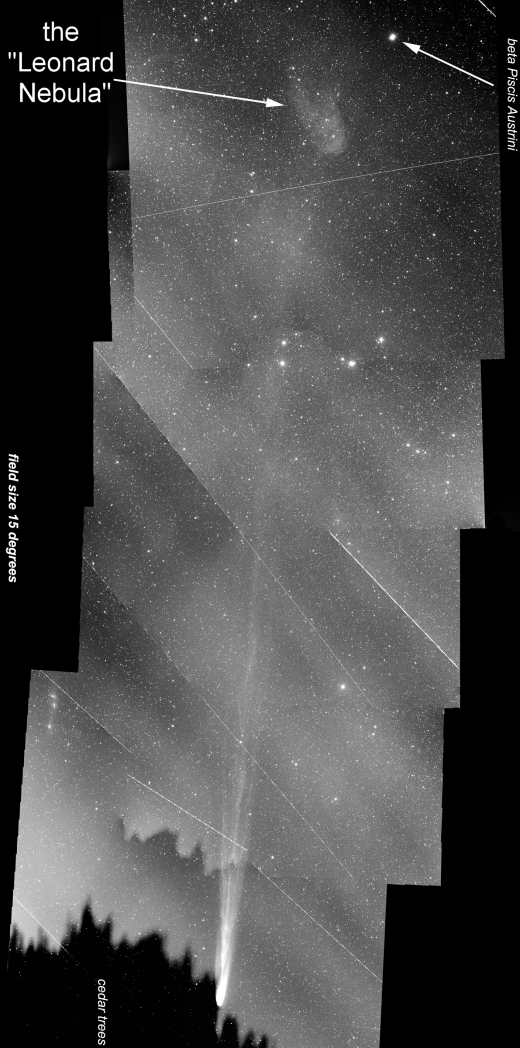
"Last night I took multiple exposures with my 100mm Vixen refractor and SBIG 16803 CCD camera and made a mosaic of the images," explains Williams. "The head of the comet was already setting behind some cedar trees when I photographed the upper reaches of the tail. It is way more than 15 degrees long."
The "Leonard Nebula" is a cloud of gas that became disconnected from the rest of the tail days ago when the comet was hit by a solar wind stream. Interplanetary magnetic fields around the comet's tail crissed-crossed and reconnected, releasing a burst of energy that gave birth to the nebula. A similar process takes place in Earth's magnetosphere during geomagnetic storms powering, among other things, the aurora borealis.
Get ready for more. Comet Leonard is approaching the sun for a 0.61 AU close approach on Jan. 3rd. Increasing heat and proximity to solar storms could spark new outbursts and ruptures. Astronomers in the southern hemisphere will have the best view as the comet glides through the constellation Microscopium--although as Williams' photo shows, northerners can see it, too.
Where is Comet Leonard? Right here.
Realtime Comet Leonard Photo Gallery
Free: Spaceweather.com Newsletter
MR SPOCK IN THE STRATOSPHERE (COLLECTOR'S ITEM): He's back by popular demand: Mr. Spock Bobblehead. On Dec. 12, 2021, the students of Earth to Sky Calculus flew the green-blooded science officer to the stratosphere onboard a cosmic ray research balloon. At the apex of the flight he was 107,341 ft high:
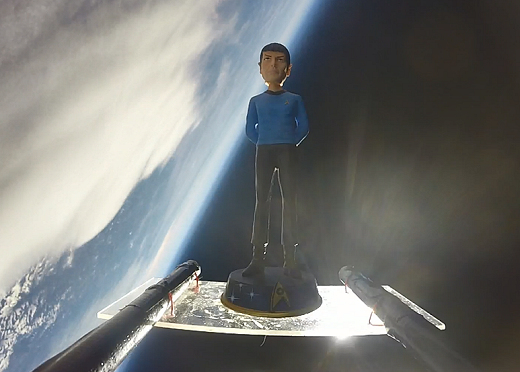
You can have it for $170.10 (the serial number of the Enterprise divided by 10). The bobblehead is made of high-quality resin and hand-painted. It cannot be purchased from Amazon; this rare collector's item is available only from the Earth to Sky Store.
The students are selling Mr. Spock bobbleheads to support their cosmic ray ballooning program. Each one comes with a greeting card showing Spock in flight and telling the story of his journey to the edge of space and back.
Far Out Gifts: Earth to Sky Store
All sales support hands-on STEM education
Realtime Aurora Photo Gallery
Free: Spaceweather.com Newsletter
Realtime Space Weather Photo Gallery
Free: Spaceweather.com Newsletter