SUBSIDING GEOMAGNETIC STORM: A G1-class geomagnetic storm caused by the impact of a CIR on Jan. 8th (see below) is subsiding now. However, a moderately fast stream of solar wind flowing behind the CIR could keep Arctic auroras going for another 24 hours. Aurora alerts: SMS Text.

CIR IMPACT SPARKS BRIGHT AURORAS: A co-rotating interaction region (CIR) hit Earth's magnetic field on Jan. 8th, igniting some of the best Arctic auroras in years. Lights over Lapland tour guide Sachrias Rundquist sends this picture from Abisko, Sweden:
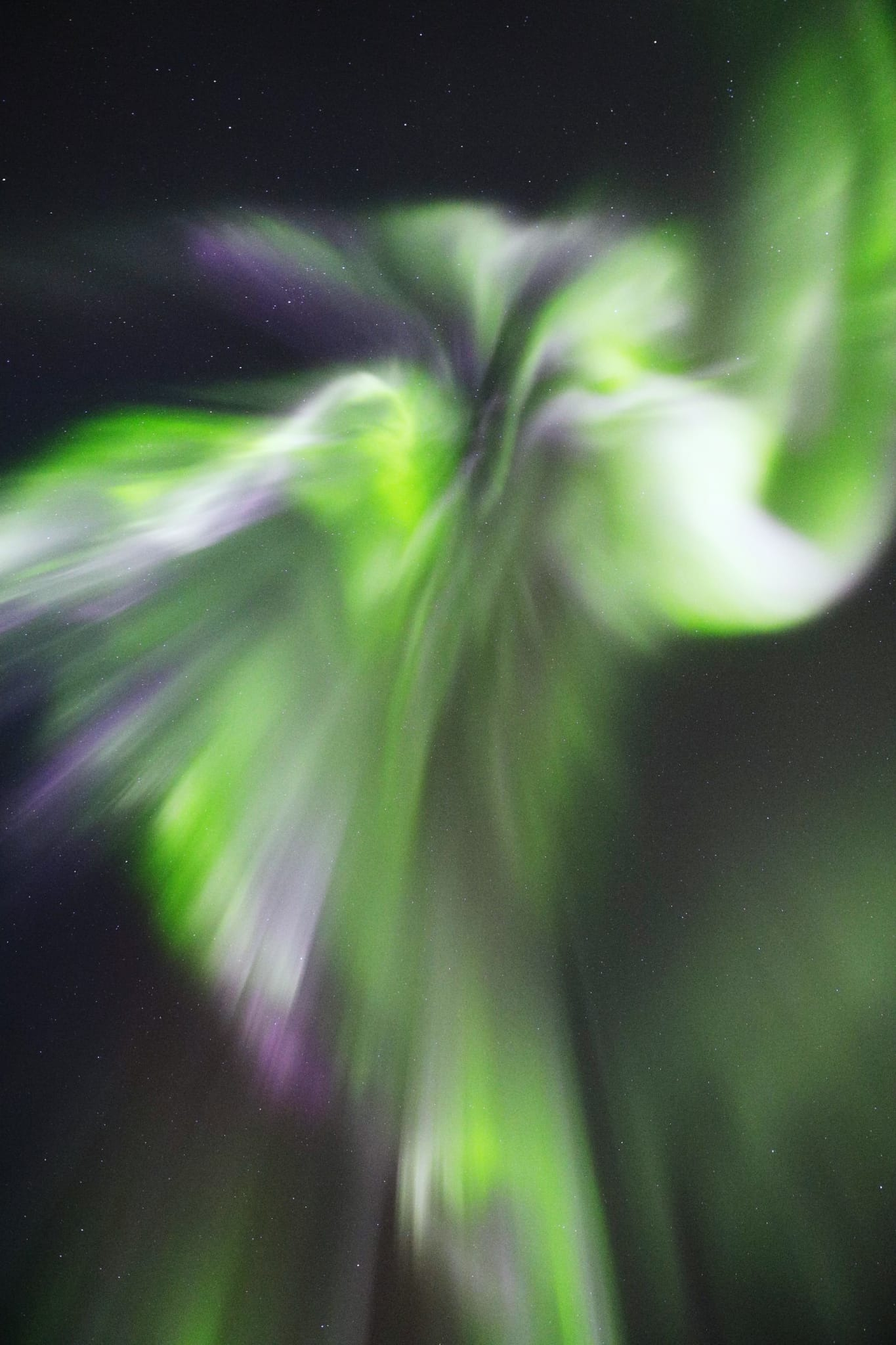
"My phone started vibrating non-stop," says Chad Blakley, who manages the tour service 250 km inside the Arctic Circle. "It was all of our guides talking to each other about how beautiful the auroras were. Several agreed that it was among the 10 best displays they had ever seen."
CIRs are transition zones between fast and slow streams of solar wind. They contain shock waves and magnetic fields that often do a good job sparking auroras. CIRs are like miniature CMEs--the next best thing when a genuine solar storm is not available. Aurora alerts: SMS Text.
Realtime Aurora Photo Gallery
Free: Spaceweather.com Newsletter
INFERIOR CONJUNCTION OF VENUS: Yesterday, Jan. 8th, Venus passed by the sun less than 5 degrees away. Marc Charron photographed the close encounter from Ayr, Scotland:
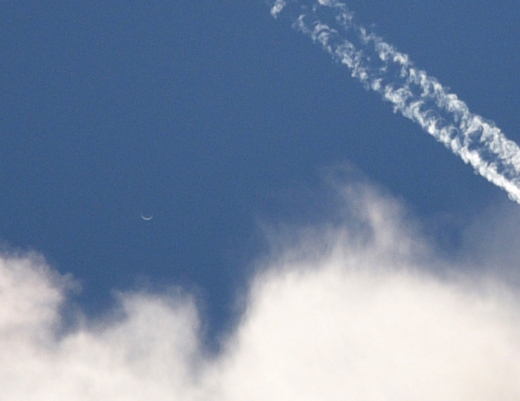
"Shot through a break in the cloud, I managed to capture Venus and a fresh contrail from a nearby airplane," says Charron.
At the moment of Charron's shot, Venus was located almost directly between Earth and the sun--an alignment astronomers call "inferior conjunction." Venus looked like a crescent because the planet's nightside was facing us.
Realtime Venus Photo Gallery
Free: Spaceweather.com Newsletter
"I LOVE YOU MORE" MOONSTONE PENDANT: Valentine's Day is coming! Nothing says "I love you" like a moonstone from space. This one hitched a ride on an Earth to Sky Calculus cosmic ray research balloon, floating 112,201 feet above the Sierra Nevada mountains of central California:
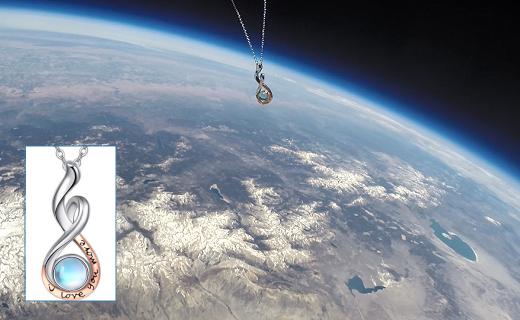
You can have it for $142.95. The students are selling these sterling silver infinity-wrapped moonstone pendants to support their ballooning program. Engraved with "I Love You More," it makes a romantic Valentine's gift. Each one comes with a greeting card showing the moonstone in flight and telling the story of its trip to the stratosphere and back again.
Far Out Gifts: Earth to Sky Store
All sales support hands-on STEM education
Realtime Space Weather Photo Gallery
Free: Spaceweather.com Newsletter