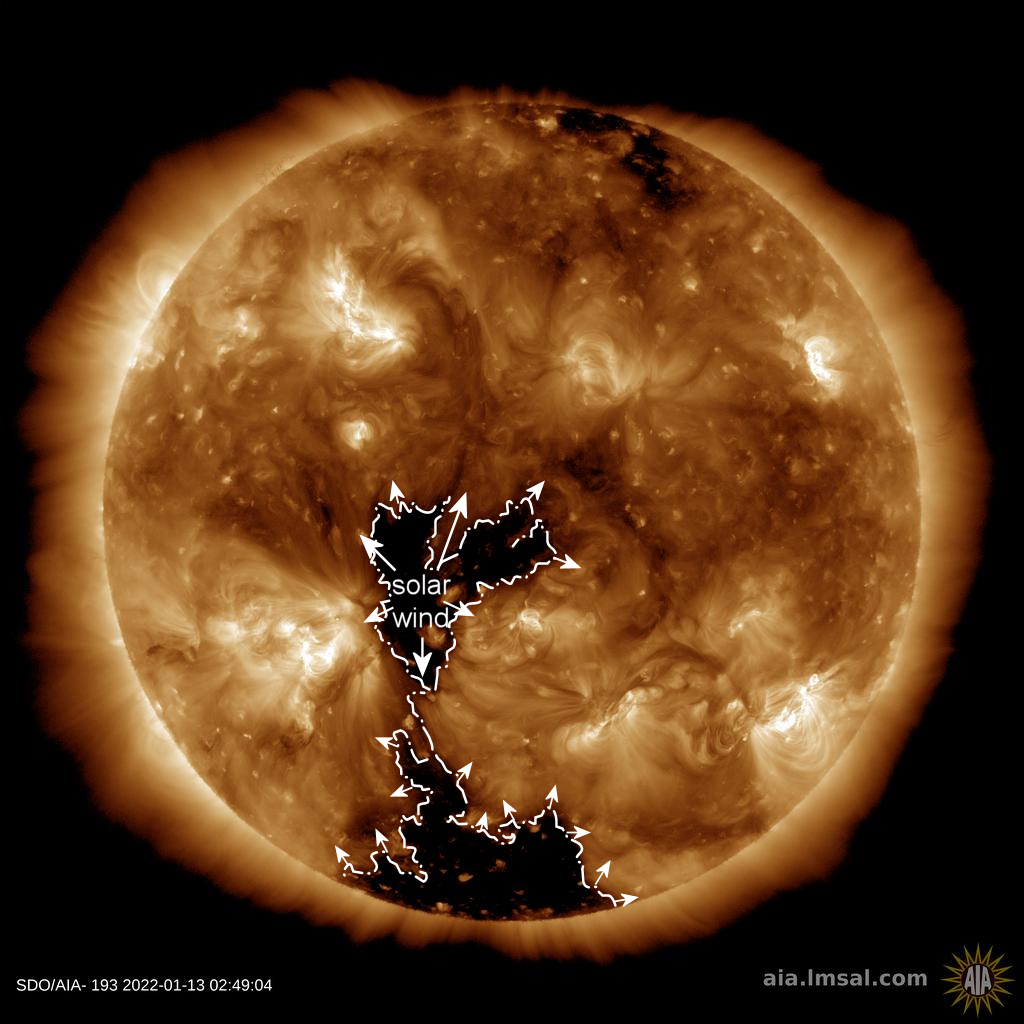
GEOMAGNETIC STORM WATCH: Minor G1-class geomagnetic storms are possible on Jan. 16th when a stream of high-speed solar wind is expected to hit Earth's magnetic field. The gaseous material is flowing from a southern hole in the sun's atmosphere. Arctic auroras could appear as early as Jan. 15th in response to a CIR traveling ahead of the stream. Aurora alerts: SMS Text.

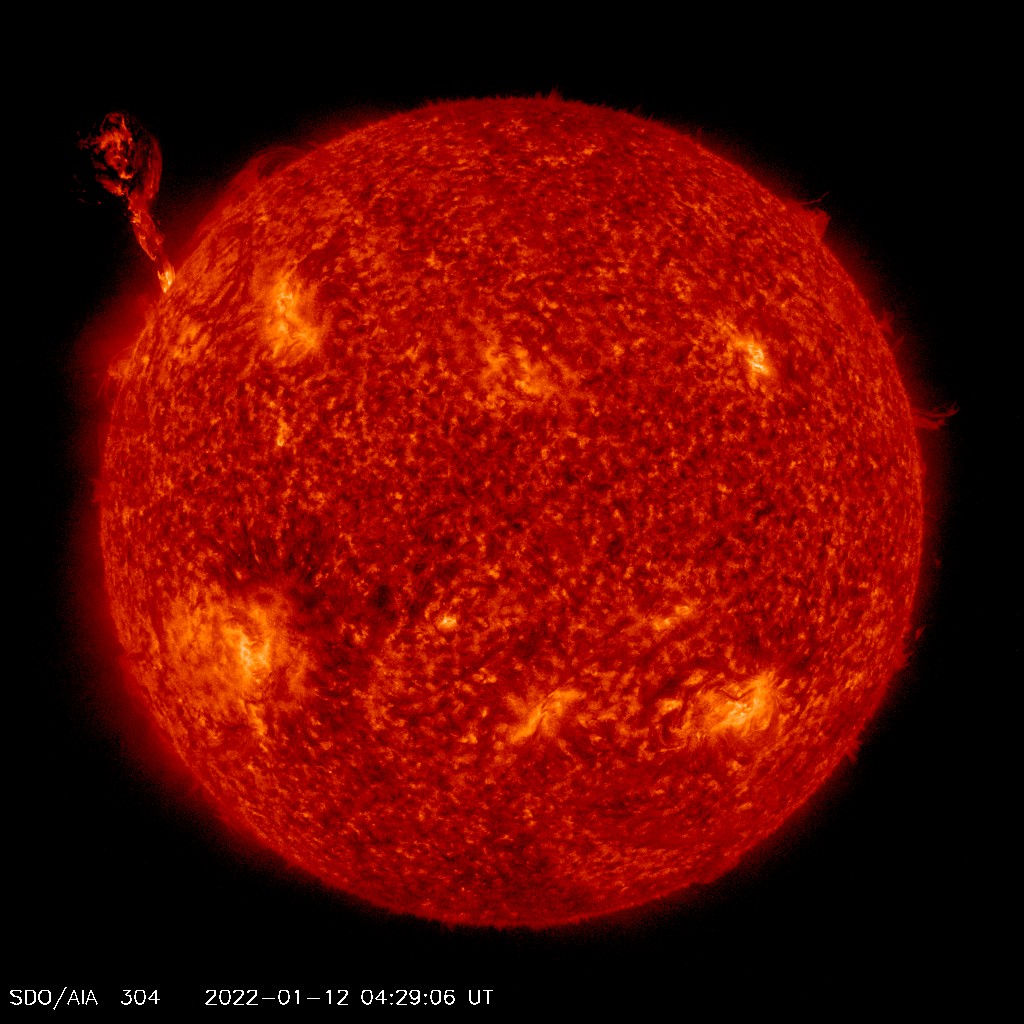
FARSIDE SOLAR EXPLOSION: Something just exploded on the farside of the sun. During the early hours of Jan. 12th, a huge plume of hot plasma leaped over the sun's northeastern limb. Soon after, a full halo CME emerged from the same location:
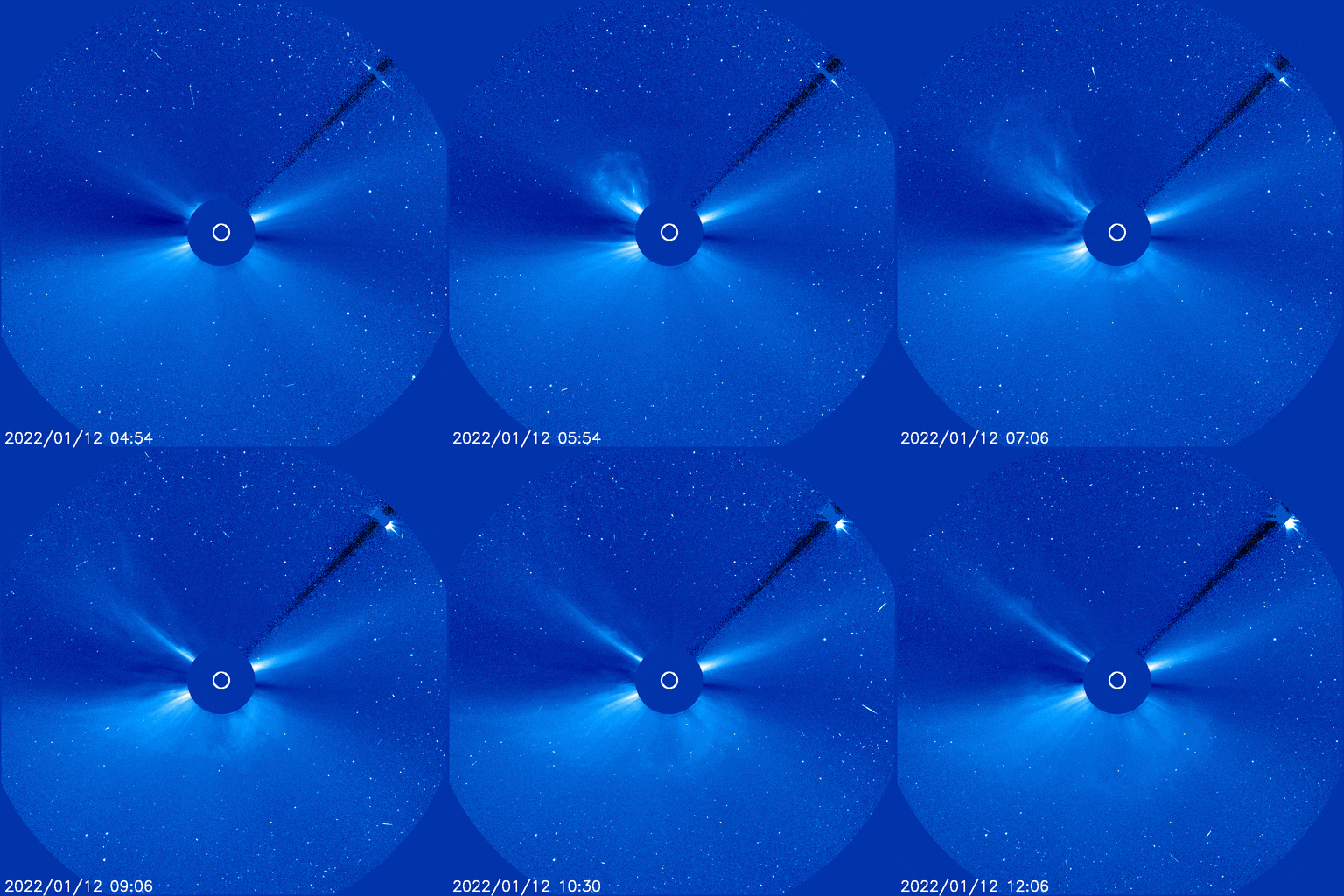
Note: The bright light at the upper right of this SOHO coronagraph is Venus
This was likely an M- or X-class event eclipsed by the edge of the sun. If it had been facing Earth, the explosion would have caused shortwave radio blackouts; also, a strong geomagnetic storm would be in the offing. Instead, there are no Earth-effects except anticipation.
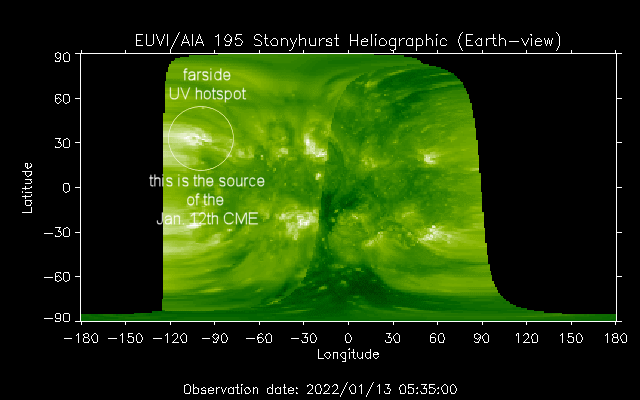
The blast site will turn to face our planet this weekend. NASA's STEREO-A spacecraft is monitoring a large ultraviolet hotspot just behind the sun's northeastern limb. Soon we will see it for ourselves. Stay tuned. Solar flare alerts: SMS Text.
Realtime Space Weather Photo Gallery
Free: Spaceweather.com Newsletter
A 'GREEN FLASH' ON VENUS: Italian Nature photographer Marcella Giulia Pace was watching Venus sink into the sunset on Jan. 5th when something unexpected happened. The reddened horns of the crescent planet suddenly filled with green light. "It was a green flash," says Pace.
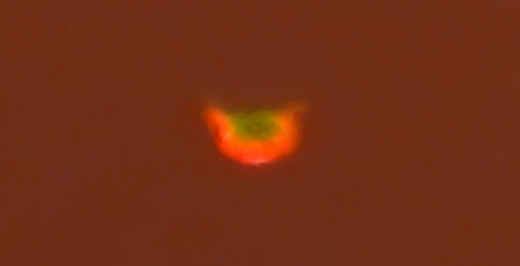
"I video-recorded Venus as it moved down toward the horizon," Pace continues. "The green emissions were popping like explosive bubbles." Watch the video to see what she means.
The bubbles in the video are literally bubbles of warm and cold air mixing in Earth turbulent atmosphere. Temperature gradients at each bubbles' edge act like prisms, separating the light of Venus into R-G-B colors. When Venus crosses an especially strong gradient, the effect is magnified, producing a "flash."
Realtime Venus Photo Gallery
Free: Spaceweather.com Newsletter
"I LOVE YOU MORE" MOONSTONE PENDANT: Valentine's Day is coming! Nothing says "I love you" like a moonstone from space. This one hitched a ride on an Earth to Sky Calculus cosmic ray research balloon, floating 112,201 feet above the Sierra Nevada mountains of central California:
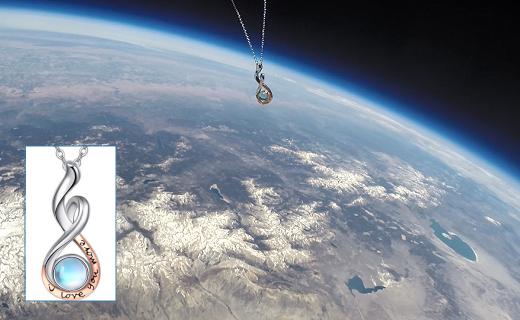
You can have it for $142.95. The students are selling these sterling silver infinity-wrapped moonstone pendants to support their ballooning program. Engraved with "I Love You More," it makes a romantic Valentine's gift. Each one comes with a greeting card showing the moonstone in flight and telling the story of its trip to the stratosphere and back again.
Far Out Gifts: Earth to Sky Store
All sales support hands-on STEM education
Realtime Aurora Photo Gallery
Free: Spaceweather.com Newsletter