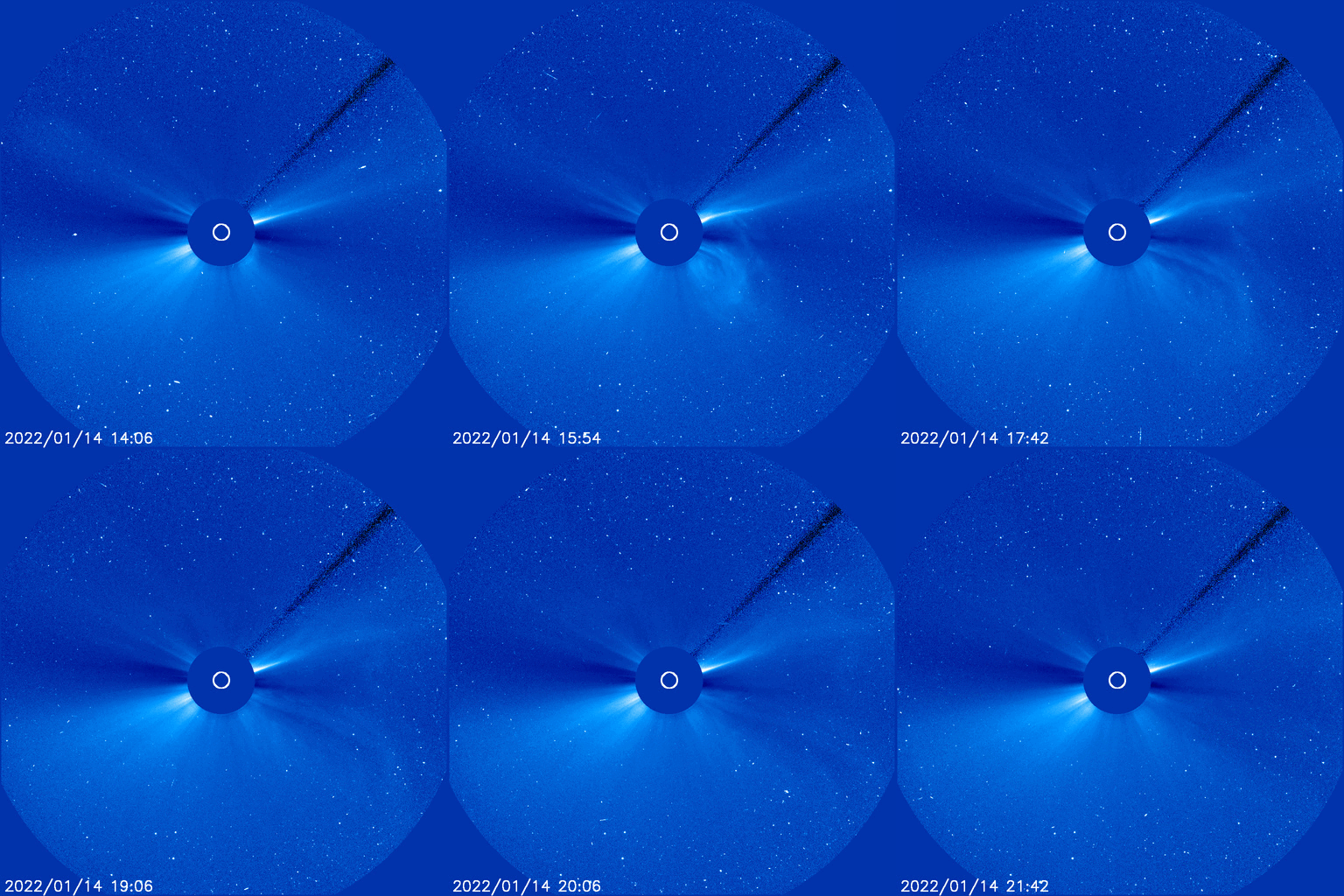
CME ALERT: A CME might be heading for Earth. It was hurled into space on Jan 14th (1333 UT) by a C4-class explosion in the magnetic canopy of southern sunspot AR2925: movie. Given the CME's southern trajectory, much of it will miss Earth. Nevertheless, say NOAA forecasters, a glancing blow is possible late on Jan 16th to midday on Jan. 17th. Aurora alerts: SMS Text.
VOLCANIC SHOCKWAVE RIPPLES ACROSS NORTH AMERICA: If you have a backyard weather station, you might have detected this weekend's volcanic eruption near Tonga. The undersea blast hurled a plume of sulfurous ash all the way to the stratosphere. Satellite videos show an atmospheric shockwave expanding on all sides of the plume.
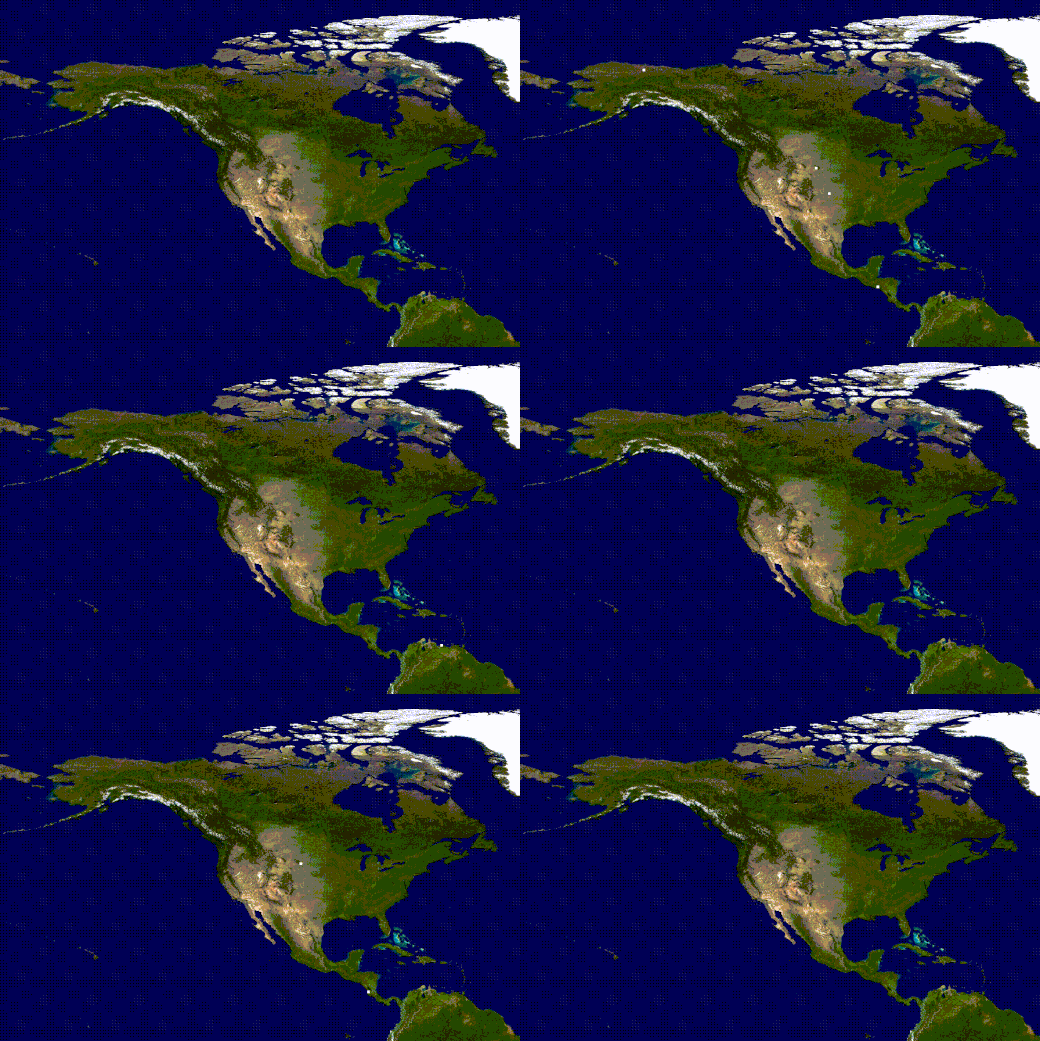
Astronomer Matt Penn and colleagues decided to investigate further. "We plotted the times of barometric pressure peaks from 150 backyard weather stations available on Weather Underground," he explains. This movie sequence shows the data they found:
Credit: Claude Plymate, Mike Conley, Geri Hall-Conley, Jonathan Mangin and Matt Penn
"White dots mark the arrival of the shock wave during the five hour interval 11:30 UT to 16:30 UT," explains Penn. "There were some very large amplitude differences! We clearly saw that the wave was severely reduced by crossing the Rockies. I think it would be very interesting to look at a smaller region, measure amplitudes, and track the reduction as the wave moves from California through the Rockies and onto the Great Plains. There is a gold mine in the Weather Underground data set."
"We looked at only 150 sites," Penn continues. "There are thousands of sites that show the pressure wave and lots of cool science projects that could be done. I hope this inspires more people to take a look!"
Realtime Space Weather Photo Gallery
Free: Spaceweather.com Newsletter
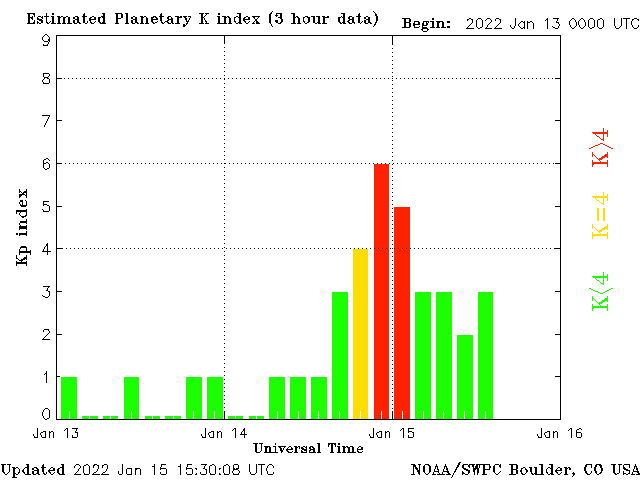
G2-CLASS GEOMAGNETIC STORM: Surprising forecasters, on Jan 14th a crack opened in Earth's magnetic field. Solar wind poured through the gap to spark a G2-class geomagnetic storm. The timing favored observers in Europe, where auroras spilled across the Arctic Circle as far south as Germany:

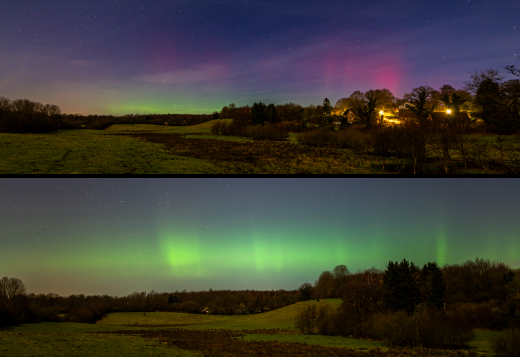
"Despite the brightly shining Moon, it was possible to see auroras with the naked eye," says photographer Laura Kranich, who watched the display from Kiel. "Solar Cycle 25 seems to be a really good one considering that the maximum is still at least two years away."
The lights were also visible from Poland, England, Denmark, Norway, Finland and Sweden.
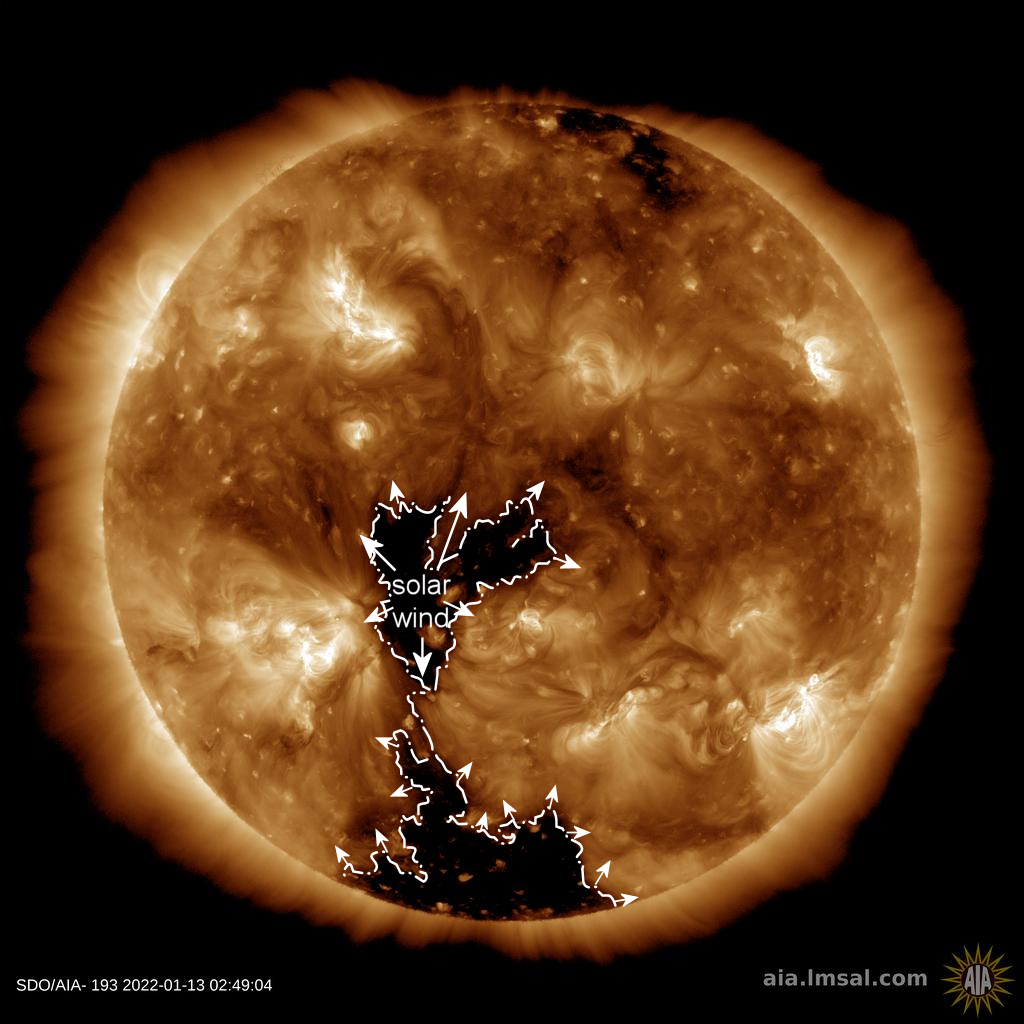
Intermittent G1-class geomagnetic storming could continue on Jan. 15th and 16th as Earth enters a high-speed stream of solar wind. The gaseous material is flowing from a southern hole in the sun's atmosphere. Aurora alerts: SMS Text.

Realtime Aurora Photo Gallery
Free: Spaceweather.com Newsletter
"I LOVE YOU MORE" MOONSTONE PENDANT: Valentine's Day is coming! Nothing says "I love you" like a moonstone from space. This one hitched a ride on an Earth to Sky Calculus cosmic ray research balloon, floating 112,201 feet above the Sierra Nevada mountains of central California:
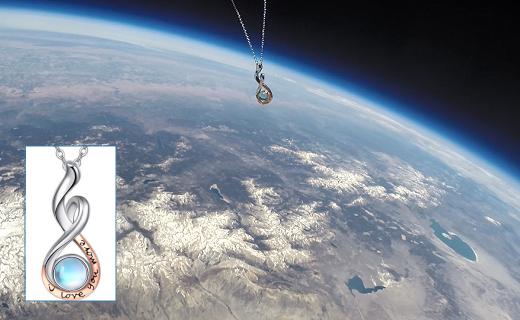
You can have it for $142.95. The students are selling these sterling silver infinity-wrapped moonstone pendants to support their ballooning program. Engraved with "I Love You More," it makes a romantic Valentine's gift. Each one comes with a greeting card showing the moonstone in flight and telling the story of its trip to the stratosphere and back again.
Far Out Gifts: Earth to Sky Store
All sales support hands-on STEM education