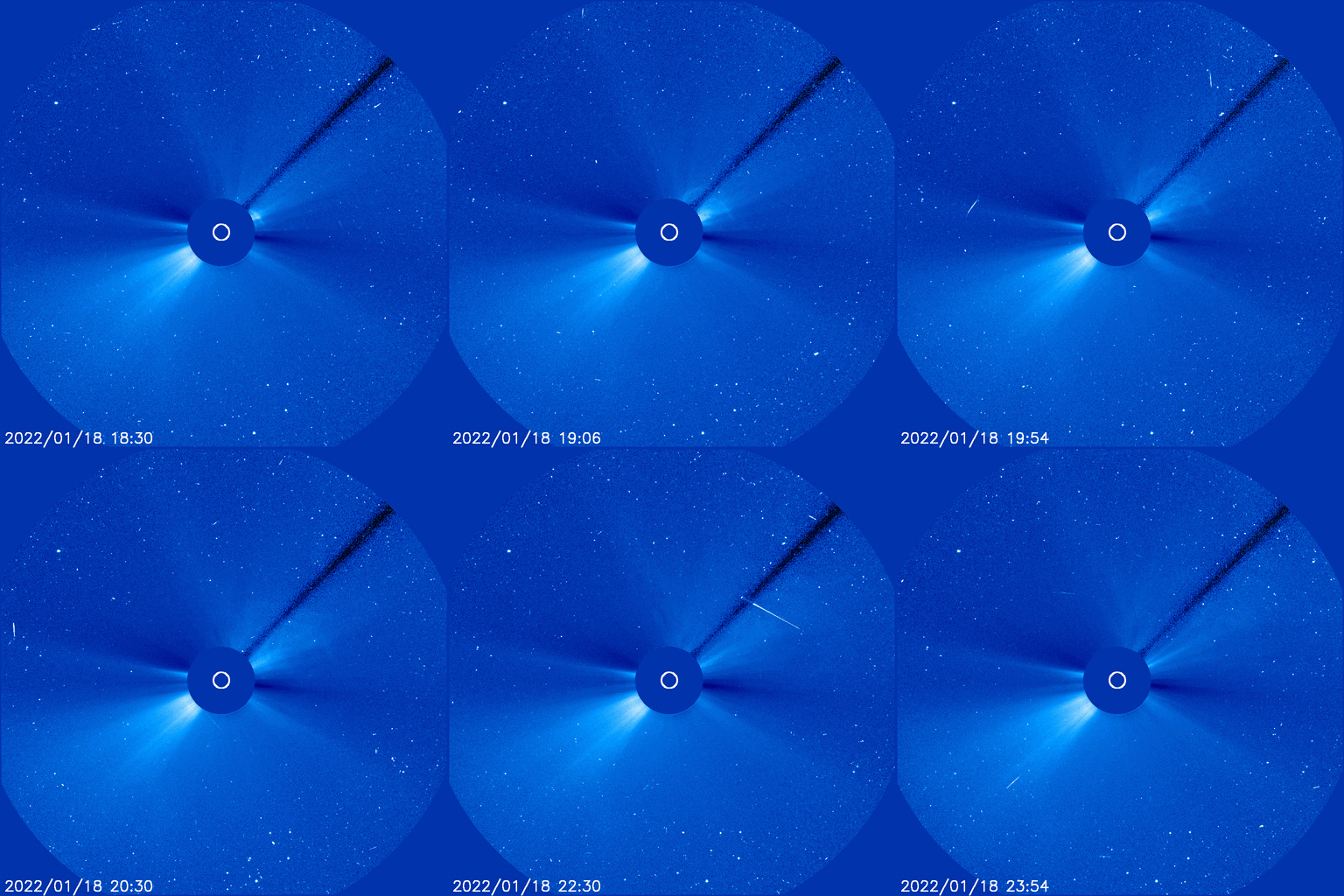
CME UPDATE: Yesterday, Jan. 18th, an M1.5-class solar flare from sunspot AR2929 hurled a CME into space. NOAA forecasters have analyzed the storm cloud and determined that it probably has an Earth-directed component. A glancing blow is possible on Jan. 22-23, bringing minor geomagnetic storms and auroras to the Arctic Circle. Aurora alerts: SMS Text.
POLAR STRATOSPHERIC CLOUDS: The most beautiful clouds on Earth just appeared inside the Arctic Circle. "It was one of the most intense daytime light shows I have ever seen," says Arina Kraaijeveld of Lights over Lapland, who sends this picture from Abisko, Sweden:

These are polar stratospheric clouds (PSCs), and they are a sign of staggering cold. PSCs require temperatures around -85º C to form.
The stratosphere is extremely dry. Only when the air up there becomes extremely cold can widely-spaced water molecules coalesce into icy clouds. Sunlight hitting ice crystals inside PSCs create colors that rival auroras.
Full moonlight can perform the same trick. Last night in Helligskogen, Norway, aurora tour guide Markus Varik photographed a rare display of nighttime PSCs:

"I have been out lurking during the night for years and never seen sight like this," says Varik.
Now is a good time for Arctic sky watchers to see these clouds. According to NOAA's Climate Prediction Center, there are now more than 9 million square kilometers of stratosphere inside the Arctic Circle where conditions are cold enough for PSC formation. This is significantly above average for this time of year: data.

Realtime Space Weather Photo Gallery
Free: Spaceweather.com Newsletter
A DRAGONFLY FOR VALENTINE'S DAY: Dragonflies have never been to the stratosphere. Until now. On Jan 12th, this sterling silver winged pendant flew 113,451 feet above the Sierra Nevada mountains of California, hitching a ride onboard an Earth to Sky Calculus cosmic ray balloon:
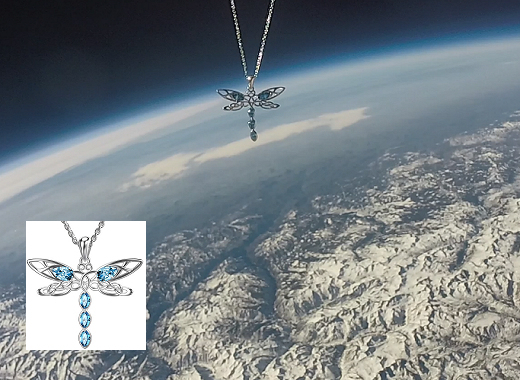
You can have it for $172.95. The dragonfly's heart is a Celtic love knot, and its wings are decorated with blue marquise crystals--all plated with 14k white gold. It's an exquisite ensemble for Valentine's day or any other romantic occasion.
The students are selling dragonfly pendants to support their cosmic ray ballooning program. Each one comes with a greeting card showing the pendant in flight and telling the story of its trip to the stratosphere and back again.
Far Out Gifts: Earth to Sky Store
All sales support hands-on STEM education
Realtime Aurora Photo Gallery
Free: Spaceweather.com Newsletter