CO-ROTATING INTERACTION REGION: A co-rotating interaction region (CIR) could hit Earth's magnetic field on Jan. 29th, according to NOAA forecasters. CIRs are transition zones between slow- and fast-moving streams of solar wind. They contain shock waves and compressed magnetic fields that often do a good job sparking auroras. Think of them as mini-CMEs. If this one arrives as predicted, Arctic sky watchers might witness an outburst of lights this weekend. Aurora alerts: SMS Text.
NOCTILUCENT OUTBURST--CONTINUED: Did the Tonga volcano cause an outburst of noctilucent clouds (NLCs)? The jury's still out. However, new data from NASA's AIM spacecraft confirm that something happened in the mesosphere. This 8-day movie shows NLCs blooming around the South Pole after the volcano erupted:
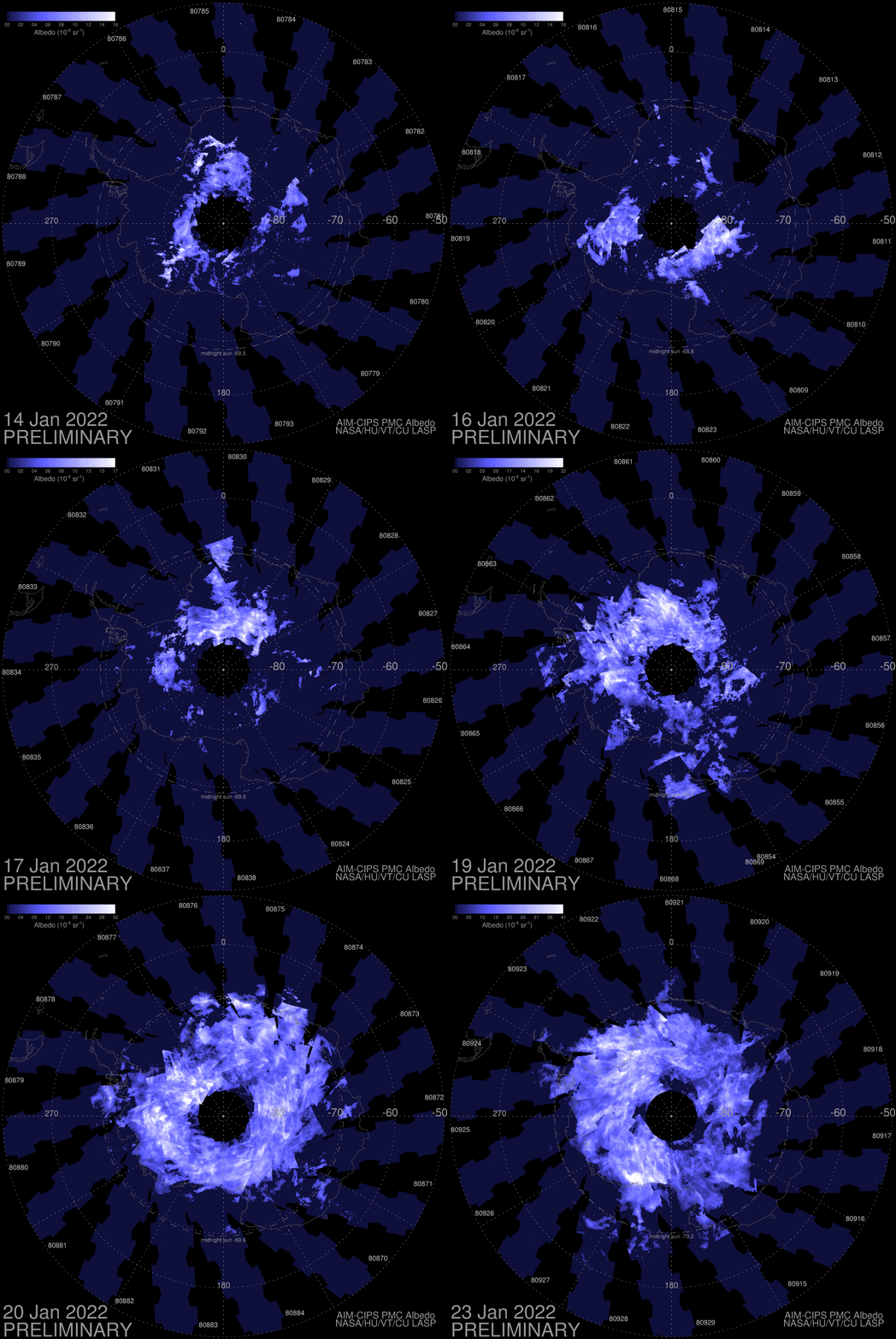
NLCs are Earth’s highest clouds. They form when water vapor rises up from Earth to the edge of space where H2O molecules can stick to specks of meteor dust. NLCs are, literally, frosted meteor smoke.
On Jan. 15th, the Tonga volcano blasted a plume of ash, sulfurous aerosols and water vapor more than 55 km high, only 30 km below where NLCs form. In the days that followed the eruption, natural upwelling may have carried water vapor the rest of the way to the noctilucent zone.
Data from NASA’s Microwave Limb Sounder (MLS) show that weather in the mesosphere (where NLCs are found) did indeed change days after the eruption. Temperatures dropped, and water vapor increased:
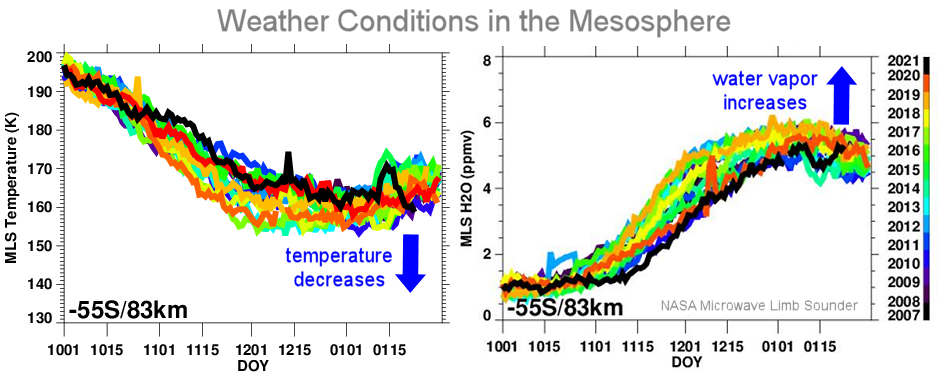
Both changes boost noctilucent clouds. But was Tonga responsible? We still don't know. Researchers are looking through the data in search of a direct link. Stay tuned.
Realtime Space Weather Photo Gallery
Free: Spaceweather.com Newsletter
AURORA SURPRISE: A co-rotating interaction region (CIR) hit Earth's magnetic field on Jan. 25th. The impact sparked an unexpected display of auroras over Iceland. "A magnificent arch began glowing from east to west," reports Christopher Mathews from Hraunborg (near Reykjavík). "Soon it split into multiple streamers and lit up the night!"
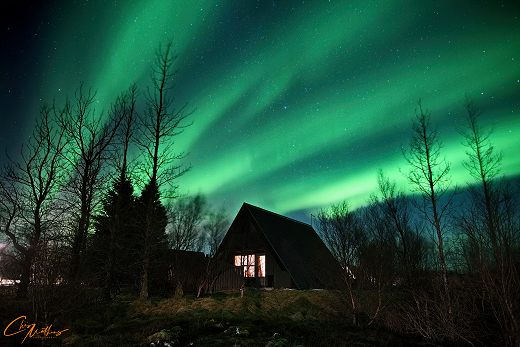
"This was an unexpected treat and a reminder that the aurora can put on a show when you least expect it!" says Mathews.
CIRs are transition zones between slow- and fast-moving solar wind streams. They often contain shock waves that do a good job sparking auroras. CIRs are also notoriously difficult to predict--hence the surprise.
Realtime Aurora Photo Gallery
Free: Spaceweather.com Newsletter
"I LOVE YOU MORE" MOONSTONE PENDANT: Valentine's Day is coming! Nothing says "I love you" like a moonstone from space. This one hitched a ride on an Earth to Sky Calculus cosmic ray research balloon, floating 112,201 feet above the Sierra Nevada mountains of central California:
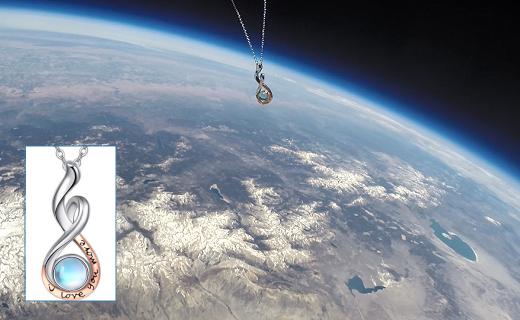
You can have it for $142.95. The students are selling these sterling silver infinity-wrapped moonstone pendants to support their ballooning program. Engraved with "I Love You More," it makes a romantic Valentine's gift. Each one comes with a greeting card showing the moonstone in flight and telling the story of its trip to the stratosphere and back again.
Far Out Gifts: Earth to Sky Store
All sales support hands-on STEM education