GEOMAGNETIC FORECAST: Earth's magnetic field is quiet and should remain so for the next 48 hours. No CMEs or streams of solar wind are heading for our planet. NOAA forecasters say the chance of geomagnetic storms is less than 5%. Aurora alerts: SMS Text.
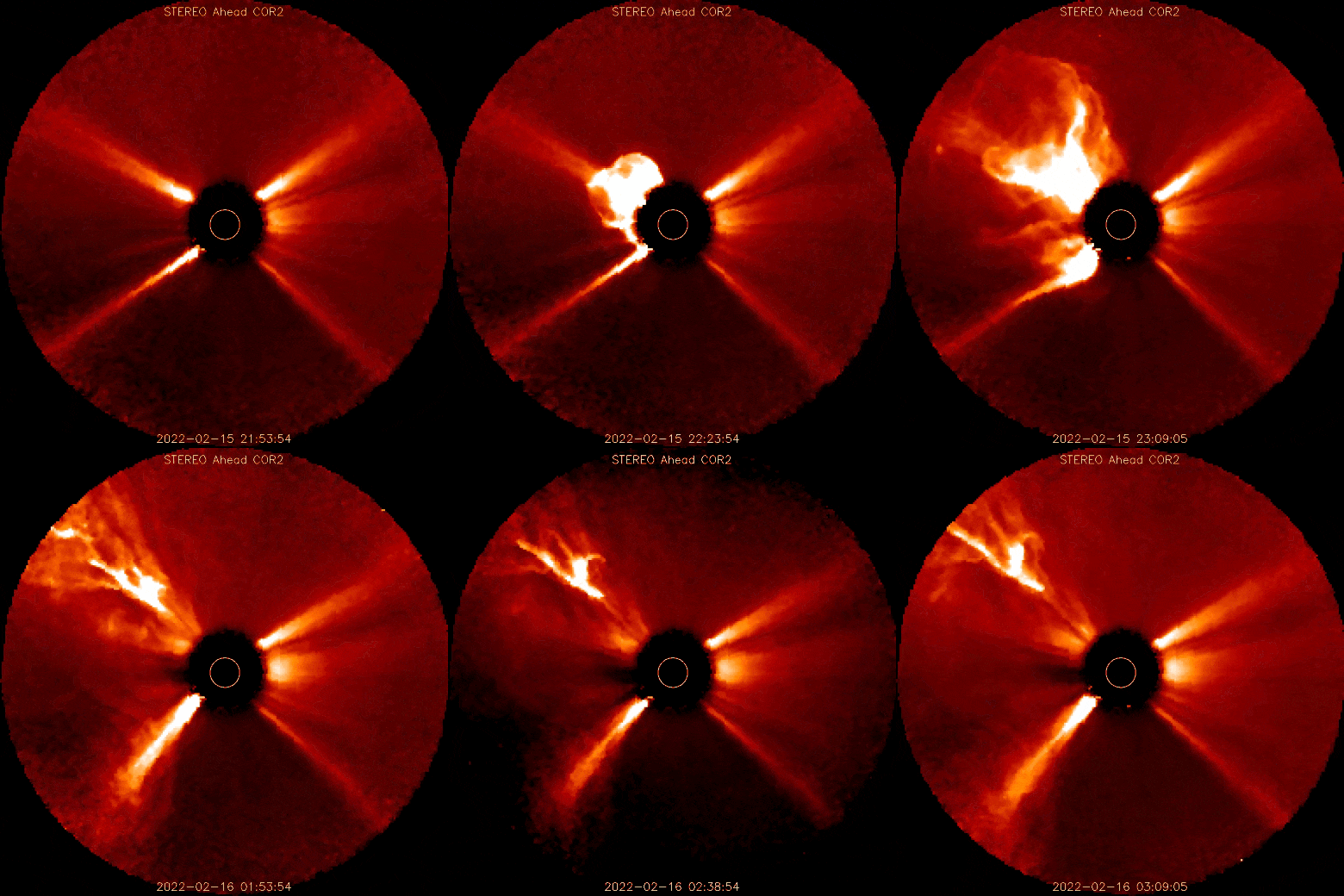
HUGE FARSIDE EXPLOSION (UPDATED): Something just exploded on the farside of the sun--and it was big. NASA's STEREO-A spacecraft recorded a magnificent coronal mass ejection (CME) emerging during the late hours of Feb. 15th:
Update: Newly-arriving images from the Solar and Heliospheric Observatory (SOHO) show the CME in greater detail. Play the movie.
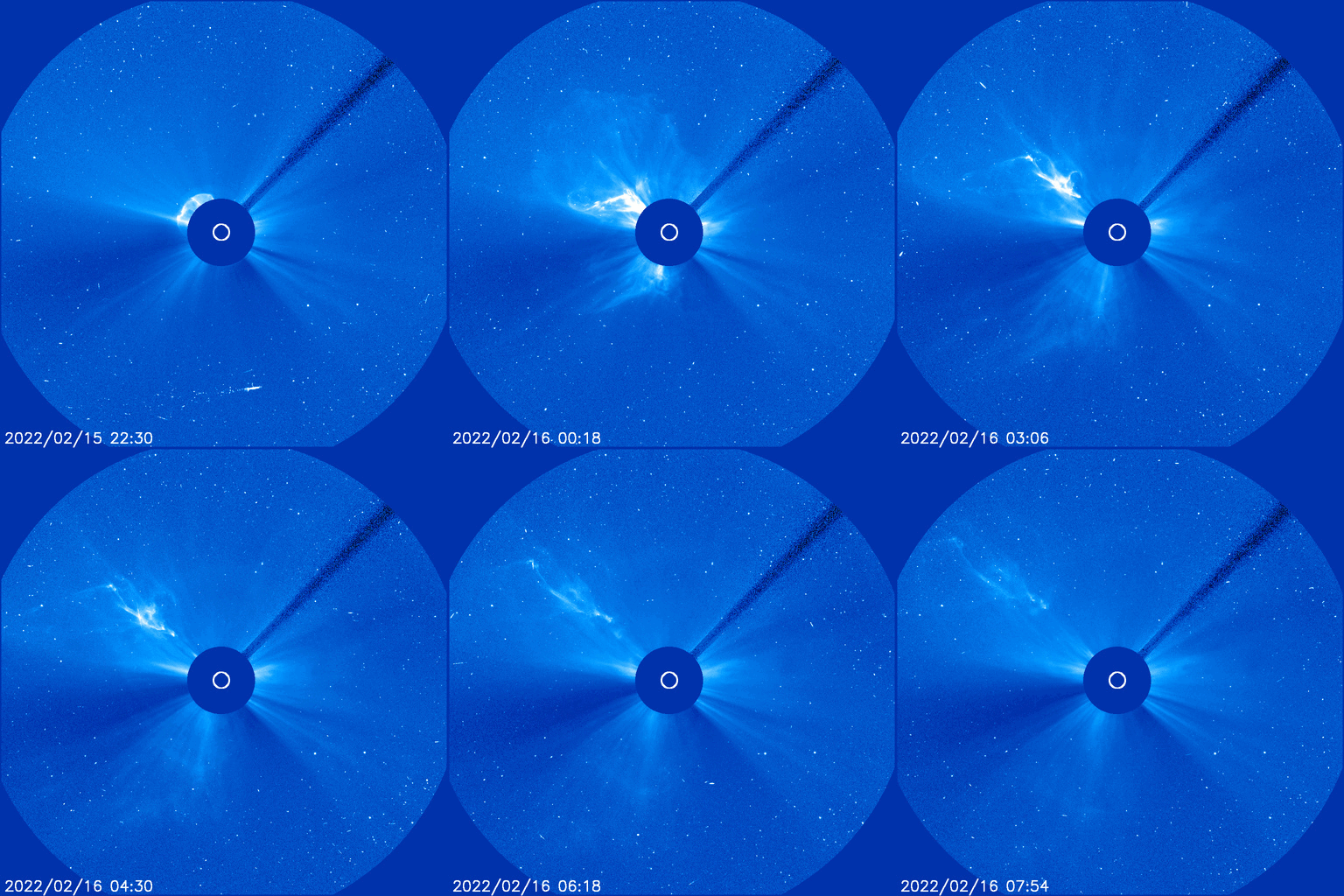
This CME will not hit Earth; it is moving away from, not toward our planet. However, if such a CME did strike, it could produce a very strong geomagnetic storm. We may have dodged a bullet.
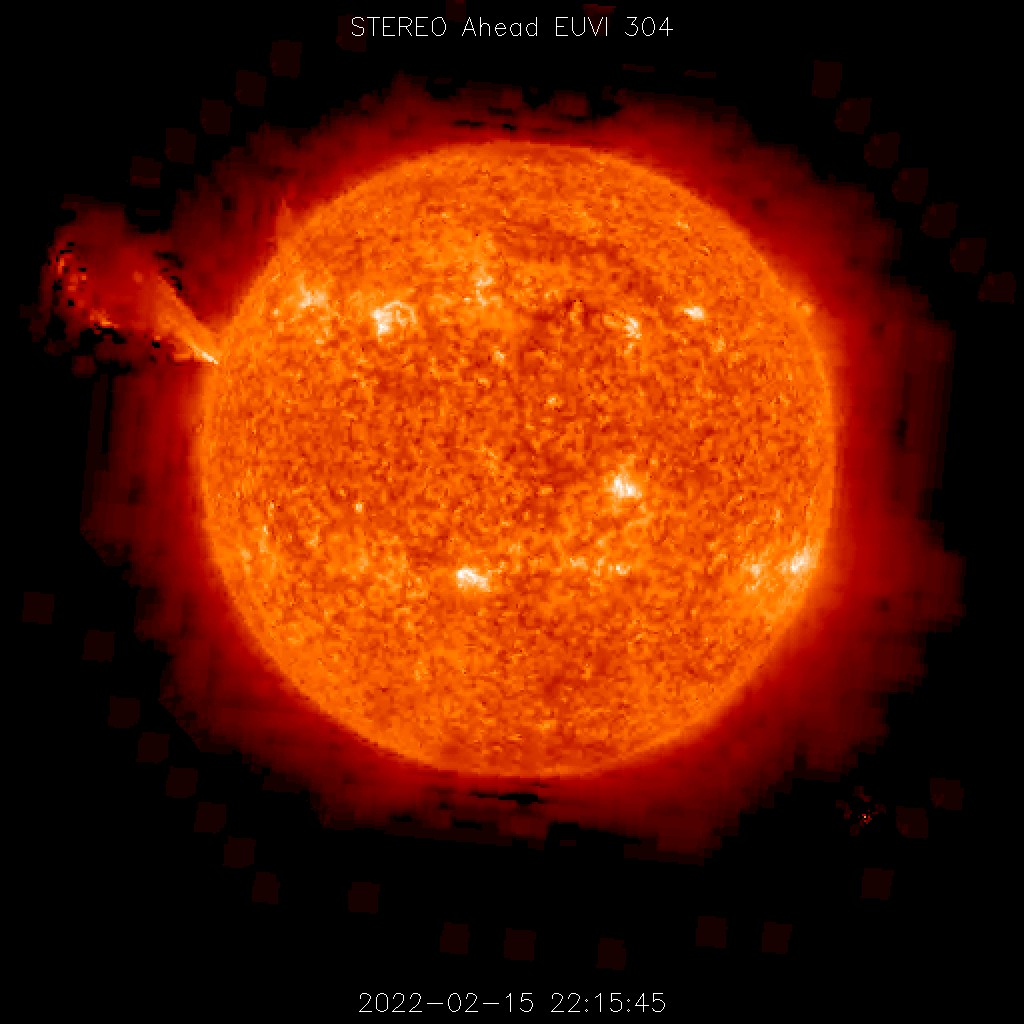
STEREO-A also observed a plume of plasma shooting up from the blast site. It was more than 400,000 km long. See the image.
What caused this explosion? Helioseismology offers a clue. By analyzing vibrations on the surface of the sun, researchers can make crude maps of the sun's farside. The latest farside image from NASA's Solar Dynamics Observatory reveals a huge active region:
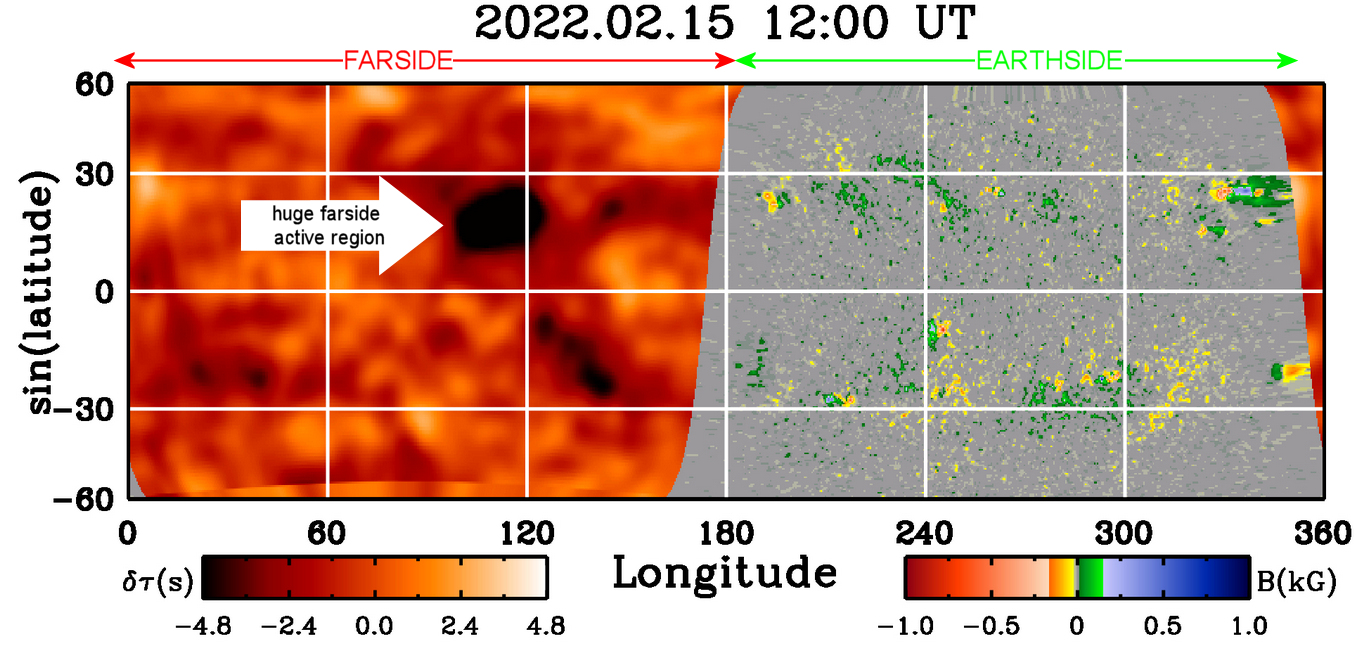
The black blob in the map above is almost certainly a sunspot group. It is the prime suspect for the Feb. 15th explosion.
"This is only the second farside active region of this size since September 2017," notes Junwei Zhao of Stanford University's helioseismology group. "If this region remains huge as it rotates to the Earth-facing side of the sun, it could give us some exciting flares."
Based on its current location, the farside sunspot could emerge into view over the sun's northeastern limb 4 to 5 days from now. Stay tuned. Solar flare alerts: SMS Text.
Realtime Space Weather Photo Gallery
Free: Spaceweather.com Newsletter
A DRAGONFLY IN THE STRATOSPHERE: Are you looking for a far-out gift? Consider the Sterling Silver Space Dragonfly. On Jan 12th, this winged pendant flew 113,451 feet above the Sierra Nevada mountains of California, hitching a ride onboard an Earth to Sky Calculus cosmic ray balloon:
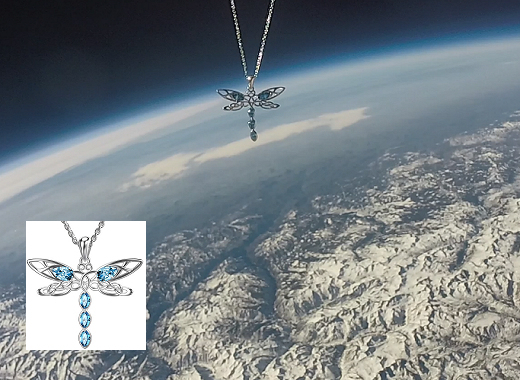
You can have it for $172.95. The dragonfly's heart is a Celtic love knot, and its wings are decorated with blue marquise crystals--all plated with 14k white gold. It's an exquisite ensemble for birthdays, anniversaries or any other romantic occasion.
The students are selling dragonfly pendants to support their cosmic ray ballooning program. Each one comes with a greeting card showing the pendant in flight and telling the story of its trip to the stratosphere and back again.
Far Out Gifts: Earth to Sky Store
All sales support hands-on STEM education
Realtime Aurora Photo Gallery
Free: Spaceweather.com Newsletter