A BIG CRACK IN EARTH'S MAGNETIC FIELD: For an hour on March 13th, a big crack opened in Earth's magnetic field--one of the biggest in years. (For specialists: BsubZ was less than -20 nT.) Solar wind poured through the gap, adding its energy to that of the CME which struck earlier in the day. This increases the chances that high-latitude auroras may remain visible at least through the early hours of March 14th. Aurora alerts: SMS Text.
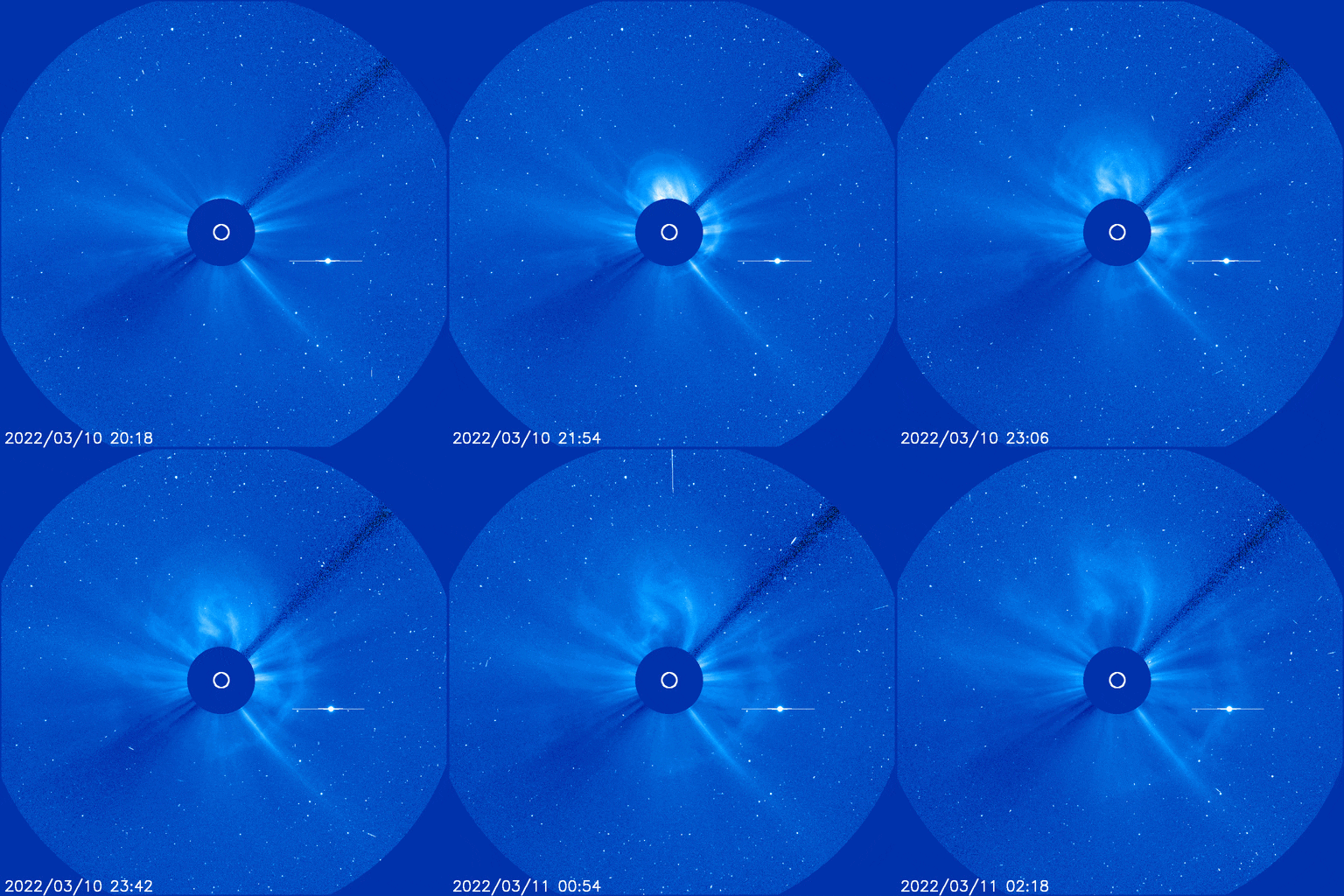
CME IMPACT SPARKS GEOMAGNETIC STORM: As predicted, a CME hit Earth's magnetic field on March 13th. The impact sparked a moderately strong G2-class geomagnetic storm. When the CME arrived, "the sky exploded," reports John Dean, who sends this picture from Nome, Alaska:

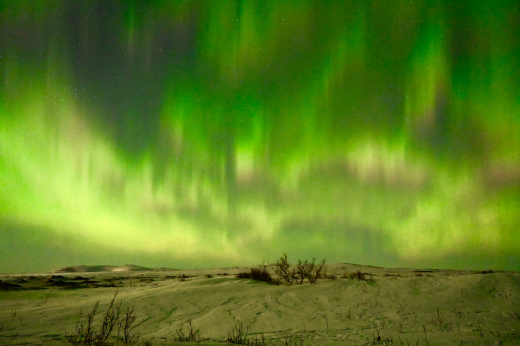
"I was out from 2:30 am until sunrise," says Dean. "The coronas (auroras that seem to fall from overhead like rain) were phenomenal."

The timing of the CME's impact was unfortunate for many aurora photographers. Europe and much of North America were daylit when the storm cloud arrived. Dark skies were positioned mainly over the Pacific Ocean and western parts of North America.
What next? Geomagnetic storms could persist through March 14th as Earth passes through the CME's wake. If so, many photographers who missed the CME's arrival may get a second chance. Stay tuned for updates. Aurora alerts: SMS Text.
more images: from Jen of Dunedin, New Zealand; from Guntis in Latvia, Europe;
Realtime Aurora Photo Gallery
Free: Spaceweather.com Newsletter
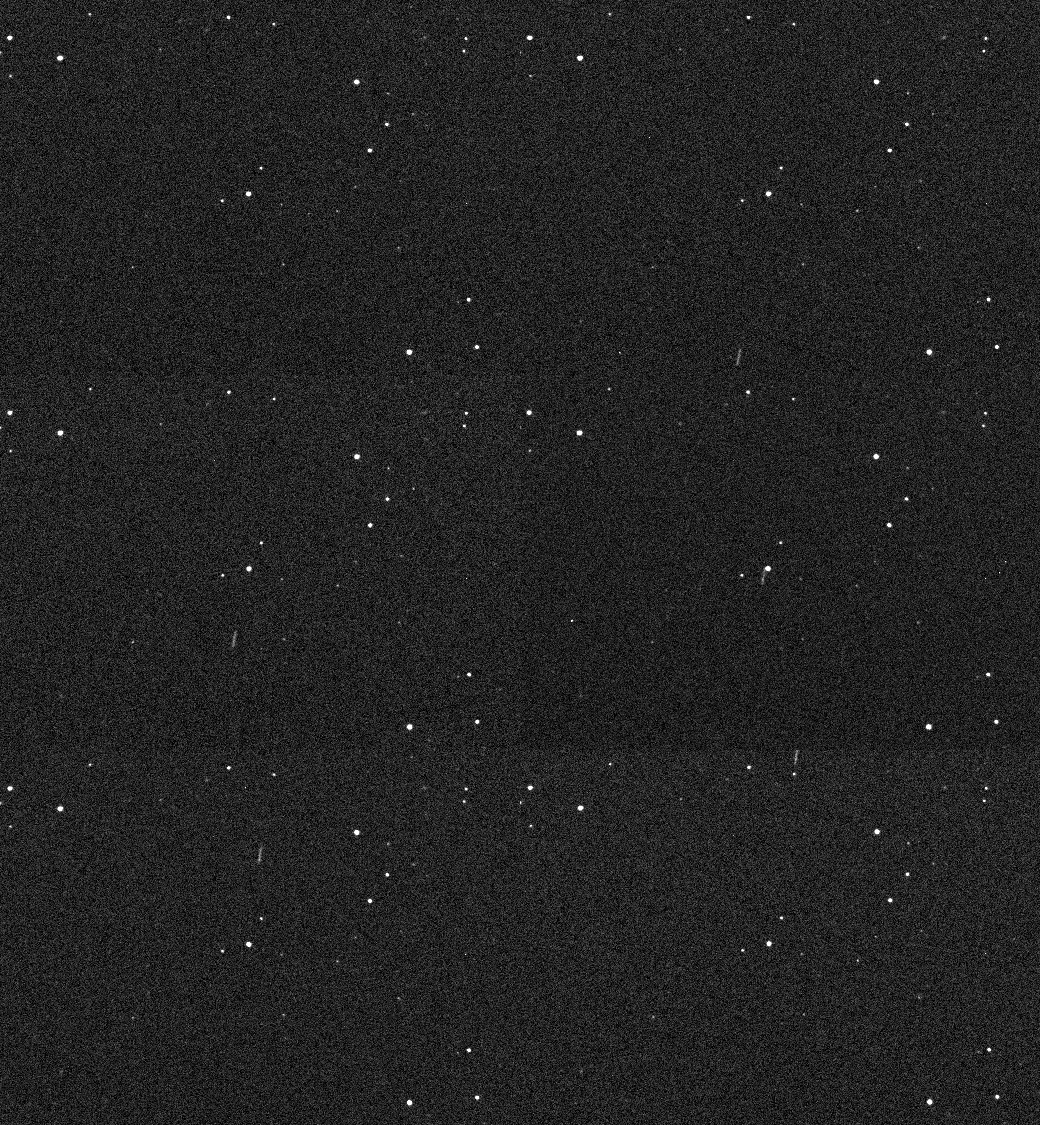
AN ASTEROID JUST HIT EARTH: Discovered-photographed-destroyed. Boom-boom-boom. March 11th was an eventful day for asteroid 2022 EB5. Hungarian astronomer Krisztián Sárneczky discovered the asteroid at 19:24 UT. Italian astronomer Enrico Pettarin photographed the asteroid at 20:28 UT:
The asteroid destroyed itself at ~21:22 UT when it hit Earth's atmosphere off the coast of Iceland, disintegrating harmlessly as a bright fireball. The entire sequence of events took less than 2 hours.
The explosion was detected by Comprehensive Nuclear Test Ban Treaty Organization infrasound stations in Greenland and Norway. Combining data from the two locations, University of Western Ontario astronomer Peter Brown estimates that "the asteroid exploded with an energy close to 2 kilotons of TNT. Assuming a speed of 15 km/s, it must have been about 3 meters in diameter," he says.
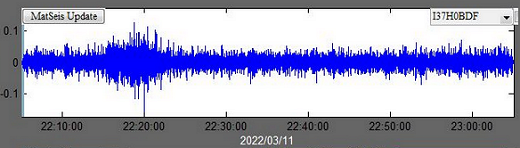
Above: Recorded in Greenland, the infrasound signature of asteroid 2022 EB5 exploding.
This is only the 5th time an asteroid was discovered just before it hit Earth. The others were 2008 TC3 (Sudan), 2014 AA (Atlantic Ocean), 2018 LA (Botswana), and 2019 MO (Puerto Rico). All were small space rocks that did no damage when they broke up in our planet's atmosphere. 2022 EB5 appears to be the smallest yet, and demonstrates that humans are getting better at finding potentially dangerous asteroids before they strike.
Realtime Space Weather Photo Gallery
Free: Spaceweather.com Newsletter
STERLING SILVER DOLPHIN PENDANT: Dolphins from space? Believe it. On Feb. 28, 2022, this crystal dolphin pendant flew 111,101 feet above the Sierra Nevada mountains of Central California, hitching a ride onboard an Earth to Sky Calculus cosmic ray balloon:
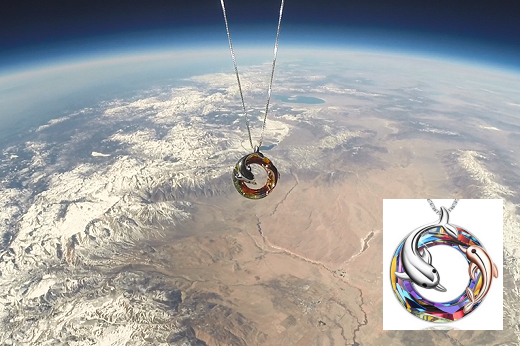
You can have it for $175.95. Swimming around a colorful crystal whirl, the playful dolphins are 100% 925 sterling silver with a matching 18-inch sterling silver chain. The entire pendant is lead-free, nickel-free, cadmium-free, and totally hypoallergenic.
Each pendant comes with a greeting card showing the dolphins in flight, and telling the story of their trip to the edge of space and back again. All sales support the student's cosmic ray research program.
Far Out Gifts: Earth to Sky Store
All sales support hands-on STEM education