EARTH DIRECTED SOLAR FLARE: Sprawling sunspot AR2965 exploded today, March 14th (0840 UT), producing an M2-class solar flare: movie. The Earth-directed flare caused a minor shortwave radio blackout over Africa and eastern Europe; frequencies affected were mostly below 15 MHz. First look data suggest that the flare did not produce a significant CME. Stay tuned for updates. Solar flare alerts: SMS Text.

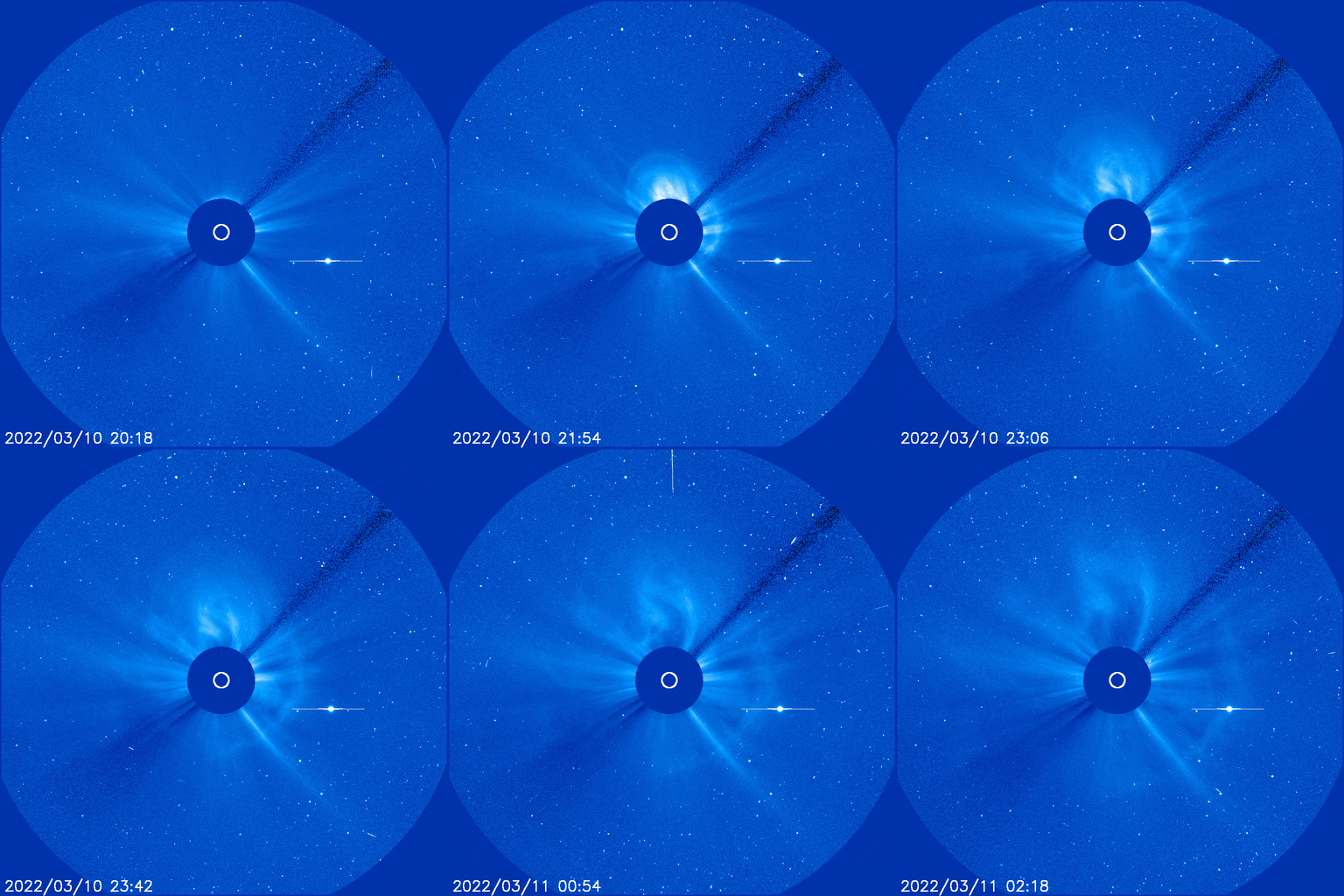
CME IMPACT SPARKS BRIGHT AURORAS: As predicted, a CME hit Earth's magnetic field on March 13th. The impact sparked a moderately strong G2-class geomagnetic storm, which lasted more than 12 hours. "It was the best Northern Lights show for years," reports Jónína Óskarsdóttir, who sends this picture from Fáskrúðsfjörður, Iceland:

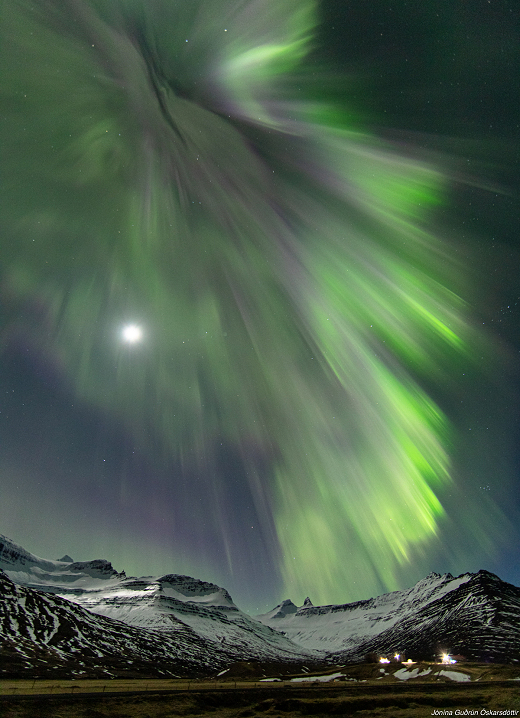
Other observers echoed Óskarsdóttir. "Best display I've seen in years," says Alan C. Tough of Moray, Scotland. "Brightest aurora in 7 years," reports Laura Kranich of Kiel, Germany. "This was the best I've seen here in the south of Norway," says Liz Gyurgyak.
In addition to auroras, the CME also jolted Earth's magnetic field and caused electricity to flow through the soil of northern Norway. Citizen scientist Rob Stammes measured these effects from his space weather observatory in the Lofoten islands.
The whole episode is a sign of strength from young Solar Cycle 25--and a hint of things to come. If forecasters are correct, Solar Max will arrive in 2 to 3 years bringing even stronger storms. If you haven't seen auroras yet, you might soon. Aurora alerts: SMS Text.
more images: from Minoru Yoneto of Queenstown, New Zealand; from Piotr Wieczorek of Pieczyska, Poland; from Markus Varik of Tromsø, Norway; from Paul Clements of Kirtomy, UK; from Petr Horálek of Ústupky, Czech Republic; from Gary King of Chesterfield, New Hampshire; from Stephane of Copenhagen, Denmark; from Pentti Arpalahti of Helsinki, Finland; from Heiko Ulbricht of Herzogswalde, Saxony, Germany; from Raimondas Ciuplys of Trakai, Lithuania;
Realtime Aurora Photo Gallery
Free: Spaceweather.com Newsletter
STERLING SILVER OPAL PENDANT: It's our most beautiful space pendant ever: The Sterling Silver Opal. The students of Earth to Sky Calculus launched this one to the stratosphere onboard a cosmic ray research balloon:
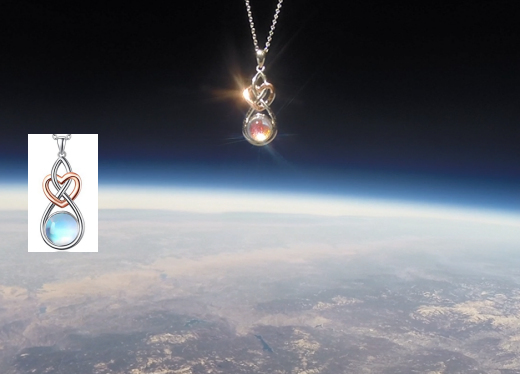
You can have it for $179.95. Wrapped in a sterling silver Celtic love knot, the opal is suspended from a matching 18-inch chain. Each pendant comes with a greeting card showing the opal in flight, telling the story of its trip to the edge of space and back again.
Opals are cousins of moonstones; in fact they look the same in low light. But when bright sunlight strikes an opal, something special happens. A spray of color emerges from the stone. This happened while the stone was in the stratosphere (see above) and it remains capable of this beautiful trick back on Earth.
Far Out Gifts: Earth to Sky Store
All sales support hands-on STEM education
Realtime Space Weather Photo Gallery
Free: Spaceweather.com Newsletter