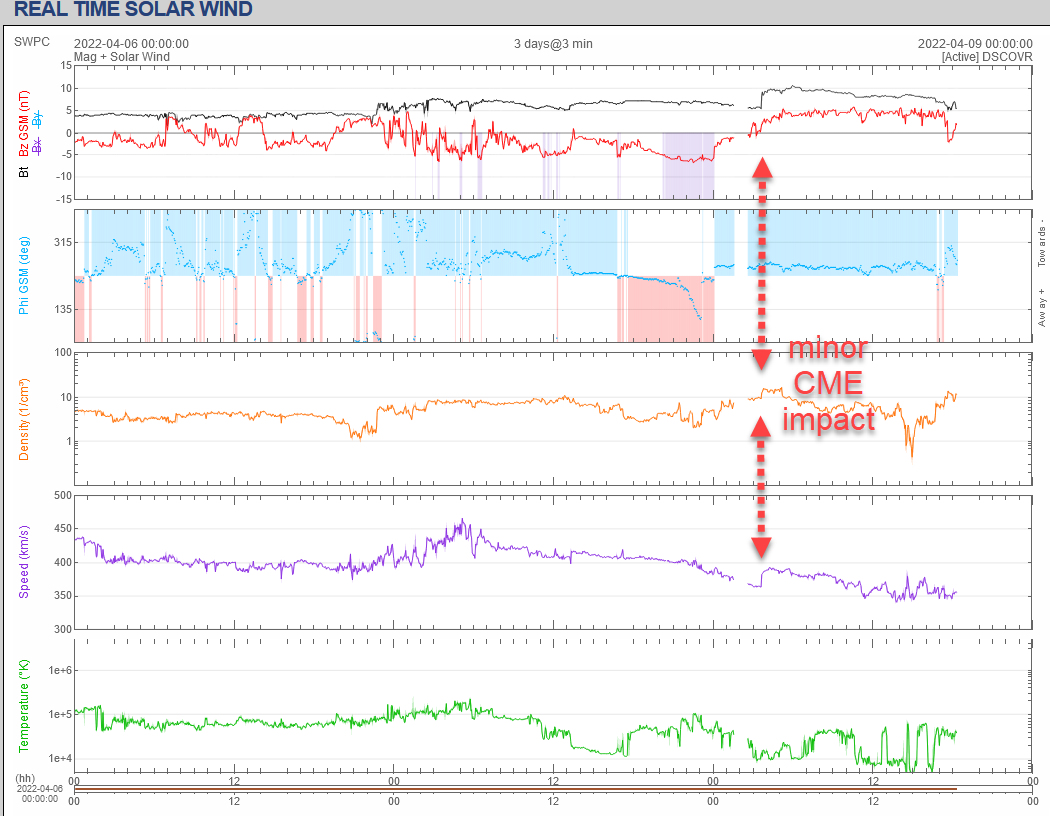
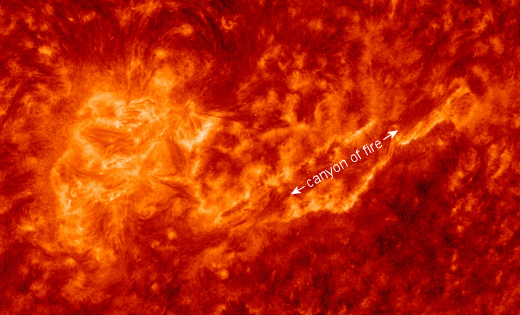
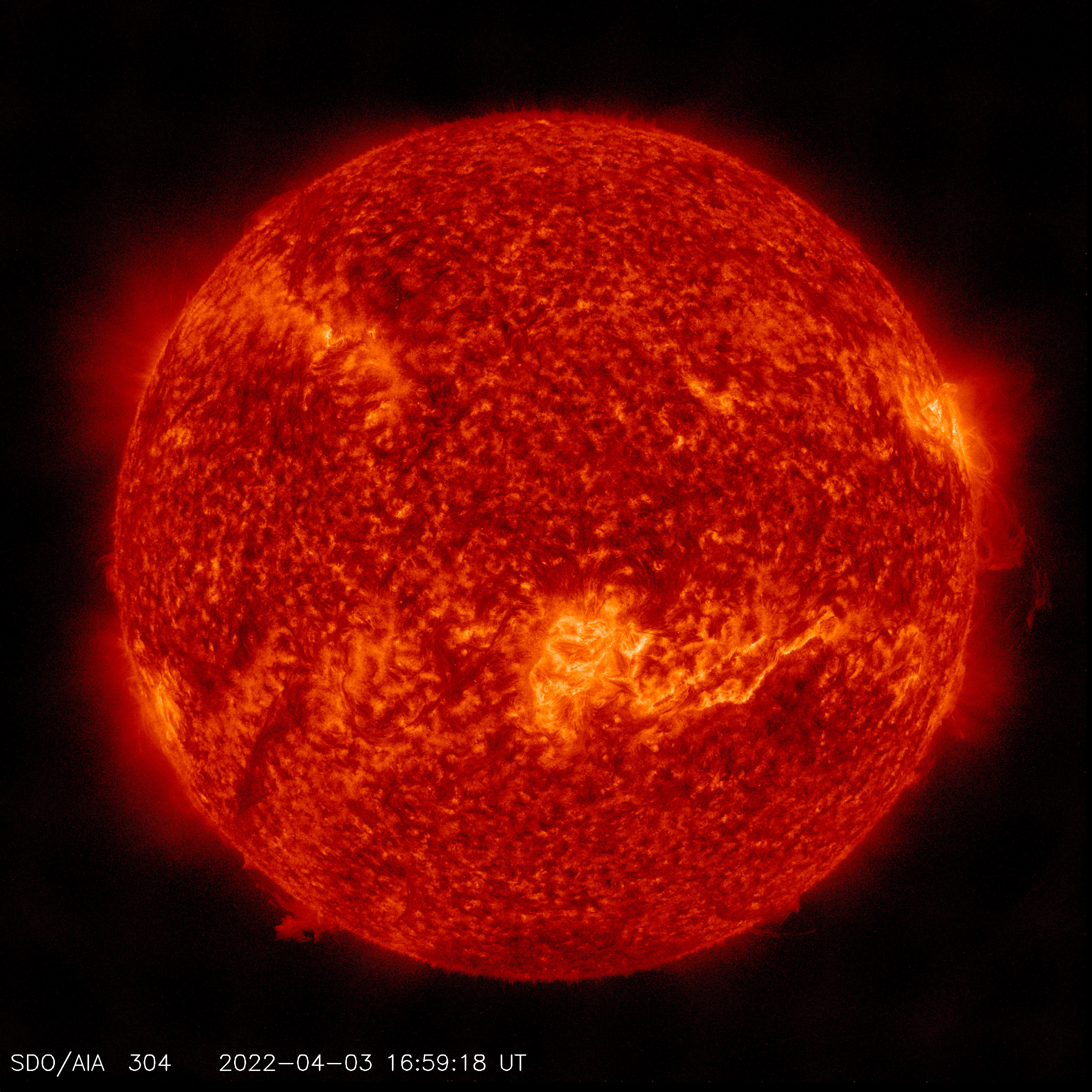
WEAK IMPACT: Arriving a day later than expected, a CME grazed Earth's magnetic field on April 8th (0400 UT). It was a weak, glancing blow that almost escaped detection. The CME was hurled into space near the edge of the Earth-strike zone on April 3rd by a "canyon of fire" filament eruption. Its tardy arrival did not spark a geomagnetic storm. Aurora alerts: SMS Text
DUCTED SUNSET: The sun is a sphere. Yesterday in San Francisco it looked more like a stack of pancakes. Mila Zinkova photographed the mirage at sunset:
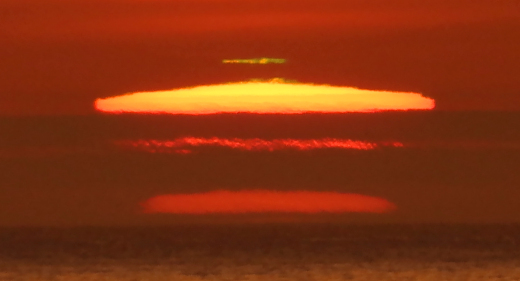
"The weather in San Francisco was rather hot, which meant it was a good time to hunt for mirages," says Zinkova. "This one was far beyond my expectations."
What happened? The sun was ducted. This can happen on suddenly warm spring days. Warm air hanging over the cool ocean creates a temperature inversion layer. Strong inversions form ducts, some of them only a few inches thick. Ducts trap and bend the rays of the sun, slicing the solar disk into colorful "pancakes." Zinkova made a 6-minute video showing the process in action.
Realtime Space Weather Photo Gallery
Free: Spaceweather.com Newsletter
AURORA ROCKET LAUNCH: Almost every clear dark night in Alaska, Fairbanks tour guide Marketa S. Murray goes outside to check for auroras. This is what she saw last night--but it was not auroras:
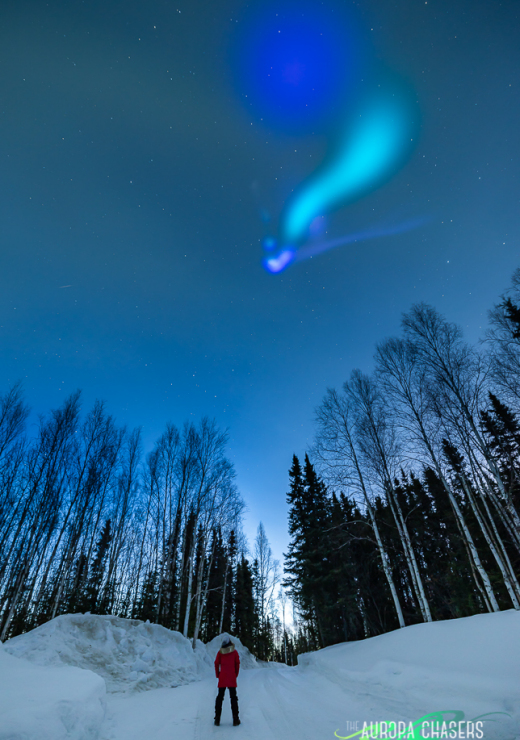
"This is the aftermath of a rocket launch on April 7th," she explains.
Researchers at the Poker Flat Research Range launched a pair of sounding rockets into a brewing geomagnetic storm over Fairbanks. One of the rockets dumped a load of colorful chemicals (vaporous tri-methyl aluminum) more than 200 miles high, allowing cameras on the ground to monitor winds in the aurora zone. The name of the mission was INCAA (Ion-Neutral Coupling during Active Aurora), led by Dr. Stephen Kaeppler of Clemson University.
According to NASA, the launches were a success and "the data are currently under review by the science team."
Realtime Aurora Photo Gallery
Free: Spaceweather.com Newsletter
WHISKEY STONES FROM SPACE: It's the gift for the person who has everything: Whisky Stones from Space. These granite cubes have experienced the cold of the stratosphere, more than 50 degrees below zero! Put them in your cup for an truly out of this world drink:
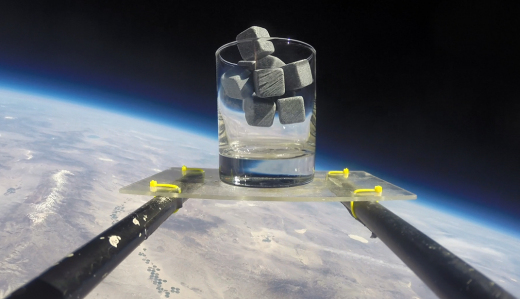
You can have a set of 9 cubes for $109.95 (glass not included). The students of Earth to Sky Calculus are selling whiskey stones to support their cosmic ray monitoring program. The ones picture above flew to the stratosphere onboard a cosmic ray research balloon on April 23, 2021, reaching an altitude of 97,543 feet.
Refrigerated whiskey stones cool a drink without diluting it, solving the problem of ordinary melting ice cubes. They make great birthday and Father's Day gifts. All stones come with a greeting card showing the cubes in flight.
Far Out Gifts: Earth to Sky Store
All sales support hands-on STEM education
Realtime Space Weather Photo Gallery
Free: Spaceweather.com Newsletter