THE LYRID METEOR SHOWER: Earth is entering a stream of debris from Comet Thatcher (C/1861 G1), source of the annual Lyrid meteor shower. Peak night is April 22nd. Now for the bad news: Bright moonlight will interfere with the display, sharply reducing visible meteor rates to no more than 5 to 10 per hour. 2022 is not a good year for the Lyrids.
A SOLAR ECLIPSE ON MARS: NASA is reporting new footage of a solar eclipse on Mars. On April 2nd, Phobos passed in front of the sun over Jezero Crater, where the Perseverance rover is studying signs of ancient flooding. The rover's Mastcam-Z camera tilted up and recorded this video:
This isn't the first time a Mars rover has recorded a Martian eclipse. Spirit and Opportunity made the first observations back in 2004; Curiosity in 2019 was the first to record video. But this is the best video yet.
Mastcam-Z has a solar filter that acts like sunglasses to reduce light intensity. "You can see details in the shape of Phobos' shadow, like ridges and bumps on the moon’s landscape," says Mark Lemmon of the Space Science Institute in Boulder, Colorado. "You can also see sunspots. And it’s cool that you can see this eclipse exactly as the rover saw it from Mars."
Realtime Space Weather Photo Gallery
Free: Spaceweather.com Newsletter
STRONG SOLAR FLARE (UPDATED): If you round up, it was an X-flare. On April 21st at 0157 UT, Earth-orbiting satellites detected a strong M9.6-class solar flare. The source was sunspot complex AR2993-94, which is almost directly facing Earth.
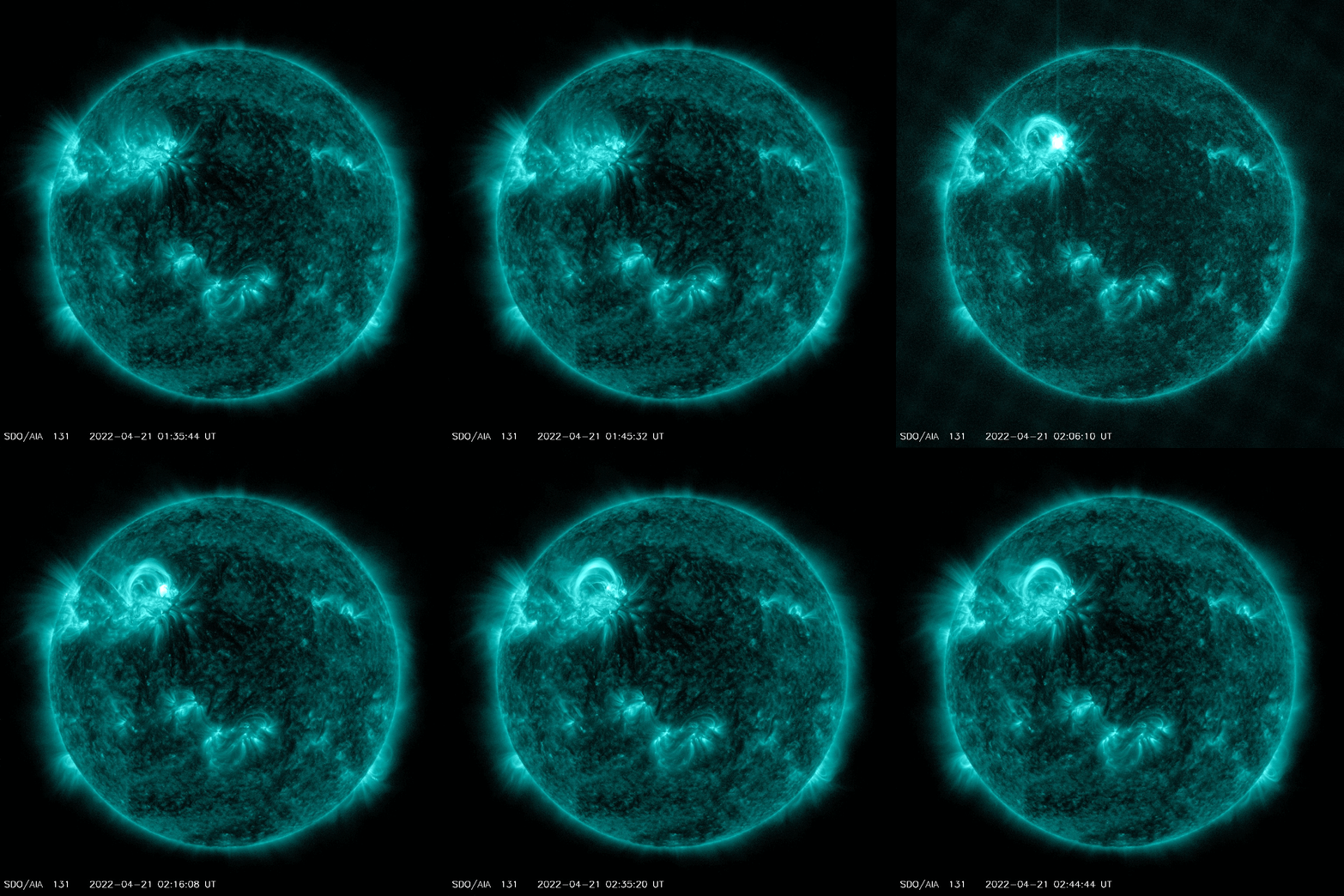
Above: An M9.6-class solar flare on April 21st. Credit: NASA's Solar Dynamics Observatory
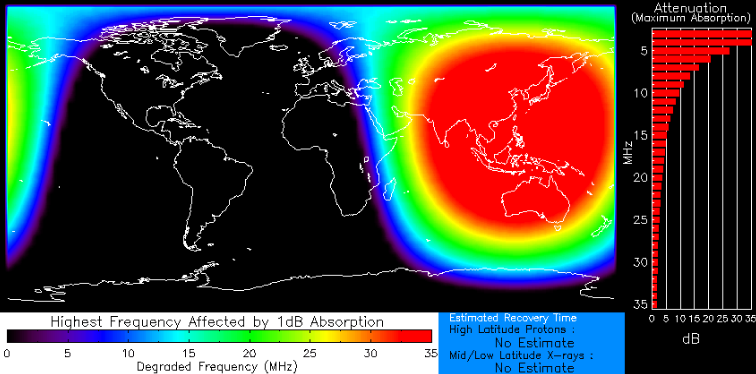
Radiation from the flare caused a shortwave radio blackout over southeast Asia and Australia: blackout map. Remarkably, this is the second day in a row the same region of Earth has experienced a radio blackout. It happened yesterday, too, in response to an even stronger X2.2 flare.

Shortly after the flare, the US Air Force reported a Type II solar radio burst--a natural form of radio noise produced by shock waves in the leading edge of a CME. This means we can expect a CME to emerge from the blast site.
Update: A CME did emerge from the blast site, but it was faint and apparently off-target. It looks like it will miss Earth. NOAA analysts are evaluating the possibility of a glancing blow. Stay tuned. Solar flare alerts: SMS Text
Realtime Space Weather Photo Gallery
Free: Spaceweather.com Newsletter
MOTHER'S DAY IS MAY 8TH: Are you looking for an out-of-this world Mother's Day gift? Consider this: Every time the students of Earth to Sky Calculus launch a cosmic ray balloon, they include something extra in the payload--something Mom will love:

Every item in the Earth to Sky Store has flown to the edge of space and comes with a greeting card showing the item in flight. The interior of the card tells the story of the gift's journey from launch to landing. Mom-satisfaction guaranteed!
Mother's Day Special: Use coupon code "SPACEMOM" at checkout for a 10% discount. Offer valid from now until Mother's Day (May 8, 2022) .
Far Out Gifts: Earth to Sky Store
All sales support hands-on STEM education
Realtime Aurora Photo Gallery
Free: Spaceweather.com Newsletter