CME GLANCING-BLOW POSSIBLE ON MAY 7th: The sun is crackling with solar flares, and these explosions are hurling multiple overlapping CMEs into space. NOAA forecasters say that one of them might graze Earth's magnetosphere on May 7th. This is a low confidence forecast. So many CMEs are leaving the sun, it is difficult to unravel their distinct shapes and trajectories. If a CME does strike on May 7th, it should spark no more than minor G1-class geomagnetic storms. Aurora alerts: SMS Text

SIZZLING SUNSPOT: In the past 24 hours, sunspot AR3004 has produced more than 18 solar flares (15+ C-class flares and 3 M-flares). Indeed, it's almost impossible to catch the sunspot not flaring. "Yesterday," says Eduardo Schaberger Poupeau, "I was able to photograph sunspot AR3004 shortly after it produced an M-class flare." It was literally sizzling:
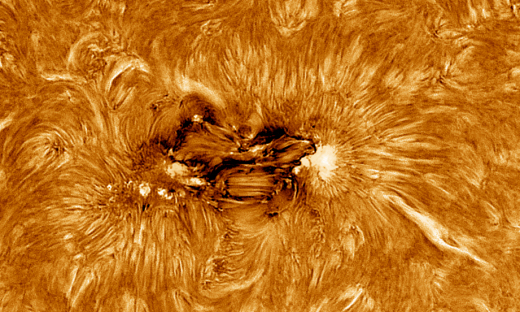
"To take the picture, I used a Sky Watcher Esprit 120 telescope with a Quark Chromosphere filter and a ZWO 174MM camera," says Poupeau.
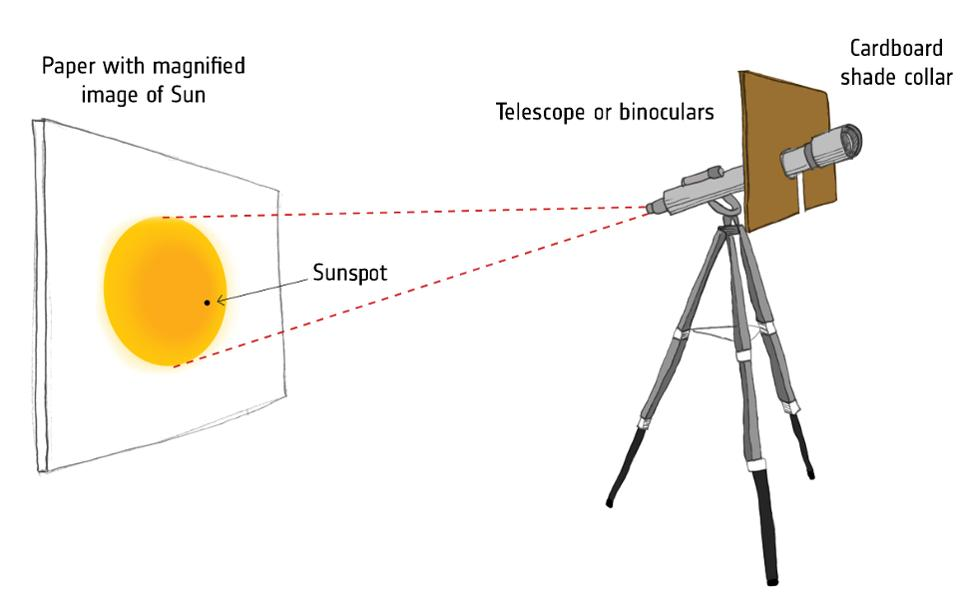
Poupeau is using some high-end equipment to monitor AR3004. But you don't have to. Simple projection techniques are sufficient for this large sunspot, which has at least two dark cores as wide as Earth. Solar flare alerts: SMS Text
Realtime Space Weather Photo Gallery
Free: Spaceweather.com Newsletter
'COMET' MERCURY: On May 1st, Mercury's comet-like tail reached its maximum brightness for this orbit around the sun. Dr. Sebastian Voltmer photographed it from La Palma in the Canary Islands:
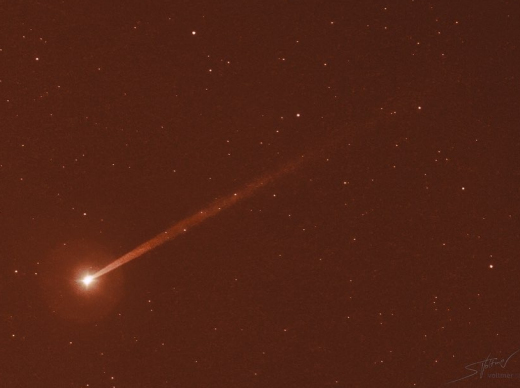
"You can even see some very small features in the tail, which is more than 24 million kilometers long," says Voltmer.
What made the tail so bright on May 1st? Research shows that Mercury's tail is brightest when the planet is ±16 days from perihelion (closest approach to the sun). May 1st was the 16th day after perihelion.
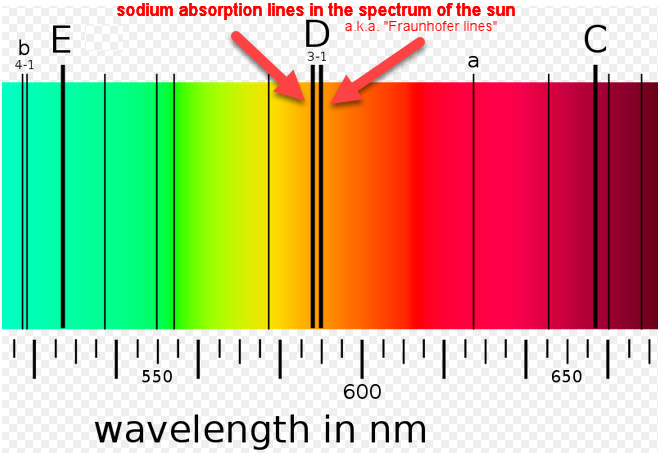
That doesn't really answer the question, though. Here's the rest of the story: Mercury's tail is rich in sodium, an element sputtered off the planet's surface by solar wind and micrometeoroid impacts. Sodium scatters yellow light from the sun. Ironically, the sun has a deficit of light at the precise yellow wavelength sodium scatters best. Take a look at the sun's spectrum and note the dark sodium absorption lines (Fraunhofer lines). Mercury's tail only "lights up" when those dark lines are fully Doppler-shifted away. This happens when Mercury is ±16 days from perihelion: movie.
Realtime Mercury Photo Gallery
Free: Spaceweather.com Newsletter
MOTHER'S DAY IS MAY 8TH: Are you looking for an out-of-this world Mother's Day gift? Consider this: Every time the students of Earth to Sky Calculus launch a cosmic ray balloon, they include something extra in the payload--something Mom will love:

Every item in the Earth to Sky Store has flown to the edge of space and comes with a greeting card showing the item in flight. The interior of the card tells the story of the gift's journey from launch to landing. Mom-satisfaction guaranteed!
Mother's Day Special: Use coupon code "SPACEMOM" at checkout for a 10% discount. Offer valid from now until Mother's Day (May 8, 2022) .
Far Out Gifts: Earth to Sky Store
All sales support hands-on STEM education
Realtime Aurora Photo Gallery
Free: Spaceweather.com Newsletter