CHANCE OF FLARES TODAY: NOAA forecasters say there is a 60% chance of M-class solar flares and a 25% chance of X-flares on May 8th. The most likely source would be big sunspot AR3004, which has an unstable 'delta-class' magnetic field. Solar flare alerts: SMS Text
MAGNETIC FILAMENTS ON THE SUN: When we think of solar flares, we think of sunspots. But sunspots are not the only sources of explosions on the sun. Magnetic filaments can do the job, too, and right now there are a lot of them. Andy Devey sends this picture from southern Spain:
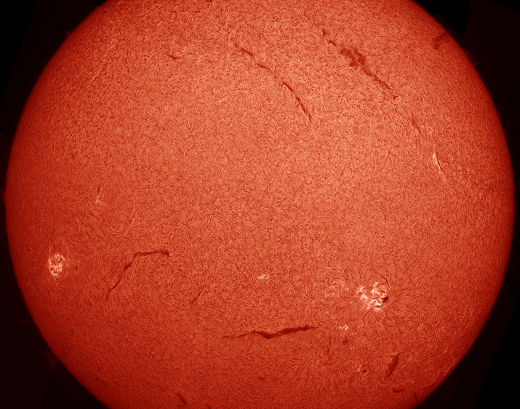
"This is a 12-panel mosaic," he says. "Filmed at 1600 mm focal length, this gives a disc image almost 1000 mm wide." The full-sized composite is a must-see.
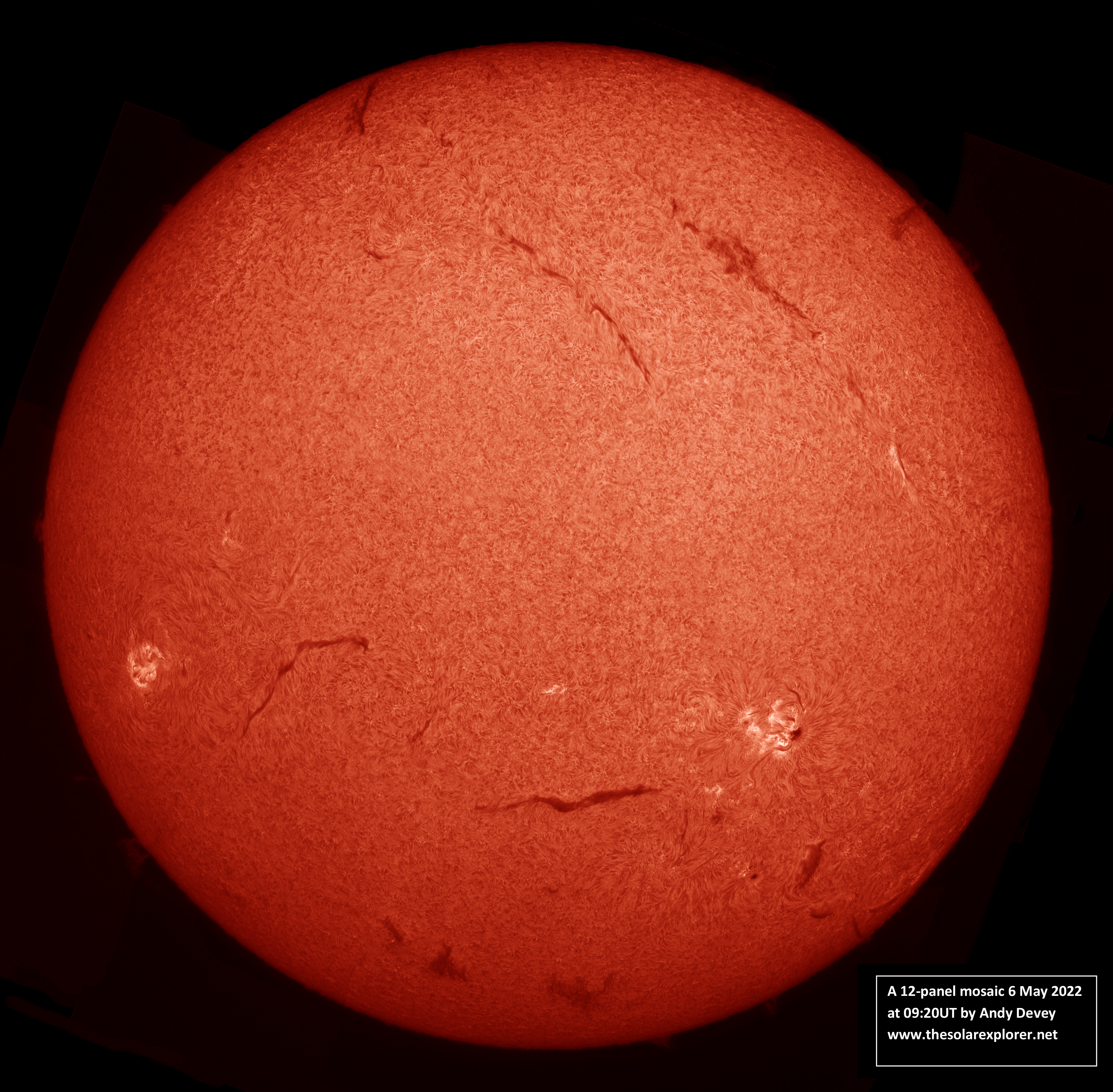
All of the dark snake-like features are magnetic filaments. Each one is an enormous tube of dense plasma held aloft by magnetic fields. The longest stretches more than 400,000 km from end to end--about the same as the distance from Earth to the Moon.
Magnetic filaments are famously unstable. When they explode, debris can fall to the surface of the sun, triggering a type of solar flare known as a "Hyder flare." Filament eruptions are also very good at hurling CMEs into space. Stay tuned. Solar flare alerts: SMS Text
Realtime Space Weather Photo Gallery
Free: Spaceweather.com Newsletter
THE ETA AQUARIID METEOR SHOWER: Earth has just passed through a broad stream of debris from Halley's Comet. This is what happened in San Pedro de Atacama, Chile:
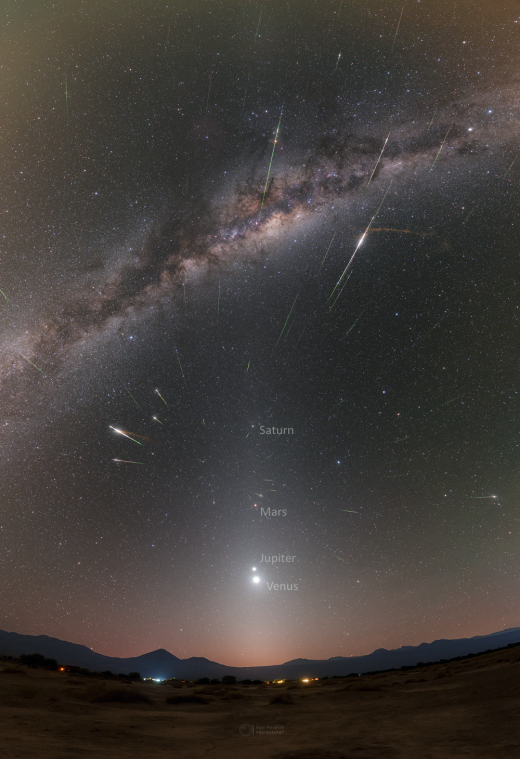
"I saw 74 meteors from April 28th to May 6th," says photographer Petr Horálek, who combined them all in a single image. "The view of the shower was nicely supplemented by a wonderful planetary parade in Zodiacal Light."
Reports from international observers suggest that shower peaked on May 7th with as many as 50 meteors per hour over dark-sky sites in the southern hemisphere.
Realtime Meteor Photo Gallery
Free: Spaceweather.com Newsletter
WHISKEY STONES FROM SPACE: It's the gift for the person who has everything: Whisky Stones from Space. These granite cubes have experienced the cold of the stratosphere, more than 50 degrees below zero! Put them in your cup for an truly out of this world drink:
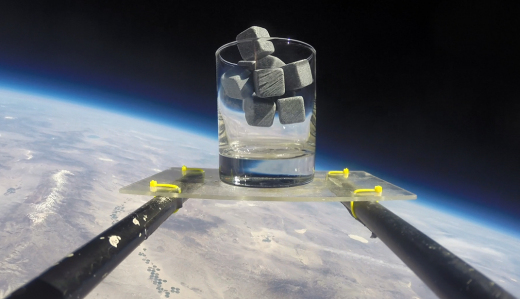
You can have a set of 9 cubes for $109.95 (glass not included). The students of Earth to Sky Calculus are selling whiskey stones to support their cosmic ray monitoring program. The ones picture above flew to the stratosphere onboard a cosmic ray research balloon on April 23, 2021, reaching an altitude of 97,543 feet.
Refrigerated whiskey stones cool a drink without diluting it, solving the problem of ordinary melting ice cubes. They make great birthday and Father's Day gifts. All stones come with a greeting card showing the cubes in flight.
Far Out Gifts: Earth to Sky Store
All sales support hands-on STEM education
Realtime Aurora Photo Gallery
Free: Spaceweather.com Newsletter