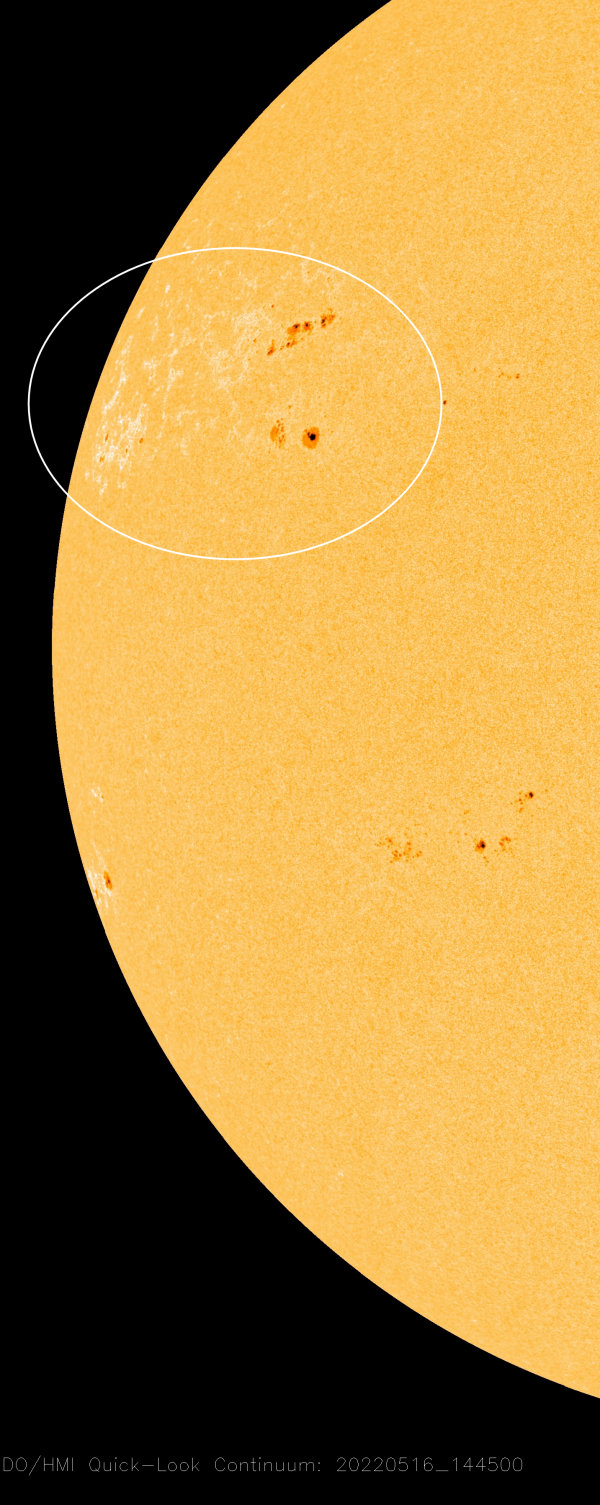
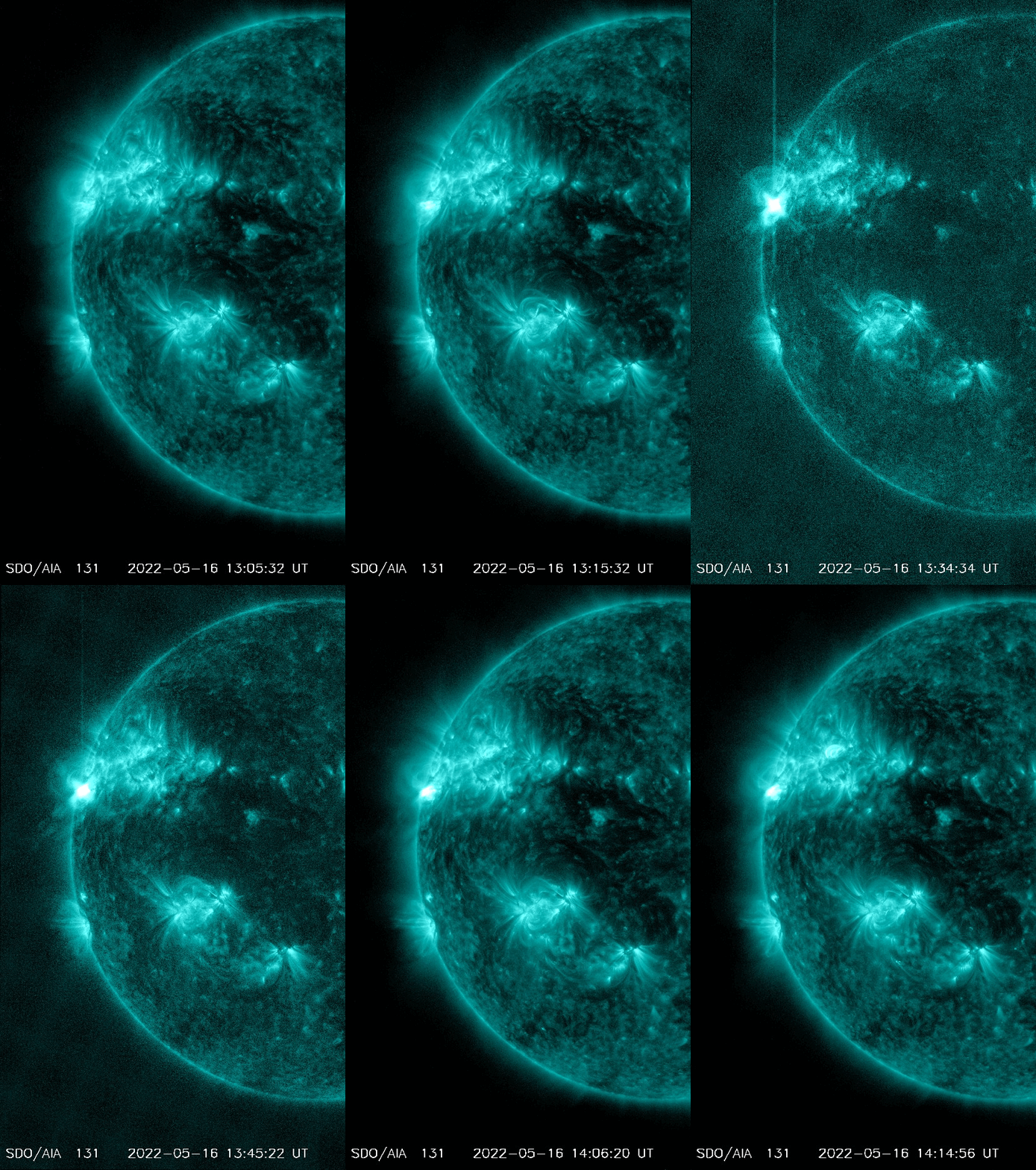
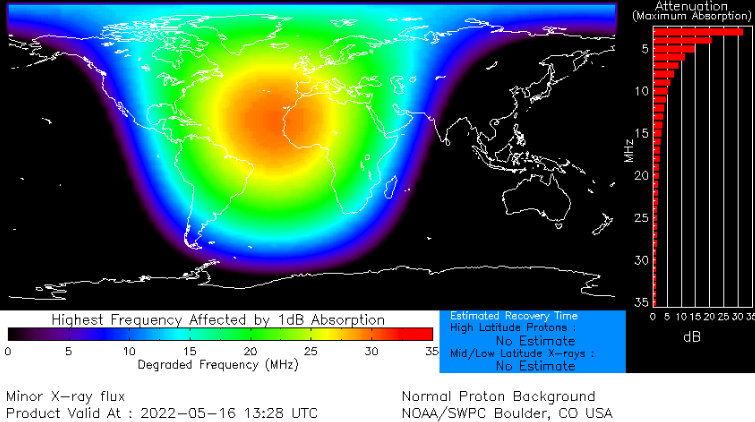
M-FLARES FROM THE NORTHEASTERN LIMB: Sprawling sunspot complex AR3014-15 is crackling with M-class solar flares. The latest, an M2-class explosion on May 16th (1327 UT), caused a minor shortwave radio blackout over the mid-Atlantic Ocean: map. The region is growing in size and complexity as it turns toward Earth, which means stronger flares are possible in the days ahead. Solar flare alerts: SMS Text
TOTAL ECLIPSE OF THE MOON: Last night, the full Moon passed through the shadow of Earth, producing a total lunar eclipse. "It was really dark," says Robbie Merrill, who photographed totality from Columbia, Missouri:
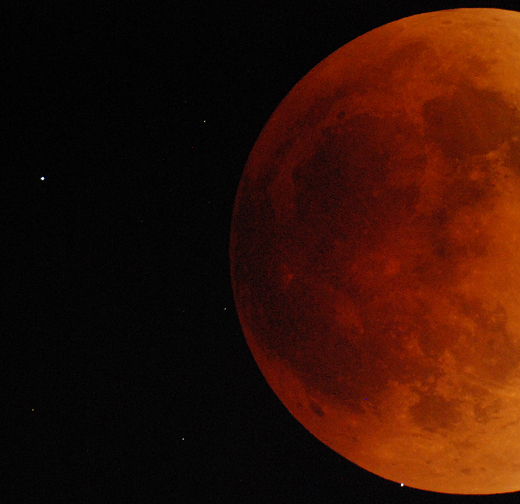
"The deep shade of red was amazing!" adds Merrill, whose 3-second exposure captured many faint stars around the shadowed Moon.
Many observers remarked on the darkness of totality. "This was the darkest total lunar eclipse in recent memory--about as dark as the 1993 total," says Chris Cook, of Duxbury, Massachusetts. Stars which would normally be invisible popped into view: Roberto Bartali of San Luis Potosí, Mexico, saw SAO159330 (magnitude +5.5) almost touching the Moon.
The darkness is probably a sign of volcanic ash. Earlier this year, an undersea volcano erupted near Tonga, hurling 400 million kilograms of ash and fumes deep into the stratosphere. During a lunar eclipse, most of the light illuminating the Moon passes through Earth's stratosphere where it is reddened by scattering. Lingering exhaust from Tonga almost certainly made this eclipse darker and redder than usual.
Light levels were so low, Francisco A. Rodriguez was able to photograph the Milky Way during the eclipse from the Canary Islands:
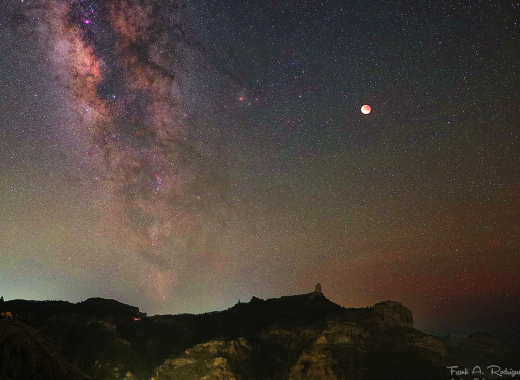
"The view was spectacular," says Rodriguez, whose exposure also captured faint bands of green airglow. Airglow is a dim upper atmospheric phenomenon usually reserved for nights when the Moon is New. It was dark, indeed.
Realtime Lunar Eclipse Photo Gallery
Free: Spaceweather.com Newsletter
MR. SPOCK IN THE STRATOSPHERE (COLLECTOR'S ITEM): He's back by popular demand: Mr. Spock Bobblehead. On Dec. 12, 2021, the students of Earth to Sky Calculus flew the green-blooded science officer to the stratosphere onboard a cosmic ray research balloon. At the apex of the flight he was 107,341 ft high:
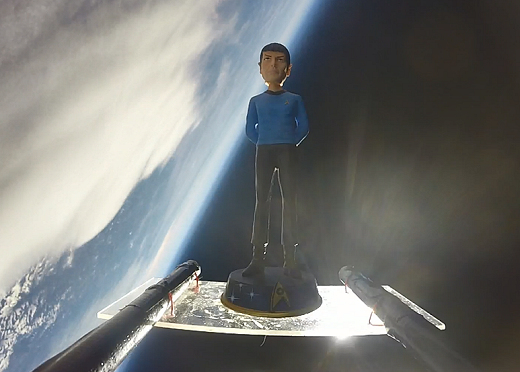
You can have it for $170.10 (the serial number of the Enterprise divided by 10). The bobblehead is made of high-quality resin and hand-painted. It cannot be purchased from Amazon; this rare collector's item is available only from the Earth to Sky Store.
The students are selling Mr. Spock bobbleheads to support their cosmic ray ballooning program. Each one comes with a greeting card showing Spock in flight and telling the story of his journey to the edge of space and back.
Far Out Gifts: Earth to Sky Store
All sales support hands-on STEM education
Realtime Aurora Photo Gallery
Free: Spaceweather.com Newsletter