CME NEAR-MISS POSSIBLE ON JUNE 5TH: A minor coronal mass ejection (CME) that left the sun on June 1st will pass close to Earth on June 5th, according to NOAA analysts. It might come close enough for a glancing blow. High latitude sky watchers should be alert for auroras when the CME arrives this weekend. Aurora alerts: SMS Text.
DAYTIME METEOR SHOWER UNDERWAY: One of the strongest meteor showers of the year is underway. You might not notice, though, because of the glare. The Canadian Meteor Orbit Radar (CMOR) is picking up significant activity less than 20 degrees from the sun:
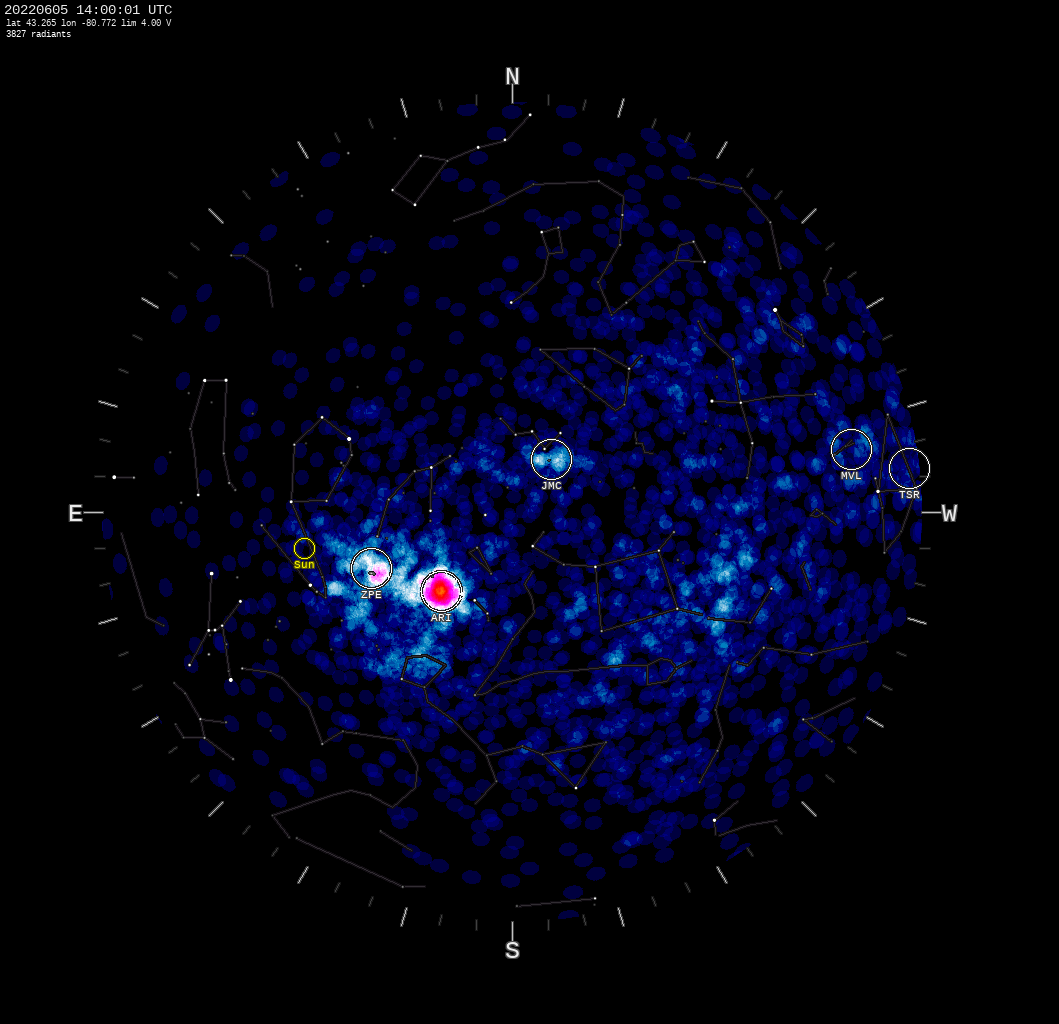
In the radar sky map, above, ARI stands for "Arietid meteor shower." Its source is sungrazing Comet 96P/Machholz, which has laid down a trail of debris in the early-June portion of Earth's orbit. When the shower peaks on June 7th, CMOR will detect approximately one Arietid every 20 seconds--a rate which ranks the Arietids among the top meteor showers of the year.
It turns out that June is the best month of the year for daytime meteor showers. When the Arietids subside, another daytime shower will take over: The zeta Perseids (ZPE) peak on June 13th. And then another: The beta Taurids on June 29th. If only we could see them....
Realtime Space Weather Photo Gallery
Free: Spaceweather.com Newsletter
A MOON HALO AT 35,000 FEET: Mark Duncan and Tim DePeele were flying over eastern Saskatchewan last month when their plane descended through a thin layer of icy clouds. Suddenly the Moon outside their window split into three pieces:
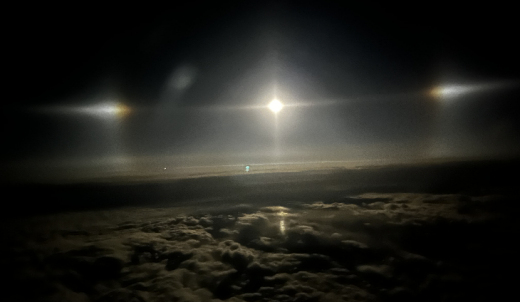
"The 'many Moons' effect lasted for about 20 minutes," says Duncan. "It resolved to the true moon as we passed the ice layer."
These are moondogs caused by plate-shaped ice crystals that fall from the sky like leaves from an autumn tree. Aerodynamic drag causes the flat faces of the crystals to line up almost horizontally, a geometry that splits the Moon as shown above.
Realtime Space Weather Photo Gallery
Free: Spaceweather.com Newsletter
JEDI WINE GLASS: Father's Day is only two weeks away. Are you looking for a far out gift? Consider the Jedi Wine Glass. This one hitched a ride to the stratosphere onboard a cosmic ray research balloon on June 1, 2022:
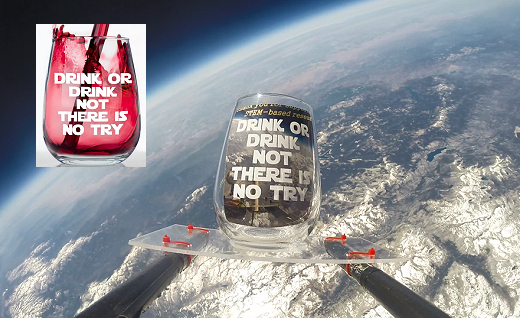
You can have it for $99.95. The funny stemless wine glass spent 2 hours floating in the stratosphere while cosmic ray sensors gathered data. It experienced temperatures as low as -63C and a vacuum-like air pressure only 0.2% of sea level.
The students of Earth to Sky Calculus are selling Jedi wine glasses to support their cosmic ray ballooning program. Each one comes with a greeting card showing the glass in flight and telling the story of its trip to the stratosphere and back again.
Far Out Gifts: Earth to Sky Store
All sales support hands-on STEM education
Realtime Aurora Photo Gallery
Free: Spaceweather.com Newsletter
Realtime Noctilucent Cloud Photo Gallery
Free: Spaceweather.com Newsletter