LONG-DURATION SOLAR FLARE: Big sunspot AR3053 exploded on July 8th (2049 UT), producing a long duration M2.5-class solar flare: movie. A pulse of radiation from the flare caused a minor shortwave radio blackout over the Pacific side of North America: map. Stay tuned for updates about a possible Earth-directed CME. Solar flare alerts: SMS Text.


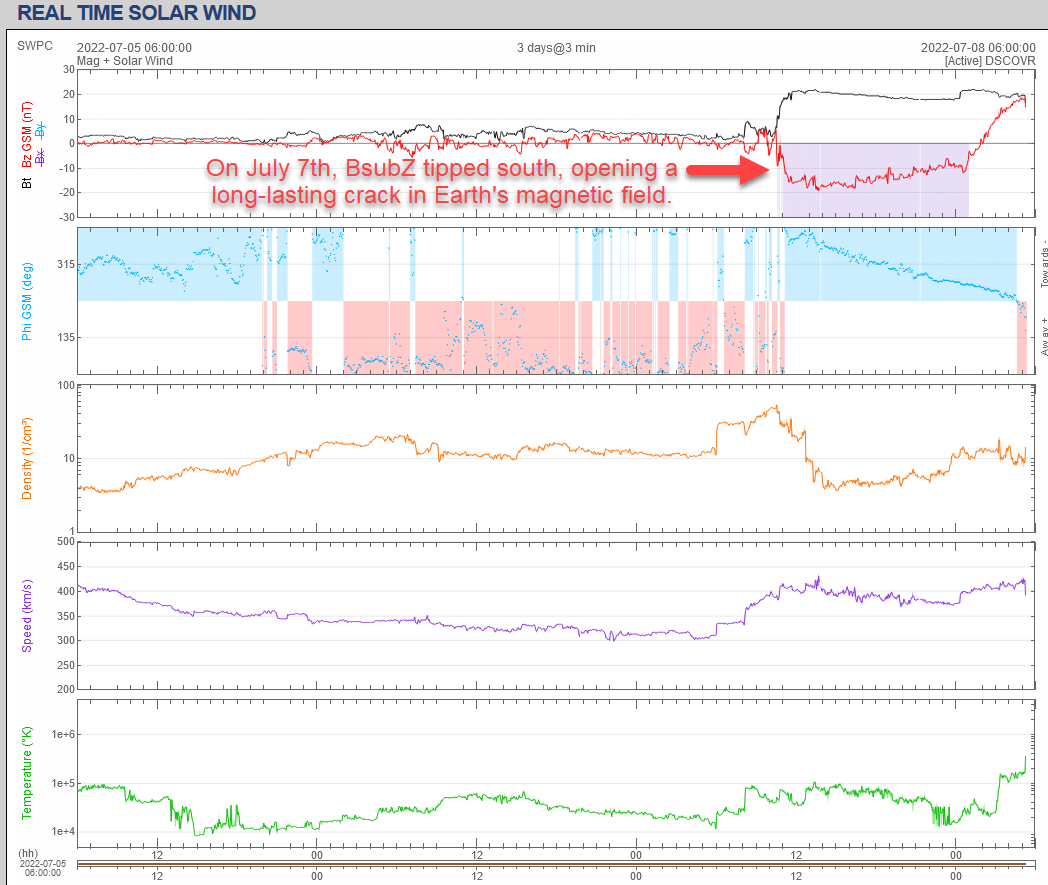
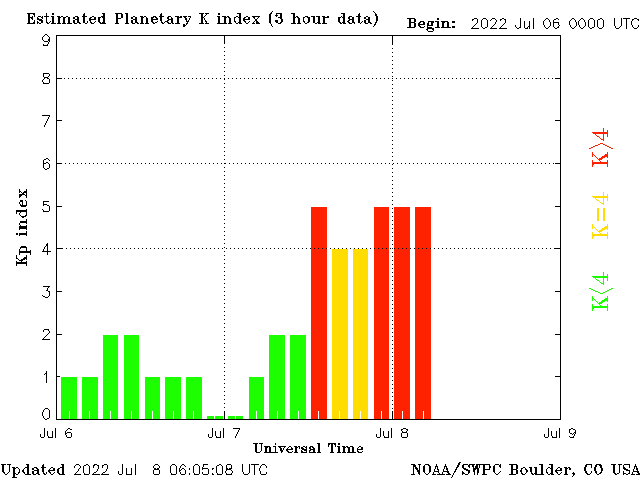
A CRACK IN EARTH'S MAGNETIC FIELD: Yesterday, July 7th, a crack opened in Earth's magnetic field--and it stayed open for nearly 14 hours. Solar wind poured through the gap to fuel a minor albeit long-lasting G1-class geomagnetic storm. Robert Snache photographed the glow from Ramara Township in Ontario, Canada:

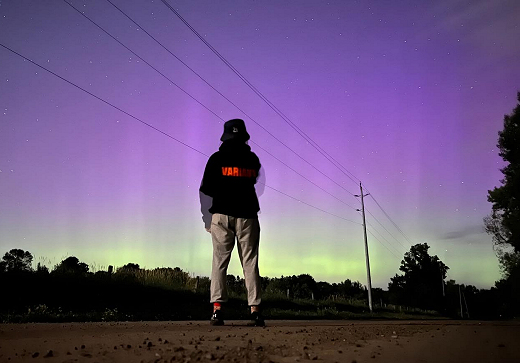
"This was the first aurora I have been able to capture in a long time!!" says Snache.
The crack was opened by a co-rotating interaction region (CIR), which hit Earth's magnetic field during the early hours of July 7th. CIRs are transition zones between fast- and slow-moving streams of solar wind. They contain shock waves that often cause geomagnetic storms. NOAA analysts think a CME might have been embedded in the solar wind just ahead of the CIR, thus delivering a double blow. Aurora alerts: SMS Text.
more images: from Chris Cook of Cape Cod, Massachusetts; from Troy Errthum of Frankfort, MI
Realtime Aurora Photo Gallery
Free: Spaceweather.com Newsletter
THE KALEIDOCOSMO: Every star is a different color. The hue depends on temperature. The coolest stars are red with surface temperatures of about 3,000ºC. The hottest stars are blue, with temperatures up to 40,000ºC. The entire range is covered in this unique image of real stars created by Italian astrophotographer Paolo Palma:
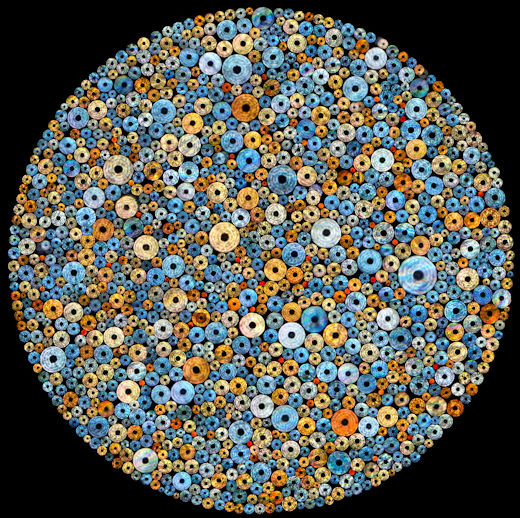
Palma explains: "In these last two years I have photographed with a smartphone all the stars up to magn. +5 visible from Naples (Italy) with my 18-inch dobson: 1250 snapshots. I put every star out of focus to make their colors clearer. With this mosaic it is possible to catch at a single glance the innumerable shades of all the stars of the celestial vault visible to the naked eye from Italy."
He calls it "the Kaleidocosmo, because it reminds me of looking through a kaleidoscope," says Palma. "Kaleidocosmo is an artistic astronomical mosaic that reveals how the starry sky is definitely more colorful than we can imagine."
Realtime Space Weather Photo Gallery
Free: Spaceweather.com Newsletter
"I LOVE YOU MORE" OPAL: Nothing says "I love you" like jewelry from space. On June 3, 2022, this sterling silver opal pendant hitched a ride on an Earth to Sky Calculus cosmic ray research balloon. At the apex of the flight it floated 101,326 feet above the Sierra Nevada mountains of central California:
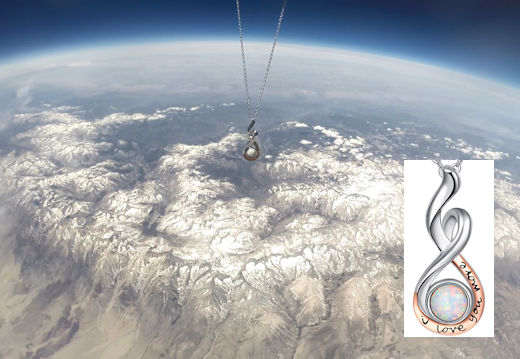
You can have it for $142.95. The opal's infinity wrap is engraved with "I Love You More." It's the perfect birthday, anniversary or (never too early!) Christmas gift for that special someone who loves space. Each pendant comes with a greeting card showing the pendant in flight and telling the story of its trip to the stratosphere and back.
Far Out Gifts: Earth to Sky Store
All sales support hands-on STEM education
Realtime Noctilucent Cloud Photo Gallery
Free: Spaceweather.com Newsletter