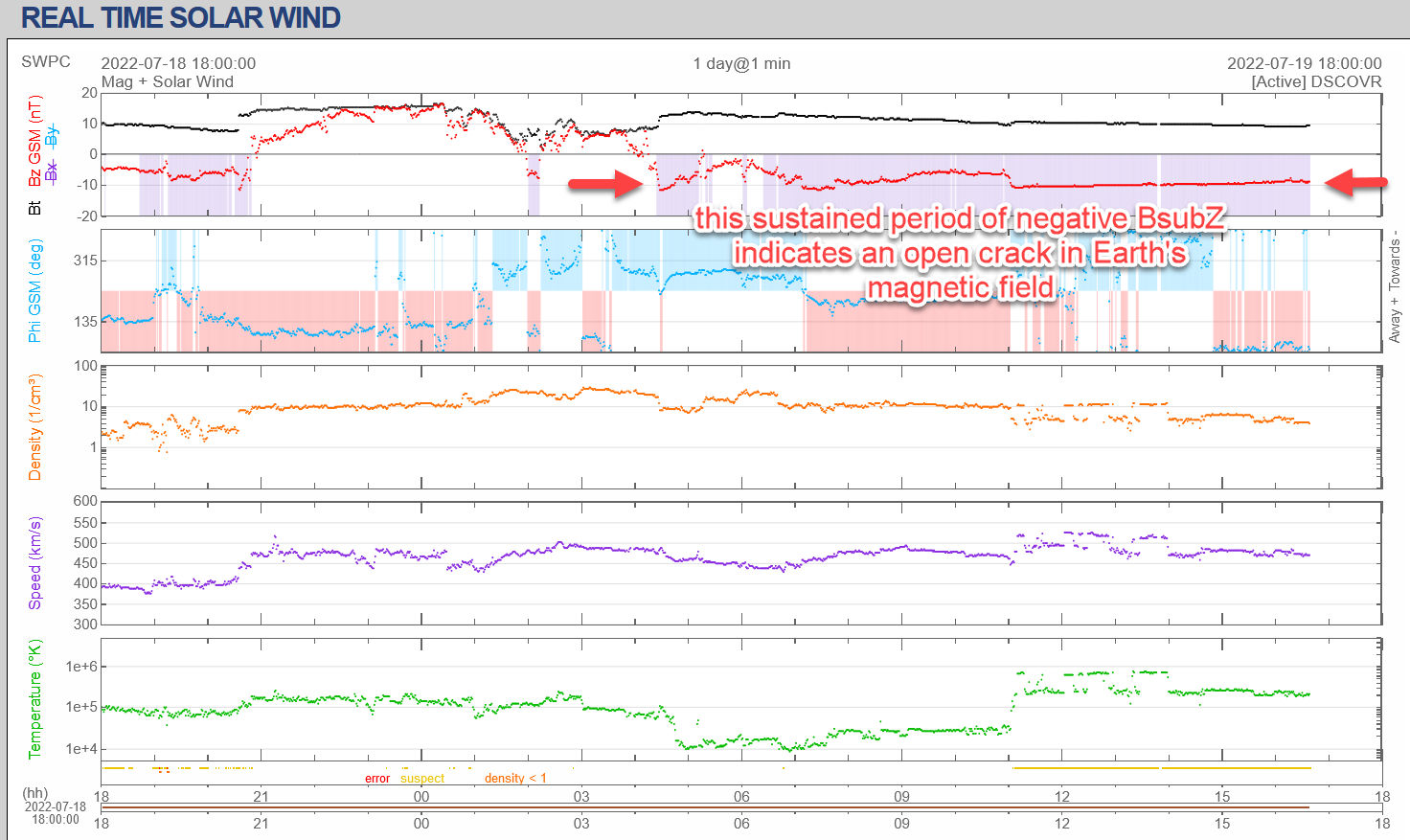
A CRACK IN EARTH'S MAGNETIC FIELD: A crack opened in Earth's magnetic field on July 19th (data), allowing solar wind to enter our planet's magnetosphere. Magnetometers registered a minor G1-class geomagnetic storm. Robert Farrimond photographed the resulting glow from Slate Peak, a 7200 ft mountain in Washington state:
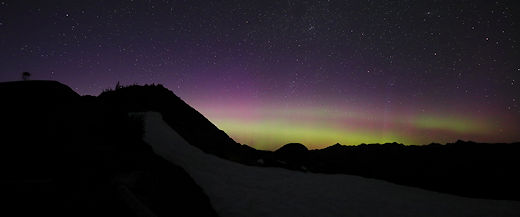
"It was still the Blue Hour on the night of July 18-19th when the auroras became evident," says Farrimond. "You can just make out the fire lookout tower on the left of the frame."
More than 20 hours after it opened, the crack is *still* open, albeit narrowing. High-latitude sky watchers should remain alert for auroras on the night of July 19-20th. Aurora alerts: SMS Text.
Realtime Aurora Photo Gallery
Free: Spaceweather.com Newsletter
SOFIA JUST FLEW THROUGH A GEOMAGNETIC STORM: NASA's famous SOFIA airborne infrared observatory is retiring later this year, but first, there's an item on its bucket list: The Southern Lights. On July 17th, the Boeing 747 flew through a geomagnetic storm south of New Zealand and photographed a magnificent display of aurora australis:
"Despite a bright moon, SOFIA's new aurora camera system managed to capture an outburst of activity at around 9:44pm NZ time," reports Ian Griffin of the Otago Museum in Dunedin. "We were flying at latitude 62 degrees south."
Griffin has been wanting to do this for years. "I noticed in 2016 that SOFIA regularly flies through the southern auroral oval, so I have been working to get a decent high resolution camera on board," he explains. "NASA has high engineering standards, so the Museum got a local engineering firm in Dunedin to produce two camera platforms (port and starboard) that fit into the seat tracks on the upper deck of SOFIA."
The new cameras can take pictures with a high cadence, every 5 to 10 seconds. Such rapid-fire photography may help researchers understand some strange things that have been happening in the southern auroral zone:
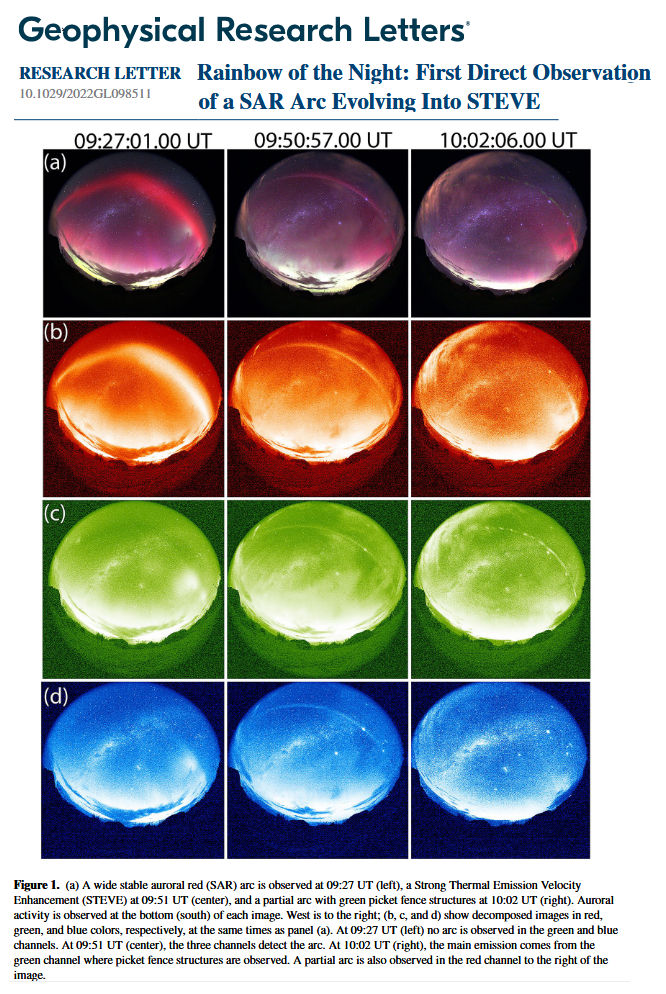
Above: All-sky images show an SAR evolving into STEVE over Dunedin, NZ. [more]
On March 17, 2015, Griffin and colleagues watched a red auroral arc (SAR) over New Zealand turn itself into STEVE. The two phenomena are supposed to have little to do with one another, and current theories can't explain how it happened. Cameras onboard SOFIA might catch the transformation again.
"I am hoping we may spot something interesting," says Griffin.
"The Museum’s camera system was aligned and tested on July 17th while SOFIA continued her primary science observations using the 2.5M onboard telescope," he adds. "The system is still not perfect, but I am hopeful we will get data on SOFIA's remaining missions south of New Zealand--maybe up to 4 more flights!" Stay tuned.
Realtime Space Weather Photo Gallery
Free: Spaceweather.com Newsletter
"I LOVE YOU MORE" OPAL: Nothing says "I love you" like jewelry from space. On June 3, 2022, this sterling silver opal pendant hitched a ride on an Earth to Sky Calculus cosmic ray research balloon. At the apex of the flight it floated 101,326 feet above the Sierra Nevada mountains of central California:
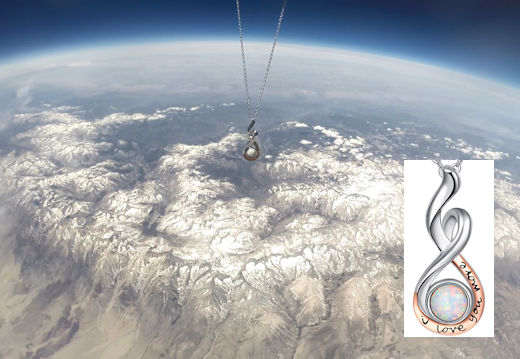
You can have it for $142.95. The opal's infinity wrap is engraved with "I Love You More." It's the perfect birthday, anniversary or (never too early!) Christmas gift for that special someone who loves space. Each pendant comes with a greeting card showing the pendant in flight and telling the story of its trip to the stratosphere and back.
Far Out Gifts: Earth to Sky Store
All sales support hands-on STEM education
Realtime Noctilucent Cloud Photo Gallery
Free: Spaceweather.com Newsletter