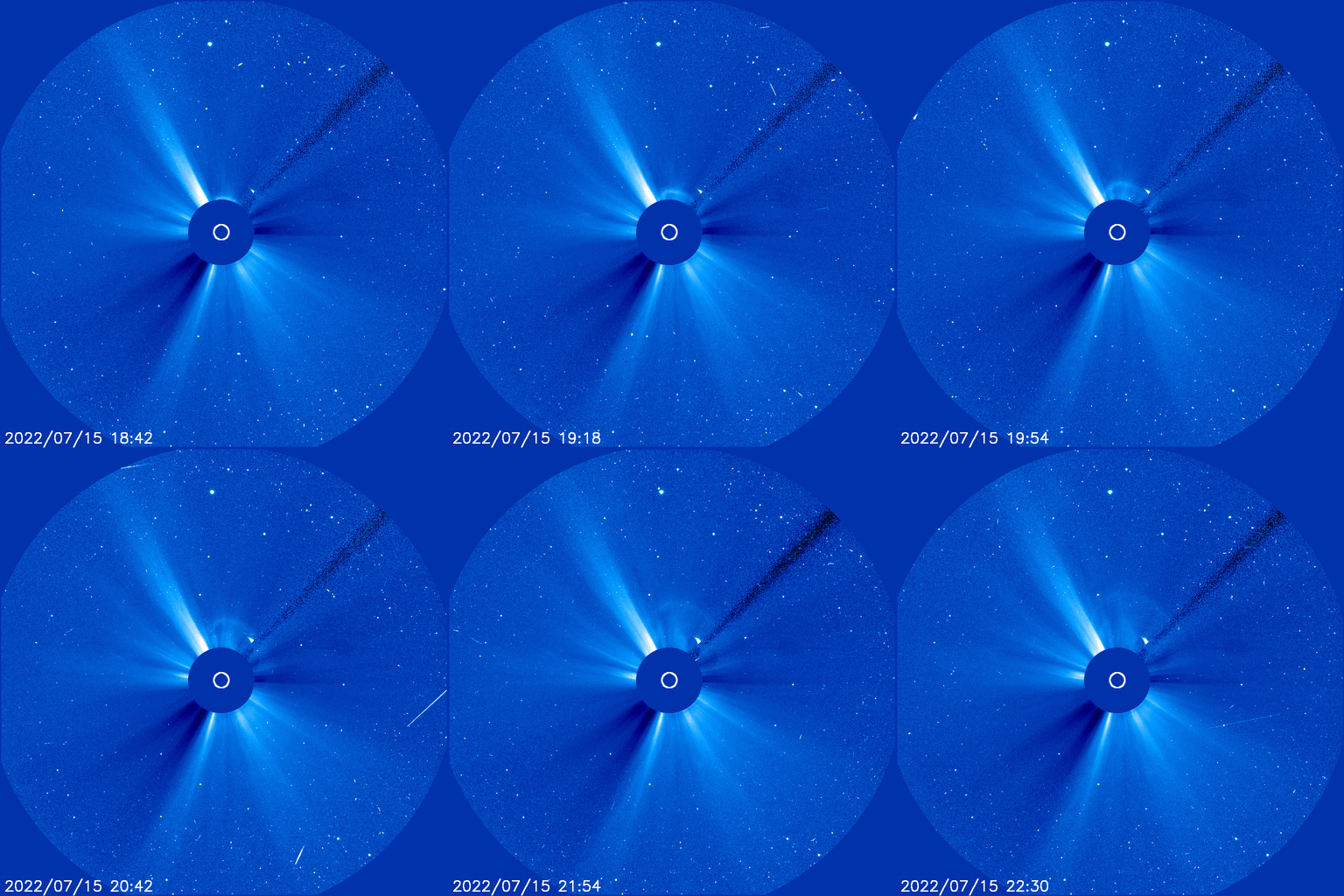
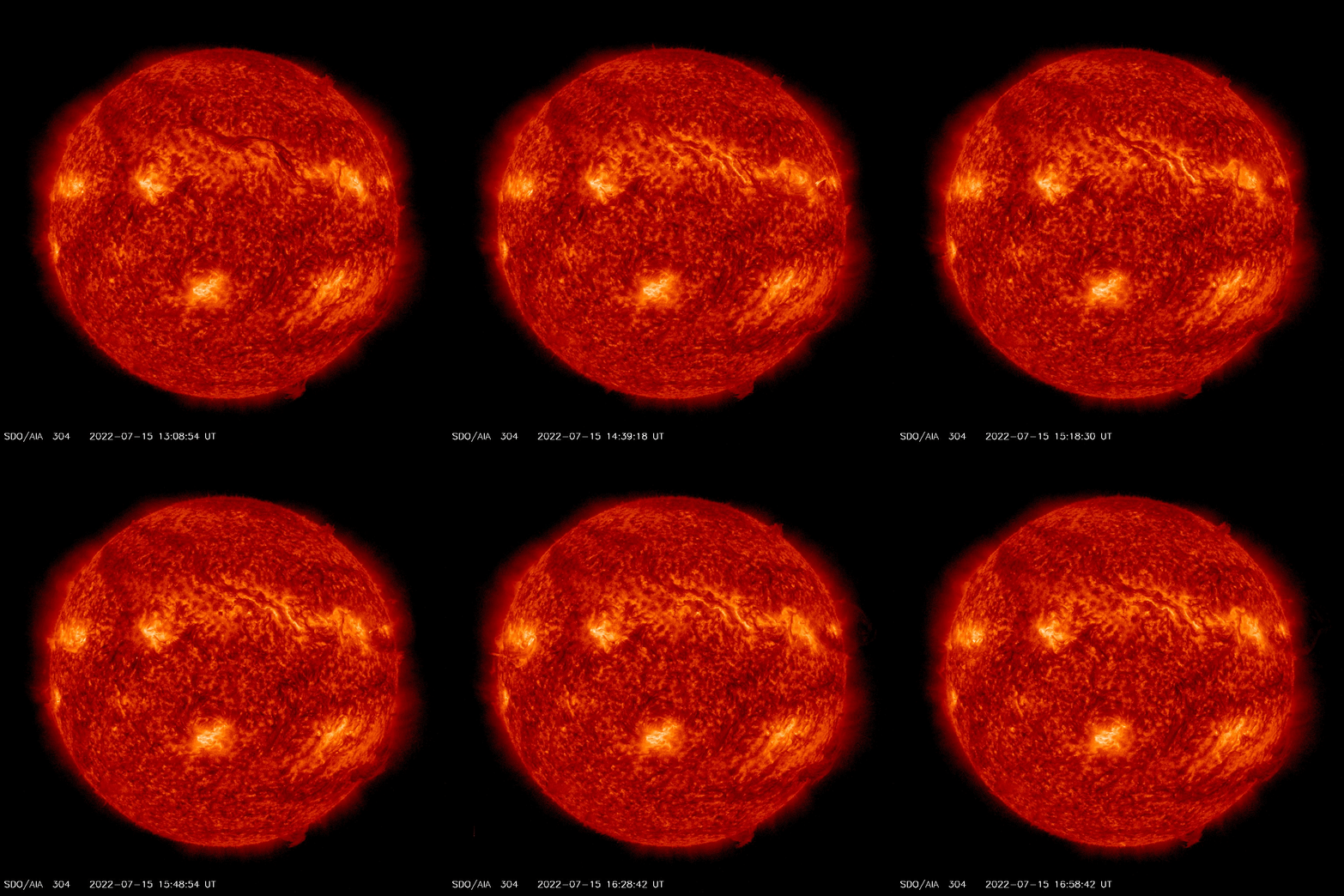
GEOMAGNETIC STORM WATCH: Minor G1-class geomagnetic storms are possible on July 20th or 21st when a slow-moving CME is expected to hit Earth's magnetic field. The CME was hurled into space by an unstable filament of magnetism, which erupted on July 15th. Aurora alerts: SMS Text.

EXPLODING SOLAR PROMINENCE: Astrophotographer Miguel Claro usually doesn't bother checking solar activity late in the day. The low sun makes a poor target for his camera. "I made an exception on July 10th, and I'm glad I did," says Claro, who caught this magnificent eruption just before sunset in Portugal:
"As soon as I realised that a huge prominence was visible and growing so fast and dramatically, I started shooting," he recalls. "The sun was lower than ideal, and the atmosphere had a fine layer of dust coming from Africa. Even late in the day the temperature was very high, around 38º C. To compensate for all these shortcomings, I made a huge effort to gather as many images as possible."
"The final result was a 4K high resolution solar movie comprising around 1 hour of images from 1737 UT and 1830 UT," he says. "The gradual change in contrast of the solar disc is caused by the sun getting lower and crossing the Sahara dust layer." ...not a bad way to end the day!
Realtime Space Weather Photo Gallery
Free: Spaceweather.com Newsletter
URBAN (NOCTILUCENT) LIGHTS: July 2022 has been an unusually good month for noctilucent clouds (NLCs) with activity measured by NASA's AIM spacecraft near a 15-year high. Last night, Lance Taylor saw them from his backyard in Edmonton, Alberta:
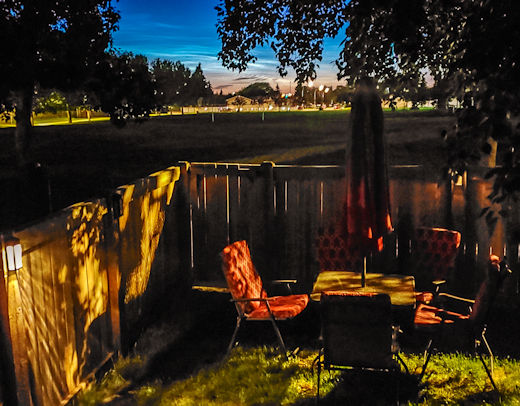
"NLCs were visible through the city lights of Edmonton," says Taylor. "They appeared low in the northwest and covered about 35 degrees of the horizon. I shot these photos using a Samsung Galaxy S9+."
NLCs are Earth's highest clouds. They form in summer when wisps of water vapor rise up to the edge of space and crystalize around specks of meteor smoke. Typical altitude: 83km. The northern season for NLCs ranges from late May to mid-August, so stay tuned for another month of sightings.
Realtime Noctilucent Cloud Photo Gallery
Free: Spaceweather.com Newsletter
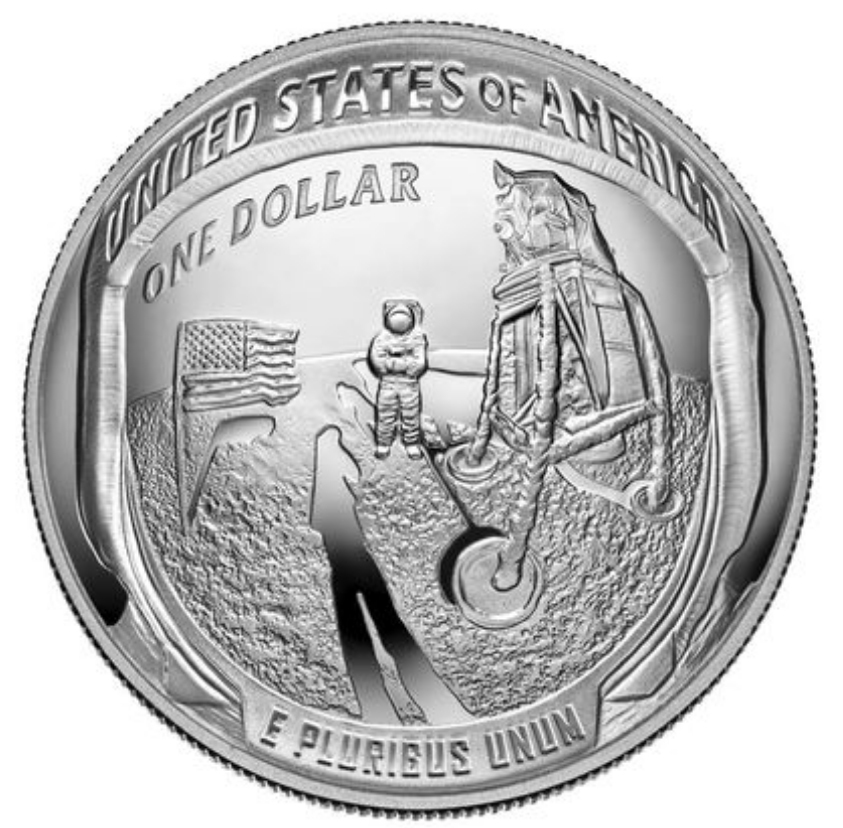
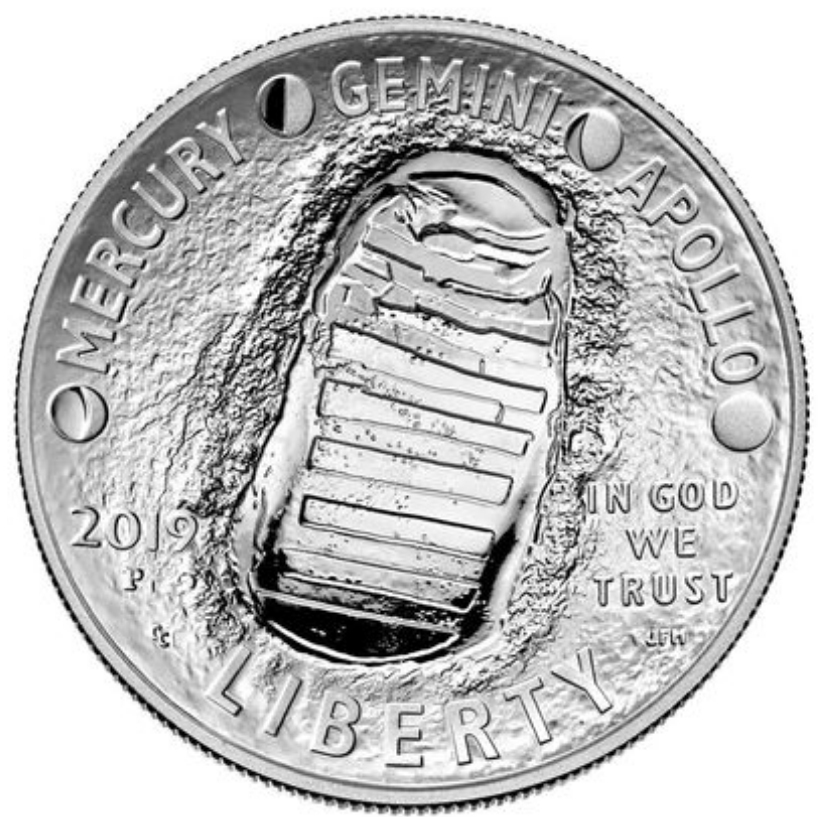
APOLLO 11 PROOF SILVER DOLLAR (COLLECTOR'S ITEM): Fifty-three years ago today, Apollo 11 astronauts landed on the Moon. Like the original astronauts, this rare Apollo 11 silver dollar has been to space, too:
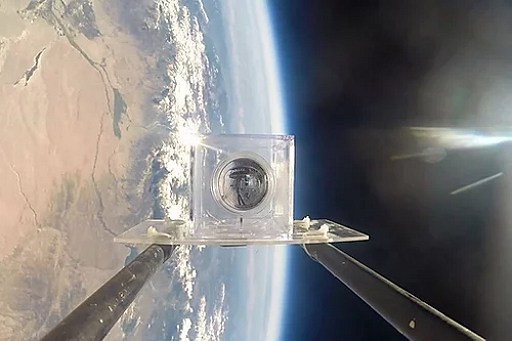
You can have it for $249.95. The US Mint created Apollo 11 silver dollars to celebrate the first Moon landing--but you can no longer buy them from the Mint. You can, however, get one from Earth to Sky Calculus. The coin was flown to the stratosphere onboard the students' cosmic ray research balloon.
The silver dollar is curved and reproduces the helmet of astronaut Buzz Aldrin. Reflected in Buzz's visor are Neil Armstrong, the United States flag, and the lunar lander. The opposite side of the coin shows Neil's iconic footprint on the Moon. Included is a greeting card showing the coin in flight and a certificate of authenticity.
Far Out Gifts: Earth to Sky Store
All sales support hands-on STEM education
Realtime Aurora Photo Gallery
Free: Spaceweather.com Newsletter