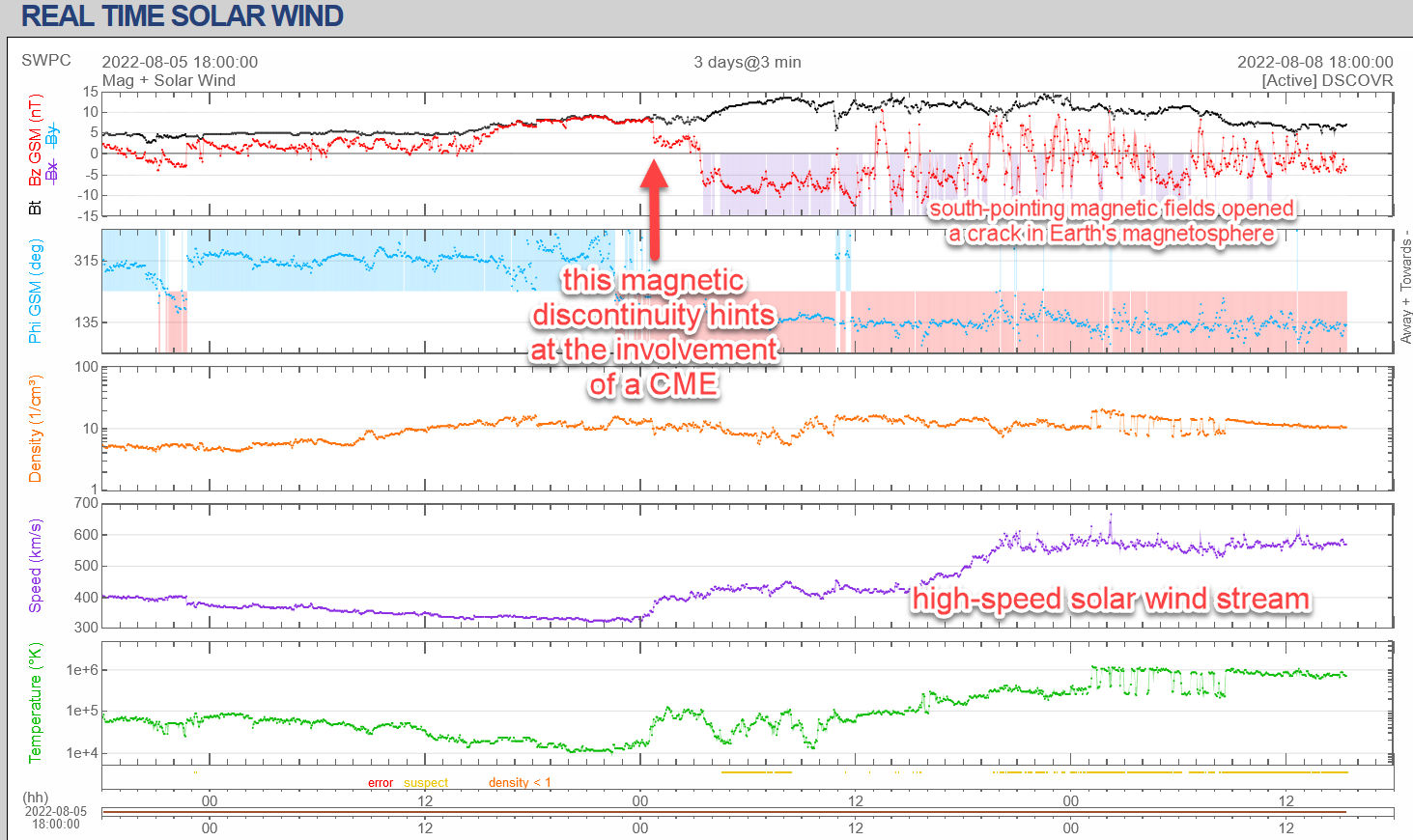
SURPRISE GEOMAGNETIC STORM: A solar wind stream hit Earth's magnetic field on August 7th. At first, the stream's velocity was low, but during the day it sped up to more than 600 km/s, ultimately triggering a G2-class (moderately strong) geomagnetic storm. This event was not in the forecast, so the resulting auroras came as a surprise.

"I was already in bed getting ready for sleep when the storm began," says Ruslan Merzlyakov. "Rushing to the beach in Nykøbing Mors, I was able to photograph the first summer auroras in Denmark in 5 years."
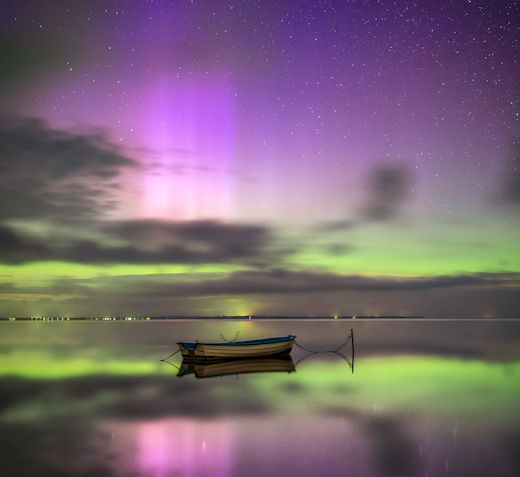
"Seeing the lights dance on a warm summer night was a great experience!" he says.
In North American, auroras spilled across the Canadian border as far south as Pennsylvannia. In Wayne County, PA, Sujay Singh photographed both red auroras and STEVE. Auroras were also sighted in Montana and the Dakotas.
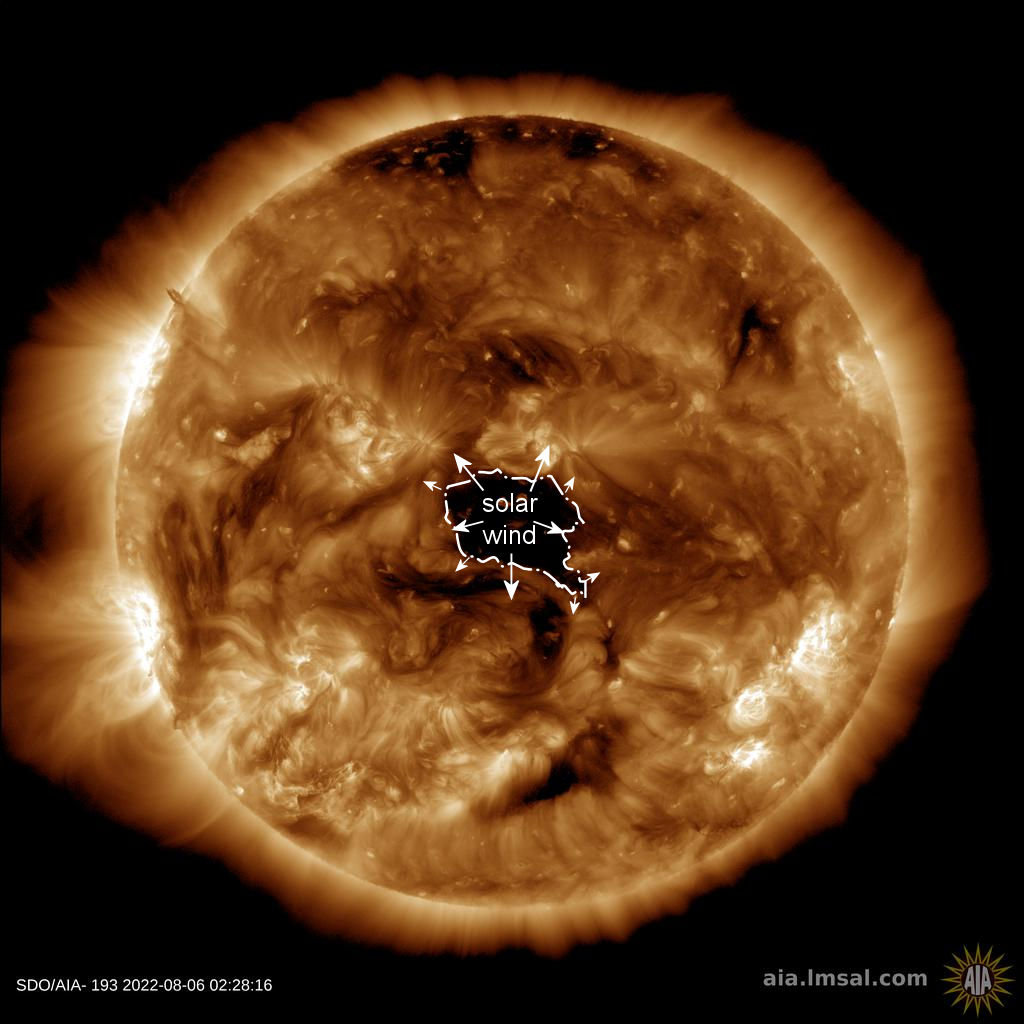
The solar wind stream that sparked this display is a bit of a puzzle. It might be the early arrival of a stream originally expected on Aug. 9th, flowing from an equatorial hole in the sun's atmosphere. Or, perhaps, a CME was involved. A discontinuity in solar wind data at 0045 UT on Aug. 7th hints at a shock wave embedded in the solar wind. These days, the active sun is producing so many minor explosions, it is easy to overlook faint CMEs heading for Earth.
Despite the surprise, subscribers to our Space Weather Alert Service were aware of the storm. Instant text alerts announced the arrival of the solar wind and the subsequent G2 event. Aurora alerts: SMS Text
more images: from Göran Strand of Östersund, Sweden; from Sebastian Sainio of Ostrobothnia, Finland; from Mikko Peussa of Nousiainen, Finland; from Jacob Eubank of Whitefish, Montana; from Henning Untiedt of Tröndel, Baltic Sea, Germany; from Alan Dyer near Gleichen, Alberta
Realtime Aurora Photo Gallery
Free: Spaceweather.com Newsletter
A VOLCANO OVERCAST BY ELECTRIC BLUE: Last Wednesday, Iceland's Fagradalsfjall volcano erupted--the second year in a row it has done that. "Yesterday around 2 a.m. I was lucky to see the erupting volcano and noctilucent clouds for the first time ever!" says Madelon Dielen, who sends this picture from the Reykjanes Peninsula:
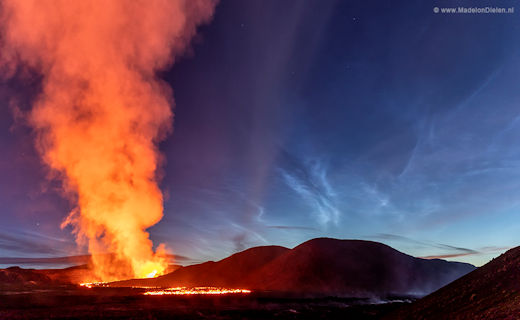
"What a wonderful combination!" says Dielen.
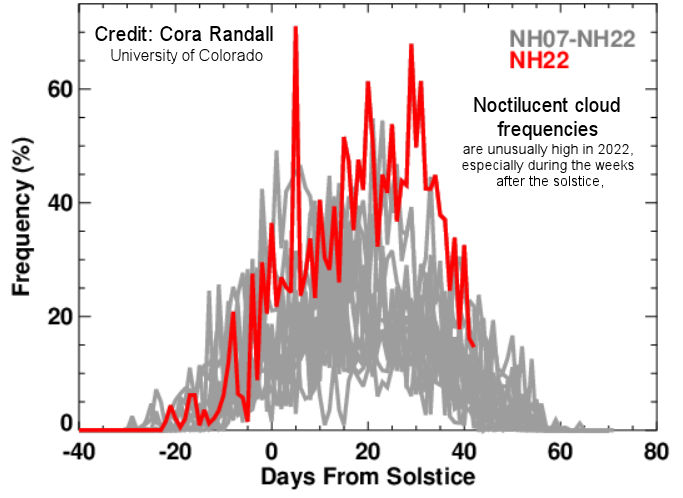
Noctilucent clouds (NLCs) form when summertime wisps of water vapor rise up to the edge of space and crystallize around meteor smoke. Normally they peak in July, then fade in August. This August is a little different, however. Data from NASA's AIM spacecraft show that seasonal NLC abundances are near a 15-year high--an enhancement that might be linked to increasing space traffic. Whatever the cause, more photos of Fagradalsfjall overcast by electric blue may be in the offing. Stay tuned.
Realtime Noctilucent Cloud Photo Gallery
Free: Spaceweather.com Newsletter
COSMIC RAY YIN-YANG PENDANT: To celebrate the yin-yang relationship between solar activity and galactic cosmic rays, the students of Earth to Sky Calculus just launched a yin-yang pendant to the stratosphere. On July 23rd, it flew 104,265 ft high onboard a cosmic ray research balloon:
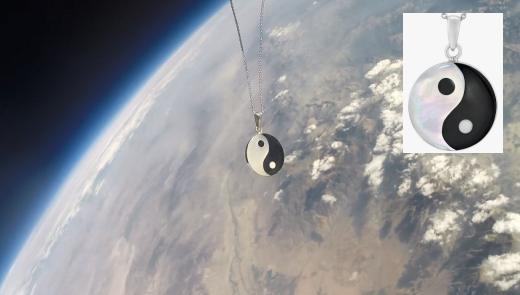
You can have it for $133.95. The pendant's sterling silver frame surrounds balancing swirls of black onyx and mother of pearl--all suspended from a matching 18-inch sterling silver chain. It makes a great anniversary, birthday or (never too early!) Christmas gift.
The students are selling yin-yang pendants to support their cosmic ray ballooning program. Each one comes with a greeting card showing the pendant in flight and telling the story of its journey to the edge of space and back again.
Far Out Gifts: Earth to Sky Store
All sales support hands-on STEM education
Realtime Space Weather Photo Gallery
Free: Spaceweather.com Newsletter