GEOMAGNETIC STORM WATCH: Minor to moderate geomagnetic storms are possible on Aug. 17-18 when a CME is expected to sideswipe Earth's magnetic field. The storm cloud was launched earlier today by an explosion around sunspot AR3076, described below. NOAA analysts are modeling the CME for a more precise estimate of impacts and arrival time. Stay tuned. Solar flare alerts: SMS Text


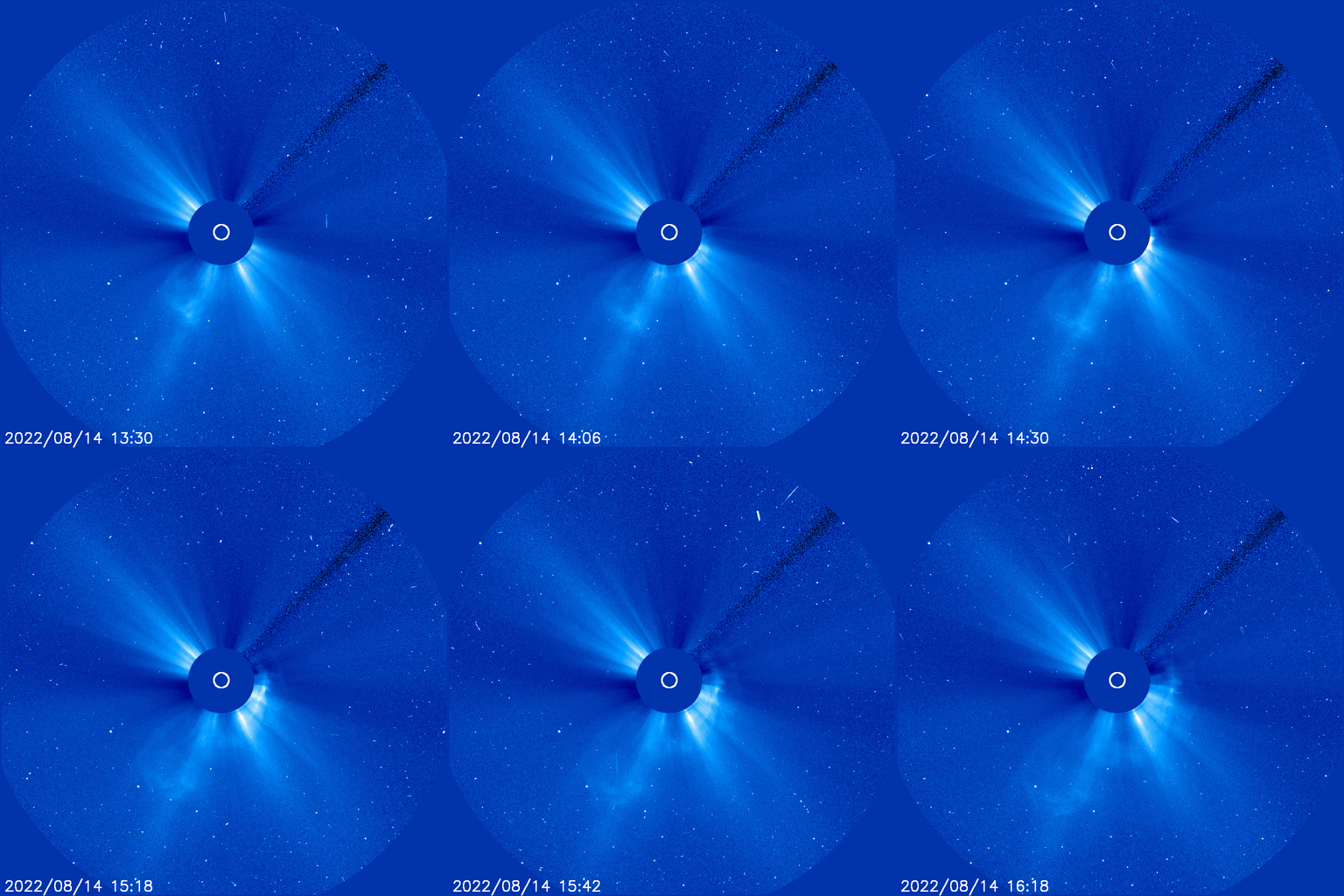
DRAMATIC EXPLOSION ON THE SUN: The sun just hurled a plume of dark plasma into space following a dramatic explosion around sunspot AR3076. NASA's Solar Dynamics Observatory recorded the blast, which began on Aug. 14th around 1130 UT:
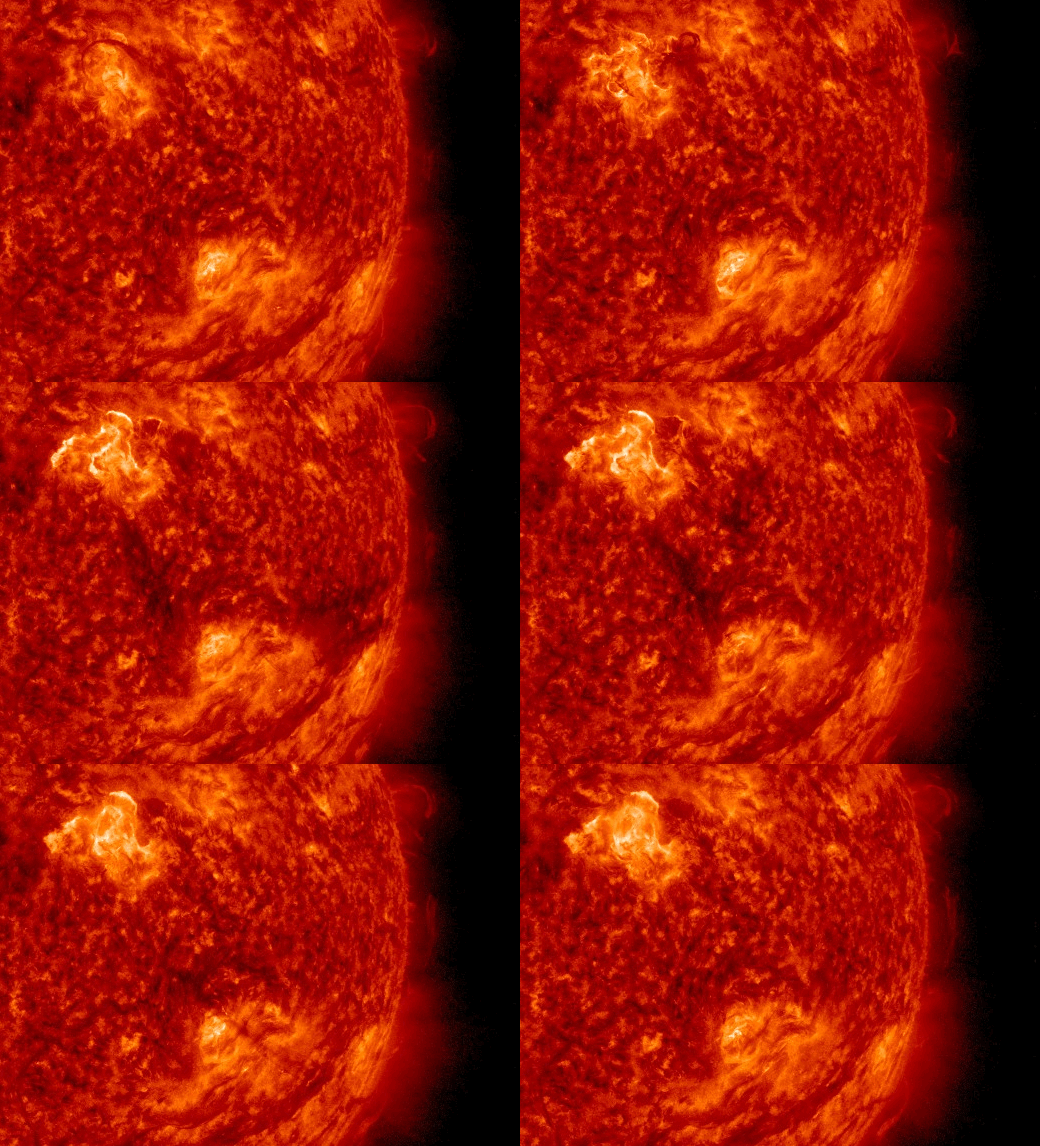
Traveling faster than 600 km/s (1.3 million mph), the plume tore through the sun's outer atmosphere, creating a coronal mass ejection (CME). Newly arriving images from the Solar and Heliospheric Observatory (SOHO) confirm that the CME has an Earth-directed component. It could sideswipe Earth's magnetic field on Aug. 17th, producing minor to moderate geomagnetic storms. Aurora alerts: SMS Text
Realtime Space Weather Photo Gallery
Free: Spaceweather.com Newsletter
PERSEID RADAR ECHOES: The Perseid meteor shower peaked on Aug. 13th. Full moonlight muted the show for most observers, but it was no problem for the GRAVES space surveillance radar. "Last night was very active with strong signals and lots of Perseids," reports Heiko Ulbricht, who recorded these echoes from his listening station in Freital, Germany:

Located in France, GRAVES scans the skies for satellites, meteors and other space debris passing over Europe. The radar sends a series of 143 MHz pulses straight up, and anything it "pings" is reflected far and wide. Ulbricht listens to the echoes from Germany using a Yagi antenna and receiver tuned to the GRAVES frequency.
"In the screenshot, above, there are two rapidfire Perseids sandwiched between echoes from the full Moon," says Ulbricht. "Listening to GRAVES last night was really fun."
Bonus: Ulbricht also recorded an audio file. Turn up the volume and listen. The two Perseid echoes sound like high-pitched "tweets" doppler-shifted by the meteors' rapid motion through Earth's atmosphere.
Realtime Perseid Photo Gallery
Free: Spaceweather.com Newsletter
SOLAR SYSTEM CRYSTAL BALL: Are you looking for a far-out gift? Consider the Solar System Crystal Ball. Watch the video as the orb travels to the stratosphere onboard an Earth to Sky Calculus cosmic ray balloon, stretching and inverting the incredible landscape of the Sierra Nevada mountains behind it:
You can have it for $229.95. The students are selling these crystal balls to pay for their cosmic ray ballooning program. The 800 gram sphere contains a model of the Solar System, including the sun, eight planets and their moons. It makes an incredible gift for anyone interested in space.
Each one comes with a unique gift card showing the item at the edge of space and telling the story of its flight. All proceeds support Earth to Sky Calculus and hands-on STEM research.
Far Out Gifts: Earth to Sky Store
All sales support hands-on STEM education
BREAKING WAVE: Yesterday in the core of sunspot AR3078, an S-shaped strand of magnetism erupted. What happened next was a little unusual. A blast wave shot out sideways and broke against the wall of a nearby coronal hole:

Coronal holes are voids in the sun's atmosphere where magnetic fields open up, allowing solar wind to escape. The hole's nearly vertical magnetic walls and outflowing stream of solar wind stopped this blast in its tracks.
The S-shaped filament, called a "sigmoid," re-formed after the explosion. Sigmoids are notoriously unstable, so more eruptions may be in the offing. Stay tuned. Solar flare alerts: SMS Text
Realtime Space Weather Photo Gallery
Free: Spaceweather.com Newsletter
Realtime Noctilucent Cloud Photo Gallery
Free: Spaceweather.com Newsletter
Realtime Aurora Photo Gallery
Free: Spaceweather.com Newsletter