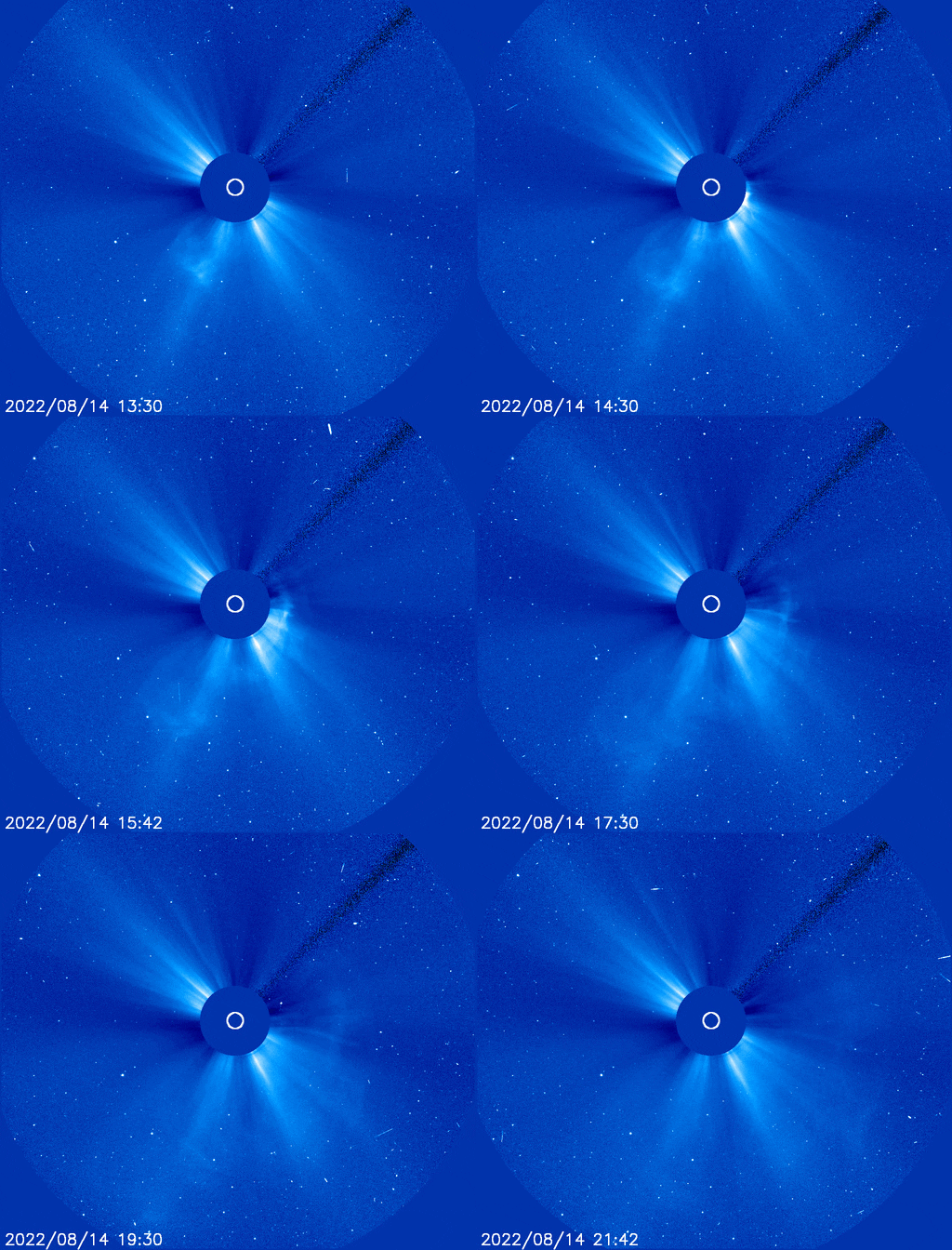
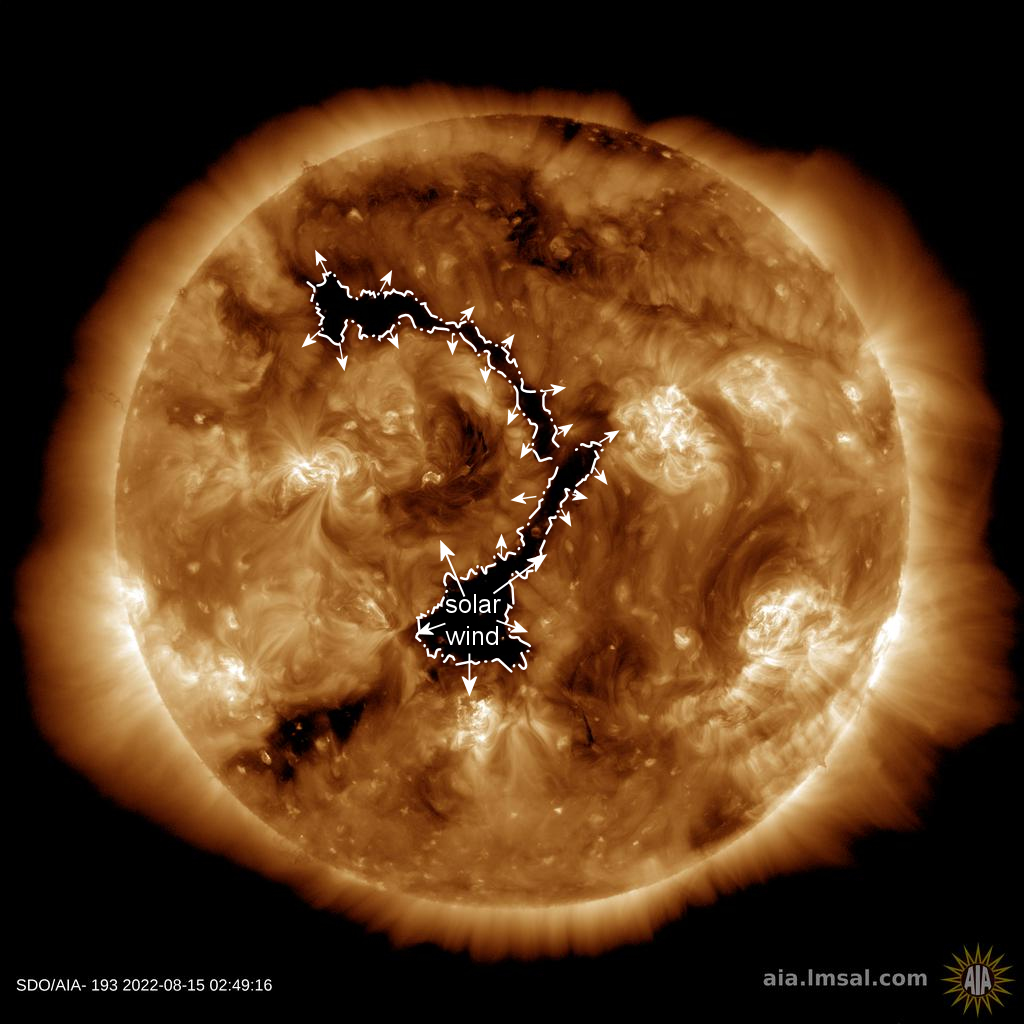
GEOMAGNETIC STORM WATCH: Minor (G1) to moderate (G2) geomagnetic storms are possible on Aug. 17th when a CME is expected to sideswipe Earth's magnetic field. The CME was hurled in our direction yesterday by a "dark plasma explosion," described below. Following close behind the CME, a stream of high-speed solar wind could arrive on Aug. 18th, boosting the odds of a geomagnetic storm on that date as well. Aurora alerts: SMS Text


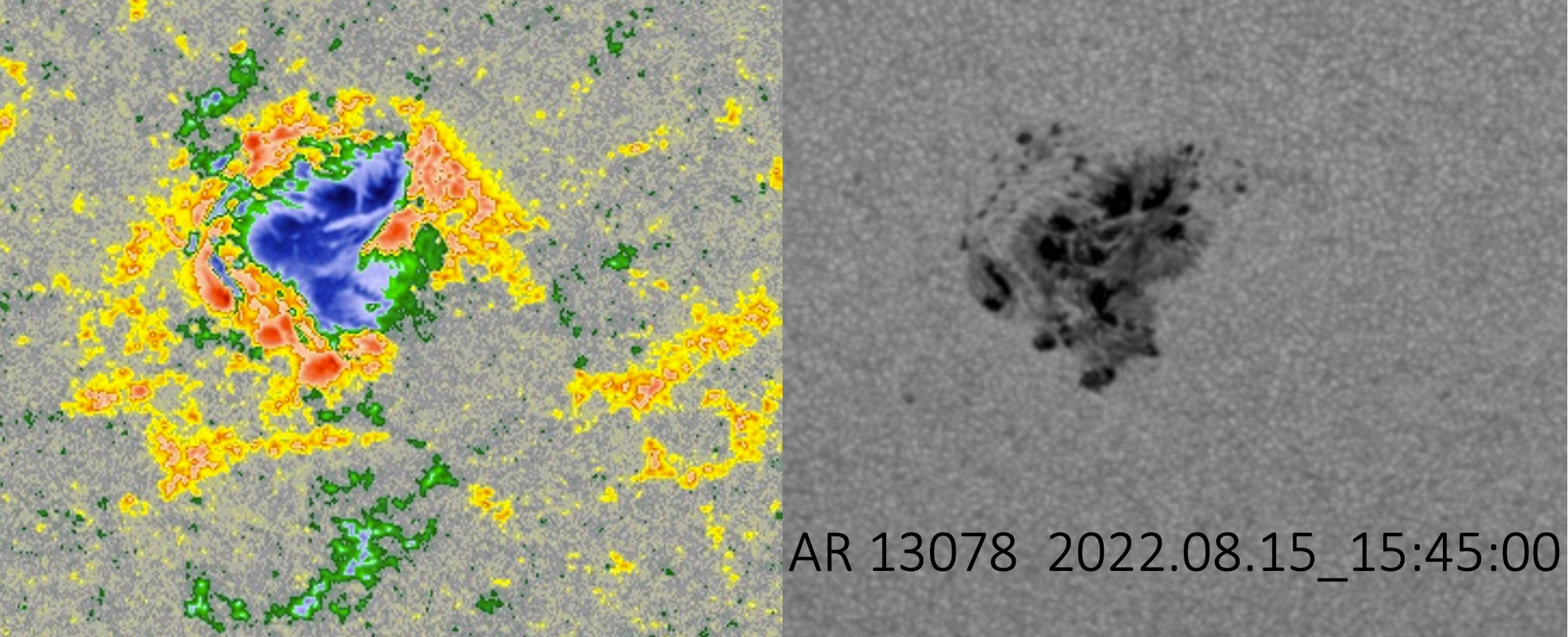
ACTIVE SUNSPOT ALERT: Growing "sunspot AR3078 has developed a delta-class magnetic field," reports Aimee Norton, a senior research scientist at Stanford's Hansen Experimental Physics Laboratory. Earlier today, Norton created this magnetic map of the sunspot using data from NASA's Solar Dynamics Observatory. It shows opposite polarities jostling together--an explosive mix that could trigger strong (even X-class) solar flares. Indeed, AR3078 is crackling with activity:
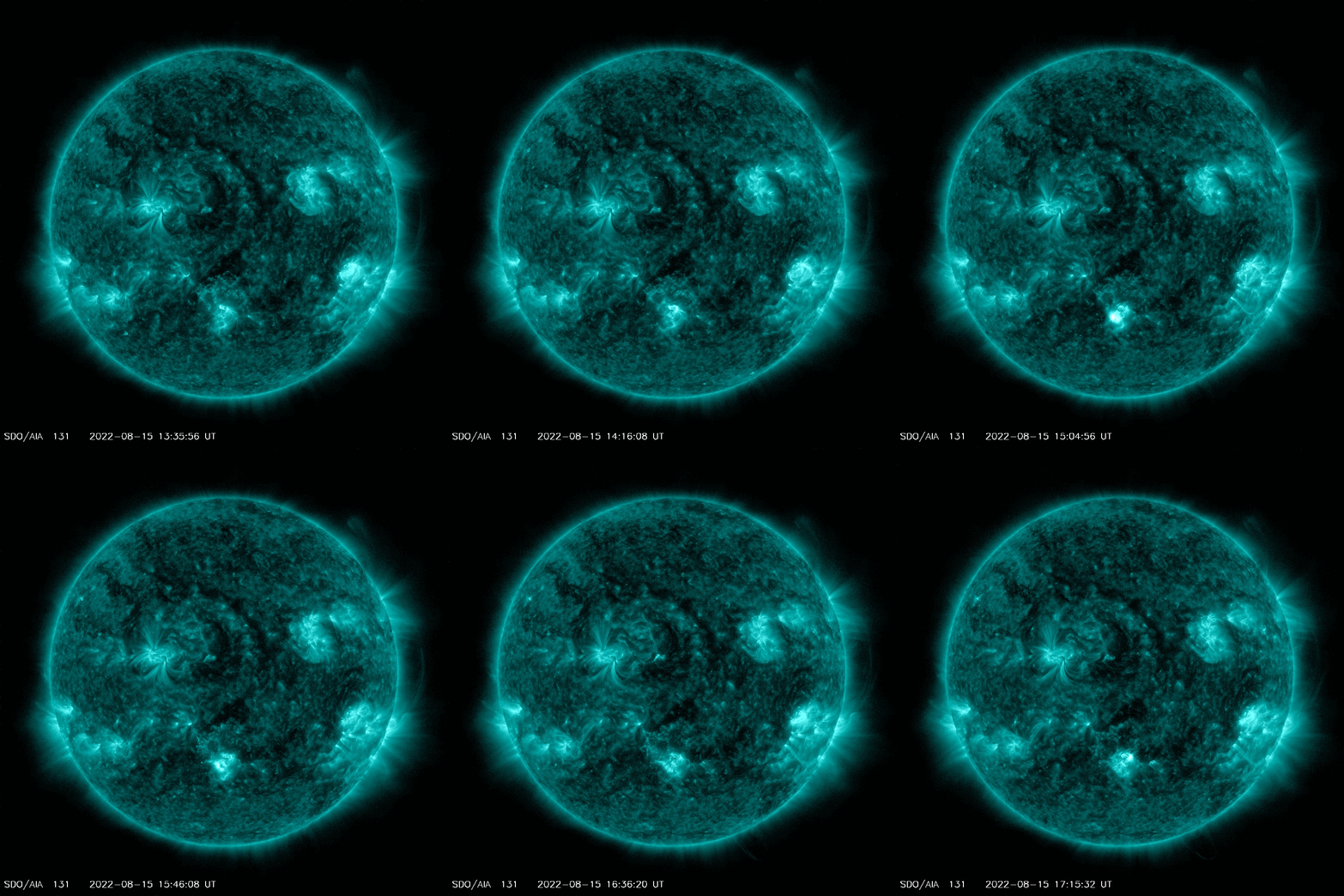
A series of M-class solar flares today has caused minor shortwave radio blackouts over the Atlantic Ocean and North America. Mariners, pilots and ham radio operators may have noticed unusual propagation effects at frequencies below 15 MHz especially during the hours between 1500 UT and 1800 UT.
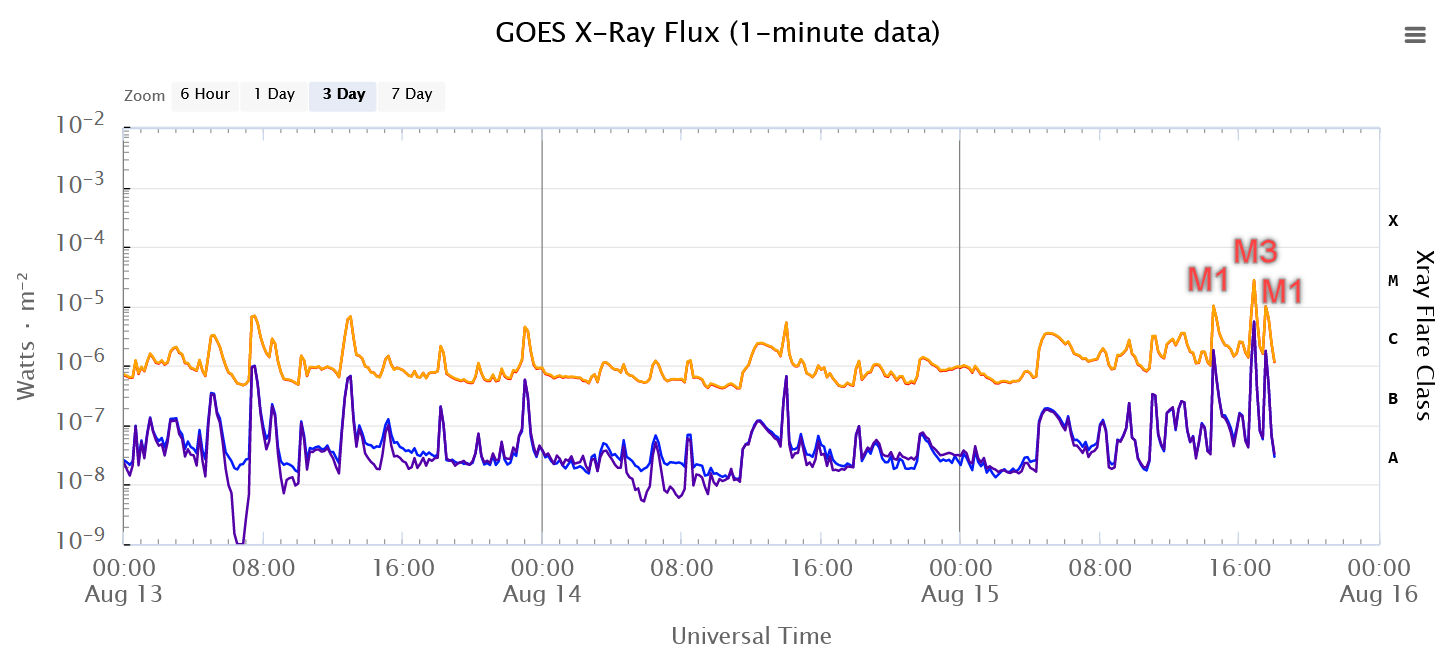
"I don't know how long this will last," says Norton. Stay tuned for updates. Solar flare alerts: SMS Text
DARK PLASMA EXPLOSION ON THE SUN: Yesterday, Aug. 14th, the sun hurled a plume of cool, dark plasma into space following an explosion around sunspot AR3076. NASA's Solar Dynamics Observatory recorded the blast:
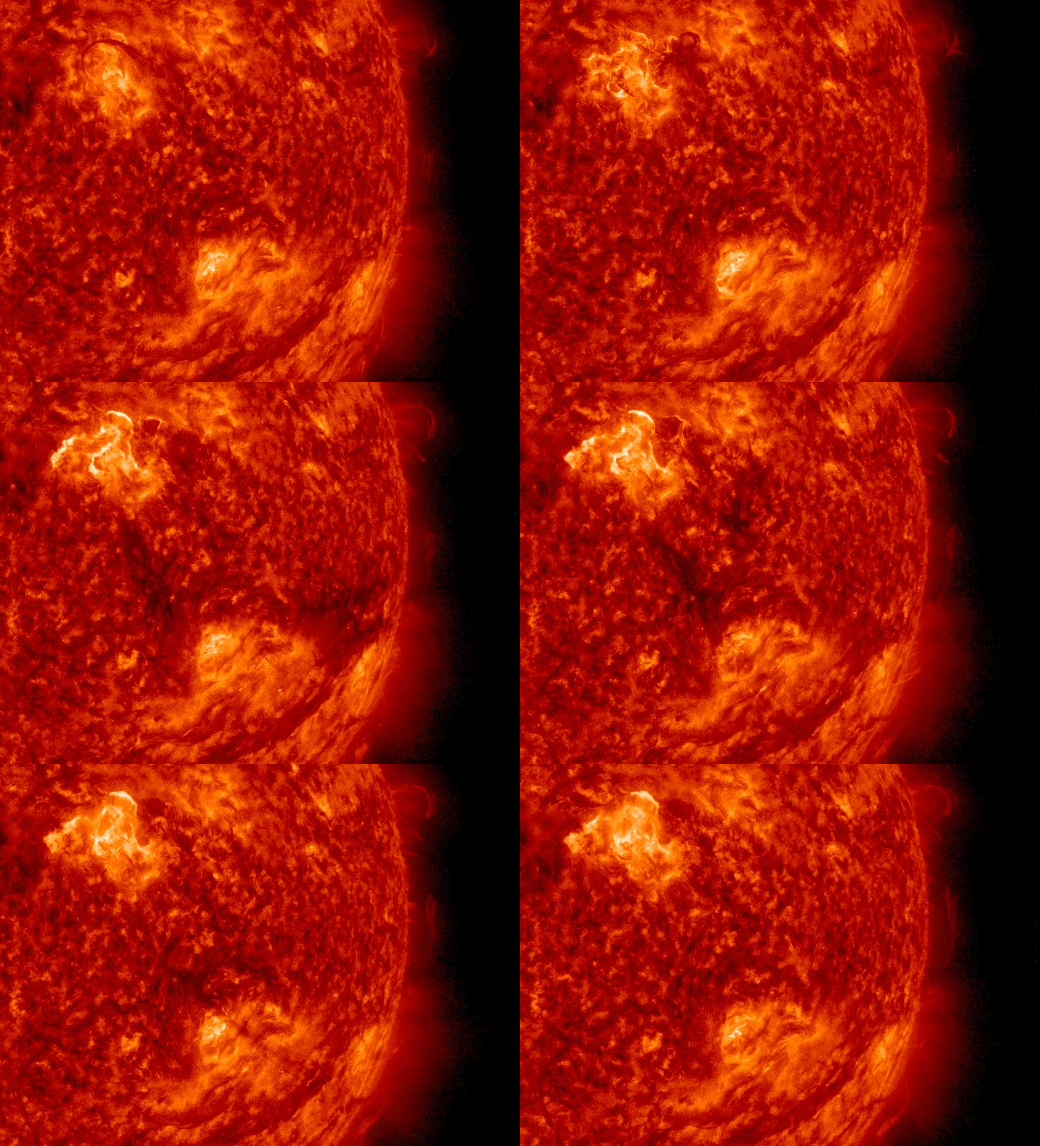
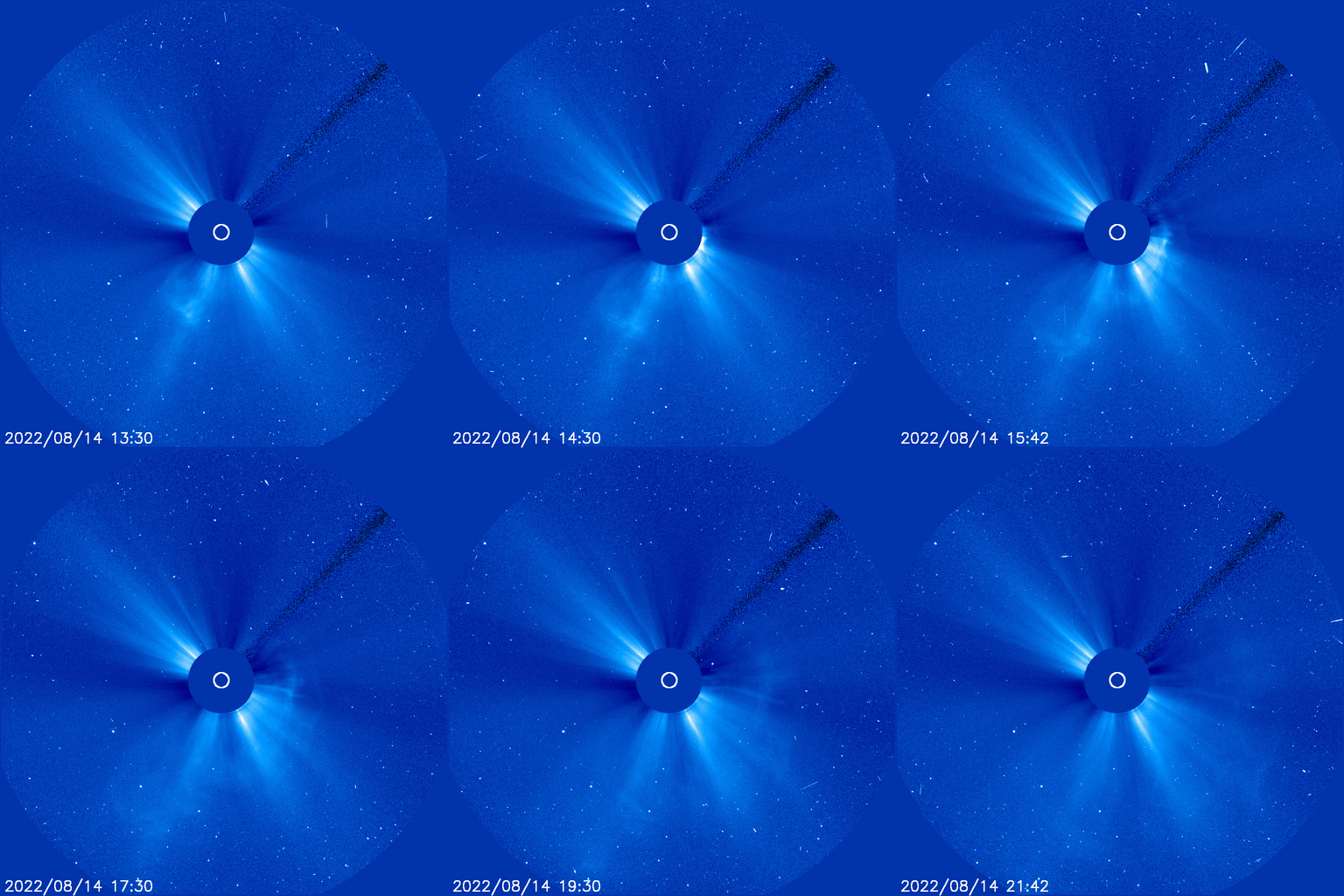
Traveling faster than 600 km/s (1.3 million mph), the plume tore through the sun's outer atmosphere, creating a coronal mass ejection (CME). Newly updated images from the Solar and Heliospheric Observatory (SOHO) confirm that the CME has an Earth-directed component. It could sideswipe Earth's magnetic field on Aug. 17th, producing minor to moderate geomagnetic storms. Aurora alerts: SMS Text
Realtime Space Weather Photo Gallery
Free: Spaceweather.com Newsletter
REVERSED POLARITY SUNSPOT: The sunspot that produced yesterday's dark plasma explosion is a little unusual. It has its signs backwards.
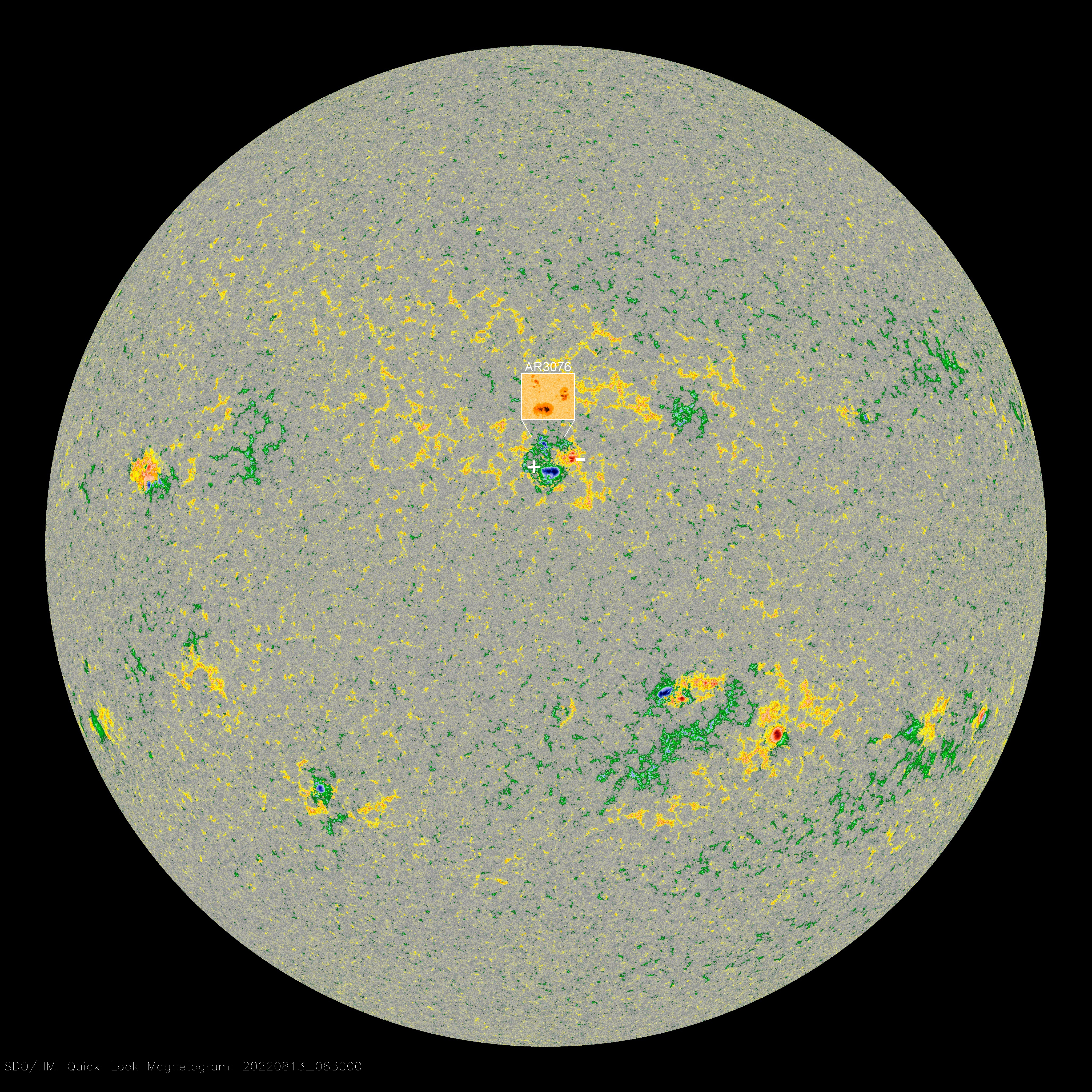
Above: A magnetic map of the sun’s surface from NASA's Solar Dynamics Observatory.
According to Hale’s Law, Solar Cycle 25 sunspots in the sun’s northern hemisphere should have a -/+ polarity; negative on the left, positive on the right. However, the magnetogram above shows the opposite. AR3076 is a reversed polarity sunspot.
Studies show that about 3% of all sunspots violate Hale’s Law. In many ways, reversed polarity sunspots are just like other sunspots. For instance, they have the same lifespan and tend to be about the same size as normal sunspots. In one key way they are different: According to a 1982 survey by Frances Tang of the Big Bear Solar Observatory, reversed polarity sunspots are more than twice as likely to develop complex magnetic fields mixing + and – together. Reversed polarity sunspots are therefore more likely to explode.
This one sure did, and a CME is now heading for Earth. Don't miss the impact.
Realtime Aurora Photo Gallery
Free: Spaceweather.com Newsletter
"I LOVE YOU FOREVER" MOONSTONE PENDANT: Are you looking for a far-out gift? Consider the "I Love You Forever" Moonstone. This one hitched a ride to the stratosphere onboard an Earth to Sky Calculus cosmic ray research balloon:
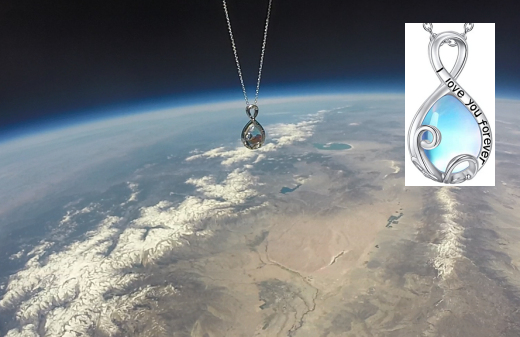
You can have it for $162.95. The moonstone's sterling silver infinity wrap is inscribed with the words "I love you forever." It makes a great anniversary, birthday or Christmas gift. The moonstone comes with a greeting card showing the pendant in flight, telling the story of its trip to the edge of space and back again.
Far Out Gifts: Earth to Sky Store
All sales support hands-on STEM education
Realtime Noctilucent Cloud Photo Gallery
Free: Spaceweather.com Newsletter