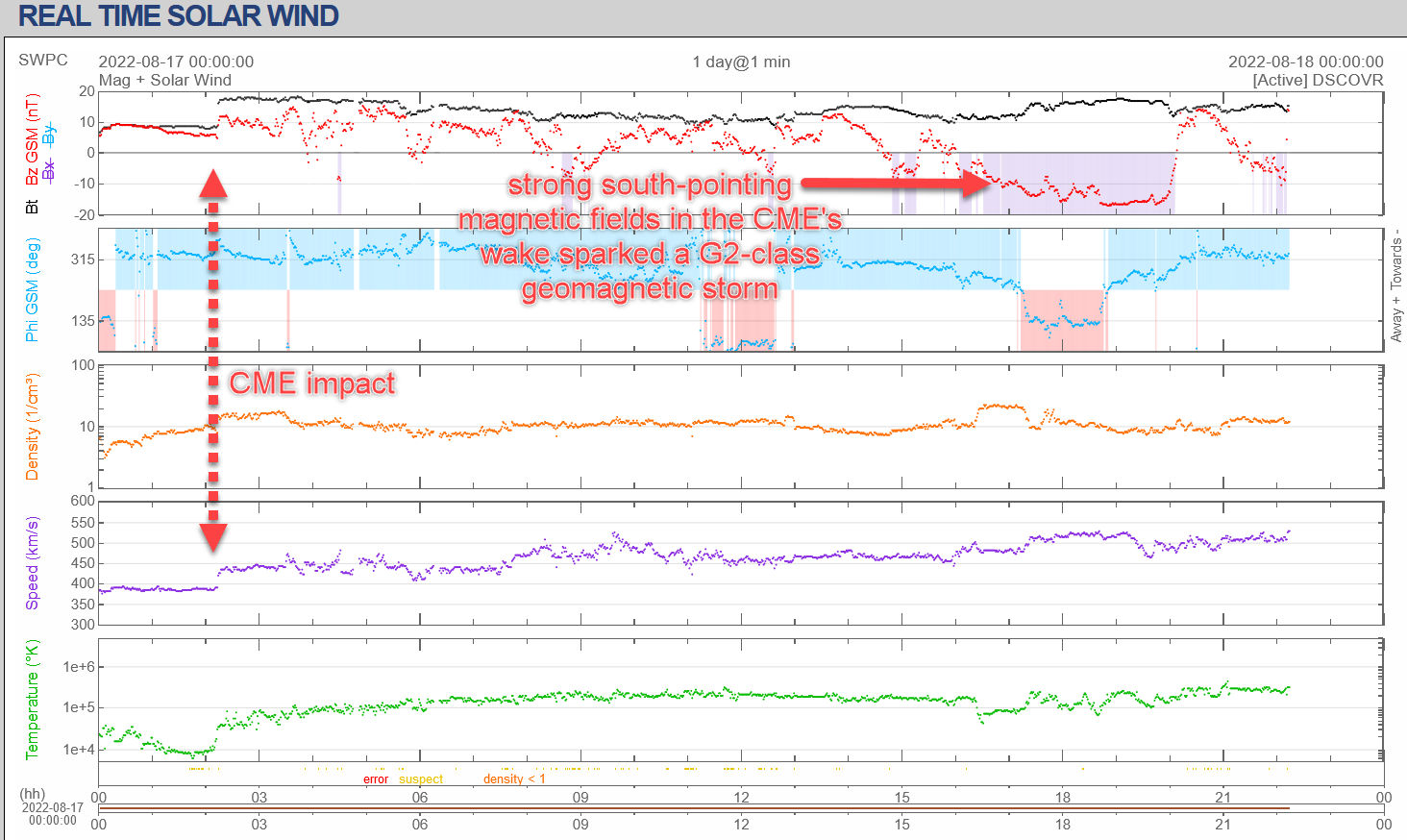
CME SPARKS GEOMAGNETIC STORM: A CME hit Earth's magnetic field on Aug. 17th (0316 UT). First contact had little effect, but hours later while Earth was passing through the CME's wake, a G2-class geomagnetic storm broke out. It's over now, but more storms could be in the offing. A series of CMEs is expected to graze Earth's magnetic field on Aug. 18-19, potentially sparking a strong G3-class geomagnetic storm. Geomagnetic storm alerts: SMS Text


SUNSPOT AR3078 KEEPS EXPLODING: For the 3rd day in a row, active sunspot AR3078 is producing strong M-class solar flares. The latest, an M2-category explosion on Aug. 17th (1345 UT), hurled a plume of cool dark plasma into space:
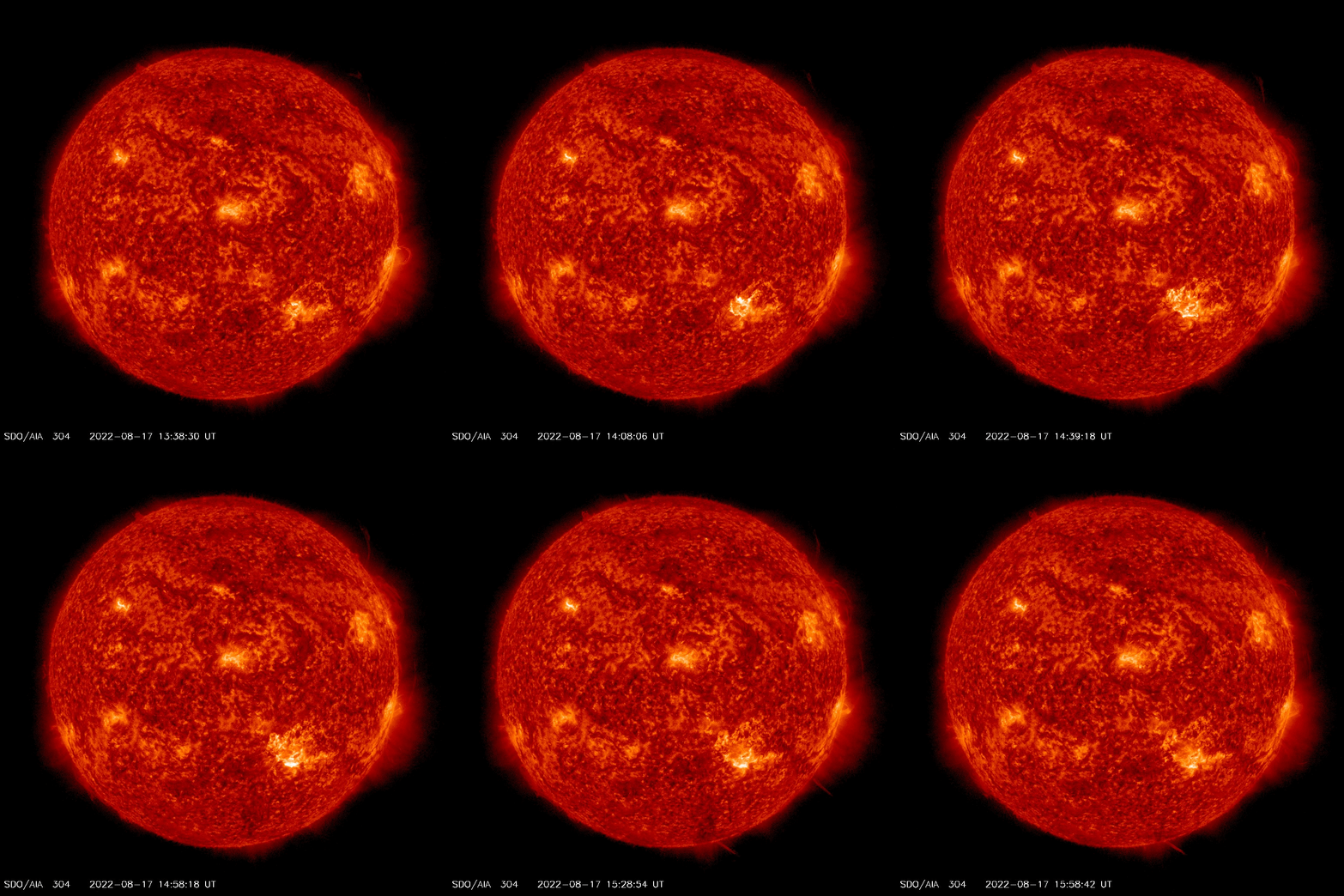
A CME will almost certainly emerge from the blast site (confirmation awaits fresh data from SOHO). But will it hit Earth? Like other CMEs AR3078 has produced this week, this one will skate the southern edge of the Earth strike zone. If it does hit us, the blow will be grazing, not full strength. However, even a grazing blow can cause a geomagnetic storm, especially in combination with other impacts, so stay tuned. Solar flare alerts: SMS Text
Realtime Aurora Photo Gallery
Free: Spaceweather.com Newsletter
COSMIC RAY YIN-YANG PENDANT: To celebrate the yin-yang relationship between solar activity and galactic cosmic rays, the students of Earth to Sky Calculus just launched a yin-yang pendant to the stratosphere. On July 23rd, it flew 104,265 ft high onboard a cosmic ray research balloon:
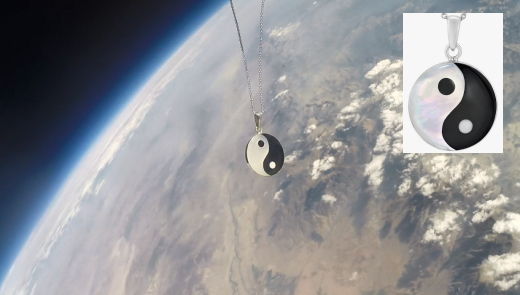
You can have it for $133.95. In this pendant, a sterling silver frame surrounds balancing swirls of black onyx and mother of pearl--all suspended from a matching 18-inch sterling silver chain. It makes a great anniversary, birthday or (never too early!) Christmas gift.
The students are selling yin-yang pendants to support their cosmic ray ballooning program. Each one comes with a greeting card showing the pendant in flight and telling the story of its journey to the edge of space and back again.
Far Out Gifts: Earth to Sky Store
All sales support hands-on STEM education
A COMET WITH TWO TAILS: Something special is happening to Comet C/2017 K2 (PanSTARRS). It's about to plunge through Earth's orbital plane (a.k.a. the ecliptic). The passage is giving us a rare view of the comet's two tails:
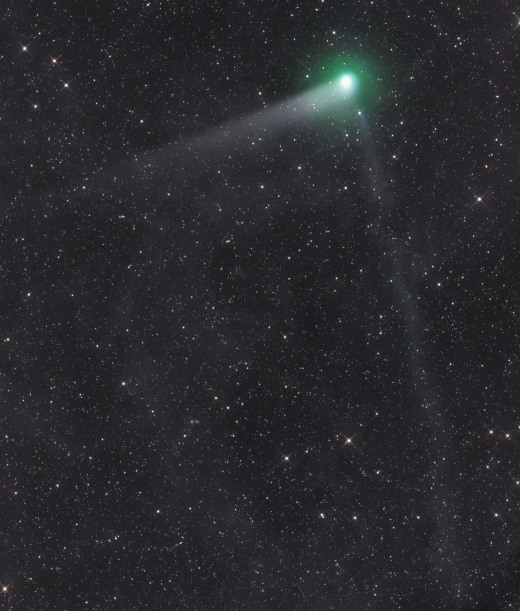
Gerald Rhemann took the picture on Aug. 15th using a 12-inch telescope in Farm Tivoli, Namibia. It shows Comet K2's dust tail pointing left, and its gaseous ion tail pointing down almost 90 degrees away.
All comets have two tails. Think about the material vaporizing from a comet's nucleus. It's a mixture of gas and dust. Lightweight gas is blown straight away from the sun by solar wind. Heavier dust lags behind, more closely tracing the comet's orbit. Voilà--two tails. Playing with Comet K2's interactive 3D orbit reveals why the two tails are currently at right angles.
This beautiful geometry will persist for some time. The exact date that Comet K2 passes through the ecliptic plane is Aug. 25th, but it will remain close to the plane for weeks. Astrophotographers, point your optics here.
Realtime Space Weather Photo Gallery
Free: Spaceweather.com Newsletter
Realtime Noctilucent Cloud Photo Gallery
Free: Spaceweather.com Newsletter