UPDATED GEOMAGNETIC STORM FORECAST: NOAA forecasters have downgraded the current geomagnetic storm watch from category G3 (strong) to category G2 (moderate). This is in response to a lack of significant CME impacts on Aug. 18th. CME impacts are still possible on Aug. 19th and 20th, however, especially from yesterday's partial halo CME, described below. High-latitude auroras remain likely as we enter the weekend. Aurora alerts: SMS Text


ANOTHER CME IS COMING (UPDATED): Yesterday, Aug. 17th, active sunspot AR3078 produced a rapid-fire pair of M-class solar flares (M1+M2). The double blast hurled this CME into space:
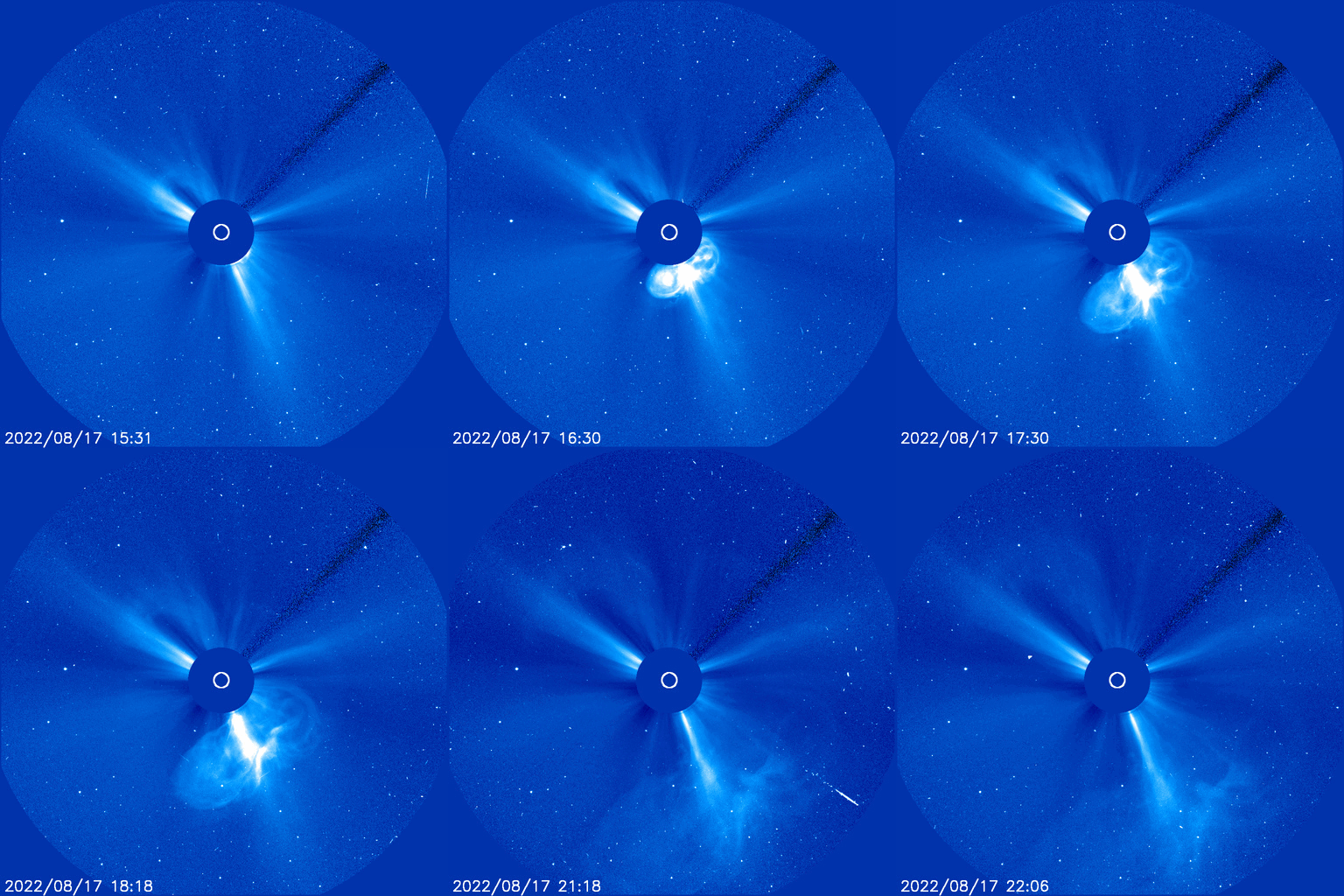
Although the bulk of the CME is directed south of the sun-Earth line, there appears to be an Earth-directed component. A faint halo suggests that a fraction of the cloud is heading our way.
Update: A new model of this CME from NOAA confirms an Earth-directed component and pinpoints its arrival time during the late hours of Aug. 19th. The impact will add to any geomagnetic storming already underway at the time. Solar flare alerts: SMS Text
Realtime Space Weather Photo Gallery
Free: Spaceweather.com Newsletter
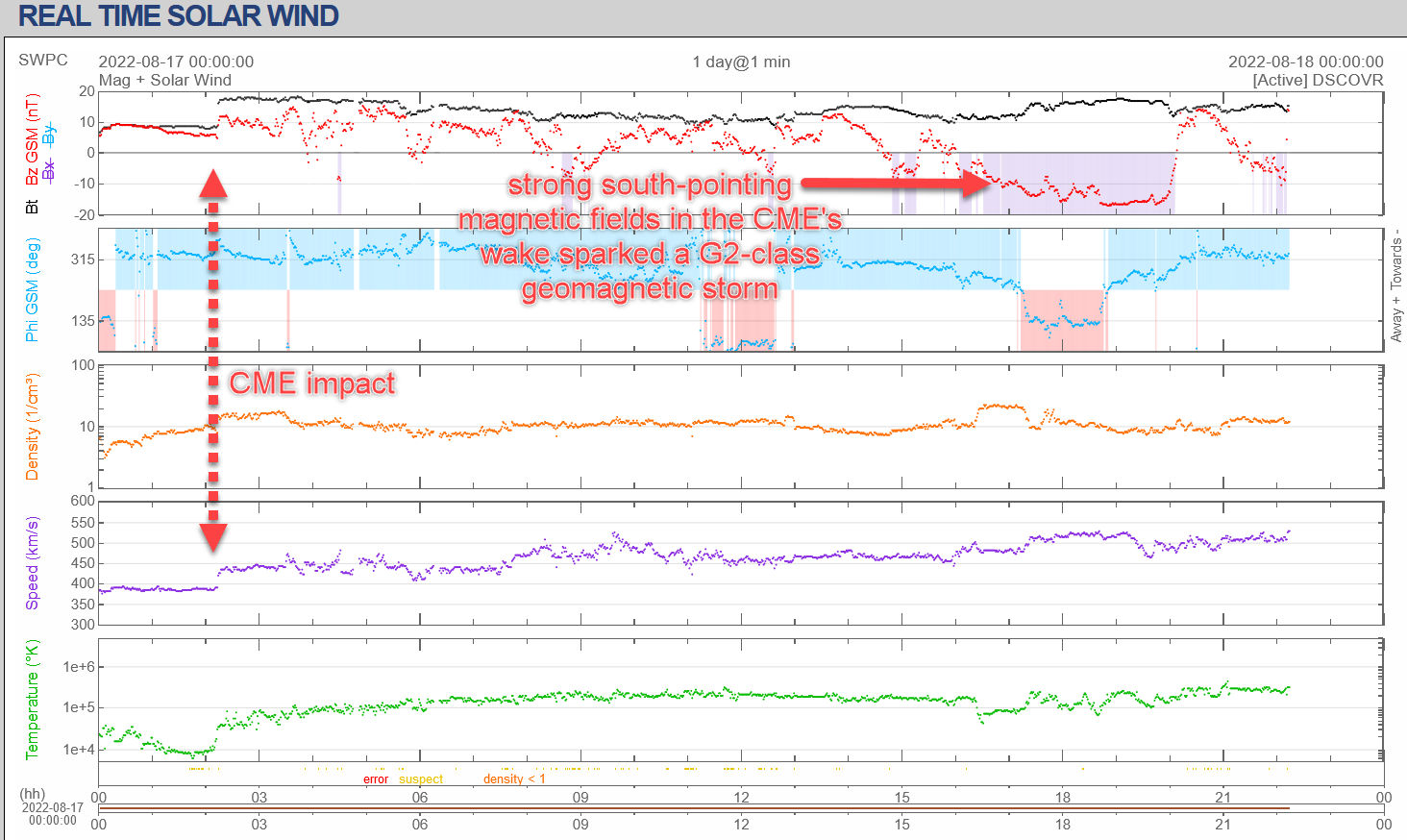
YESTERDAY'S GEOMAGNETIC STORM: A CME hit Earth on Aug. 17th, sparking a moderately-strong G2-class geomagnetic storm. Heiko Ulbricht photographed the resulting auroras from Herzogswalde, Germany:
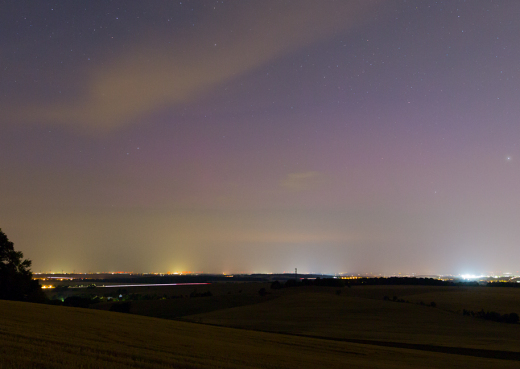
At first glance, his photo might not seem impressive, but consider the following: Herzogswalde is at latitude 51° N, and the auroras were visible through clouds, haze and urban lights. The CME that caused the storm was probably hurled toward Earth by a "dark plasma eruption" on Aug. 14th. Solar flare alerts: SMS Text
Realtime Aurora Photo Gallery
Free: Spaceweather.com Newsletter
COSMIC RAY YIN-YANG PENDANT: To celebrate the yin-yang relationship between solar activity and galactic cosmic rays, the students of Earth to Sky Calculus just launched a yin-yang pendant to the stratosphere. On July 23rd, it flew 104,265 ft high onboard a cosmic ray research balloon:
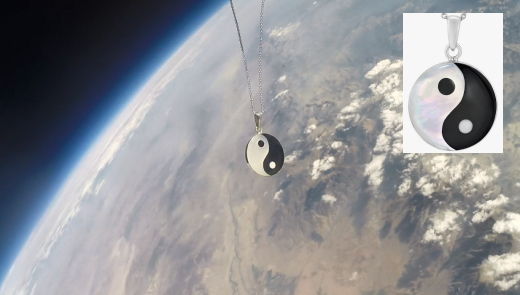
You can have it for $133.95. The pendant's sterling silver frame surrounds balancing swirls of black onyx and mother of pearl--all suspended from a matching 18-inch sterling silver chain. It makes a great anniversary, birthday or (never too early!) Christmas gift.
The students are selling yin-yang pendants to support their cosmic ray ballooning program. Each one comes with a greeting card showing the pendant in flight and telling the story of its journey to the edge of space and back again.
Far Out Gifts: Earth to Sky Store
All sales support hands-on STEM education
Realtime Noctilucent Cloud Photo Gallery
Free: Spaceweather.com Newsletter